ArchDaily Team

BROWSE ALL FROM THIS AUTHOR HERE

Luis Darmendrail: “In Chile, a lot is taught about the history of wars, but what about urban histories?”

Subscriber Access | 

Nicolás Valencia speaks this week on the TERRAZA podcast with Chilean researcher Luis Darmendrail about his book ⁠Concepción 1930⁠, published by dostercios editorial in 2023.

Concepción 1930 is a compelling study of a pivotal decade in the architectural history of the Chilean city of Concepción: the 1930s are presented as a turbulent period of change and new beginnings, where culture, commerce, the media, and institutions serve as the pillars of an urban life that flows alongside the narrative, revealing a city at the turn of the century.

Nicolás Valenzuela Levi: "Food infrastructure has been on the brink of collapse in our cities"

Subscriber Access | 

This week on the podcast TERRAZA, Nicolás Valencia speaks with Chilean researcher Nicolás Valenzuela Levi, editor of the book “⁠Alimentando la ciudad. Diálogos sobre infraestructura alimentaria urbana⁠”, published by Editorial ARQ in 2024.

“⁠Alimentando la ciudad. Diálogos sobre infraestructura alimentaria urbana⁠” is a collection of research on a type of infrastructure that we often fail to notice until it breaks down. The pandemic, followed by food price inflation, has heightened food insecurity, which manifests on the ground through examples such as the price of cooking oil at a neighborhood store or community kitchens as a local response. This book brings together an international, multidisciplinary group of researchers addressing these issues.

Andrea Ortega: “We have lost a lot of railway heritage in Chile”

Subscriber Access | 

This week on the TERRAZA podcast, Nicolás Valencia talks with Chilean architect Andrea Ortega about her book “Rieles que unen. Patrimonio ferroviario entre Estación Central y San Bernardo” (Rails that Unite: Railway Heritage between Estación Central and San Bernardo), published by the National Cultural Heritage Service in 2022.

Rieles que unen” is a critical account of the configuration and development of the heritage surrounding the initial urban stretch of the only active passenger and freight railway line currently operating in Santiago, Chile. The research approaches the understanding of railway heritage by integrating tangible and intangible elements, considering its urban-territorial scale and the valuation processes driven by organized communities at local levels.

Sofía Montealegre: The Thousand Lives of the Gabriela Mistral Cultural Center in Chile

Subscriber Access | 

This week on the TERRAZA podcast, Nicolás Valencia speaks with Chilean architect Sofía Montealegre, author of the book “Capas de memoria,” published by LOCAL ediciones in 2024.

Montealegre writes about a giant that has changed both its name and its appearance over the last 50 years. Inaugurated in 1972, the UNCTAD III building was an emblem of the Unidad Popular, only to be transformed into the Diego Portales building during the dictatorship, and later reopened as the Centro Cultural Gabriela Mistral (GAM)—standing as a testament to our complex history.

José Luis Uribe: “In Paraguay, a very fresh and vibrant architecture has emerged”

Subscriber Access | 
José Luis Uribe: “In Paraguay, a very fresh and vibrant architecture has emerged” - Featured Image

This week on the TERRAZA podcast, Nicolás Valencia talks with José Luis Uribe, author of the book “Viaje a Paraguay,” published by Arquine in 2023.

In “Viaje a Paraguay,” Uribe approaches the work of Gabinete de Arquitectura, Lukas Fuster, Estudio Elgué, José Cubilla, and Javier Corvalán and the Laboratorio de Arquitectura, drawing from three expeditions conducted between 2017 and 2019 to reflect on Paraguay’s contribution to the contemporary state of architecture.

La Cabina de la Curiosidad: “Just like water, to draw you have to let it flow”

Subscriber Access | 
La Cabina de la Curiosidad: “Just like water, to draw you have to let it flow” - Featured Image

This week on the TERRAZA podcast, Nicolás Valencia speaks with Marie Combette and Daniel Moreno, the French-Ecuadorian duo behind La Cabina de la Curiosidad and the book “Los caminos del agua,” published by Arquine in 2023.

In “Los caminos del agua,” a series of journeys across different scales unfolds, providing objective, compelling, and detailed insights into the origins of water flows within Latin American geography. The slow, patient, and rigorous hand-drawing of watersheds proposes a conscious assimilation of the natural wealth of this territory.

Michelle Llona: “Modern architecture in Peru is disappearing”

Subscriber Access | 
Michelle Llona: “Modern architecture in Peru is disappearing” - Featured Image

This week on the TERRAZA podcast, Nicolás Valencia speaks with Peruvian architect Michelle Llona, co-author of the award-winning book “⁠Catálogo Arquitectura Movimiento Moderno Perú⁠”, published by the University of Lima in 2016.

“Catálogo de Arquitectura del Movimiento Moderno del Perú” (CAMMP) is the result of the research project of the same name, developed by Llona alongside Alejandra Acevedo between 2013 and 2015, under the auspices of the Scientific Research Institute of the University of Lima. It is the first initiative in Peru to inventory and document the most significant buildings of the country's modern architectural production.

Mauro Gil-Fournier: “Everyone talks about how environments affect us, but no one talks about how we affect spaces”

Subscriber Access | 

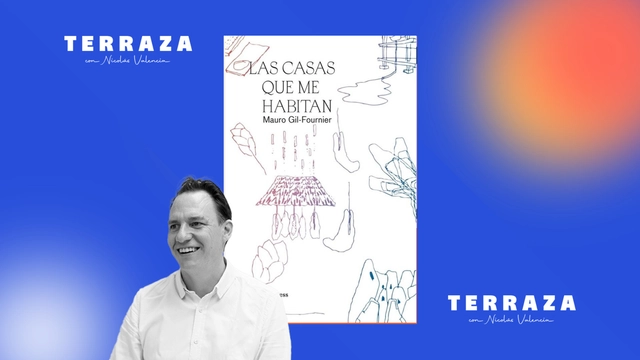
This week on the TERRAZA podcast, Nicolás Valencia speaks with Spanish architect Mauro Gil-Fournier, author of the book “Las casas que me habitan” (The Houses That Inhabit Me), published by Arquitecturas afectivas in 2022.

In “Las casas que me habitan,” Gil-Fournier suggests that as citizens we think we inhabit our houses, our squares, and our cities, but we only inhabit our everyday practices. The houses presented here are the affects that inhabit us on a daily basis.

“Affective architectures allow us to create a space where we can express ourselves honestly, without judgment, and safely,” Gil-Fournier notes in this interview.

Blanca Zúñiga: “Rural public space has no form; it emerges when its inhabitants are present”

Subscriber Access | 

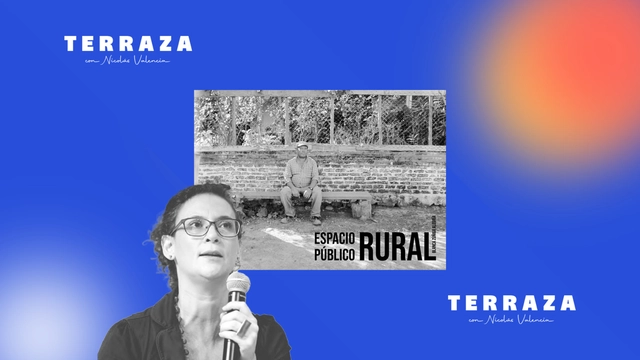
This week on the TERRAZA podcast, Nicolás Valencia speaks with Chilean architect Blanca Zúñiga, author of the book “Espacio público rural,” published by Sa Cabaña in 2021.

In “Espacio público rural,” Zúñiga develops a photographic project that seeks to capture and value the diverse ways of inhabiting the Chilean countryside in the Maule region.

“In the rural towns of the region, you don't know if the living room of the house is a public or private space because the doors are always open,” Zúñiga explains in this interview.

HOLDER ARCHIVE #01 | Juan Baixas - The Puzzle Chair, 1975.

Subscriber Access | 

"Perhaps in other times knowledge was a secret, which held back progress. As knowledge is made public, knowledge advances." - Juan Baixas

This micro-documentary by HOLDER is the result of an initiative dedicated to bringing visibility to contemporary Latin American design through its histories and creations. In this first episode, Juan Baixas offers a first-person account of the creation and development of his Puzzle Chair, a piece that was added to the permanent collection of the Museum of Modern Art (MoMA) in New York in 2015, highlighting its significance in modern design.

Results Announced for the Ideas Competition of the XXIII Chilean Biennial of Architecture and Urbanism

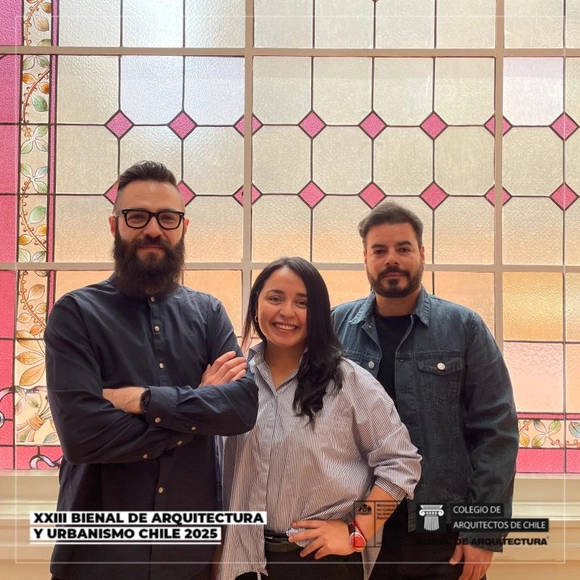
The Architects Association of Chile and the Ministry of Cultures announced the results of the competition for the XXIII Chilean Biennial of Architecture and Urbanism. The winning proposal, "Double Exposure: reprogram, revitalize, rebuild", by Sebastián López, Ángela Carvajal, and Óscar Aceves, addresses interventions in disused heritage spaces, merging old and new works. In addition, awards were presented to "Urban Amusements" and "Weaving Territories". The event reflects on historical architecture and its revitalization.

The curatorial team for the XXIII Chilean Biennial of Architecture comprises Sebastián López Jeldes, Ángela Carvajal Fernández, and Óscar Aceves Álvarez, and the jury is composed of Fernando Pérez Oyarzún, Amarí Peliowski, Cristián Izquierdo, Macarena Cortés, Pablo Rojas, Beatriz Buccicardi, Fernando Miranda, Martín Urrutia, and Vicente Burgos.

Ricardo Greene: “Perhaps boredom defines non-metropolitan cities”

Subscriber Access | 

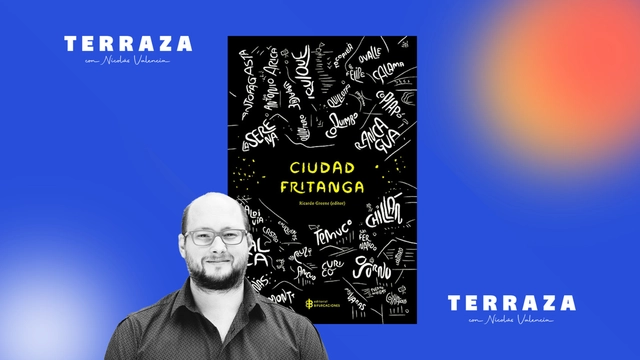
This week on the TERRAZA podcast, Nicolás Valencia speaks with Chilean sociologist and Universidad San Sebastián academic Ricardo Greene, editor of the landmark book "Ciudad Fritanga," published by Editorial Bifurcaciones in 2014.

"Ciudad Fritanga" compiles 34 chronicles of non-metropolitan Chilean cities like Arica, Talca, and Punta Arenas through the lens of poets, artists, and writers such as Lina Meruane, Jorge Baradit, Marcelo Mellado, and María José Navia.

"When people write about cities, they write about London, Berlin, and New York.  That is the urban chronicle. However, non-metropolitan cities are also cities," Greene comments in this interview.

Zaida Muxí: “No one resolves a family life in 35 square meters”

Subscriber Access | 

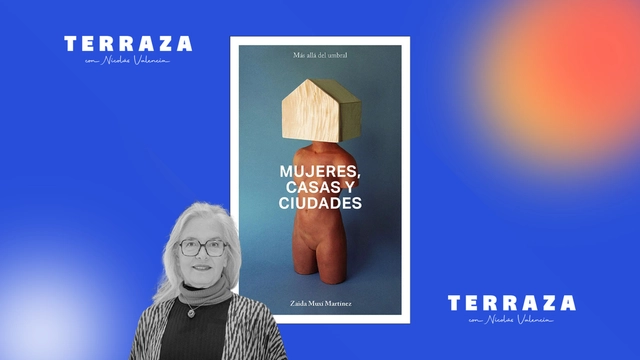
This week on the TERRAZA podcast, Nicolás Valencia speaks with Argentine-Spanish architect Zaida Muxí, author of the book “⁠Mujeres, casas y ciudades⁠” (Women, Houses, and Cities), published by dpr-Barcelona in 2018.

In “⁠Mujeres, casas y ciudades⁠”, Muxí proposes rewriting the history of architecture and urbanism by incorporating the contributions of the many women who have been silenced in mainstream historical accounts.

“If we want to play by market rules, housing will never be a right,” Muxí posits in this interview.

Sandra Iturriaga: "The city must be thought of as an ecosystem"

Subscriber Access | 

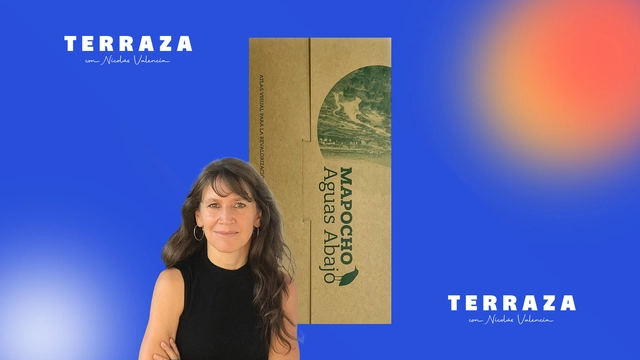
On this week's episode of the TERRAZA podcast, Nicolás Valencia speaks with Chilean architect Sandra Iturriaga about the book ⁠Mapocho Aguas Abajo⁠ (Ediciones ARQ), a publication developed by the Mapocho 42K Lab at the Pontificia Universidad Católica de Chile that proposes revaluing the heritage and landscape of the downstream stretch of the Mapocho River in Santiago, Chile.

Elisa Silva: "Spontaneous settlements do not need to be integrated because they are already part of the city"

Subscriber Access | 

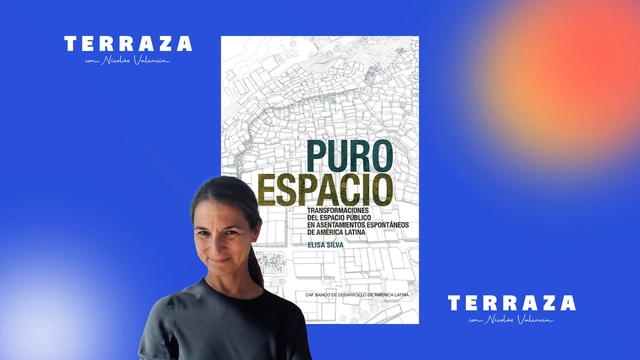
This week on the TERRAZA podcast, Nicolás Valencia talks with Venezuelan-American architect Elisa Silva about her book, "Pure Space: Public Space Transformations in Latin American Spontaneous Settlements" (Actar Publishers), an analysis of a series of public space interventions in communities across Mexico, Colombia, Venezuela, Brazil, Argentina, Peru, and Chile.

What are performative spaces in architecture according to Rodrigo Tisi?

Subscriber Access | 

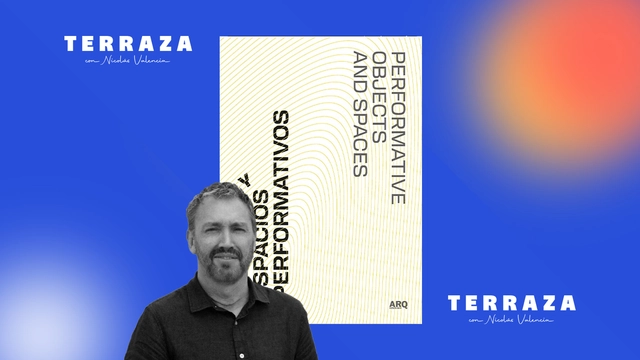
Nicolás Valencia talks this week on the TERRAZA podcast with Chilean architect Rodrigo Tisi about his book ⁠Objetos y espacios performativos⁠ (Ediciones ARQ), research that examines key moments to observe, explain, and establish the possibilities of certain performance practices in academia and creative environments.

Guilherme Wisnik: “In an ephemeral world, architecture has to become an image”

Subscriber Access | 

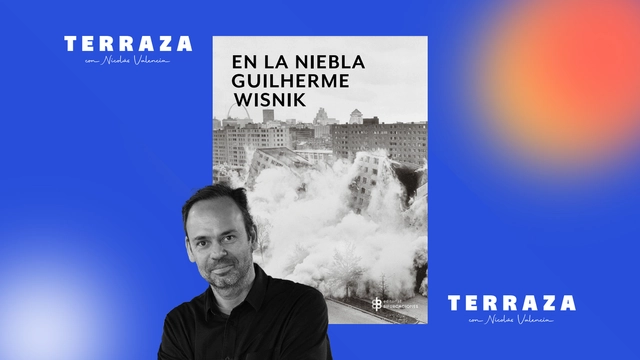
This week on the TERRAZA podcast, Nicolás Valencia talks with Brazilian architect and critic Guilherme Wisnik about his book En la niebla (Editorial Bifurcaciones), a series of essays where fog serves as a metaphor for the state of uncertainty in today's world, weaving together contemporary debates on space, art, and politics.

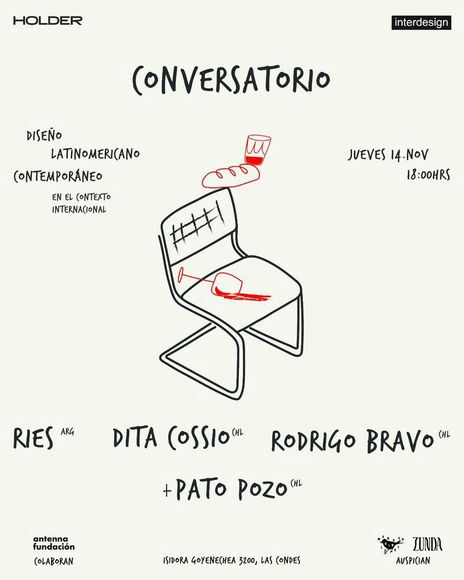
Holder Objects presents a discussion on contemporary Latin American design in the international context.

HOLDER is an initiative dedicated to highlighting contemporary Latin American design through its stories and creations. Founded in 2023 by designer Trinidad Davanzo and architect Camilo Palma, Holder Objects blurs the lines between an editorial platform, a design shop, and a gallery. Its constantly evolving catalog features a curated selection of furniture and artistic objects for everyday use, promoting prominent designers from Latin America.