Cortesia de Saint-Gobain's Architecture Student Contest
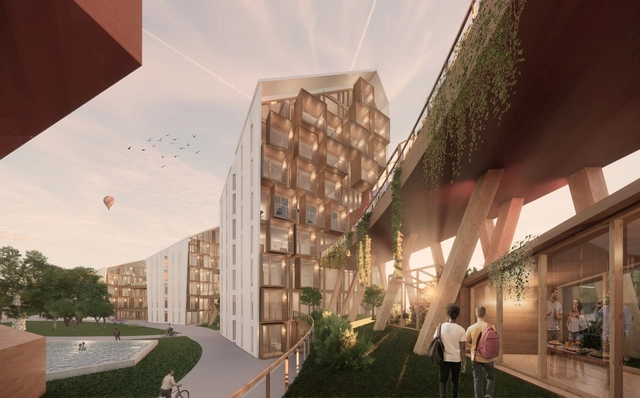
The 17th edition of the "Architecture Student Contest" has come to an end, with the participation of over 220 universities from 32 countries. This year, the challenge was to transform a district located in Warsaw, Poland in order to revitalize an area located next to Warszawa Wschodnia (Warsaw East). The contest involved the design of a new student residence and housing, as well as a meeting and entertainment center in an old factory building that is classified as a historical heritage site. With the requirement of addressing the space's performance as well as its architectural, environmental and social aspects, the contestants were tasked with a project that positively impacts its users and the planet, with low carbon emissions throughout its life cycle.
Wallpapers can be quite controversial. They can be typical of old-fashioned and antiquated homes, but at the same time, they can also add personality to otherwise dull spaces. One of the best parts of using these elements is that they can be quickly installed, and with relatively low costs. This also means that they aren't very long-lasting, and can therefore be quickly discarded and replaced, making them transient decoration items. As Joanna Banham—a researcher on wallpapers—states, “Wallpaper is often regarded as the Cinderella of the Decorative Arts – the most ephemeral and least precious of the decorations produced for the home. Yet, the history of wallpaper is a long and fascinating subject that dates back to the 16th century and encompasses a huge range of beautiful patterns created both by anonymous hands and by some of the best-known designers of the 19th and 20th centuries.” Today we are seeing another wallpaper resurgence, with numerous options of materials, patterns, and colors, and several examples of architects who have used them creatively in their projects. In this article, we go through the history of wallpapers and some of the current alternatives on the market, by diving into the Architonic catalog.
Food pyramids are familiar to all of us. They are visual guides that show us the proportions of foods that we should supposedly eat on a daily basis, in order to stay healthy. Composed of a series of layers with different food types–such as grains, flour, fats, vegetables, and others–, at the base are the foods that should be consumed in larger quantities. Towards the top, each layer becomes successively smaller, indicating the foods that are meant to be ingested rarely. The pyramid can vary according to countries and cultures, but its main purpose is always to provide a guide for a balanced life. There are no prohibitions, but it does indicate some foods that should be consumed with caution because of their impacts on our health.
If we are what we eat, is it possible to also replicate this in the construction industry and our buildings? Using this same easy to understand visual language, the Royal Danish Academy Center for Industrialized Architecture (Cinark) developed the Construction Material Pyramid. The idea was to highlight the environmental impact of the most used construction materials, focusing on the analysis of the first three life phases: extraction of raw materials, transportation and manufacturing.
Façades don't always have to be opaque. Whereas in the past the only options were heavy and raw–such as stone and brick–in recent years façades have adopted an increasingly lighter appearance, with innovative materials becoming the protagonists. These give the building a different look, delicate and transparent, while still maintaining privacy and thermal comfort. Examples of these include polycarbonate, translucent sheets, perforated tiles, glass and even metal chain links, which was the chosen material for a building in Montpellier, France.
The terms critical regionalism, popularized by theorist Kenneth Frampton, proposed an architecture that embraced global influences, albeit firmly rooted in its context. That is, an approach defined by climate, topography and tectonics as a form of resistance to the placidity of modern architecture and the ornamentation of postmodernism. Bringing familiar elements to a particular location can allow the building to be better accepted and incorporated into the local context. This was the case of the New Maitland Hospital, which incorporated a large brick panel next to the main façade, as a reference to the community's traditional symbols.
In the face of increasingly alarming predictions regarding the climate crisis, just increasing the efficiency of buildings is no longer enough. Zero energy buildings - or, better yet, energy positive buildings - make it possible to mitigate the negative impacts of the construction industry, which is responsible for 40% of all greenhouse gas emissions. These are buildings capable of producing more energy than they consume through the use of renewable sources. To reach this ambitious goal, it is necessary to follow three main steps:
Install a renewable power system to provide clean energy;
Include high efficiency systems, such as climatization equipment and low energy lighting.
Improve the construction envelope to conserve energy and reduce loads.
There are many myths and misunderstandings around sustainability in construction. First, the belief that what is sustainable must inherently be technological, complicated or out of reach. Or that the products will necessarily be more expensive, will be made of recycled materials or will not be so aesthetically pleasing. When it comes to material specification, there is often confusion. Is steel more sustainable than bamboo? Would it be better to use a material that is said to be sustainable, but which goes through numerous industrial processes, or one with a low level of processing? The answer is not so simple, and there are various comparison mechanisms to help guide us. But this is an important consideration to make, as one of the main ways the construction industry can help reduce its carbon footprint is to select materials with the lowest general contribution to emissions and environmental impact. Natural slate, which can be used for roofing and facades, is a great example of this.
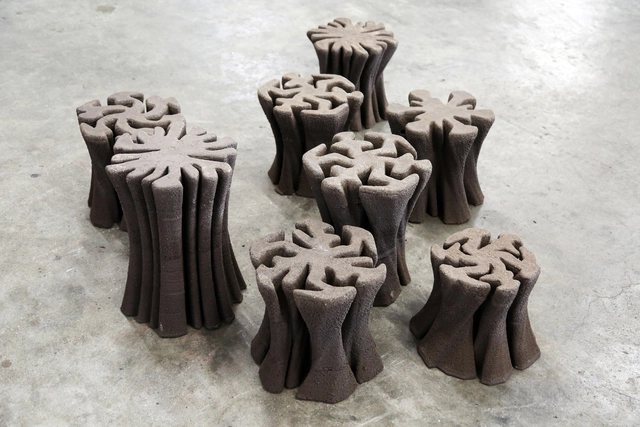
As humanity becomes aware of its impact on the environment, it has also sought ways to reverse some of the harm caused to fauna and flora, especially in cities. Our way of living, consumption and construction has caused severe damage to nature. In fact, according to a study from the Weizmann Institute of Science, we are at a point of inflection where the mass of all man-made materials is equal to the planet's biomass, and it should double by 2040. But not necessarily everything we build should have a negative impact. "The Tidal Stool" project is an example of this - part of a comprehensive revitalization project in Kuk Po Village in Shau Tau Kok in Hong Kong, which brings together two different ecologies, the anthropocentric and natural environment.
Choosing a career as soon as we leave high school can be somewhat challenging and even tormenting. Although it has been said that in the future it will be common to change careers or have various overlapping jobs, the fear of making the "wrong" choice causes many soon-to-be graduates to lose sleep. Having a good overview of what each profession entails is important to understand whether or not it is a good fit, especially in creative areas or newer and more dynamic professions. Architecture, for example, is a career that is well known for covering several areas - from mathematics to art history - but also for requiring many hours of dedication, critical thinking and mastery of computational tools. To give prospective students a taste of the experience of being an architect or an architecture student, Design Immersion Days (DID) is a four-week immersive summer program for future high school graduates to experience the world of design and architecture.
Charles Darwin's theory of natural selection sought to explain the origin and survival of species on the planet. In short, it points out that the fittest organism survives and can reproduce itself, perpetuating useful variations for each species in a given place. Adaptation is, therefore, a characteristic that favors the survival of individuals in a context. In the construction world, we could draw some parallels. Could adaptation be an important quality to increase the useful life and efficiency of a building over time, considering the changes and demands of society, as well as technologies and lifestyles?
Whether in a compact studio in Hong Kong or in a Michelin-starred restaurant, kitchen design requires special attention in order to make the act of preparing food a pleasant experience; with adequate space for all necessary functions and without the need for useless movements. The theory of the “golden triangle” or “kitchen work triangle” was conceived 100 years ago but remains valid and helpful in the definition of layouts and the organization of functions. Basically, the three main elements of the kitchen should be located at each end of the triangle: the sink, the refrigerator and the stove, with their respective functions in cleaning, storage and cooking. According to its principles, each side of the triangle must be between 1.20 and 2.70 meters long, and the perimeter should not be less than 3.96 meters or more than 8 meters.
Of course, it is not always possible to have the ideal dimensions and proportions to implement this type of kitchen, especially when we take into account the increasingly lean dimensions of contemporary environments. Nevertheless, there are various ways of making everyday operations more efficient even in tight kitchens. Below is a selection of items and products that can increase the space and efficiency of kitchens, without having to add even one square meter to them, straight from the comprehensive Architonic catalog.
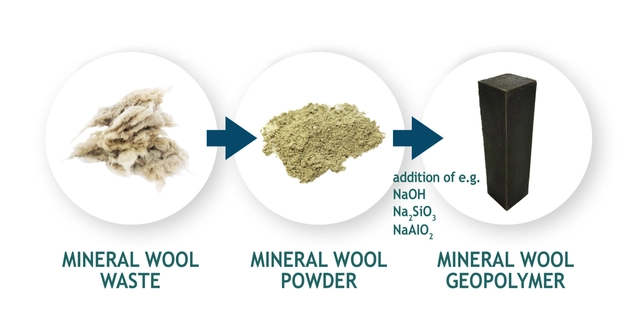
When approaching the process of recycling building materials, there are a number of obstacles to achieving a comprehensive and effective result. First, careless demolition can make the process very complex, as products with different recycling products are often mixed. In addition, not all materials can be efficiently recycled or processed, as many still need expensive or overly complex processes. But the construction industry, being a huge contributor to waste production and greenhouse gas emissions, has also developed multiple new technologies to improve its practices. This is the case of the WOOL2LOOP project, which seeks to solve one of the biggest challenges in applying a circular approach to construction and demolition waste.
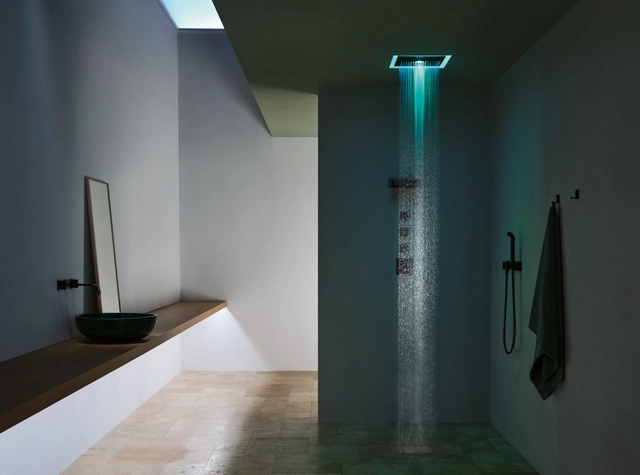
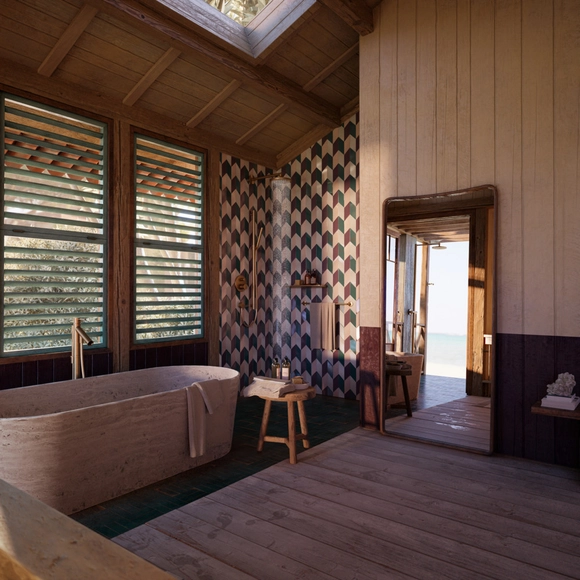
Taking a good shower can be an extremely relaxing and pleasant experience. Far beyond the simple (and important) functions of removing dirt and sweat and balancing the bacteria present on the skin and body, the feeling of well-being that a bath provides can make us think better, come up with ideas to solve problems and relax our muscles. To make things even better, this experience can be enhanced through a well-designed space, with suitable materials, well thought out lighting, and components that provide a good waterflow.
Located somewhere between opacity and transparency, translucent surfaces allow rays of light to partially pass through them, creating a "blurred" aspect to what is seen on the other side. This is an effect widely used in art, as in the works of the Icelandic–Danish artist Olafur Eliason, for example, who works with optical illusions through light and colorful and transparent surfaces. But it is also admired by contemporary architects, such as the Japanese office SANAA, or European offices such as Barozzi / Veiga or Lacaton & Vassal, among many others.
In buildings, when using translucent surfaces with materials such as polycarbonate or glass, elements become visually lighter and highlight interiors or even the building's structure, without intruding on inhabitants' privacy. Chairs, lamps, pots: there are several everyday objects that use translucency for aesthetics and lightness. In the bathroom, however, this is not so common. Usually made of porcelain, the traditional pieces used in this space are opaque and at times are not so flexible to allow for a designer's vision.
Xi'an Qujiang Art Center by Xiaoxia Wang - gad. Image Courtesy of A'Design Award and Competition
“Good design deserves great recognition”. This statement encapsulates the A'Design Award and Competition, an award for designers, innovators and companies that wish to stand out and attract the attention of the media, editors and buyers. These aspects are especially important in the world of design, where millions of products and projects are launched, and often end up being swallowed up and not receiving due recognition. To address this, every year projects are submitted to the A' Design Award with a focus on innovation, technology, design and creativity. It offers a chance for recognition, with the valuable curatorship of a renowned jury and the possibility of a successful international launch. The A'Design Award contains a series of public relations, advertising and marketing services to celebrate the success of its winners. In addition, and unlike other design awards, it is completely free of charge.
Wooden floors bring warmth, personality and style to any interior space, whether old or new. Rustic and elegant, wood also has excellent thermal properties, a pleasant temperature to the touch, and can even improve the acoustics of a space by absorbing sound waves. They are also highly durable and resistant to daily use. It is therefore no surprise that they are one of the favorite and most coveted materials for residential interiors. Wooden flooring is also very visually appealing, with a huge amount of variations possible in its design. Pieces can vary greatly depending on which part of the trunk they come from, even if they are from the same manufacturer and tree species. Colors and designs also vary according to different tree species, from light yellows to dark browns, with infinite possibilities. In addition, it is possible to create various types of patterns when laying the floor, according to the dimensions of the pieces used and the desired effect for the space. See below a selection of wooden floors in Architonic catalog.
Videos
AXOR Starck. Image Cortesia de AXOR / Hansgrohe SE
The practice of frequenting public baths was common in civilizations such as the Greeks, Persians and Byzantines, but it was the Romans who popularized their use as places of socialization and purification. These bathrooms were communal and people sat side by side in a collective latrine. The modern bathroom, more similar to what we know today, began with Sir John Harington and his invention of the first flush toilet in 1596. Another crucial advance occurred with Alexander Cummings in 1775, which included a siphon within the toilet to retain gases and odors. But it was only when houses were equipped with running water and effective drainage in the second half of the nineteenth century that the modern private bathroom emerged: a bathroom, a sink and a bath place, which can be a shower or a bathtub. The basics have remained almost unchanged since then, with a few cultural variations in different parts of the world.
These days, the bathroom is a space that goes far beyond its function. With numerous options on the market, it can be designed with the most diverse aesthetics in mind, become a space for relaxation or a design statement in an interior design project.
Museums play a key role in the preservation and dissemination of culture and knowledge. They can exhibit works of art, documents, photographs, historical artifacts or even plants and trees. Although today there are entirely virtual exhibition spaces, the primary functions of traditional museums are the conservation and protection of objects, which are invaluable due to their historical relevance, rarity or market value. From simple “Do not touch” signs to tape, security guards, or glass displays, each object receives a type of protection that is in accordance to its needs. These types of protection, in turn, must consider both the safety of the object, whilst also allowing for its appreciation and conservation, creating a controlled environment for the exposed object that preserves it indefinitely.