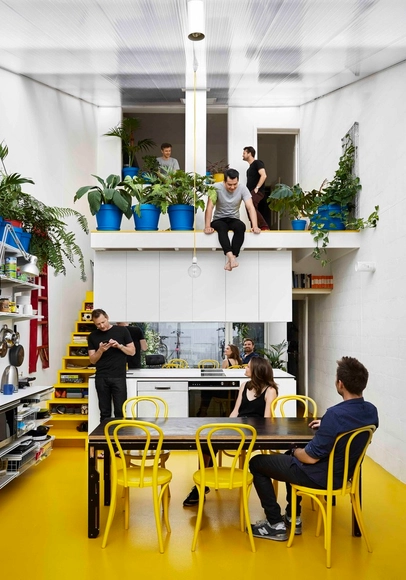
Not every architectural project can incorporate a landscaping project, consider a garden or access to ample green space. Smaller spaces need more creative strategies to incorporate vegetation. Regardless of the context, plants offer benefits in all types of spaces, such as indoor temperature regulation, an option for sustainable production on a smaller scale than a greenhouse, in addition to their aesthetic qualities. In this article, we present 4 simple strategies and a selection of examples for incorporating plants in small-scale spaces, all of which can be found in Architonic's Planting section.
The world’s architects and interior designers do not simply design space. They take existing space and redefine and reinterpret it—along with its history, its surroundings and its culture. If the designer succeeds in capturing the very essence of a place, indoors or outdoors, and in filling it with new life, it can be described as outstanding design. And outstanding designs have won the iF Design Award again in 2021. Be they spaces for discovery or remembrance, for learning or for prayer, the iF Design Award has gone across categories and types of building to architectural and interior design projects that could hardly be more different, yet have “The CreatiFe Power of Design” in common. But what does that mean?
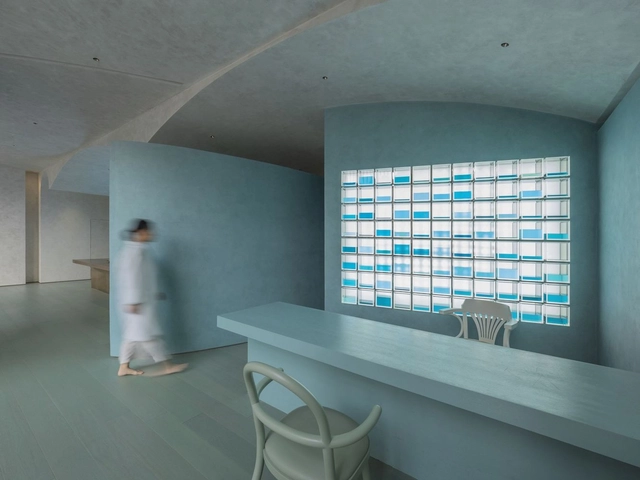
A room, a life. Nowadays we spend most of our time in closed spaces. Ideally, they should suit us and be conducive to our well-being. Furniture, décor, lighting, colors, patterns, and fabrics all have an effect on us, albeit an unconscious one. Be it playful elegance, rekindled tradition, or simple functionality, what mainly counts where interior architecture is concerned is the purpose for which a room is to be used. The iF DESIGN AWARD 2021 winners’ designs create totally new styles for very different needs and carry conviction with a great sense of detail.
The NextGen International Talent Taskforce is a collaboration between IE University’s School of Architecture and Design and CPA NextGen to promote international talent exchange and foster discussions related to the real estate industry. This “working group of NextGen professionals”—which includes alumni from IE University—meets bimonthly to discuss important topics such as sustainability, inclusivity, technology, cities and wellbeing.
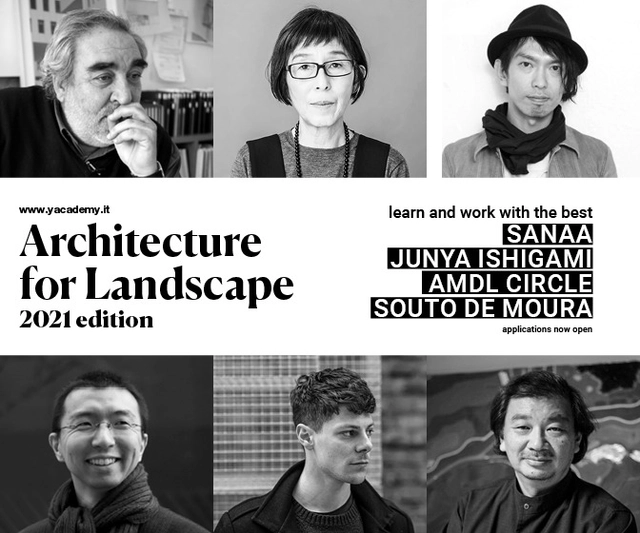
From Stonehenge to Greek temples, architecture is the signature of humankind on landscape, the artificial element that has always been connected to the natural environment. Architecture and landscape are linked by a fundamental continuity that is now starting to fade, damaging the quality of the space we inhabit.
Videos
Courtesy of IE School of Architecture and Design
ArchDaily and IE School of Architecture and Design invite you to unfold the strategic interior design process by solving a challenge for a real client in a real case in a real-time session. The online workshop will take place on June 10 at 5 PM CEST.
ArchDaily and IE School of Architecture and Design would like to invite you to this live webinar in collaboration with City Property Association in London.
Epic Games is excited to announce the next episode of The Pulse—a series of interviews and live Q&As exploring the latest thinking on interactive 3D technology. In episode 6 of The Pulse, join AEC influencer, Fred Mills—together with Salla Pallos of Microsoft, Tim Johnson of Buildmedia, and David Weir-McCall of Epic Games—to talk about the fast-growing world of digital twins and their impact on the future of architecture, engineering and construction.
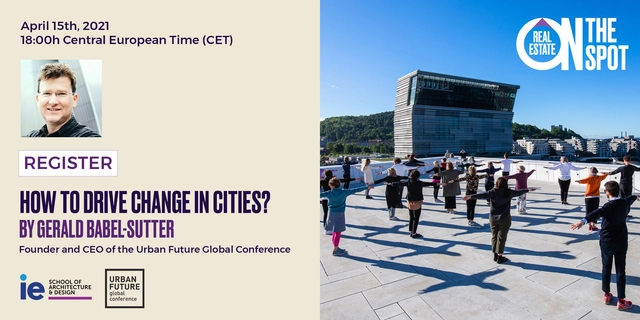
Gerald Babel-Sutter, CEO and Founder at Urban Future Global Conference, Europe's largest event for sustainable cities, will share the story of the Urban Future Global Conference: How it evolved from a local mobility workshop planned for the city of Graz in 2014 to be the meeting place for CityChangers across Europe and beyond, with almost 3000 participants gathering in Oslo in 2019.
IE School of Architecture and Design and ArchDaily would like to invite you to join this outstanding online masterclass by Caroline Cole where she will explore the importance of setting out a viable business proposition for architects and designers.
The School of Architecture, Planning and Landscape (SAPL) at the University of Calgary is accepting applications for its Master of Environmental Design (MEDes) program. Located in the foothills of the world-renowned Canadian Rockies, with easy flight access to Vancouver and Toronto, the University of Calgary offers incredible value to international students when comparing its tuition to similar programs in the U.S, as well as a reasonable cost of living compared to other Canadian and American cities.
Carbon textile-reinforced concrete is a composite of high-performance materials that is corrosion-resistant, thin, light, resource-friendly and environmentally friendly. It provides a basis for long-term endurance in construction, both in new buildings and in renovation or repair. Longevity and economic viability are two essential factors at which the construction industry, as well as research, politics and environmental associations, have demonstrated a keen interest.
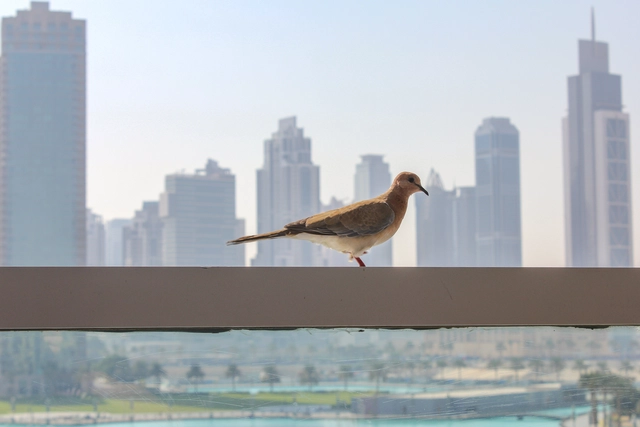
Every year around this date, festivals, educational events, exhibitions, and excursions are organized to celebrate and raise awareness about the conservation of migratory birds. These species have seen their habitats transformed during the last few decades in part because of human action: designers and real estate agents have built and nurtured an urban imaginary dominated by glass structures as a symbol of power and progress. Before proceeding with the conquest of the sky, it is worth considering some materials that are more friendly to the species with which we cohabitate.
SCI-Arc’s Master of Science in Design Theory and Pedagogy is a one-year program that addresses the growing ambiguity between practice and academia and prepares students for the new hybrid career that has emerged in architecture: the architect-theorist-educator. As shifting political, social, cultural, technological, and ecological paradigms redefine architecture, the program speculates on how architects will practice in the future, interrogates current pedagogical models, and focuses on what needs to be rethought, advanced, or challenged. One of five master’s programs within SCI-Arc EDGE, Center for Advanced Studies in Architecture, Design Theory and Pedagogy prepares young architects for new forms of architectural practice.
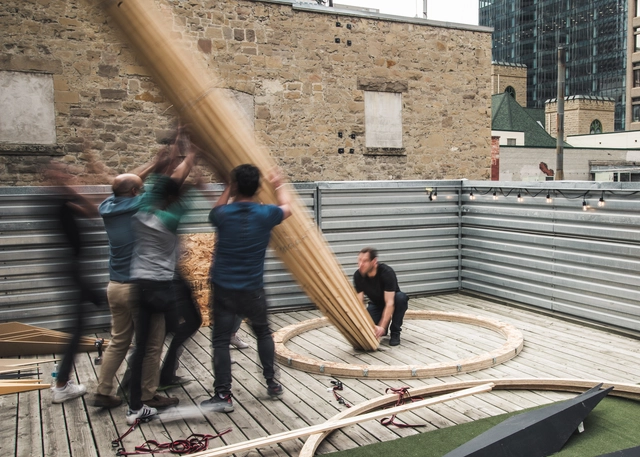
Craftmanship is back. Following a century of mass production and industrial development, crafts are starting to be revalued and reinterpreted. A new sensitivity towards raw materials, the recovery of local techniques and the defense of small-scale trade are a few of the claims that this comeback represents. Materials such as earth and ceramics, textiles and wood are being reinterpreted by designers, artists, and architects around the world, in search of both their own style and the representation of collective nostalgia.













.jpg?1582834753&format=webp&width=640&height=580)
.jpg?1582834791&format=webp&width=230&height=230&crop=true)


.jpg?1582834753)