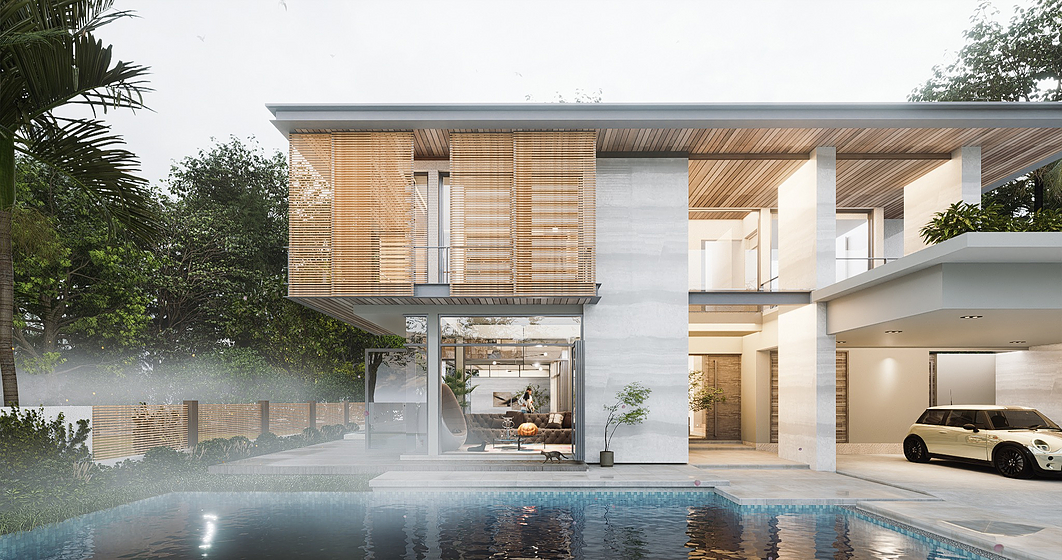
This guide shows how to use a D5 Render a free live-sync plugin to improve SketchUp workflow.


This guide shows how to use a D5 Render a free live-sync plugin to improve SketchUp workflow.
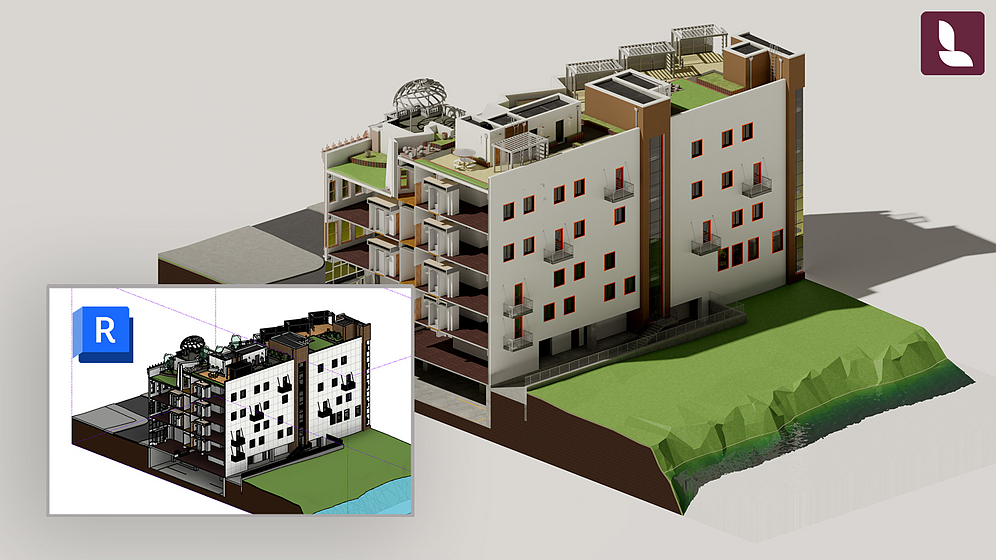
A real-time visualization, providing a realistic, immersive view of your model within your familiar BIM environment.

In nature, nothing is perfectly square, and organisms orient themselves by the sun. Both truths explain the fresh design of the “net zero” Zona home.
The Jacksonville, Florida, residence, designed using ArchiCAD software from GRAPHISOFT, the personal home of by architect John Zona III and his wife. It features a main residence and guest cottage/studio, both with American football-shaped footprints to minimize the considerable cooling demands of homes in Southern climes.

The 2011 edition of Indesem will focus on the theme ‘Losing ground’; the changing position of architect and architecture with respect to the digitalized network society and the necessary shifts in practice and thinking when designing in this changing paradigm. For more information on the theme, lectures and workshop you can go to the event’s official website.

The three fountains located in the Republic Square of Pilsen were designed by Ondřej Císler and constructed in 2010 following a 2004 two-stage competition. It took five years for local authorities to accept the design that jurors of the competition very positively received. When in 2010 Pilsen was announced to be a European City of Culture in 2015, the decision to finally construct the fountains was approved.
More on the project after the break.

Great projects from Europe, Asia, and South America you may have missed last week. Check our selection after the break.
Rural Dining / Javier Rodriguez Acevedo In the search of a certification project, it found an agricultural company located in the north riverside of Lontué river that required an agricultural dining for their employees who work in season from pruning, thinning and harvesting. More strong in the third one, between the months of January and March (read more…)

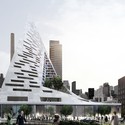
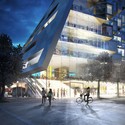
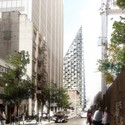
The awkwardly shaped large site at West Side Highway and 57th Street is about to get a whole lot more attention. Bjarke Ingels and BIG will finally make their architectural debut in North America, with an unusual apartment building design in none other than New York City. The asymmetrical peak almost pyramid in shape is the result of blending the mismatched forms of a typical Manhattan tower podium and a low-rise apartment block European in style.
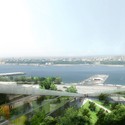
BIG’s reinvention of the ‘New York apartment building’ somehow is able to check all of the boxes, providing a connection to the waterfront and the Hudson River Park, acknowledging the surrounding context both in relationship to building size and neighbors’ views, and alleviating traffic noise. The leafy green courtyards that pop up within this new residential typology help to balance a steeply sloped facade, 450-feet at its peak. Designed for client Durst Fetner Residential, the building offers both a cultural and commercial program and will accommodate 600 residential units varying in size.
Follow the break for the architect’s description and more photographs.
Architects: BIG-Bjarke Ingels Group Location: Manhattan, New York, USA Partner in Charge: Bjarke Ingels Project Leader: Beat Schenk Project Architect: Sören Grünert Project Team: Thomas Christoffersen, Celine Jeanne, Daniel Sundlin, Alessandro Ronfini, Aleksander Tokarz, Alessio Valmori, Alvaro Garcia Mendive, Felicia Guldberg, Gabrielle Nadeau, Ho Kyung Lee, Julian Liang, Julianne Gola, Lucian Racovitan, Marcela Martinez, Maria Nikolova, Minjae Kim, Mitesh Dixit, Nicklas Rasch, Riccardo Mariano, Stanley Lung, Steffan Heath, Thilani Rajarathna, Xu Li Architect of Record: SLCE Architects Landscape Architects: Starr Whitehouse Structural: Thornton Tomasetti MEP: Dagher Engineering Civil: Langan Engineering Construction Manager: Hunter Roberts Transportation: Philip Habib & Assoc. Building Envelope: Israel Berger & Assoc. Marketing: Nancy Packes Vertical Transportation: Van Deusen & Assoc. Acoustical: Cerami & Assoc. Wind: CPP Environmental: AKRF Client: Durst Fetner Residential Project Area: 870,000 sqf Renderings & Animation: German Glessner

The Techno Box by LED Architecture Studio is a habitat structure designed to perform in emergency situations. The elements are modules that can be aggregated to serve different functions. Each unit is designed for a maximum of 5/6 people and is conceived to serve temporary housing problems for people facing natural disasters.
Read on for more on this project after the break.

While building information modeling (BIM) is traditionally thought of as being effective on large, complex projects, more and more architects are also using it on single-family residential projects to lower costs, speed construction process, and make better-performing, greener buildings. Hear from architects using BIM for residential work about the benefits-and some of the challenges.

Jean-Paul Viguier has produced this design for the SFR Headquarters in Saint-Denis, France, a 130,000 sq. meter facility that will house four sectors of offices along a single spine. The building is scheduled for completion in 2013.
More on this project after the break.

Studio O+A, principals Verda Alexander and Primo Orpilla, were named this week by Contract magazine as the 2011 Designers of the Year. Known for designs such as the Facebook Offices in Palo Alto, the award is recognition of Studio O+A’s consistency of bringing creative quality design to start-ups and venture firms in Silicon Valley.
Complete press release following the break.

Atelier Zündel & Cristea architects shared with us their Grenelle Tower in Paris France, which has been commended by the Mipim AR FUTURE awards. At a time when Paris is reviewing its ambitions of ‘greatness’, the richness of the city’s diversity is transposed vertically into towers of shifting density. More images and architect’s description after the break.

Greek architects, mab architecture, have shared with us their interactive, multi sensory pavilion, Plinthos. Additional images, multiple videos and a description of this visually striking project after the break.

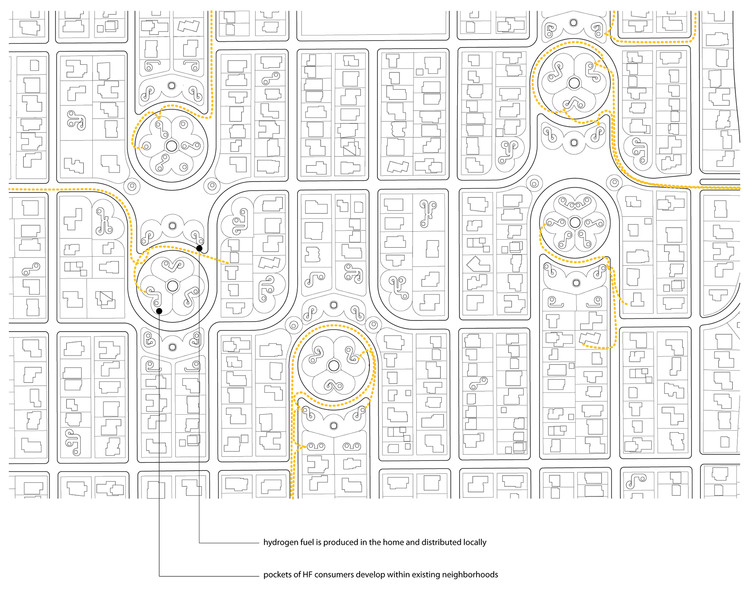
Hydrogen House is a series of house prototypes and suburban planning strategies for the Hilltop neighborhood in Denver, Colorado. Advocating a shift from a corporate fuel economy to a grassroots one, the project uses hydrogen fuel cells to link the design of domestic environments to ambitions for suburban development. Follow the break for more drawings of Hydrogen House.
Architects: !ndie Architecture Location: Denver, Colorado, USA

Illinois Institute of Technology B.Arch students, Seth Ellsworth and JaYoung Kim have shared with us their Mumbai traveling studio project, TATA Tower. Their project studies the infrastructural crisis regarding parking in developing regions such as Mumbai and how to address such issues in a way that does not stifle economic expansion, increases housing density, produces clean energy and creates high quality outdoor space for Mumbai. Additional images and a description by the architects after the break.

The contest proposes to question our traditional ways of providing light to the great population. The CLU Foundation wants to give a new meaning to Public lighting and to sensibilities humanity to take advantage, to share and to take ownership of all available lighting.

For today’s Round Up, we even have one of our finalists for the Building of the Year Awards! Our fifth selection of previously featured cultural centers after the break.
Gabriela Mistral Cultural Center / Cristian Fernandez Arquitectos, Lateral Arquitectura & Diseño We live in time where throwing things out is easier than to repair, adapt and implement value. However, the objects and buildings that surrounded us have a hidden history that is necessary to discover or rediscover if you will. The Diego Portales building (or what’s left of it) is an ideal example (read more…)

The work of Indian artists, including Raqs Media Collective, will also be included in the exhibition, offering insights into the complex and oft cited “messy” urbanism of India. Curator is Kanu Agrawal and the exhibition design and graphics by Popular Architecture and Omnivore.

The Israeli firm Lothan Architects has shared with ArchDaily their design for a visitor’s center in the Khula valley, north of Israel in collaboration with Arc. Yinnon Lehrer. Their sweeping design seeks to create a constant communication between the visitor and the surrounding nature reserve. More images and a brief description after the jump.

The International Olympic Committee and the IAKS are organizing the IOC/IAKS Award 2011 for Exemplary Sports and Leisure Facilities. At the same time, the International Paralympic Committee and the IAKS are holding the IPC/IAKS Distinction for Accessibility 2011.

Nikola Enchev and Stefan Vankov shared with us their winning design in the student Green Design Award category for the Design Against the Elements Competition. Set in Manila, Philippines, the design addresses the disastrous consequences of climate change around the world, and propose an architecture that would end the cycle of destruction and rebuilding that occupies so much time and so many resources in countries that are most effected by extreme storms. The design focuses on affordable and resilient communities that use modern technologies to thwart the effects of such storms.
Read on after the break to read more on this project.
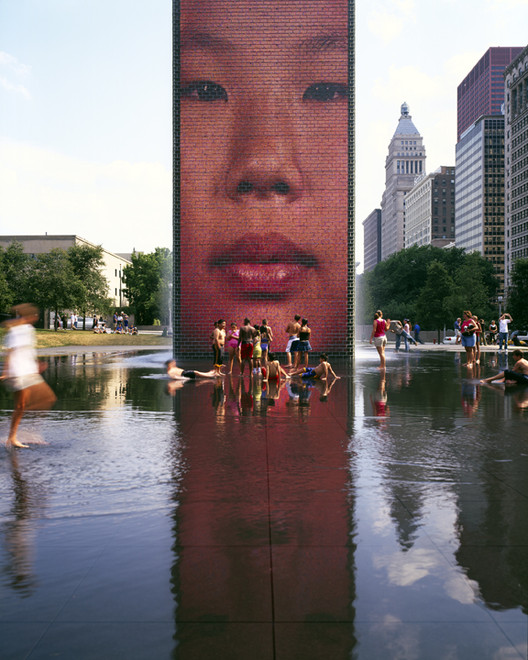
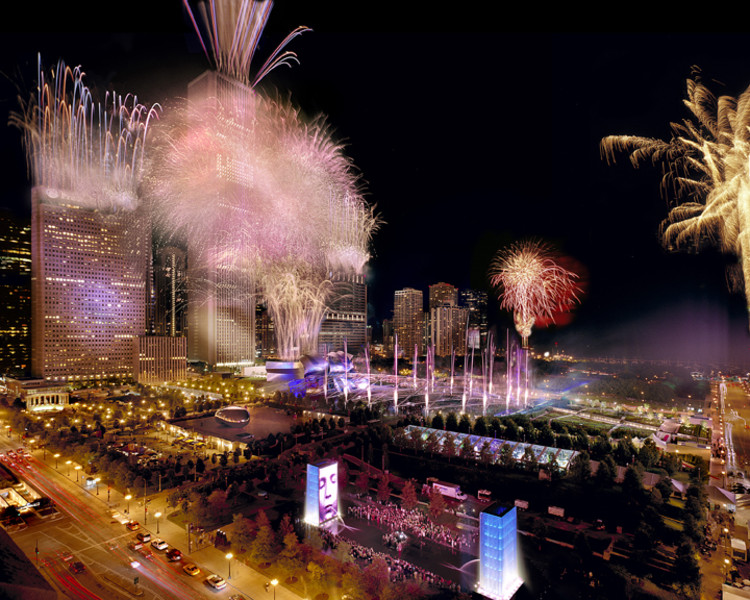
The Crown Fountain in Millennium Park is a gift to the people of Chicago by the Crown family. Located at the corner of Michigan Avenue and Monroe Street, this interactive piece is a poetic meditation on the elemental and sensual qualities of water and light. The world renowned Spanish artist Jaume Plensa was commissioned to create the work.
Architects: Krueck & Sexton Architects Location: Millennium Park Chicago, Illinois, USA Owner’s Representative: U.S. Equities Development MEP Engineers: Environmental Systems Design Structural Engineers: Halvorson + Kaye Water Feature Consultants: Crystal Fountains Video Art: The School of the Art Institute of Chicago Photographs: Cesar Russ, William Zbaren, Hedrich Blessing, Courtesy of Krueck + Sexton Architects, Courtesy of Millennium Park

Almost 39,000 photos from our Flickr Pool. Will we get there next by next week? As always, remember you can submit your own photo here, and don’t forget to follow us through Twitter and our Facebook Fan Page to find many more features.
The photo above was taken by aspheric.org in Berlin, Germany. Check the other four after the break.

What immortal hand or eye / Could frame thy fearful symmetry?
William Blake, The Tyger
Ehrlich Architects recently beat out Zaha, Foster, and Massimiliano Fuksas to win a competition for the UAE Federal National Councils Parliament Complex (UAEFNC).
Their winning design has received mixed reviews from the online audience. Many are laden with bile and downright hostile. I imagine these online critics spitting with dismissive contempt as they violently bang away at their keyboards. I usually stay clear of architectural scuffles, but in this case I’m making an exception.
Keep reading after the break.
Copenhagen-based architectural office MAPT is behind the concept and development of the first interactive bench; one that invites you to play, move and experience the urban space in a dynamic way. The bench that changes color and pattern as people pass by has sprung up in Copenhagen’s “Islands Brygge.” The design became possible with the collaboration with designer Sune Petersen.
Read on for more about The Playful Bench after the break.
But you can browse the last one: 417