Álvaro Siza Vieira’s birthday week just got even better, as he has been awarded the Golden Lion for Lifetime Achievement of the 13th International Architecture Exhibition. The decision was made by the Board of la Biennale di Venezia, chaired by Paolo Baratta, under Director David Chipperfield’s proposal. Siza will be honored at the Giardini of la Biennale, during the opening and award ceremony on August 29th, 2012.
“It is difficult to think of a contemporary architect who has maintained such a consistent presence within the profession as Álvaro Siza. That this presence is maintained by an architect that lives and works at the extreme Atlantic margin of Europe only serves to emphasize his authority and his status.”
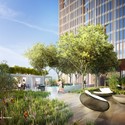
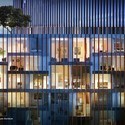
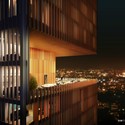
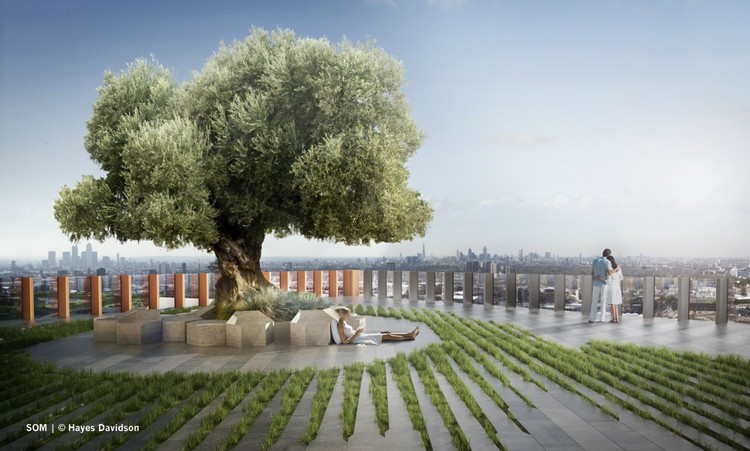
A triple height entrance lobby will welcome visitors to a world-class hotel, two restaurants, three sky gardens and a 248 unit residential tower, all with stunning views over Olympic Park. These are some of the key features offered in the newly unveiled plan for the 42-storey Manhattan Loft Gardens in London, designed by Skidmore, Owings & Merrill (SOM). It is planned to be built near the Stratford International Station – the gateway to the 2012 London Olympics. Completion is scheduled for 2014.
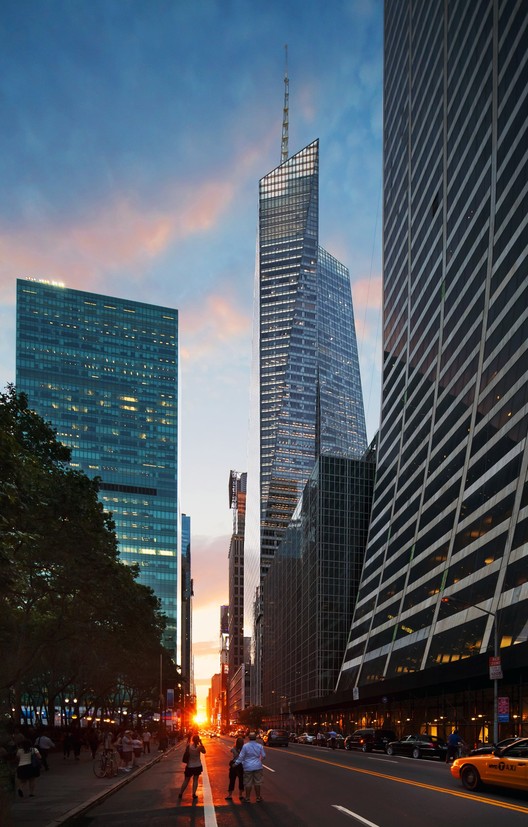
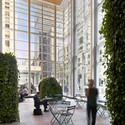
The Bank of America Tower at One Bryant Park in midtown New York, designed by Cook + Fox Architects, is the first commercial high-rise to achieve LEED Platinum certification. The design and high performance of this building is intended to set a new standard for commercial construction and for the office-work environment. By focusing on ways to emphasize daylight, fresh air and a connection to the outdoors, the architects redefine the parameters of the skyscraper as more than a glass box.
More on the strategies implemented in this project after the break.
The fifth anniversary of the Creative Spaces summer event highlights the creation of a pedestrian mall on St. Catherine, between St-Hubert and Papineau streets. Taking place until September 16, the event offers an opportunity for the instigator of the project, the Société de développement commercial du Village (SDCV), in collaboration with the Ville-Marie borough, to celebrate the thirtieth anniversary of the creation of Montreal’s Gay Village. The spaces will open up for the display of creative installations and art exhibitions. More information on the event after the break.
“Every second, 2.8 million emails are sent, 30,000 phrases are Googled, and 600 updates are tweeted. While being absorbed into this virtual world, most rarely consider the physical ramifications of this data. All over the world, data centers are becoming integral components of our twenty-first city infrastructure As cloud storage and global Internet usage increase, it’s time to talk about the physical space of data.” - CLOG (5)
What does it look like to give the virtual, physical form? As every CLOG edition, Data Space explores “from multiple viewpoints and through a variety of means, a single subject particularly relevant to architecture now” (5) and this subject, how to design “the infrastructure of invisible data” (103), could very well be the defining question of our age.
With the economic stability of Europe still uncertain, Dame Hadid has recently spoken out against ideas of austerity, warning the UK government that such a move would lead to poor quality projects for the country’s citizens. Hadid told Kath Viner of The Guardian, ”I think that austerity is used as a cliche because people don’t have ideas, they want to crib (old ones) to do bad stuff. Schools, housing, hospitals – I think the government should invest in good housing.” Hadid went on to explain, “”There needs to be investment. We need some sort of quality. All the privileged can travel, see different worlds, not everyone can. I think it is important for people to have an interesting local nearby. Buildings need to do another job, enlighten people, space enlightens the same way as music art and technology.”
Designed by Peter Ruge Architekten, the ‘Bambooline Berlin’ project, exhibited at Gallery DEN in Berline, explores the city’s urban development and proposes a new approach for the temporary, interim use of sustainable urban wasteland. This new, imaginary band complements the historically developed lines of the Berlin cityscape. More images and architects’ description after the break.
At the seventh edition of the International Architecture Festival from June 27-July 1, eme3‘s project brings back the action to the public space. They aim to recover the format of former editions and take back the interventions and organization of activities in different locations of the city center. These locations include some lots and spaces that were abandoned and fell into degradation. Their topic, ‘Bottom Up’, has a participation of around 50 participants coming from 17 countries. More images and architects’ description after the break.
The days of carrying around rolls of construction documents on site are in flux. The rapid change of both software and hardware has already dramatically changed the way architects, engineers, and general contractors communicate with each other. For those of you who do site visits on a regular basis, you are no doubt familiar with the relatively drawn out process the contractor has to take in order to get clarification on a detail or problem distillation – taking pictures of detail, scanning redlines, emailing to architect, etc. However, what if, and it is happening, you can bring out an iPad or similar device with all the drawings loaded ready to view in palm of your hand. Questions can simply be marked up right on the spot and instantly fired off for review or approval.
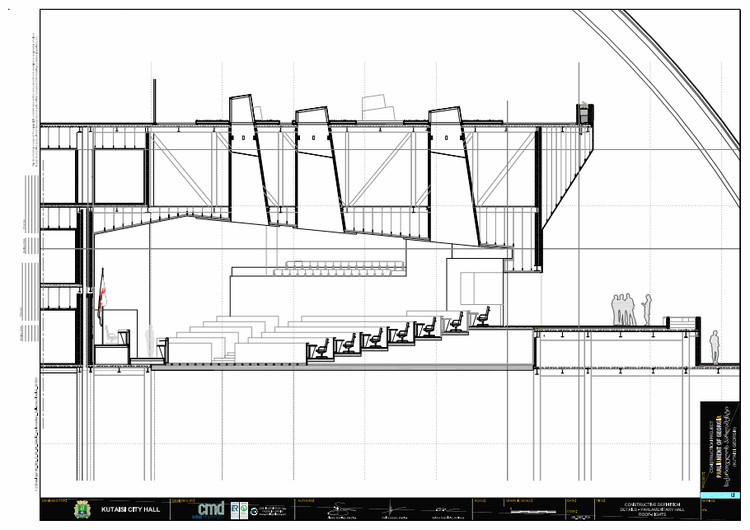
Architects: CMD Ingenieros Location: Kutaisi, Georgia Year of Construction: 2011-2012 Design Team: Alberto Domingo Cabo – PhD in Structural Engineering , Carlos Lázaro Fernández – PhD in Structural Engineering, Juliane Petri – Civil Engineer. Master’s Degree in Land Use Planning, Francisco Palacios Climent – Civil Engineer Client: Kutaisi City Hall Surface: 45,000 sqm Budget: 82,000,000 € Photographs: Courtesy of CMD Ingenieros
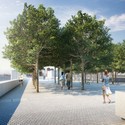
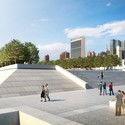
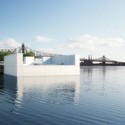
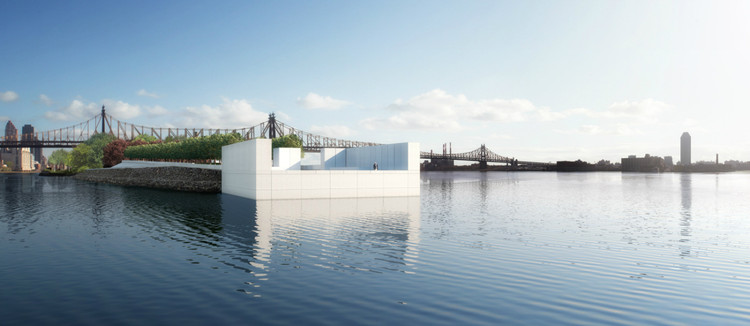
Nearly 40 years after Welfare Island was renamed to honor President Franklin D. Roosevelt (FDR), the Four Freedoms Park is nearly complete. The four-acre park, located on the southern tip of Roosevelt Island in New York City, honors the 32nd U.S. President and the four essential freedoms he believed in. The legendary architect Louis I. Kahn , FAIA (1901-1974) was commissioned to design the memorial in the early seventies and completed the design right before his unfortunate death in 1974. As New York City approached bankruptcy, the project was put on hold until March 29, 2010. Now, many are anxiously anticipating the park’s grand opening that will take place this Fall.
Continue after the break to learn about the story and design of Four Freedoms Park.
In an effort to make New York City’s built environment “more livable and hospitable” the Department of Design and Construction (DDC), Health and Mental Hygiene, Transportation (DOT), and City Planning have developed the Active Design Guidelines: Promoting Physical Activity and Health in Design to be referenced in conjunction with the DOT’s Street Design Manual and other guidelines produced by NYC. The guidelines are written for urban planners, designers and architects and are driven by the need to address health concerns such as obesity and diabetes through intelligent design. Our built environments give us cues as to how to inhabit them and have tremendous effects, sometimes subconscious, on our lifestyles. Do you walk, drive, or bike to work? Do you take the stairs or the elevator? We make these types of decisions, which are largely based on comfort, on a daily basis. But the guidelines established in this manual are intended to give designers the tools to encourage healthy lifestyle choices to address the social concerns of NYC. So, what can planners, architects and designers do to create an active and healthy city? Find out after the break.
As part of the 5th International Architecture Biennale in Rotterdam, Casanova + Hernandez Architecten will be putting on the ‘Can public space be used to regenerate urban life?’ roundtable discussion today, June 26 at 3:00pm.
This roundtable discussion is based on the one-year postgraduate studio entitled “Public Space Acupuncture”, that has been guided at the Berlage Institute by Helena Casanova and by Jesus Hernandez. An accompanying exhibition will open at 7:00 pm, remaining on view until Sunday, August 12. More information on the participants after the break.
Equilibrium shows a city of the future where all feelings have been suppressed in order to avoid war. Any means of expression that could urge a sensorial response is censored and terminated. Diversity and free thinking have been replaced by uniformity and an unquestionable authority of a “Father”, who guides lives in this new society. The entire city organization is prepared for accommodating spaces needed by the administration, including public space for citizens to congregate, and several kinds of facilities for control.
Do you think we could deal with this kind of cities in the future, or maybe they already exist? As always, we wait for you to enjoy it and let us know your thoughts in comments.
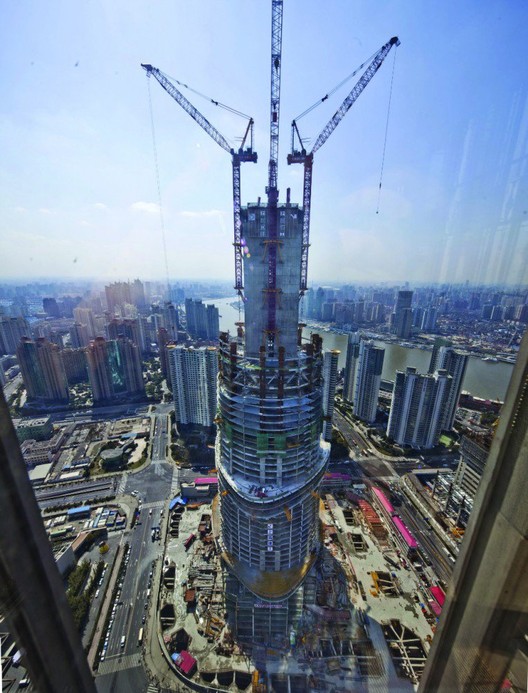
Yesterday, the final steel beam rose 977 feet into the air and was placed atop 4 World Trade Center – the 72-story tower designed by Pritzker Prize-winning Japanese architect Fumihiko Maki. As gospel singer BeBe Winans sang “God Bless America”, the 8 ton beam, signed by all members of the team and adorned with an American flag, reached its final destination atop the city’s sixth tallest tower.
At over 80 years of age, Maki is making his New York debut in an elegant manner. The tower was designed to serve as a “respectful backdrop” to the National September 11 Memorial and not to compete with 1 World Trade. ”This is a special place with a sacred meaning and we felt we had to be respectful,” explained Osamu Sassa, Maki’s project architect, to The New York Times. Such a ideology offers a strong contrast with the other architectural statements that will eventually rise as part of the World Trade Center complex, such as Norman Foster’s 2 World Trade and Richard Roger’s 3 World Trade. While the minimalism of Maki may have kept the design under the radar during its design and construction stages, the grace of its simplicity will craft a dignified presence while visiting the site. ”The design of the tower at 150 Greenwich has two fundamental elements – a ‘minimalist’ tower that achieves an appropriate presence, quiet but with dignity, and a ‘podium’ that becomes a catalyst for activating the surrounding urban streetscape as part of the revitalization of lower Manhattan,” explained Maki.
RETHINK REUSE, an independent group whose goal is to inspire discourse on the topic of reuse is inviting all to participate in their Transforming Seattle’s 520 Floating Bridge 2012 International Design Ideas Competition. The goal is to envision new, innovative reuse strategies. The 520 bridge will be decommissioned in 2014 due to high maintenance costs, damage, and the need for additional lanes. The Washington State Department of Transportation is requiring of the new bridge’s design-build team that it be reused or recycled in a sustainable fashion; current trends for the reuse of pontoons have been floating docks, breakwaters and piers, but what else could be done with such a feat of engineering? More information on the competition after the break.
In the video above, Simon King, lead MEP engineer for the King’s Cross Station Redevelopment by John McAslan + Partners, discusses the background and challenges that shaped Arup‘s unique lighting design for the new western concourse of this famous London railway station. The transformation of the station represents a compelling piece of place-making for the city of London.
The proposal for the Klaksvìk City Center by studio wok starts from a thorough study of the natural elements of the place and from a study of the context. The two qualities of the bay and the natural character of the isthmus are key factors in the project. The new masterplan for Klaksvík strives to build a new way of living in the open public spaces through “spatial ecology”: the project wants to restore continuity to residential space at all scales of the project, from the design of the sidewalk up to design of urban systems on a regional scale. More images and architects’ description after the break.
Architectural Record has published their annual list of the “Top 250 Architecture Firms” in the United States. The companies are ranked according to architectural revenue from the prior year. Gensler claimed the number one spot, with a record high of $764 million in revenue, over the long-standing leader AECOM, whom brought in $445 million in 2011.
Antoni Gaudí (1852 -1926), the Catalán architect best known for his whimsical style and his inimitable masterpiece, the still unfinished Sagrada Familia, would have turned a ripe 160 years old today.