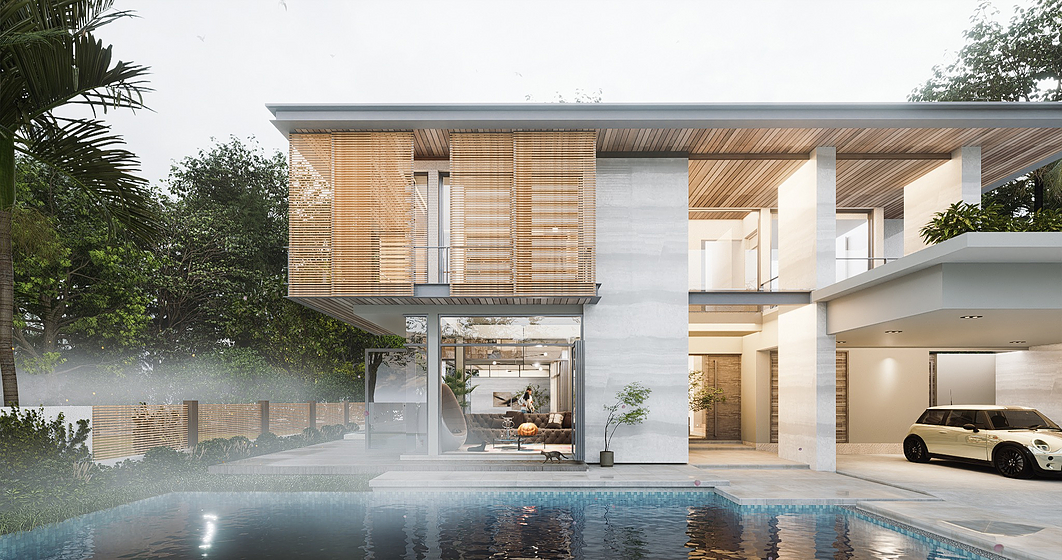
This guide shows how to use a D5 Render a free live-sync plugin to improve SketchUp workflow.


This guide shows how to use a D5 Render a free live-sync plugin to improve SketchUp workflow.
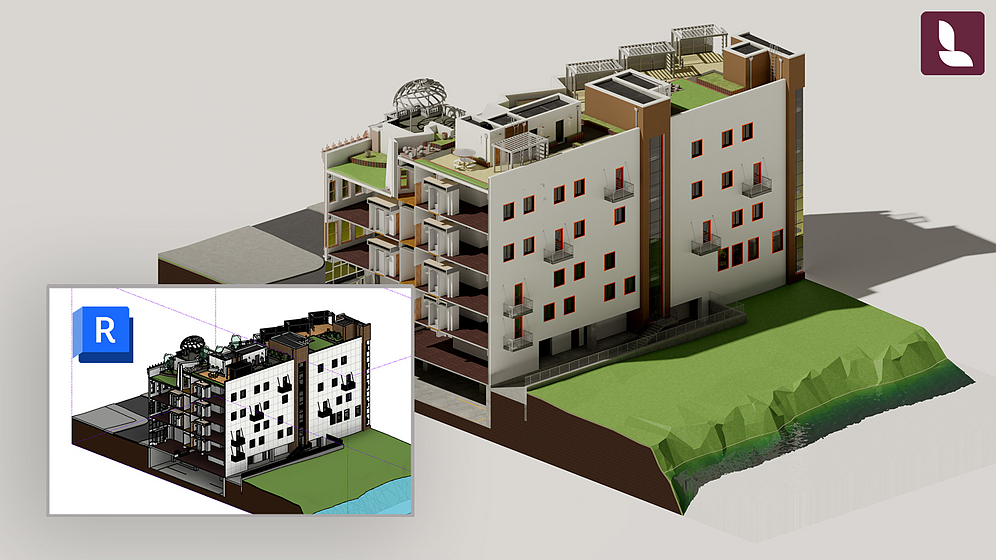
A real-time visualization, providing a realistic, immersive view of your model within your familiar BIM environment.

Grimshaw Architects have released submitted a proposal for a major commercial office development planned above the Crossrail station at Paddington in London. The 15-story structure, located at the junction of Bishop’s Bridge Road and the Grand Union Canal, will also provide retail space, a grand colonnade along the canal frontage, and a new entrance to the Hammersmith & City and Circle Line stations below.
Grimshaw Associate Director Declan McCafferty said: “We are delighted to be working once again with Crossrail on what is an exciting and challenging project. We have utilized all of our experience in both the commercial and transport sectors to create a scheme which will provide significant public realm improvements, while integrating the new station entrance and taxi ramp into a coherent and dramatic piece of commercial architecture.”
Continue reading for more.

For Taiwan’s seventh year at the Venice Biennale, the Taiwanese team will present Architect/Geographer – Le Foyer de Taiwan. The exhibition will embody the main theme of the 2012 Venice Architecture Biennale which is “Common Ground”. The aspects of Taiwanese culture and architecture will be presented through the perspective of a geographer as mapping that can uncover a new understanding of Taiwan through international eyes. The team is supervised by the Ministry of Culture, organized by the National Taiwan Museum of Fine Arts, and curated by Ke-Fung Liou. The exhibit will be displayed at Palazzo delle Prigioni.
Follow us after the break for more on the exhibit.

Draw Me a House is an interactive colouring book for children, budding architects and anyone interested in the built environment. Come on a journey across time and around the world. Color in, think about it , doodle and engage with architectural elements from Malian houses to New York skycrapers. Draw a new top on the Chrysler building, design a deluxe doghouse, color in a gargoyle and fix up the Parthenon.

The American Institute of Architects, California Council (AIACC) has announced the 2012 Design Award Recipients. Since 1982, AIACC has recognized excellence in architecture and design through the AIACC Design Awards Program. An esteemed Design Awards jury has selected these award winners out of 300 submittals. Continue after the break to review the projects!

Architects: Rojkind Arquitectos Location: Mexico City, Mexico Architects: Michel Rojkind, Gerardo Salinas Design Team: Alonso de la Fuente Obregón, Rafael Cedillo Sánchez, Phillip Schlauch, Birgit Hammer, Djurdja Milutinovic, Alfredo Hernández Soto, Rodrigo Medina, Juan Manuel Ortuño, David Stalin Vergara, Dolores Robles – Martínez Gómez,Isaac Smeke, Andrea León Project Year: 2012 Photographs: Courtesy of Guido Torres, Rojkind Arquitectos

So what exactly is BIMx and how can it be used? Graphisoft BIMx is an interactive 3D presentation tool that allows all the stakeholders in a project to have access to the building model, without requiring any specialized BIM skills. BIMx is a game changer that allows for innovation with the types of models created and the presentation/utility of these models.

The Architect, is not a renowned film. We have to admit that there’s not that much unique about it in terms of cinematography. However, for us the plot of this movie is quite relevant. The director uses an specific example, one built utopian residential complex in United States to illustrate the issues that were not considered during design of these uniformity-driven blocks.
Tell us your thoughts about this topic, and what is the kind of responsibility that relies on architects, or on the whole profession of architecture?

Sitting on the brink of a waterfall near Loddgard farm in central Norway, the sauna, designed by Formløs Architecture, is simple and sculptural. As if cut from one piece of wood, the sauna hovers one foot above the ground and stretches out over the water. The idea for the sauna came from a wish to bring festival guests together in an atmosphere where all social constructions from daily life can be forgotten and the opera singer from the capital sits shoulder to shoulder with the local farmer. More images and architects’ description after the break.

The proposal for the National Museum of Afghanistan by Paul Preissner Architects reconsiders the method of the museum, which is dedicated to collections of historic artifacts and archeological evidence of past cultural moments. By allowing for the collection to be endlessly linear, and removing the separations between items in an era, eras in a past, and pasts within a culture, the museum incorporates a significant number of breakthroughs. The architects do so in terms of the architectural design, the notion of a cultural campus and the design thinking on curatorial endeavors, to revolutionize the way a museum works today. More images and architects’ description after the break.
Keeping the material library organized is a difficult task for many architects, let alone keeping it up-to-date with the latest, most innovative materials. Well, today we stumbled on this video, by The Economist, that highlights Andrew Dent, vice-president of Material ConneXion, and his thoughts on the evolution of material science. Material ConneXion has created the world’s largest resource for advanced, innovative and sustainable materials and processes. Their online archive and material libraries, based in seven cities world-wide, feature over 6,500 of the world’s most cutting-edge materials that are all commercially available for use.
Andrew Dent believes Material ConneXion will help bridge the gap between science and design as we move from the “synthetic century” into a “biological century”, where intelligent, nature-inspired materials consume less resources and less energy.
As we reported yesterday, the LEGO Group, the company responsible for everyone’s favorite LEGO bricks, just turned 80. We’ve often talked about LEGO’s major impact on young architects’ development, but few are aware of architecture’s influence on LEGO… so we thought we’d keep the LEGO celebrations going by sharing this cute (if unabashedly cheesy) video on the birth of LEGO.


At a time when sustainability is high on the agenda and construction costs continue to soar, many Cambridge residents are questioning a proposal to demolish a sound and respected school building to replace it with a new school one that will strive to be a “green facility”. The Martin Luther King Elementary School (1968-1971) was designed by Catalan architect Josep Lluis Sert (Sert, Jackson and Associate). As it stands today, the school compliments the many other buildings in Cambridge that Sert worked on while also teaching at Harvard University, including the Peabody Terrace Graduate Housing complex just across the street.
Read on to find out what the community is doing to save the building from demolition and why it can prove to be a more sustainable option for the city.

Architects: Steve Domoney Location: Hawthorn, Victoria, Australia Architect In Charge: Steve Domoney Project Year: 2011 Photographs: Derek Swalwell

Alred Hitchcock (13 August 1899 – 29 April 1980), who would have turned 113 today, is often known as the “Master of Suspense.” But we here at ArchDaily would like to tweak that moniker slightly, to the Master Architect of Suspense.
Hitchcock, who actually worked as a set designer in the 1920s, not only maintained meticulous control over his film sets as a director (many of which were mounted in studio), but incorporated many architectural themes into the narratives themselves.
More on Hitchcock’s use of Architecture, after the break…

Although the UK has not shortage of architectural talent,Venice Takeaway: Ideas to Change British Architecture responds to David Chipperfield’s ‘Common Ground’ theme for the 2012 Venice Biennale by seeking out imaginative responses to universal issues worldwide in an ambitious global research project. The British Council sent ten architectural teams around the world to research inspiring places and subjects that could generate discussion on what is great architecture while injecting new ideas into the UK. The Venice Takeaway exhibition charts the course of these teams and shares the ideas they discovered throughout Argentina, Brazil, China, Germany, Japan, the Netherlands, Nigeria, Russia, Thailand and the USA.
Continue after the break to learn more.

Designed by Hans Hollein & Partner, the Tehran Stock Exchange aims to become a civic symbol that not only accommodates the stock exchange functions but also repents the practice in its entirety. As an architectural intervention, The buildings’ architectural nature allows it to become an identifiable structure within the urban fabric. The rectangular form of the office tower follows the homogenous surroundings, but the TSE´s façade is an innovative merger of two building envelope typologies and a strong contrast to any building in the vicinity: The window wall and the ceramic brick façade. More images and architects’ description after the break.

Architects: Massimo Fiorido Associati + sundaymorning Location: Marina di Castagneto Carducci, Tuscany, Italy Project Year: 2008 Photographs: Fabio Candido

Last week, we shared LCLAOFFICE‘s conceptual proposal for the Kiev Islands, a proposal which connected the urban with the natural through an activated network of activities. In their shortlisted entry for the Faroe Islands, the firm teamed with Lateral Office to relink the city of Klaksvik with both of its bays. Such a move allows the urban development, which has historically happened along the length of the bay, and the civic and public institutions, which have been concentrated in an urban corridor, to connect people with the water.
More after the break.

Gustafson Guthrie Nichol and Davis Brody Bond were recently announced as the winners of the National Mall competition for Union Square. As the country’s most visit park, attracting more than 25 million visitors annually, Union Square is the site of major historic events from presidential inaugurations to public gatherings and demonstrations. Located at the base of the Capitol, they were judged on the flexibility, sustainability, and creativity of their design and how well it reflects the established vision and design influences of this historic setting. More architects’ description after the break.

During the last few years the world has witnessed dramatic changes. Our world is no longer rural, economic models are struggling, and the centres of innovation and political power have shifted.
It is this context that explains why the recently held competition for the new Tehran Stock Exchange is relevant beyond the building. The Physical Development Research Center organized a competition between 29 top architecture firms, later narrowed down to eight after a RFQ process, who each worked with a local Iranian firm. In a country experiencing a very unique economic moment, the brief of the competition aimed to challenge the typology of the stock exchange in general, as well as factors that could alter this type to address cultural factors specific to its location. Thus, the firms were asked to look at how this program has developed throughout history while also undertaking a thorough analysis of the specifities of this project.
The jury was composed by local architects Mehdi Alizadeh, Farhad Ahmadi, Bahram Shirdel, Hossein Sheikh–Zeineddin and Nader Tehrani (MIT Head of Architecture, principal at NADAAA) as spokesperson.
Alejandro Aravena (founder of Alejandro Aravena Architects, Executive Director of ELEMENTAL) together with local office VAV Studio were selected as the winners for their artful, considered, and minimal, project; of the various proposals, it was the only project which took into consideration functions and forces, geometry and geography, and an organization that distributed its program in a field condition, evenly spreading its function to best capture, light, views, cross ventilation, as well as shade. In turn, it produces a timeless (yet fast-paced) character of the stock exchange as an institution, a building that extends broader traditions while mirroring the current state of its country.
Aravena’s entry stood out from the rest as it was conceptually distinct, aligned with the brief of the competition. Other highlights of this entry are its geometry, structural base, sensitivity to climate, and relation to its mountainous landscape, which are explained further in the architect’s description below:
A monolithic figure at a first glance, the building achieves a particular transparency thanks to the hollow blocks used on its skin, turning into a lamp that is transparent to the public.
The decision of the jury, while unanimous, is only a recommendation to the client, so we will keep you informed as the project moves forward.
Read the complete architect’s description, with renders and drawings, after the break:

AIA Detroit Chapter’s Urban Priorities Committee just launched their Detroit by Design 2012: Detroit Riverfront Competition, which is open to students and professionals world-wide. The project site consists of the area between Cobo Hall and the Renaissance Center and between Jefferson Avenue and the Detroit River. A distinguished group has been put together to judge the competition including Daniel Libeskind, Walter Hood, Reed Kroloff, Faye Alexander Nelson, and Lola Sheppard. With a prize of $8500, the winner will also win a trip to Detroit and a lecture at an AIA sponsored event. Proposals are due by 5:00 p.m. EST on November 30. An accompanying symposium is scheduled for Thursday, December 6, 2012. To register and for more information, please visit here.

Architects: ART & BUILD ARCHITECT Location: City of Brussels, Belgium Project Year: 2010 Project Area: 9,600 sqm Photographs: Courtesy of Art&Build
But you can browse the last one: 417