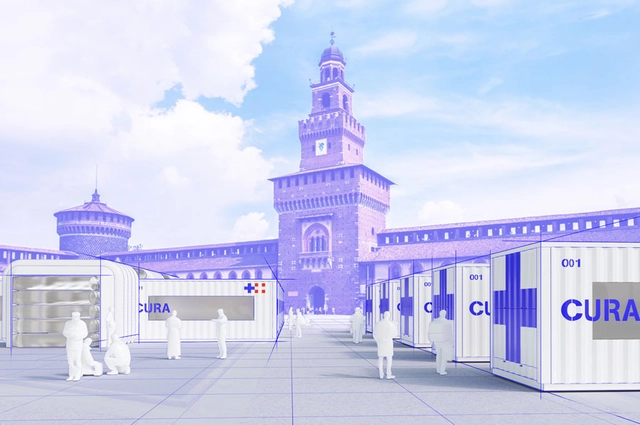
CURA pods. Image Courtesy of Carlo Ratti Associati
As the global health crisis continues, architects and designers are putting their expertise, technical capabilities and research skills in the service of the fight against the coronavirus. Metropolis Magazine has gathered together a list of several companies and their different initiatives for helping out in this novel situation. From 3d-printing personal protection equipment for medical staff, to designing modular intensive care units, and researching steps for converting buildings into hospitals, the creative community is bringing its own contribution to the efforts of tackling the pandemic.
The incorporation of new technologies into architectural designs has been expanding design possibilities over the last few years. Automation in construction processes can be used both in large scale city strategies, and smaller-scale demands like in the construction of residences. One of the more recent ways that technology has been integrated into the design of workplaces is through the incorporation of artificial intelligence, which uses data that can “teach” the machines how to work in several levels of autonomy.
Many of us have already lived, or are currently living in, some sort of shared community housing. Whether it be from a college experience of living in a dormitory or a retirement community filled with other senior citizens, the loosely defined, yet increasingly popular concept of co-living has taken on many forms in society. The co-living market giants, including WeLive, Common, and Ollie, center themselves around participating in a shared economy, offering a financially sensible housing solution, and fostering meaningful social connections. As we continue to battle the COVID-19 pandemic and adapt to the enforcement of social distancing and stay-at-home mandates, co-living tenants have felt compelled to navigate the loopholes in the designs of their communities in order to discover new ways of living with others, while also mitigating health risks. In fact, co-living communities may be better positioned to handle a pandemic while balancing a sense of normalcy more so than traditional residential real estate offerings.
It's no secret that adobe is one of the most widely utilized materials in construction. For centuries, it has been the go-to material for civilizations worldwide thanks to its aesthetic qualities and durability. Today, we continue using earthen materials like adobe for a wide array of building projects; however, to obtain optimal results, one cannot ignore the art and skill required in brickmaking. For many in the trade, it's a craft that has been passed down generation after generation.
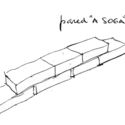
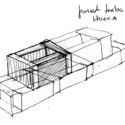
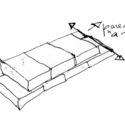
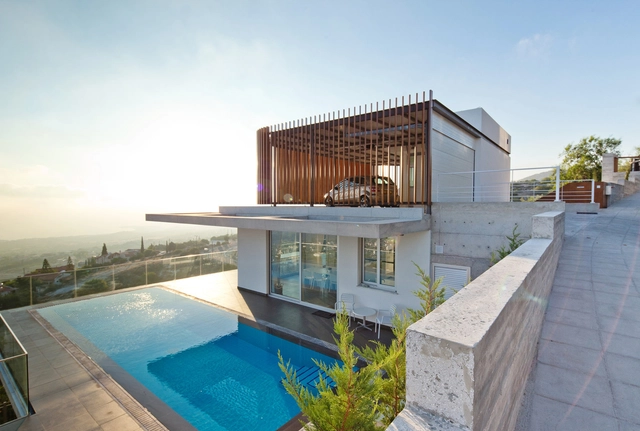
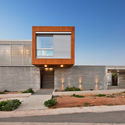
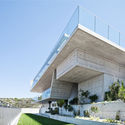
The architecture of Cyprus has been defined by larger geopolitical forces throughout history. Located in the Eastern Mediterranean, the island country is shaped physically and socially by the Cyprus dispute. Dating back to the bronze and iron ages, its architecture has been influenced by the Greeks, Assyrians, Egyptians, Persians, and Romans. Today, new homes are built across the island that reinterpret past building methods and construction techniques.
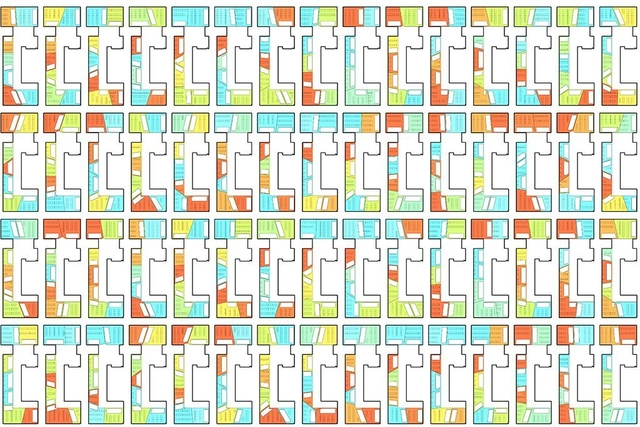
Trial and error. On a napkin, on tracing paper, or on a black CAD background, much of an architect's work is to make and redo lines, shapes, objects, and images. Discard, start over, repeat. Between an initial idea and a final project is a long and exhausting path. This difficulty lies in the root of designing as a process of making infinite decisions, where a change can influence countless other elements and consequently is an exercise in choosing benefits and concessions. These choices can take a number of forms, from determining how much area to cover while minimally impacting the environment to fitting as many work tables in an office as possible without losing good circulation. Each require many studies or considerations to arrive at the most suitable option. For example, the position of a window, even if it looks great on a the façade, can make the location of the bed in a dormitory unfeasible or increase the building's energy consumption.
Of course, there are always tight deadlines and budgets throughout any project, with the client often in a hurry and willing to devote limited time to thinking about every possible combination or the precise appropriateness of each decision. This stage is where, increasingly, the concept of Generative Design has appeared in architecture.
As Artificial Intelligence has become one of the most significant forces driving innovation and economic development, this societal transformation requires new knowledge and an additional set of skills. Just as knowing a BIM software has become a prerequisite for most architecture jobs, understanding or even knowing how to use AI-related tools would become a desirable asset, if not a requirement in the future. However, with a vast array of information available, how does one begin to venture into this topic? The following is a compilation of online resources, lectures, and courses, that could provide a better understanding of the field and how to incorporate it into the practice of architecture.
With the recent release of Twinmotion 2020, you can now create even more convincing visualizations and immersive experiences from your CAD and BIM models. In addition to a huge boost in realism, one of the most significant areas of improvement in the new release is project review, with a range of features for fast BIM design review and presentation.
Yesterday, on the 20th of April, we passed the cap of 111 days of the pandemic. During this time, we’ve been busy fighting in supermarket aisles over toilet paper in Australia, lining up for marijuana purchases in Amsterdam and boosting gun demand in the USA. We are conscious none of those will help in fighting the virus, but we do it, nonetheless. Beyond the bizarre human psyche, this pandemic unveils interesting trends that will, whether we like it or not, impact on Architecture and Cities.
https://www.archdaily.com/937928/introducing-an-illustrated-series-architecture-and-cities-post-virusZaheer Allam, Gaetan Siew and Felix Fokoua
During the academic formation process, beginner architects are educated and trained to develop projects on the most “traditional” software. Several reasons might explain that: the partnerships that these companies usually make with the university labs, the lack of time to learn a new program, or the culture to use the most popular software.
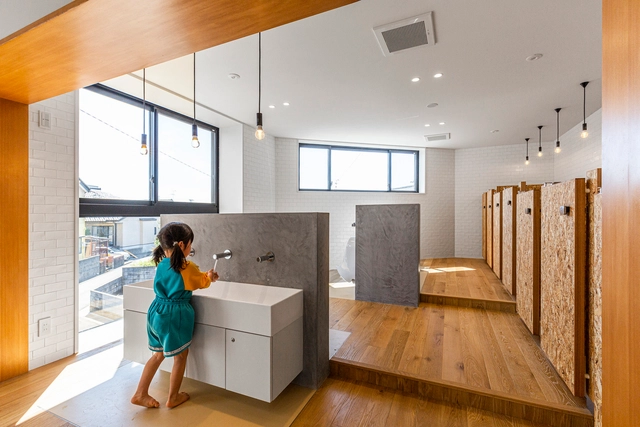
We often use the term accessibility when designing spaces for the elderly or for people with special needs. However, to guarantee effective universal design for children, it is necessary to understand and cater to their specific needs as well, especially through ergonomics, safety, lighting, colors, and some particular accessories. In this article, we will cover the most important parameters to consider when choosing dimensions and materials in public bathrooms for young children.
The impact of COVID-19 has disrupted daily life as we know it and caused a shift in technology trends within the workplace. Over recent weeks, businesses have found themselves hastily searching for and implementing temporary solutions to help them deliver an uninterrupted service. These solutions are highlighting the significant role technology plays in helping companies adapt to the situation and maintain daily operations. But what happens once the crisis is over?
Intro GPS systems and Location Based Services give access to an important amount of data that is currently being used mostly for traffic analysis - but which, if properly processed, could open up infinite possibilities for planning.The access to these Mobility Big Data is no longer a privilege of large cities; on the contrary, it is possible to effectively apply the technologies to increasingly more diverse territories, from mega-regions to contained districts and cities. These data, when retrospectively compared to previously collected ones, lend themselves to multiple applications loosely related to the traffic issue, such as socio-demographic or economical studies. Systematica opens the doors of its laboratory to show us what are the potentials and limits of these tools, starting from a direct experience - a research project, developed in the Los Angeles area.
For the 2019 Shenzhen Biennale of Urbanism\Architecture (UABB), titled "Urban Interactions," (21 December 2019-8 March 2020) ArchDaily is working with the curators of the "Eyes of the City" section to stimulate a discussion on how new technologies might impact architecture and urban life. The contribution below is part of a series of scientific essays selected through the “Eyes of the City” call for papers, launched in preparation of the exhibitions: international scholars were asked to send their reflection in reaction to the statement by the curators Carlo Ratti Associati, Politecnico di Torino and SCUT, which you can read here.
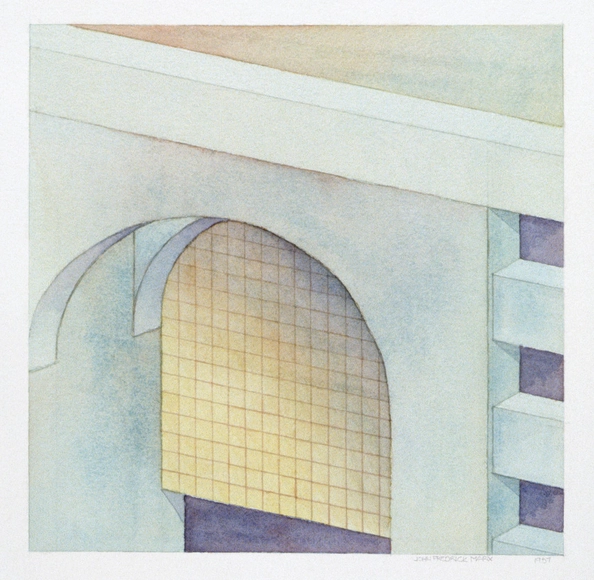
Etudes is a rare thing amongst architecture books. Its subject is neither built nor unbuilt projects but instead imaginary places and abstract compositions by San Francisco architect John Marx. Rendered in delicate watercolours, Marx’s places are dreamlike and akin to the structure and sentiments of his taut poetry that sits alongside pages of his paintings.
Curiously, the quiet streets and vacant landscapes of Marx’s imagination speak to us in an acutely timely fashion as we find ourselves in a new world of empty cities closed for business, a world that feels as if it has come to a standstill.
Hashim Sarkis, the curator of the 17th International Architecture Exhibition organized by La Biennale di Venezia, launched a striking visionary theme at the beginning of this year: “How will we live together?”. This fundamental question finally transcends all disciplines and opens an existential portal for humanity. It does not refer only to humans but all species, the nonhuman organisms as well.
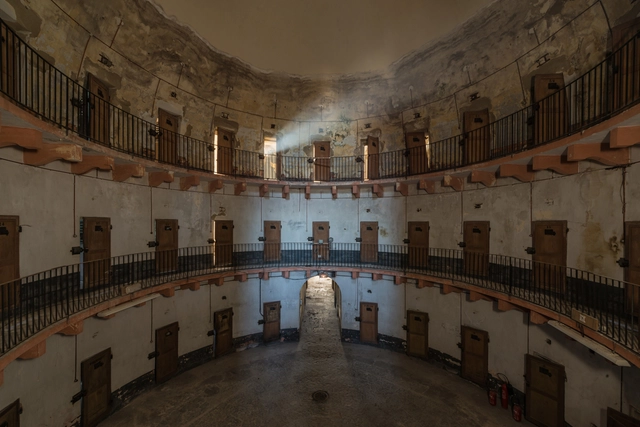
An expression of power and a symbol of surveillance, the panopticon is a notorious architectural concept intended as a disciplinary mechanism. Photographer Romain Veillon shares his images of the Panopticon-inspired prison in Autun, France.
Architects throughout the modern era have displayed their fantasies through their designs and their obsessions with how women have inhabited them. Take for example Corbusier’s infatuation with Eileen Gray and her home, E. 1027. Plagued with unconfirmed tales of how he broke into her home to paint murals on the white walls, he was also known to publicly downplay the home's design, while conversely praising it in a series of unreciprocated love letters to Gray. In the same vein, while Adolf Loos stood firmly against architectural decoration, he perhaps supported the elegance of women acting as a human ornament, an assumed notion in his envisioned home for the French Entertainer, Josephine Baker. The unbuilt proposal took on the form of a black and white striped solid which located a glass pool at the center of the space, forcing Baker to catch the male gaze of other occupants.
The relationship of sensuality and space doesn’t stop with the provocative desires of these three men, but lives on in one of the world’s most famous publications, Playboymagazine. Perhaps best known for its significance as a vanguard in the sexual revolution with its promotion of masculinity, the magazine also illustrated a showcase of swanky glass bachelor pads standing high above Beverly Hills that pushed forward a debonair lifestyle punctuated by modern design. As a generator of a glamorized lifestyle, the magazine highlighted architectural titans including Mies van der Rohe, Bucky Fuller, and Eero Saarinen, and made them palatable to a general audience.
In the midst of a pandemic that has already affected 184 countries and infected more than a million people around the world, we seek to cover all topics that relate the coronavirus within architecture and space, and ways to make social distancing less painful.