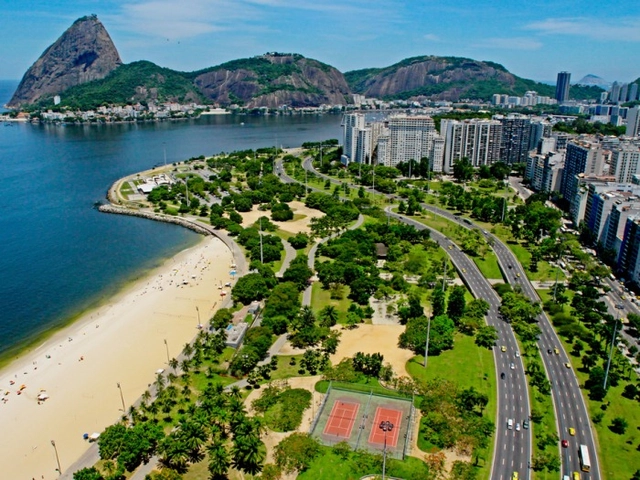
The Council of the International Union of Architects (UIA), meeting in Oaxaca, Mexico, unanimously approved on May 18 the nomination of the city of Rio de Janeiro as the UIA/UNESCO World Capital of Architecture for 2020. Securing this title is part of the program proposed by the City of Rio, with support from the Institute of Architects of Brazil (IAB), for 2020, when the city will host the 27th World Congress of Architects.
Paraty, RJ. Photo: Chaval Brasil on Visual hunt / CC BY-NC-ND
With the aim of promoting the care and recognition of cultural heritage, the Cultural Heritage Law Research Group of the Federal University of Ouro Preto (UFOP), the Technical Office of the National Institute of Historic and Artistic Heritage (Iphan) in Ouro Preto (MG), and the Public Ministry of Minas Gerais (MP-MG) have developed the Manual for Residents of Heritage-Listed Houses.
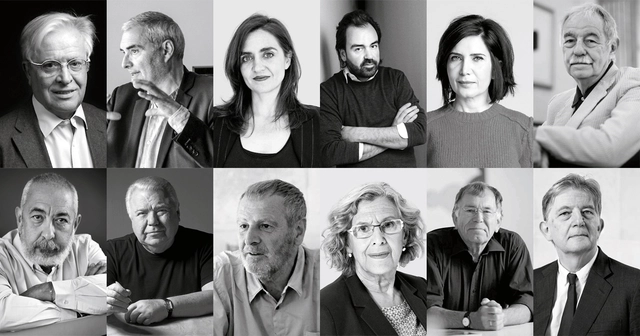
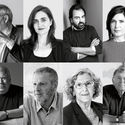
Protagonistas del V Congreso Internacional de Arquitectura y Sociedad. Image Cortesía de Fundación Arquitectura y sociedad
Yesterday, June 13, marked the opening of the 5th International Congress of Architecture and Society, an event presided over by King Felipe VI for the second consecutive edition. The President of the Government of Navarra, Uxue Barkos, and the Minister of Development, José Luis Ábalos, also participated in the official opening.
Architect Francisco Mangado was responsible for opening the event, which in its fifth edition will focus on cities and the challenges architecture faces in addressing urban demands. The architect from Navarra stated that “Architecture is not an isolated event of personal preferences; it is a profoundly cultural and social act, linked to the city as a reality that belongs to the common good,” adding that “the quality of architecture and the city is not a luxury, it is a right for all citizens.”
https://www.archdaily.com/1113864/francisco-mangado-opens-the-v-congress-of-architecture-and-society-the-quality-of-the-city-is-not-a-luxury-it-is-a-rightJavier García Librero
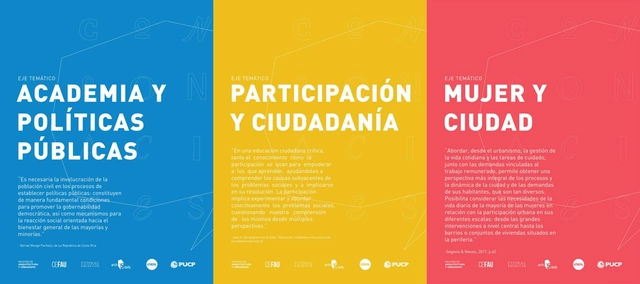
Most committed architecture students will agree that as the years of learning go by, a growing urge arises to speak up, express ourselves, and mobilize in different ways to bring the architecture we study in school to life. This spark is further ignited in a country where development is largely controlled by private interests rather than public ones, and where, above all, deep inequality persists amidst vast potential diversity. Outraged, our voices are increasingly being heard as citizens. We are stepping out of the classroom, seeking dialogue, marching more frequently, and carving out new paths to intervene in and transform our social reality. And we realize, or rather, we return to the natural understanding of our political role within architecture.
AA48 – Responsive Archipelago. Image Cortesía de TU Delft
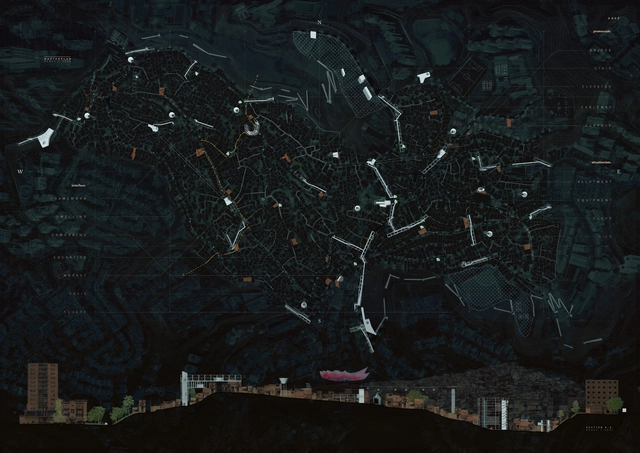
Twenty proposals for informal settlements from Brazil to Bangladesh have been awarded in Confronting Informality, the first edition of the competition organized by TU Delft's Department of Urbanism, alongside universities from around the world.
Launched last April, this ideas competition addresses the challenge of urban settlements based on the principles of the New Urban Agenda. Through their projects, architecture and urban planning students from all over the world answered the following question: how can we create healthy, safe, and resilient environments in informal settlements while simultaneously preserving social networks and a sense of community?
"We live in an urban world, but explosive, unplanned urbanization processes in developing countries mean that new informal settlements are growing in population and size—often without infrastructure, access to sanitation, or quality public spaces," the organizers explained in the competition brief.
The millions of cars, trucks, and buses on São Paulo's roads account for over 90% of all air pollution. With residents spending up to five hours a day commuting, the metropolis is constantly gridlocked. To address this, What Design Can Do and the IKEA Foundation are calling on creative professionals from around the world to develop radical, innovative solutions for more sustainable flows of people and goods in the city.
The 5th Lisbon Architecture Triennale has announced its title and theme: “The Poetics of Reason.” This title asserts that, despite its subjective and non-scientific dimensions, architecture is grounded in reason, and its goal is to shed light on the specificity of this rationality. Indeed, a foundation in reason and rationality is essential for understanding architecture—making it accessible to everyone, not just architects.
The city of Barcelona remains firm in its fight against speculation and gentrification, which are currently widening the inequality of opportunity for residents seeking access to decent and affordable housing.
To address this, Barcelona's Commission for Ecology, Urbanism, and Mobility has initially approved two new urban planning tools to tackle the housing accessibility crisis and protect the social balance of its neighborhoods. These measures respond to the demands of organizations such as the Federation of Neighborhood Associations of Barcelona (FAVB), the Mortgage Affected People's Platform (PAH), the DESC Observatory, the Neighborhood Assembly for Sustainable Tourism (ABTS), and the Tenants Union.
https://www.archdaily.com/1113887/barcelona-to-increase-social-housing-construction-in-its-fight-against-gentrificationJavier García Librero
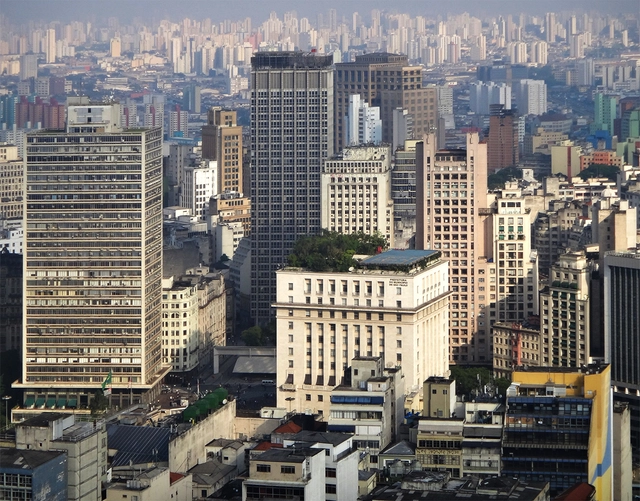
The tragedy of the fire and collapse of the Wilton Paes de Almeida building in downtown São Paulo prompts this statement from the Council of Architecture and Urbanism of Brazil on the social and urban challenges affecting not only the state capital but most of the country's major cities.
At the core of this tragedy is the social drama of the victims' families and the thousands of people living in other occupied buildings under precarious conditions across major Brazilian urban centers. The loss of a modernist building of cultural value adds another layer of loss.
Finding the right block for your project can be a tedious task; although websites offering blocks are becoming increasingly common, the sheer quantity does not always reflect the quality of the models and textures.
With this in mind, the creators of the platform Arq Onlinehave made a package of blocks and textures available for free on their website, useful for both architects and students. With over 100,000 items available for download, the package caters to users of AutoCAD, Revit, SketchUp, 3D Studio Max, VRay, and Photoshop.
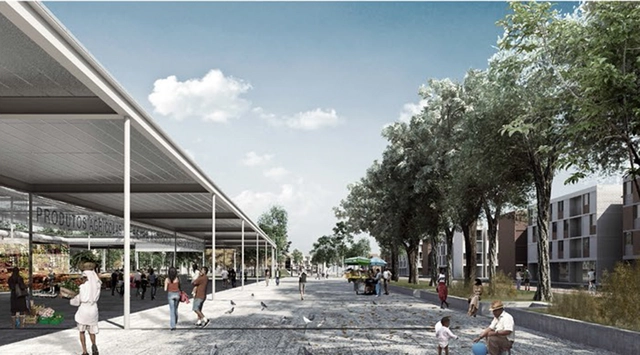
The Housing Development Company of the Federal District (CODHAB/DF) continues to release the results of design competitions, establishing itself as a benchmark for institutions across the country by holding competitions to ensure high-quality construction through a clear and democratic selection process for the most qualified technical, scientific, or artistic proposals. This latest edition features the National Public Urban Planning and Architecture Design Competition for the QNR 06 Housing Sector, in the Administrative Region of Ceilândia.
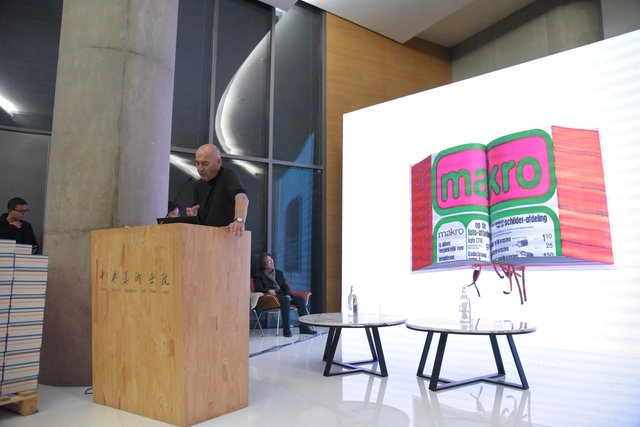
On the evening of November 2, Rem·Koolhaas held a book launch for Elements of Architecture at the Central Academy of Fine Arts (CAFA). Hosted by Dean Zhu Pei, the event featured a roundtable discussion with artist Xu Bing, Mohsen·Mostafavi (Dean of the Harvard Graduate School of Design), and Stephan·Petermann, the book's editor. Koolhaas opened with a brief presentation introducing the book and the journey behind its publication. During the panel, the speakers engaged in an in-depth discussion on architectural details, differences between Eastern and Western book cultures, and the relationship between books and space. Below is a recap of this remarkable event.
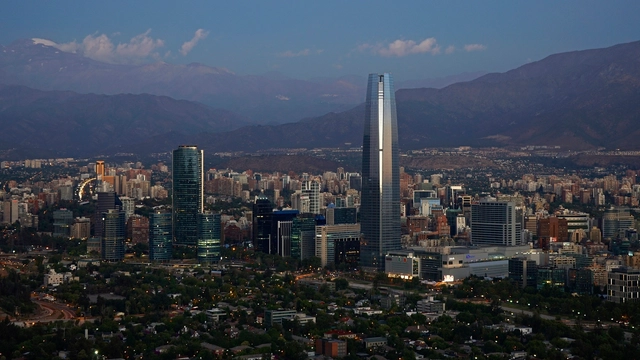
Santiago, Chile. Image via Flickr User: alobos Life. Used under CC BY 2.0
The first American Institute of Architects Committee on Design (AIA COD) Conference in South America will take place in the cities of Santiago and Valparaíso, Chile, from October 20 to 27, 2018. The event is organized by the Copperbridge Foundation in collaboration with the Chilean organizations Constructo and Massantiago.
The architecture of Santiago, Chile—inherited from the colonial era but connected to a contemporary design vision—will take center stage at the conference, providing a global perspective on “Blueprint for Better Cities,” the AIA's theme of the year chosen by its president, Carl Elefante.
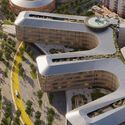
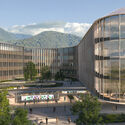
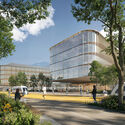
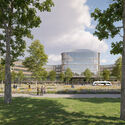
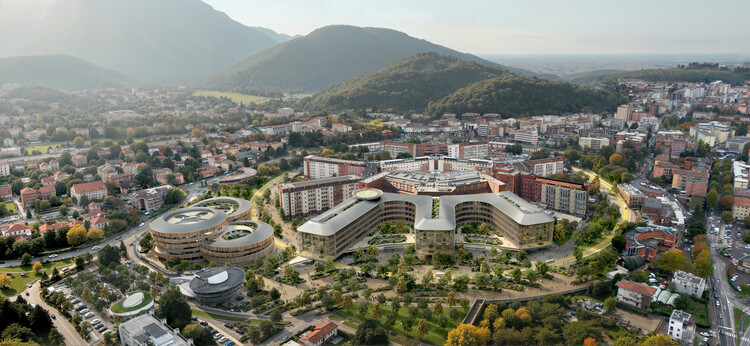
The project developed by CRA-Carlo Ratti Associati, Park Associati, Politecnica Building for Humans, Openfabric, DOTDOTDOT, Studio Mattioli, and Eckersley O'Callaghan has been selected to design the new Main Hospital and Children's Hospital in Brescia, Italy. The international competition mandate was to redevelop an existing hospital, preserving and extending a radial plan conceived by engineer Angelo Bordoni in the early twentieth century. The existing healthcare complex, Spedali Civili di Brescia, follows a hexagonal masterplan and radial layout that informs the new design for the premises. The geometry is reinterpreted to update the campus for future models of care, drawing a new CareRing around it that connects people, nature, and healthcare through the principles of One Health, the idea that human health, environmental health, and social wellbeing are inseparable.
Recent events highlighted the many ways architecture responds to changing environmental, social, and cultural conditions. Major earthquakes in Venezuela, Japan, and Northern California renewed attention to the role of planning, infrastructure, and building practices in shaping resilience to natural hazards. As these questions continue to inform the built environment, the opening of the 2026 UIA World Congress of Architects in Barcelona brought together practitioners and researchers to discuss climate, housing, public space, and the future of the profession. Recent project announcements, preservation initiatives, completed works, and new design tools further reflected the range of approaches shaping architectural practice today, from heritage conservation and adaptive reuse to environmental performance and long-term planning.




.jpg?1536593816&format=webp&width=640&height=580)