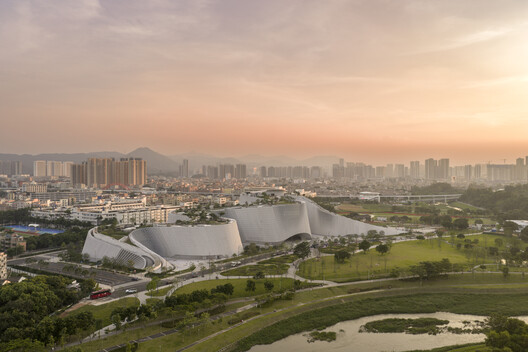
Designed by the 3XN, B+H Architects, and Zhubo Design consortium, the Shenzhen Natural History Museum has opened to the public in Shenzhen, China. Covering more than 100,000 square meters, the institution is the largest natural history museum in South China and among the largest recently completed museums of its kind worldwide. Developed as part of Shenzhen's expanding cultural infrastructure, the project brings together exhibition, research, education, and public space within a single civic destination. 3XN led the architectural design, B+H Architects served as lead consultant, executive architect, and landscape architect, and Zhubo Design provided local technical expertise and regulatory coordination throughout the project's development.
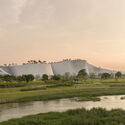
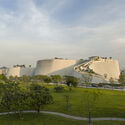
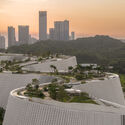
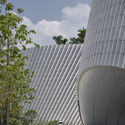
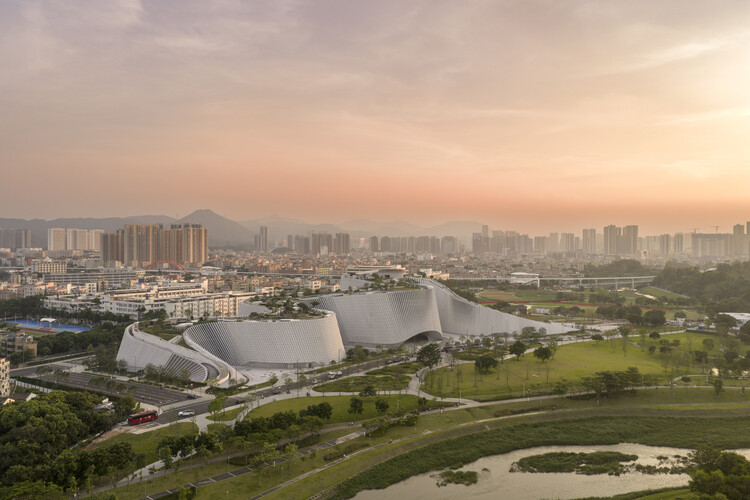
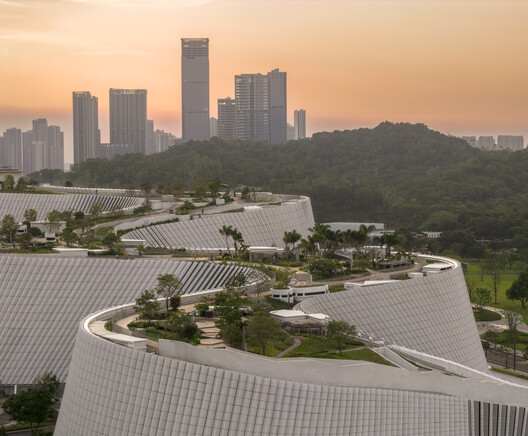
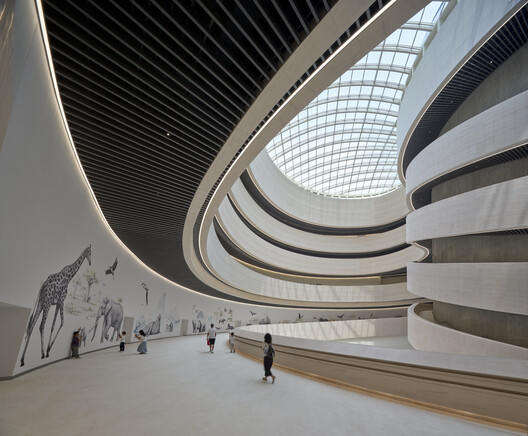
Situated beside Yanzi Lake, the museum is organized as a continuous landscape that integrates the building with its surrounding river-delta environment. Rather than presenting a distinct architectural object, the project extends the site's topography through a publicly accessible roofscape of sloping surfaces, terraces, and plazas that connect the museum to the adjacent park. The granite-clad envelope draws references from the geology and hydrology of the region, while a series of openings introduce natural light into the interior and reveal portions of the exhibition spaces. Five conical volumes structure the museum's primary galleries, defining its internal organization and establishing a sequence of circulation spaces, courtyards, and viewing points that connect visitors with both the exhibitions and the surrounding landscape.
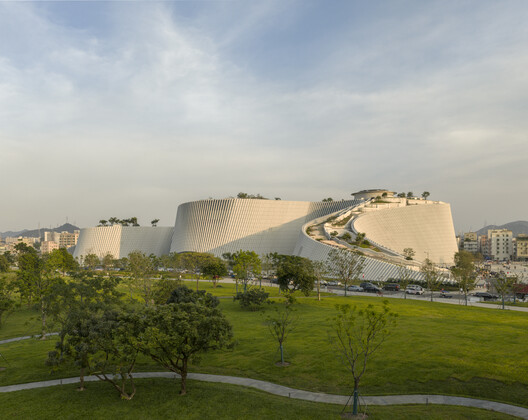
The permanent exhibition is organized across eight thematic galleries that trace the history of the Earth from the formation of the universe to contemporary ecological systems. The displays include fossil, mineral, botanical, and zoological collections alongside multimedia installations and large-scale exhibition environments that place global natural history within the context of South China's landscapes and biodiversity. Exhibition design was developed in collaboration with Atelier Brückner and Museum Studio, with the architecture and scenography conceived as an integrated spatial experience. The museum's curved geometries and vertical volumes inform both circulation and exhibition design, allowing the galleries to unfold as a continuous sequence rather than as a series of isolated rooms.
Related Article
Guggenheim Abu Dhabi by Frank Gehry To Open in December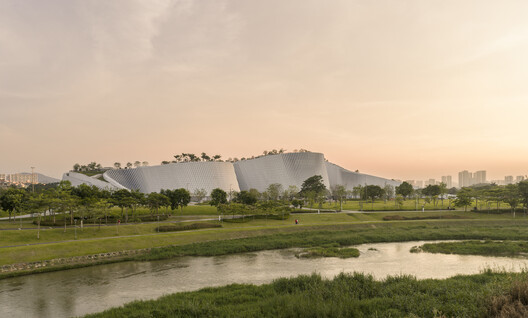
The project is the result of a collaboration between international and local teams, combining design, engineering, landscape, exhibition planning, and technical coordination throughout its development. According to the architects, the project sought to preserve the spatial and conceptual qualities of the original competition-winning proposal while responding to the technical requirements of a building of this scale and complexity. With its opening, the Shenzhen Natural History Museum expands the city's network of cultural institutions while introducing a new public landscape that extends beyond the museum's exhibition program, positioning the building as both a destination for scientific learning and a year-round civic space.
In related museum news, Abu Dhabi's Department of Culture and Tourism has announced that the Guggenheim Abu Dhabi, designed by the late Frank Gehry, will open on December 11, 2026, becoming the fourth institution in the Guggenheim network. In Ecuador, an international team led by SANAA has been selected to design the new Museo Nacional del Ecuador (MuNA) in Quito. Meanwhile, the Crystal Bridges Museum of American Art in Arkansas has unveiled the expansion by Safdie Architects and Coen+Partners, adding new galleries, educational spaces, and landscape connections to its campus.