
For years, advances in architectural visualization have been measured by image quality. Physically accurate lighting, sophisticated material systems, and real-time rendering have made photorealistic imagery an industry expectation. Yet architectural practice has evolved in a different direction.
Today, clients, consultants, engineers, and design teams contribute earlier and more frequently throughout the design process. Design reviews no longer simply present decisions. They increasingly become part of how those decisions are made.
Still images, animations, and fixed camera paths communicate proposals effectively, but they also capture a project at a single moment in its development. As discussions move toward alternative materials, revised design options, or different environmental conditions, additional visual material often has to be prepared before the review can continue.
The challenge is no longer simply producing better images. It is keeping visualization connected to the design conversation.
From Sequence to Conversation
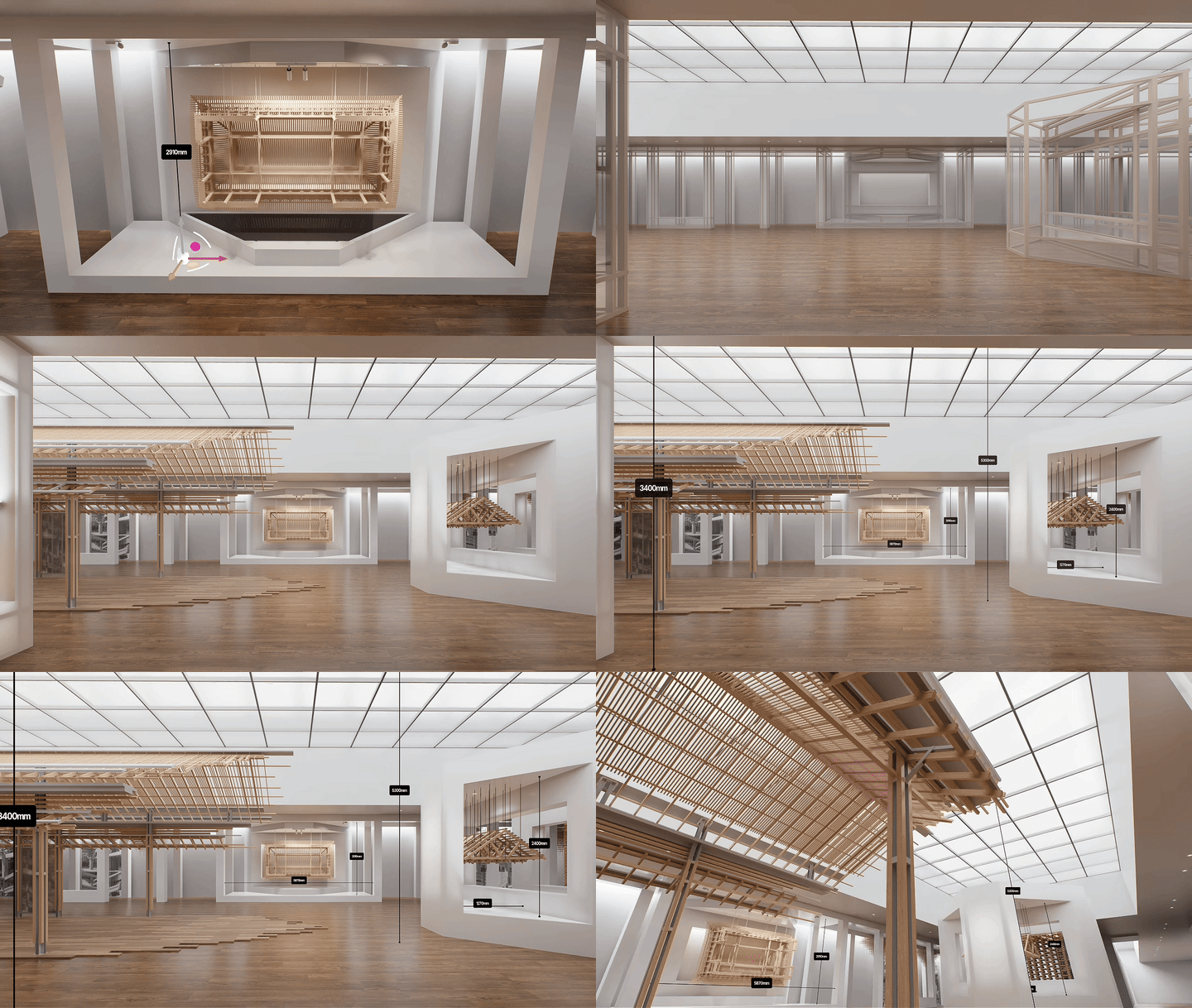
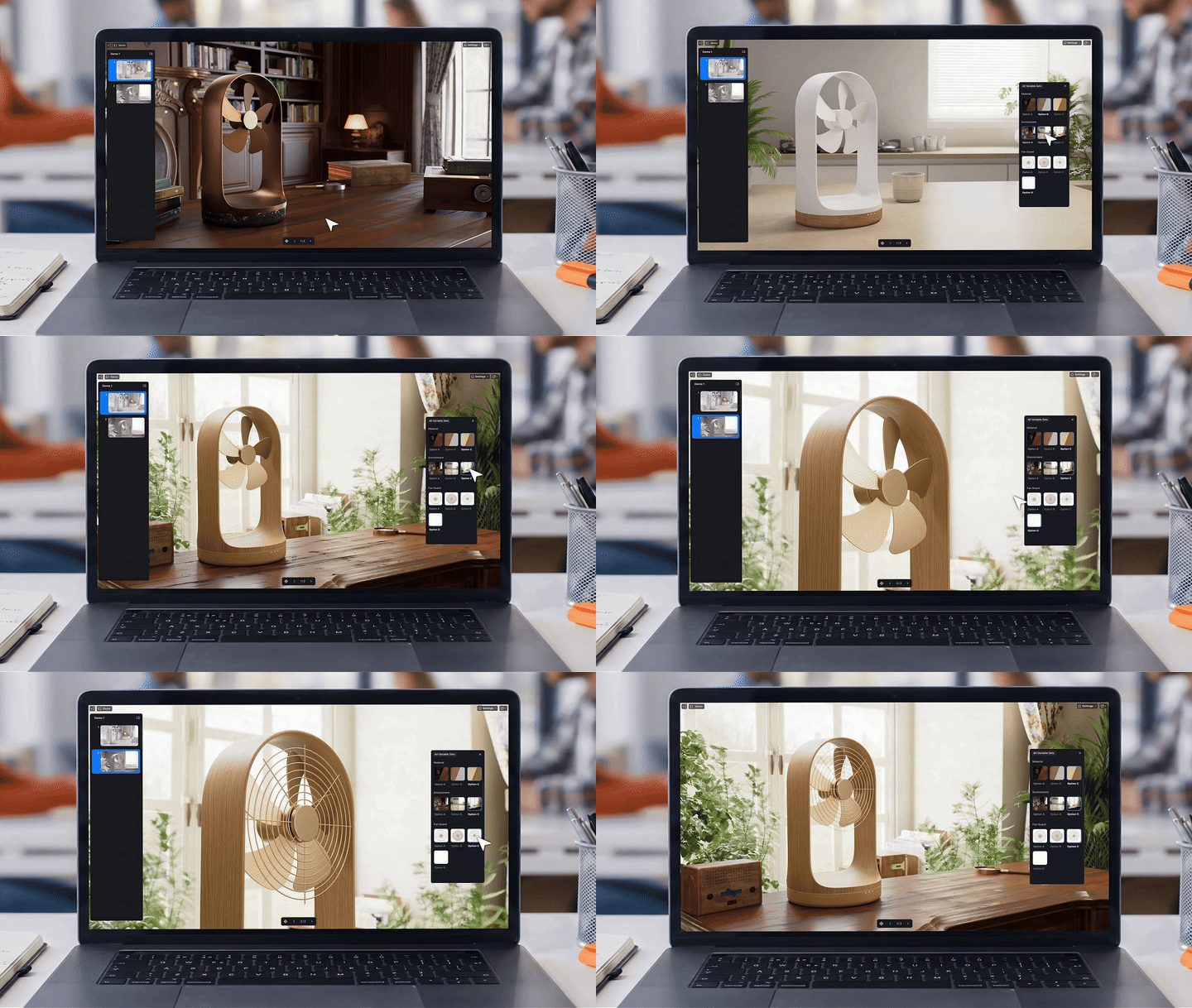
D5 3.1 responds to this condition by treating presentation less as a final output and more as a live environment for review. At the center of this shift is Interactive Presentation, a workflow that allows architects to organize a review with the clarity of slides while maintaining access to the live project. Viewpoints, design schemes, material options, lighting conditions, weather settings, and object visibility can be arranged within a single presentation flow.
This does not remove the need for preparation. A team still structures a narrative and guides attention, but the presentation is no longer limited to a fixed set of exported images. It can respond when a client asks to compare options, when a consultant questions spatial performance, or when the design team needs to revisit an earlier decision.
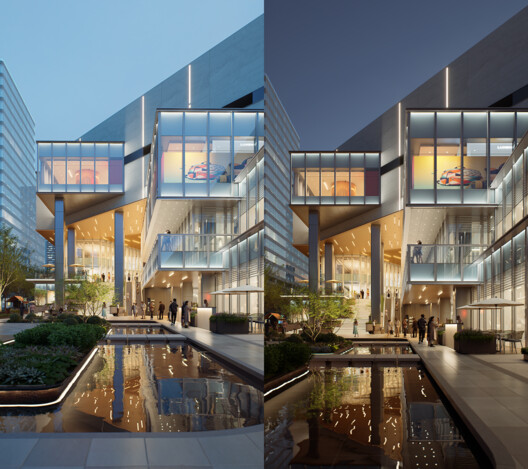
The presentation becomes not only a medium of communication, but also a place where alignment can happen.
Seeing Space Beyond the Image
Architectural understanding is not built through images alone. Scale, circulation, adjacency, and atmosphere are often understood through movement and comparison.
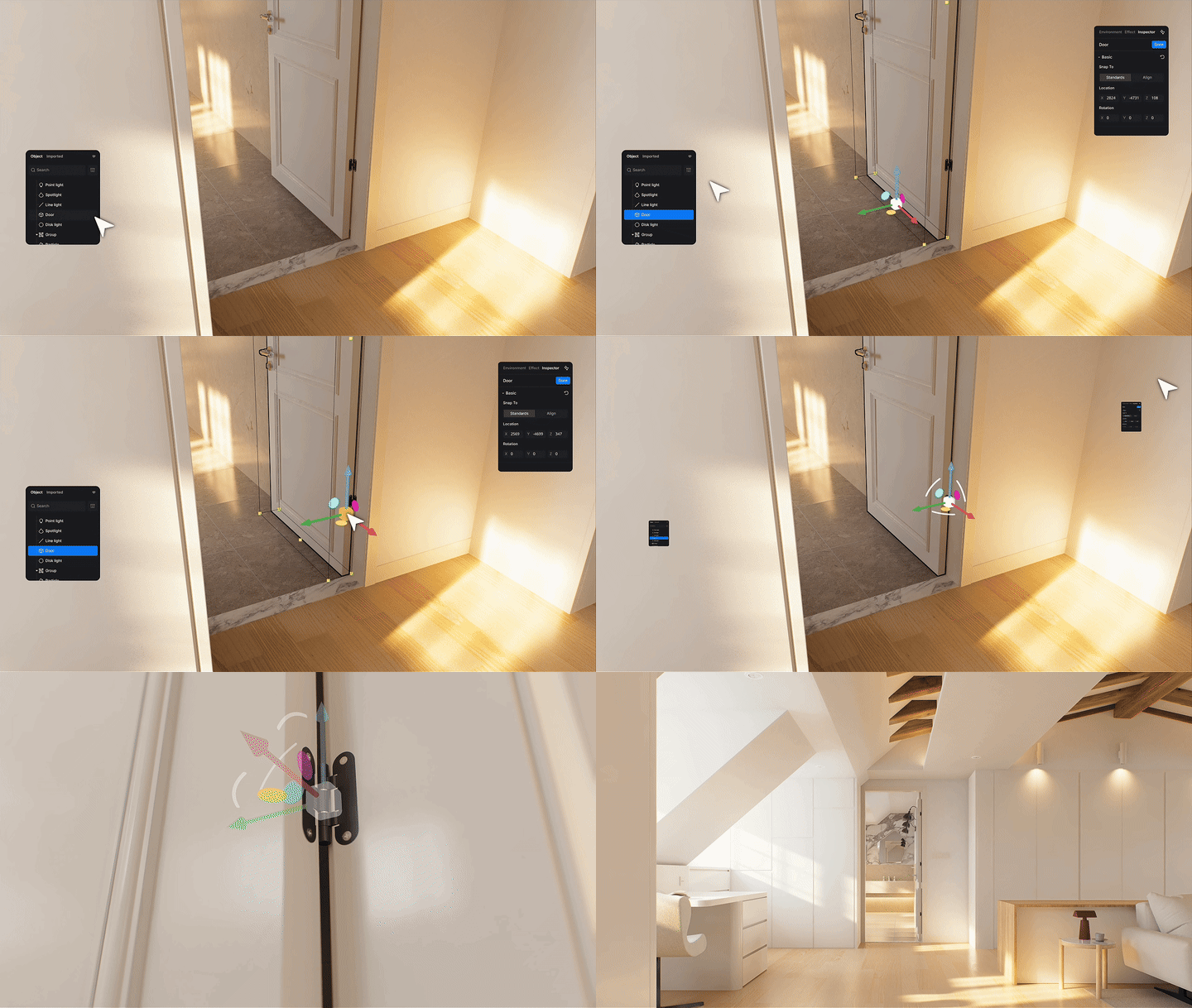
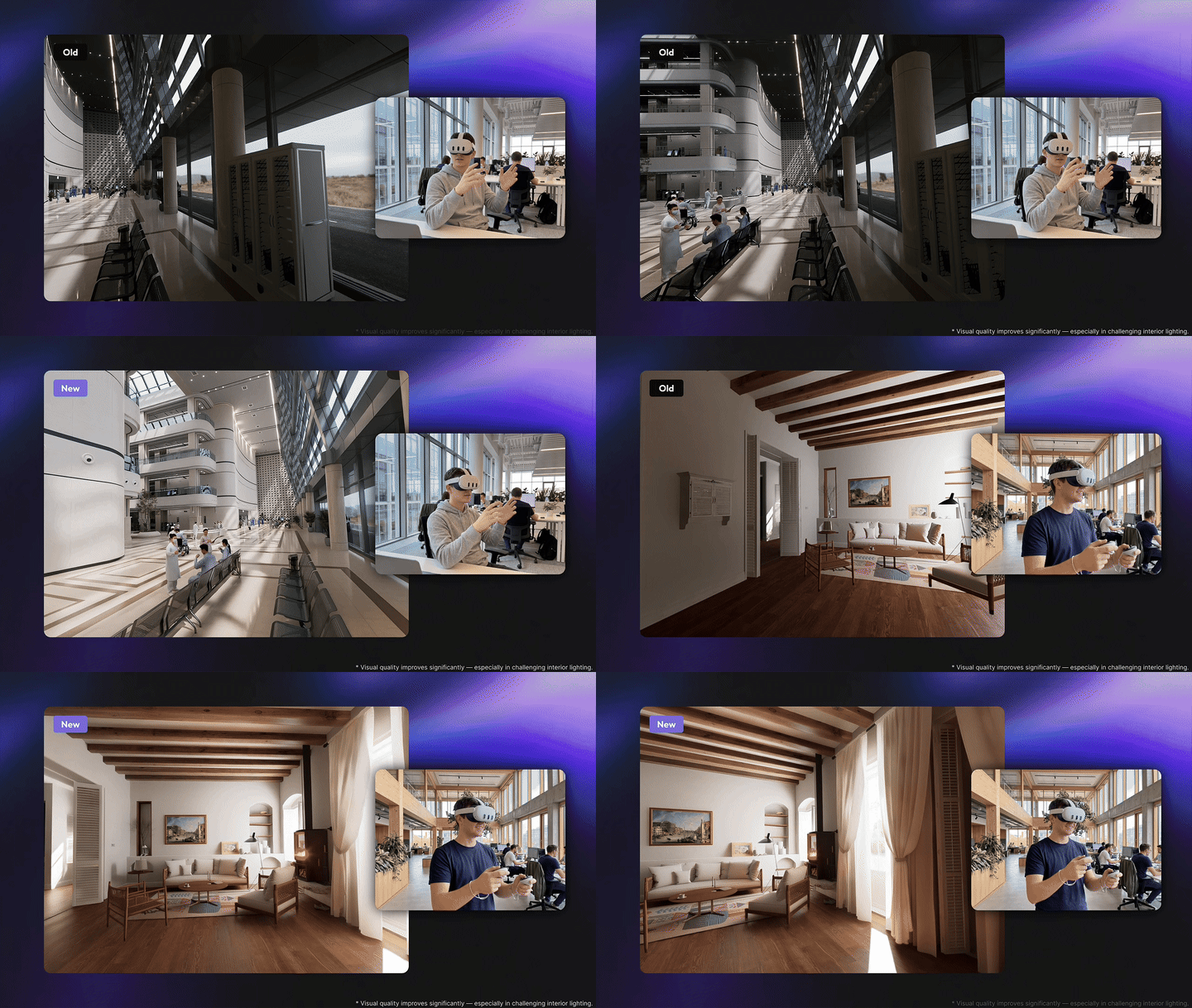
D5 3.1 expands this layer through immersive review tools. Stereoscopic Panorama introduces depth-aware panoramic experiences for VR, helping viewers read scale, materiality, and spatial relationships with greater clarity. Spatial Tour has also been refined with faster scene generation, smoother transitions between indoor and outdoor spaces, and dollhouse views that help users understand complex projects.
These tools do not replace renderings or animations. They extend the range of presentation, allowing teams to choose the format that best supports the review.
Presentation Before the Presentation
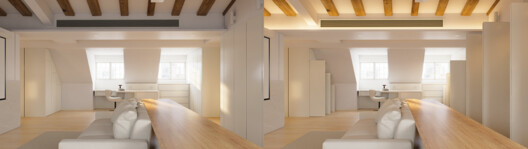
A responsive review depends on decisions made long before the meeting begins. Massing studies, daylight tests, material comparisons, and atmospheric studies all shape how a project will later be communicated. In this sense, presentation begins earlier than the slide deck.
Following its earlier release for SketchUp, D5 Lite now expands to Rhino and Revit, bringing real-time visualization into more of the modeling environments architects already use. Designers can preview materials, lighting, and visual direction while a project is still being formed, supporting concept development, façade studies, and iterative testing.
D5 Lite is not intended to replace the full production and presentation capacity of D5 Render. Its role is earlier in the process, making design decisions more visual from the start. When a project requires higher-end imagery, animation, immersive review, or Interactive Presentation, the workflow can continue into D5 Render.
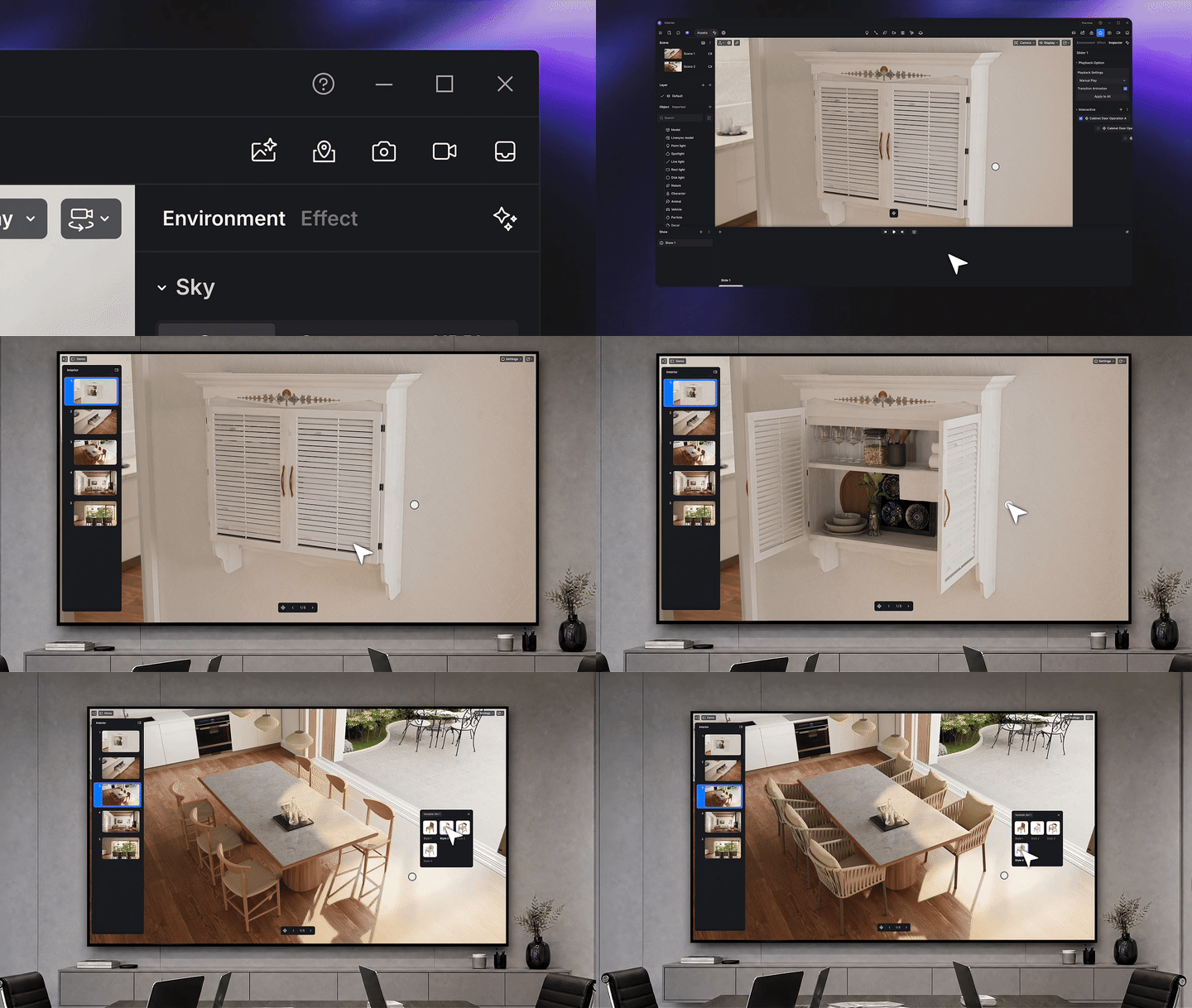
Realism as a Foundation for Responsiveness
As presentations become more interactive, rendering quality remains essential. In a live review, materials must hold up from multiple viewpoints. Lighting must remain convincing under changing conditions. Landscapes and surfaces must support the discussion without breaking the sense of presence.
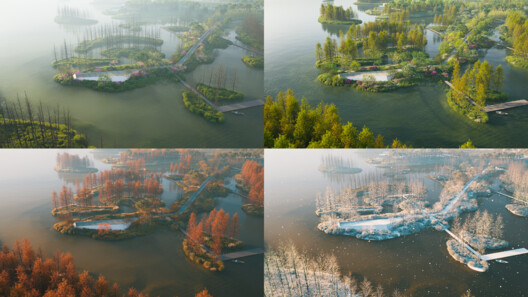
D5 3.1 strengthens this foundation through production-focused updates. ACEScg Working Color Space supports a more consistent color pipeline across visualization and post-production. HeightField Tracing improves surface relief for displacement materials without adding unnecessary geometric complexity. Seasonal Vegetation allows planting schemes to shift more naturally across the year.
These updates reinforce an important point: greater responsiveness does not reduce the need for realism. It places greater demands on it. When a project can be explored from different angles, under changing light, and across multiple design states, visual quality must remain consistent throughout the review.
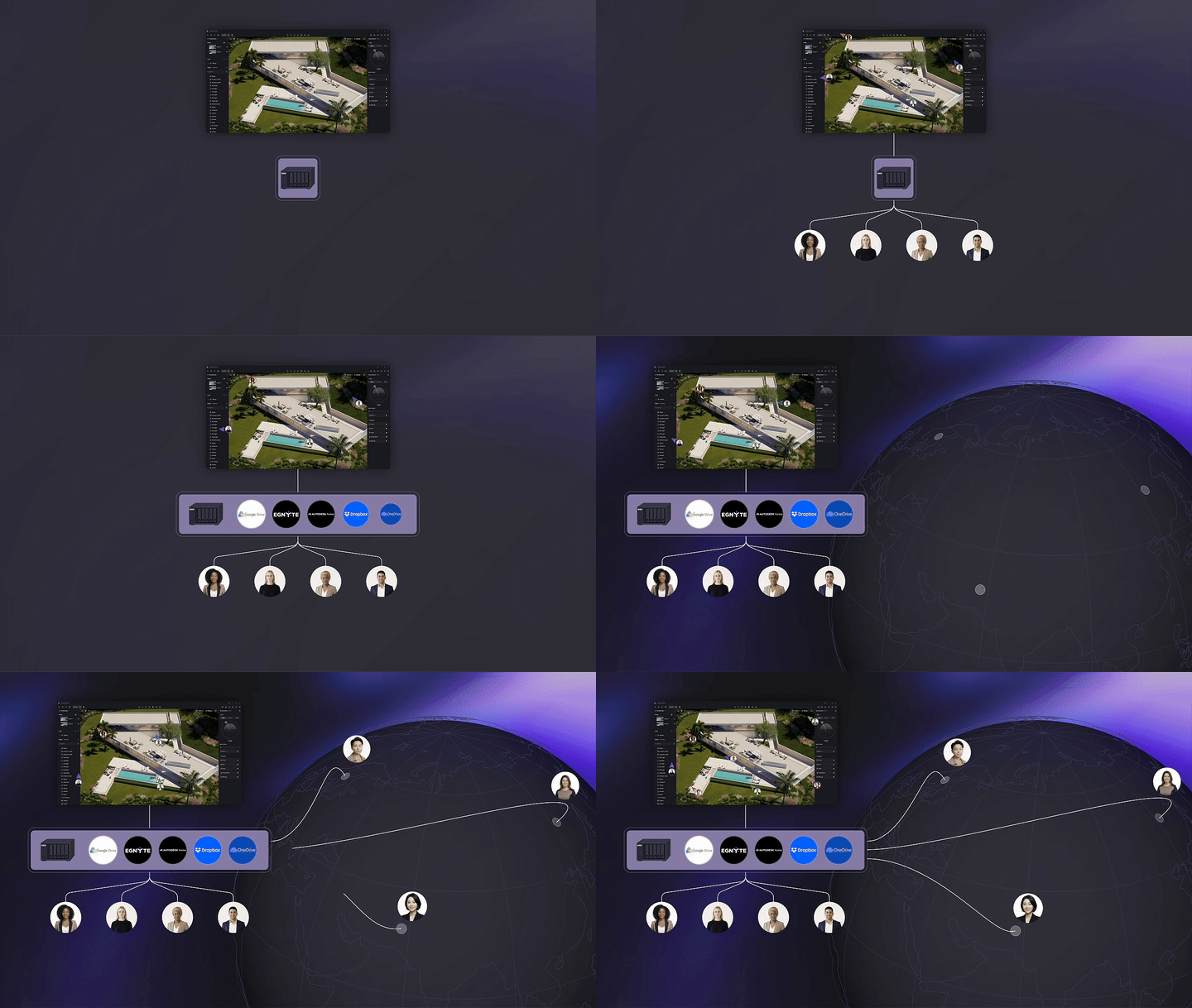
Taken together, the developments in D5 3.1 point toward a more connected architectural workflow. Visualization begins during concept development through D5 Lite, continues into high-fidelity review and Interactive Presentation in D5 Render, and extends across distributed teams through Cloud Collaboration. Each capability supports a different stage, while the visual context carries forward as the project evolves.
The result is a workflow that connects early design exploration with presentation experience, and collective decision-making. Visualization no longer belongs to a single moment of production. It accompanies the project from the first model to the final review, helping architecture remain visible, discussable, and open to refinement throughout the process.