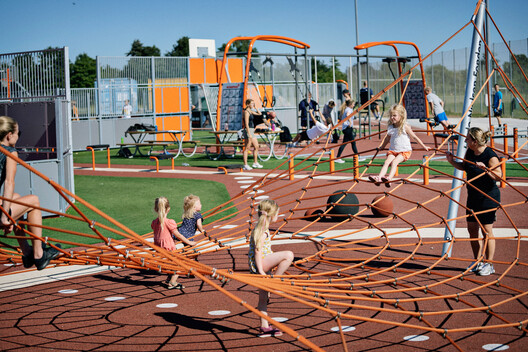
Play, as a human activity, is a multidimensional practice: it is biologically rooted, socially transmitted, and architecturally situated. Within this interrelation, while play offers dynamics and narratives that invite us to explore alternative ways of inhabiting the world, architectural projects provide the physical and sensory support that unlocks these possibilities, with play structures serving as the medium that connects the two. Consequently, a defining relationship emerges between play, the built environment, and its evolution over time.
Although its roots trace back to the very origins of human society, it was around the mid-20th century, in a post-war context, when the act of playing began to be understood as a way to appropriate space, explore, experiment, forge connections with the environment, and foster urban enjoyment. Today, the evolution from "playgrounds of the past" to contemporary spaces reflects a shift toward innovation and learning through play, in response to new dynamics of integration, fabrication, and spatial use.
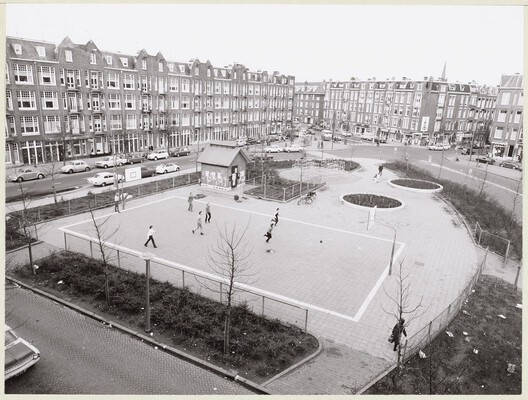
Historically, the work of Aldo van Eyck serves as a key reference for understanding 20th-century children's urban space, framing play as an open-ended activity that invites exploration and relationship-building. With over 700 playgrounds designed in Amsterdam, his approach marked a turning point for subsequent designs. As a modern benchmark and the next step in the evolution of play space design, Urbanplay stands out. Their approach aims to foster children's physical, creative, and inclusive development through design innovation and support throughout every stage of the process, from concept to project execution.
Throughout the evolution of urban recreational spaces, various approaches have emerged. Early designs, such as those by Van Eyck, were characterized by simple shapes—cubes, bars, and predominantly geometric structures—and the use of hard surfaces. By contrast, contemporary designs have diversified, focusing on supporting the physical, social, and creative development of children while incorporating criteria such as inclusivity and sustainability, alongside meeting globally adopted quality and safety standards. Rather than merely offering a recreational function, these spaces seek to actively integrate into contemporary ways of living, playing, and sharing. Within this framework, two approaches are particularly relevant.
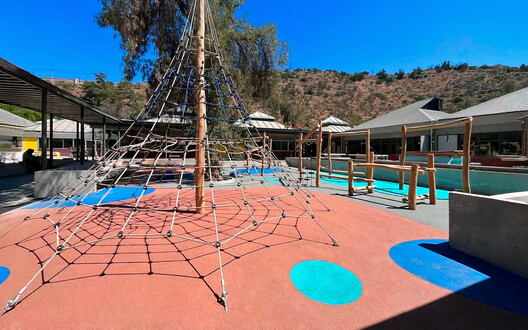
Dynamic and Rope Play: Organic Shapes and Multi-Play Structures for Physical Development
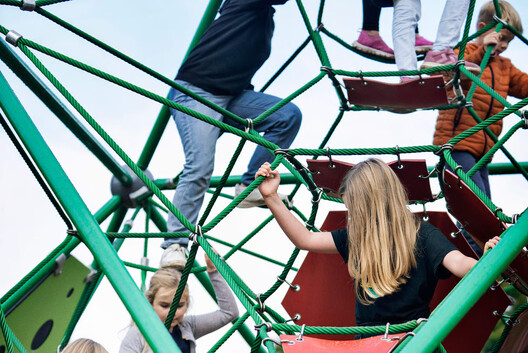
Because play is linked to shifting dynamics and imaginative narratives, it requires platforms that allow for organic exploration, where children use their bodies and imaginations to interact with their surroundings through diverse, self-directed experiences. In rope structures, for instance, the use of curved shapes, gentle slopes, and undulating elevations has become a key tool for elevating play to a more complex dimension, activating skills such as smart climbing, balance, cross-coordination, and logical thinking.
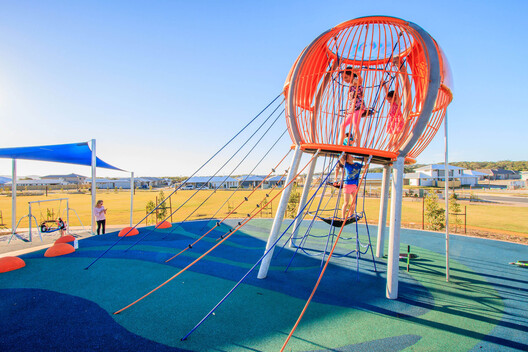
Furthermore, because it is intrinsically linked to physical activity, play is a dynamic practice requiring solutions that encourage movement. Spinning, pushing off, and jumping enrich the play experience and make it more challenging. This intensity directly stimulates childhood development, making dynamic play an effective way to strengthen spatial awareness and motor skills.
Inclusive Play: Incorporating the Principles of Universal Design into Play Spaces
As a platform for inclusion, play requires conditions where everyone, regardless of their diverse abilities, can access the space and participate in its activities. To this end, the principles of universal design—and the play structures developed from them—represent one of the most effective approaches to designing inclusive parks.
In these spaces, finding a balance between dynamic and calmer activities is essential. It is not just about offering variety, but about allowing everyone to find their own pace. A detail as simple as strategically spacing the main components of the playground can make a major difference: it helps prevent physical and sensory overload and keeps the play experience accessible to more people without sacrificing excitement.
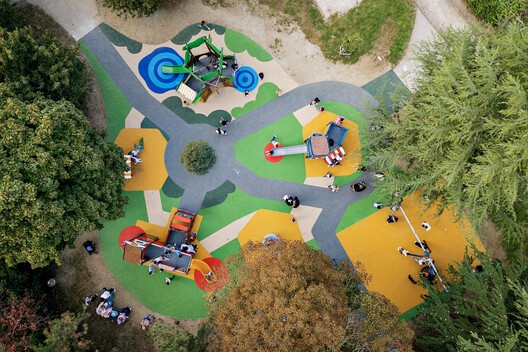
There is also another, less visible dimension: the sensory experience. When addressing accessibility, physical needs are only part of the equation. Touch, smell, sight, and hearing are ways of reading the world, which is why play elements that stimulate these senses are vital in inclusive design. Soft surfaces like seamless rubber flooring, varied textures, or subtle scents are part of a design vocabulary that expands the possibilities of play, making it more welcoming for everyone.
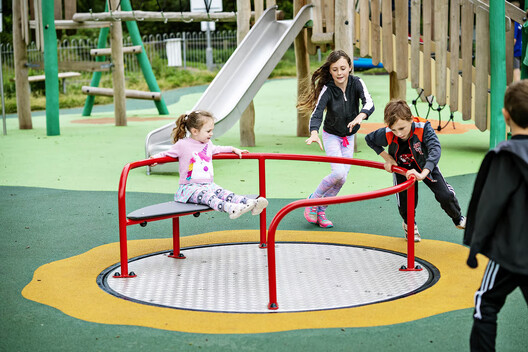
In the contemporary design of recreational structures, technical boundaries are increasingly blurred. Conceptually, the focus is expanding toward a more comprehensive understanding of play: not just as a recreational activity, but as a practice that bridges pedagogical, sensory, and social dimensions. Within this context, the research behind these products, alongside workshops designed to spark new conversations, plays a key role in translating these ideas into spaces capable of fostering meaningful and sustained child development.
Consequently, the innovative concepts shaped by Kompan and delivered by Urbanplay offer a key starting point for placing play at the center of various spatial typologies, well beyond environments traditionally dedicated to recreation. From parks and themed play spaces to indoor public installations, the convergence of play, the supporting structure, and the surrounding space is central to the evolution of recreational environments and the planning of child-centered atmospheres.
To learn more about Urbanplay, visit their website or browse their product catalog on ArchDaily.
This article was written by Enrique Tovar. The translation is powered by AI.


.jpg)
