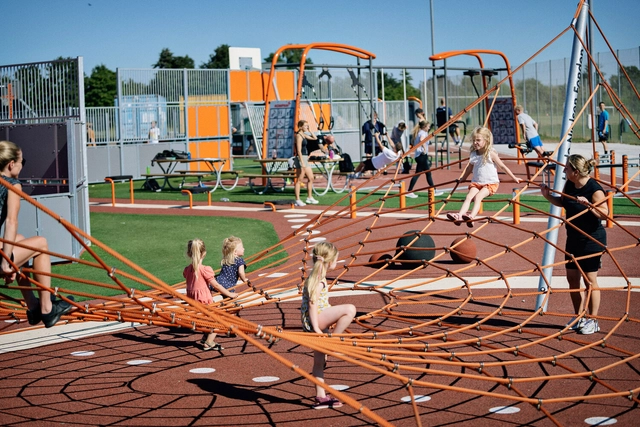
Play, as a human activity, is a multidimensional practice: it is biologically rooted, socially transmitted, and architecturally situated. Within this interrelation, while play offers dynamics and narratives that invite us to explore alternative ways of inhabiting the world, architectural projects provide the physical and sensory support that unlocks these possibilities, with play structures serving as the medium that connects the two. Consequently, a defining relationship emerges between play, the built environment, and its evolution over time.