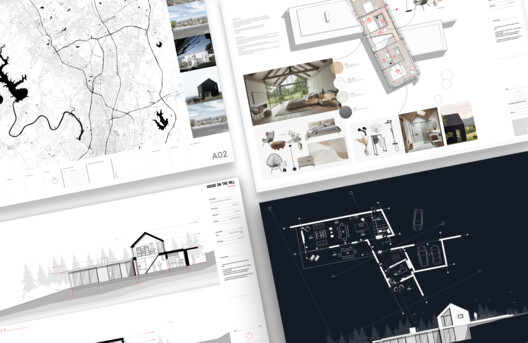
Finding the right tools to represent a project idea or carry out a construction job remains an ongoing challenge for architecture and design professionals. While software for drafting, 3D modeling, and calculations has increased precision and efficiency, many architects continue using legacy tools learned in academia or practice—tools that feel familiar, but don't necessarily offer the best design experience. From overloaded interfaces and clunky workflows to endless plug-ins and constant back-and-forth between disconnected software, traditional design tools often reveal their complexity and fragmentation.
But a new generation of architectural tools is emerging—cloud-based, AI-powered, modern, and accessible. These platforms challenge the default of legacy software and invite professionals to streamline their workflows, unlock new creative possibilities, and reclaim time and focus from technical friction. Rayon Design introduces a unified architectural workflow, a clean and focused interface, and a set of thoughtful innovations, while also encouraging faster work and easier collaboration—returning creative energy to design. Built on the belief that CAD can—and should—feel effortless, Rayon rethinks the entire design experience.
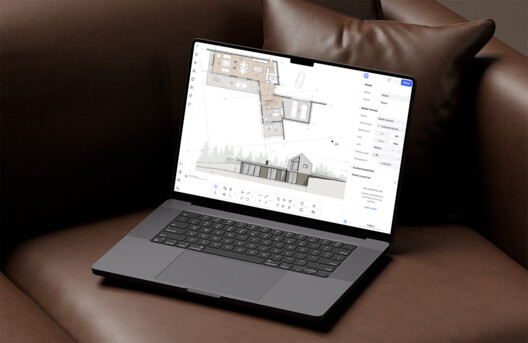
A New Era of Effortless CAD for the Built Environment
Related Article
Architecture in the Age of Platforms: What Role Does Software Play in Practice Today?For decades, architects and interior designers have relied on heavy, fragmented software ecosystems to bring their ideas to life—drafting in one tool, modeling in another, assembling presentations elsewhere, and constantly exporting, importing, and updating as projects evolve. In an industry where every detail matters and deadlines move fast, this patchwork of tools drains time, energy, and creative focus. Rayon Design represents the next-generation CAD platform reimagined for the way modern design teams truly work. Fully web-based and purpose-built for interiors and architecture, it unifies drawing, documentation, and presentation into one seamless environment—removing friction at every step of the process. More than just another drafting tool, it sets a new standard for visualizing, iterating, and communicating design intent.
From concept to client-ready deliverable, Rayon offers an intuitive, fluid, and effortless experience to produce precise technical drawings and instantly transform them into polished presentations without switching tools. Designers gain access to an extensive library of over 10,000 CAD blocks across plans, sections, and elevations. Parametric controls let blocks adapt instantly, and built-in AI can generate new ones from simple images or text prompts. Rayon is also built for true real-time collaboration. As a fully cloud-native platform, it provides a single source of truth for teams, consultants, and clients. Updates sync instantly, versioning is automatic, and communication stays connected to the work. The launch of Rayon V3 introduces deeper AI integration throughout the interface, enhanced presentation and communication tools, and smarter specification capabilities.
Explore each of these advancements—and how they redefine what an effortless CAD experience can be.
Integrate Artificial Intelligence With CAD Expertise
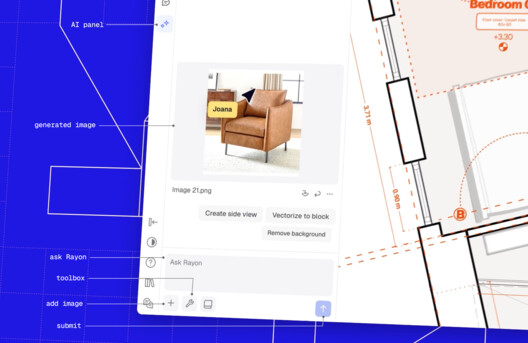
Rayon AI is presented as an all-in-one experience for interior designers, architects, space planners, and other professionals. Accessible through a single AI panel, it aims to achieve three main goals:
- Educate: It helps users navigate the software, refine their workflow, and improve overall quality while gathering best practices, tips, and techniques for clearer design.
- Generate: It can create visual elements, edit images, trace vector files, and build CAD blocks from simple product photos.
- Search: It features a reasoning-driven search agent that assists in exploring libraries—styles, blocks, and templates.
Viewing AI as both an opportunity and a technology capable of simplifying the entire CAD experience, its integration enables a variety of application scenarios. For example, users can get assistance setting up a drawing or apply styling to plans, blocks, visuals, or scenes. It can also alter representations, such as transforming a floor plan into an axonometric view or converting a side view of a product into a top view. From creating CAD blocks from product images to finding blocks for specific programs or tracing elevations using product photos and scenes, these are just a few of the many workflows waiting to be explored.
Integrate Data and Programming Into the Design
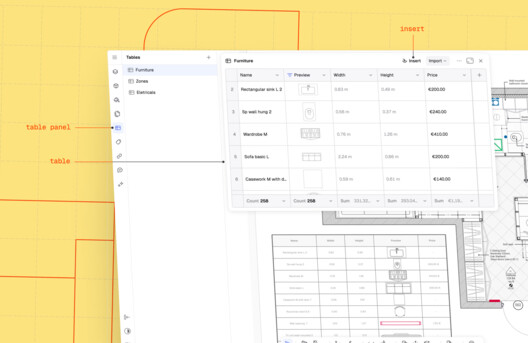
Today, data analysis, specification schedule creation, and even cost studies in construction still pose significant challenges when it comes to integrating them with the drawings, plans, and diagrams produced by industry professionals. The importance of combining concrete data analysis with graphic documentation in architecture highlights a key part of the design process—one in which multiple stakeholders from different fields are involved simultaneously. With Rayon V3, designers can specify exactly the information they need. From basic concepts like length, price, and cost, to more advanced details such as URLs, product images, categories, linear cost, or even computed formulas, all of these can be created in Rayon. V3 offers a flexible way to capture a wide range of data while tagging elements like walls, zones and blocks, styles, layers, pages, and more.
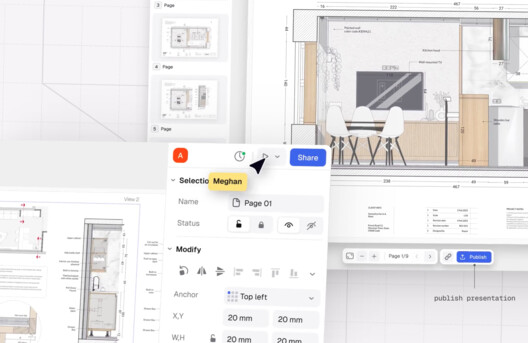
All this information can be listed and organized through a scheduling interface. V3's table panel introduces a refreshed experience where users can add, filter, and group data, among other functions. This new table panel functions like an intuitive spreadsheet, allowing users to insert their own tables directly into their work. As a result, drawings, tables, mood boards, and other documentation can be produced together on a single canvas. Product schedules, electrical specification sheets, legend tables, and similar documents now become far easier and faster to create than with traditional workflows.
In this way, the idea of "light-BIM" becomes more tangible in Rayon. While Version 2 helped reveal how the complexity of BIM represented a major opportunity—introducing the concept of simplifying object and data management within a CAD-like environment—Version 3, with its new data layer, aims to take this vision even further.
Integrate Presentations to Build Communication and Collaboration
From Rayon's perspective, the ongoing exchange between clients and designers remains one of the last areas where SaaS best practices can radically transform the traditional system. By speeding up client iteration, offering greater control over the process, and reducing the effort required to keep everyone aligned, presentations help create a constant flow of updates for clients and within workflows.
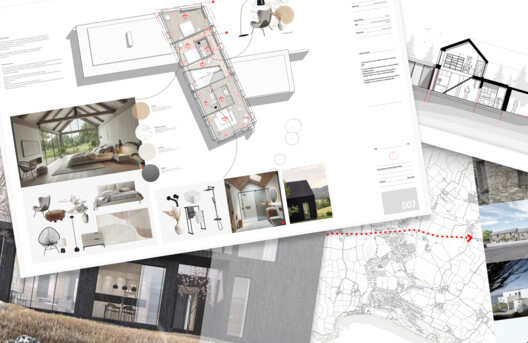
Moving away from the traditional method of exporting files, Version 3 aims to take advantage of the opportunity to create an alternative, more interactive experience for users. The focus is on building presentations and portfolios directly from a drawing file and sharing them with clients through a real-time link. Today, designers often need to export their work, send it via email, and repeat the process every time a small change is made. Live-synced presentations eliminate this friction by allowing users to publish their work, share a URL link on any device, and update with a single click whenever the project changes. With this version, any page set can be turned into a public presentation. The preview screen allows users to review their work and confirm whether it's ready to share.
Presentations mark the first phase of the Rayon community, and together with public models and templates, they form the foundation for its growth. Rayon is built on the belief that one of the strongest indicators of a design tool's success is its ability to bring users together into a thriving community of designers. The platform aims to provide a space where drawings, resources, and knowledge can be shared. In 2025 alone, more than two million new drawings have already been created, and with V3, Rayon hopes to push this even further.
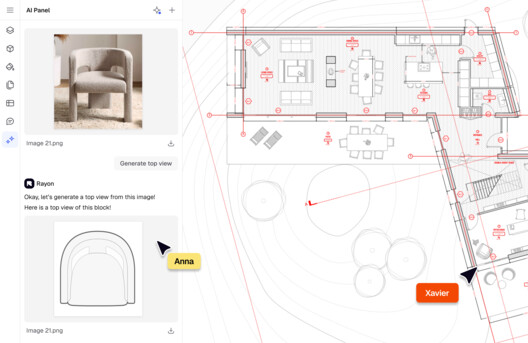
Here, the qualities of being "different" and "familiar" converge to offer more than simply rebuilding CAD in a browser. Rayon provides a real-time collaborative environment—an all-in-one solution with unlimited libraries that functions as a drafting tool, a styling tool, and a layout tool in one place. Architects and designers can work together in real time as a team, commenting and communicating directly in a one source-of-truth model. Beyond providing extensive CAD block libraries, Rayon makes it possible to transform an imported file into an accurate, edited version—stylizing it with stroke widths, materials, fonts, and images—then laying everything out and sharing a live-synced version with just one click.
In a world overflowing with information and countless design and programming tools operating simultaneously, architecture and design fields are in constant adaptation—evolving to meet today's environmental, human, and spatial needs. From the use of artificial intelligence to the combination of multiple design software tools, the discipline continues to expand into a space where possibilities are limitless and the sky remains the only boundary.


