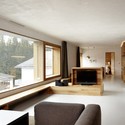
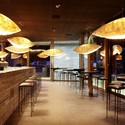
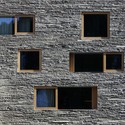
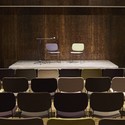
Wood Design & Building Awards is the only North American program to annually recognize excellence in wood architecture. Entries to the 2015 program celebrate leading edge architecture.


Wood Design & Building Awards is the only North American program to annually recognize excellence in wood architecture. Entries to the 2015 program celebrate leading edge architecture.

Architecture students and designers are called to define the home of the future under the theme ‘Living Tomorrow’. This is an idea-based challenge and seeks for conceptually sound proposals. The site can be of any size or form but limited to the Zimbabwean future context.
.jpg?1444826709&format=webp&width=640&height=580)
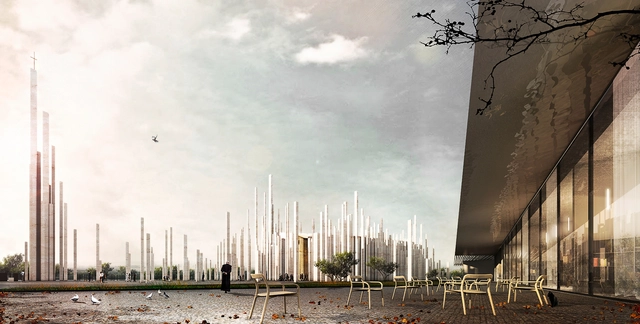
A few weeks ago, we featured Andrea Maffei Architects’ entry to the Redemptoris Mater Church competition to design a new church complex in Cinisi, Italy. Now, Tomas Ghisellini Architects has unveiled their entry, titled Living Stones, which gets its shape from a series of steles that surround the complex.
In collaboration with the Los Angeles County Museum of Art and the Cal Poly LA Metro Program in Architecture and Urban Design, Caroline Bos, co-founder and Principal Urban Planner of UNStudio (www.unstudio.com), will speak about recent architectural, infrastructural and masterplan projects carried out by UNStudio. She will also introduce UNStudio’s Urban Unit and the approach to knowledge sharing recently adopted by the practice to enable the development, application and dissemination of practice related research.
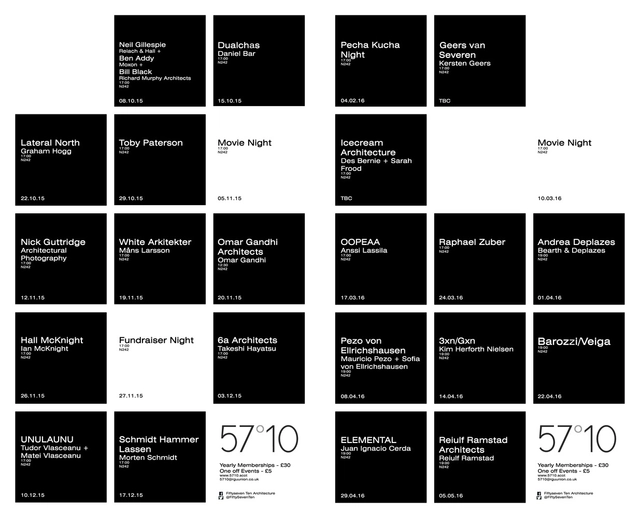
An architecture lecture series society at the Scott Sutherland School of Architecture and the Built Environment in Aberdeen, Scotland. The society, 57°10, has been running for 27 years and invites guest lecturers to the school to talk about the ideas and projects explored by their practices. The society prides itself in being student led; providing lectures that will in turn inspire our future architects, perhaps on topics out-with the discourse of the school.https://www.facebook.com/FiftySevenTenSociety

Stanley Tigerman will discuss his 2015 New Titanic along with the opening of a special exhibit that includes a selection of past and recent work featuring the 1978 “Titanic” photomontage.

Monuments are deliberate gestures—objects or structures created to commemorate an event, person or era. Their meaning is usually imposed, and they often serve as focal points for aspirational civic and political attributes like valor and sacrifice, or to underscore a foundational political narrative. But their meaning can transform, changing over time as the relevance of their symbolism ebbs and flows due to social and political shifts. Like monuments, architecture and photography are also inflected with a grace of intention, and both have the ability to commemorate or represent a nation, event, time or place. The act of photographing monuments and buildings transforms them, sometimes revealing some of the original qualities and more closely evoking the response that they were originally intended to have. And photographs have an inherent memorial quality. This group exhibition examines the work of international artists, some of whose work addresses actual monuments, some whom look at architecture and its relationship to memory and how its importance and symbolism can shift over time, and others approach the idea of the future monument.
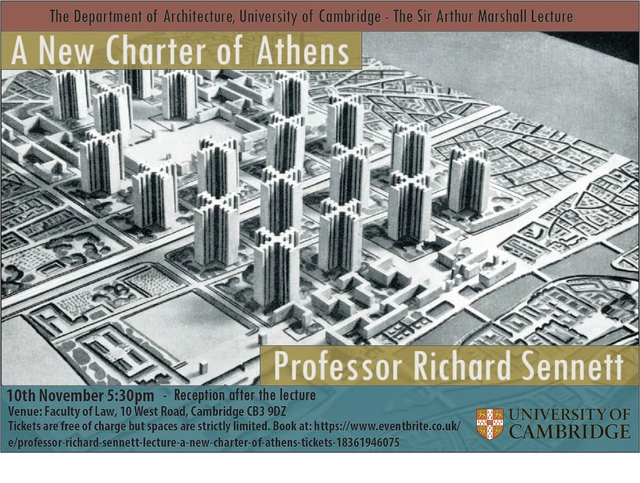
'Next year sees the opening of Habitat III, the environmental congress held every twenty years by the United Nations. For this event, a manifesto is being prepared about the design of cities. It aims to replace the guidance given by Le Corbusier and others nearly a century ago, in document they called "The Charter of Athens." The new Charter of Athens addresses issues emerging in the 21st Century about environmental crises, the uses of technology and big data, and the challenge of social inclusion. The lecture serves as an introduction to this modest proposal.'

China Design Week (CDW) supported by the China Britain Business Council (CBBC) is pleased to host this timely conference to discuss the possibility of increasing creative links between China and the UK.

In a Los Angeles Times article last December, “The future is in the past: Architecture trends in 2014,” acting critic Christopher Hawthorne sought to make sense of a year that included Koolhaas’s Venice Biennale, Smiljan Radic’s Serpentine Pavilion, and periodicals like Log 31: New Ancients and San Rocco 8: What’s Wrong with the Primitive Hut? Through these examples and others, Hawthorne concluded that it was a year of overdue self-reflection, where in order to determine architecture’s future it was necessary to mine the past.
Building on these precedents, Hawthorne predicted that after years of baroque parametricism, in 2015 architects would use last year’s meditations on history as a practical foundation for new projects and proposals. An example of this can be found in the work of Michael Ryan Charters and Ranjit John Korah, a duo who recently shared the top-five prize for the CAF led ChiDesign Competition (part of the Chicago Architecture Biennial) for their project Unveiled. In a brief that called for “a new center for architecture, design and education,” and with lauded jurors including Stanley Tigerman, David Adjaye, Ned Cramer, Monica Ponce de Leon, and Billie Tsien, Charters and Korah proposed what could casually be summarized as a terracotta framework over a multi-story crystalline form of wooden vaults, but is actually something much more complex.
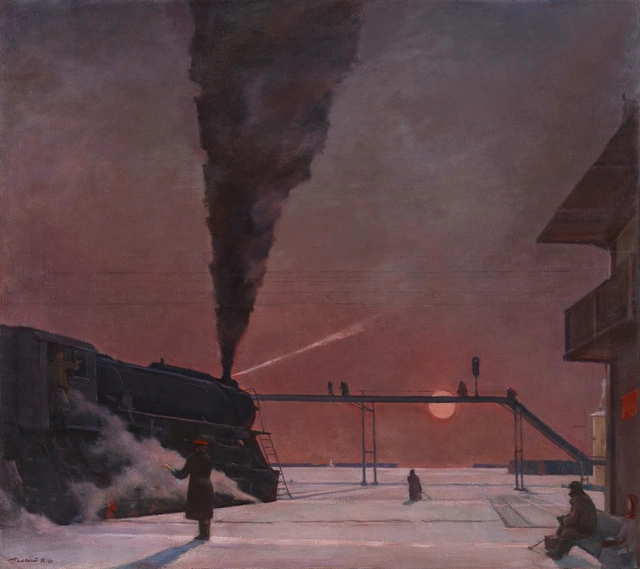
Institute of Russian Realist Art in participation with the Palazzo delle Esposizioni, the “Academia Arco” International Fund, The Ministry of Cultural Heritage and Activities and Tourism of the Italian Republic, the Ministry of Culture of the Russian Federation, the Italian Embassy in Moscow, the Ingosstrakh insurance company, Promsvyazbank and Lomonosov Moscow State University present the exhibition Russia on the Road. 1920 – 1990, which is dedicated to theme of transport, one of the most important themes for the artists of XX century.
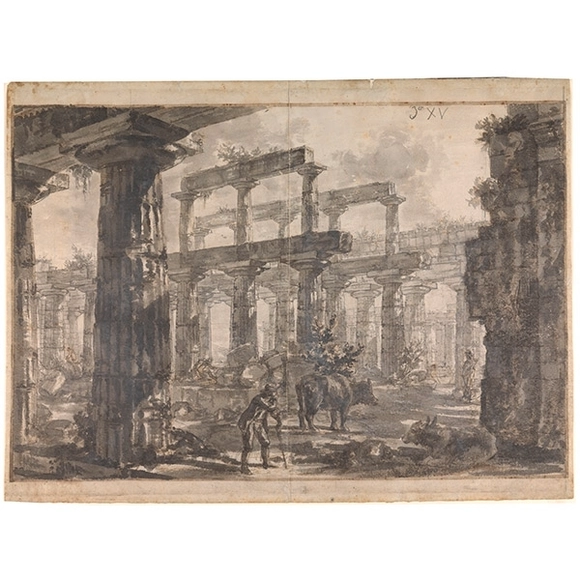
Sergei Tchoban, managing partner of the architectural firm nps tchoban voss with offices in Berlin, Dresden, and Hamburg, SPEECH in Moscow and founder of the Tchoban Foundation – Museum for Architectural Drawing in Berlin and Andrew Zago, partner and founder of the firm Zago Architecture in Los Angeles will talk about the architectural hand- and computer generated drawings in architectural practice today. The importance of a drawing as an official language of an architect, as well as collecting and displaying it.
The panel will be moderated by Wim de Wit, Adjunct Curator of Architecture and Design at the Cantor.
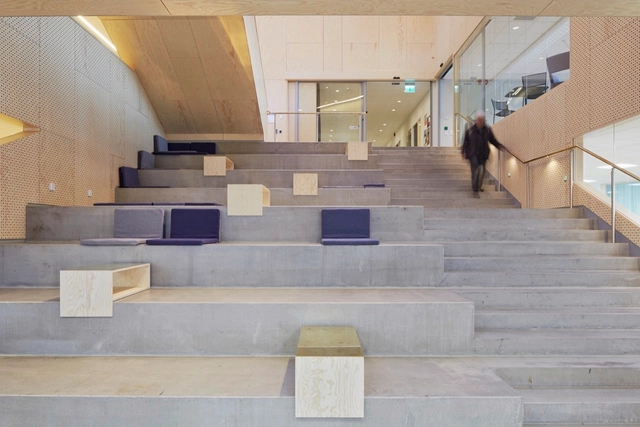
Even though China has become the world’s second largest economy and the world’s largest manufacturing base, the term ‘made in China’ still has negative connotations.
Transforming “Made in China” to “Created in China” is a key challenge for Chinese enterprises urgently in need of world-class creative design. What are the best methods, models and practices of designing? What is the value and the role of creativity in emerging markets? What are the contemporary ideas in design thinking? Are they appropriate in the Chinese context? What is “good design?”


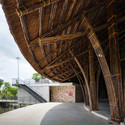
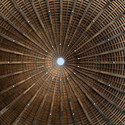
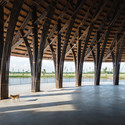

.jpg?1444826644 "Courtesy of SABO project")
.jpg?1444826758 "Courtesy of SABO project")
.jpg?1444826928 "Courtesy of SABO project")
.jpg?1444826792 "Courtesy of SABO project")
.jpg?1444826709)