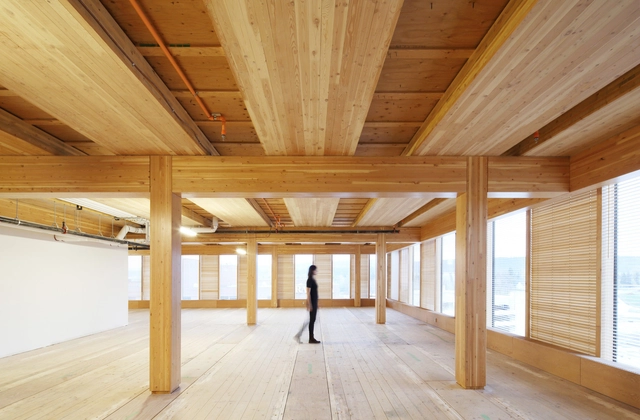
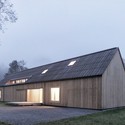
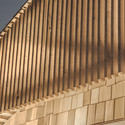
Wood Innovation Design Centre / Michael Green Architecture. Image
Concrete, an essential building material, has for decades offered us the possibility of shaping our cities quickly and effectively, allowing them to rapidly expand into urban peripheries and reach heights previously unimagined by mankind. Today, new timber technologies are beginning to deliver similar opportunities – and even superior ones – through materials like Cross-Laminated Timber (CLT).
To better understand the properties and benefits of CLT, we talked with Jorge Calderón, Industrial Designer and CRULAMM Manager. He discusses some of the promising opportunities that CLT could provide architecture in the future.
As wood is one of the most widely-used materials in the world, architects are accustomed to being able to easily obtain sawn wood at a nearby store. However, many of us know little about its manufacturing process and all the operations that determine its appearance, dimensions, and other important aspects of its performance.
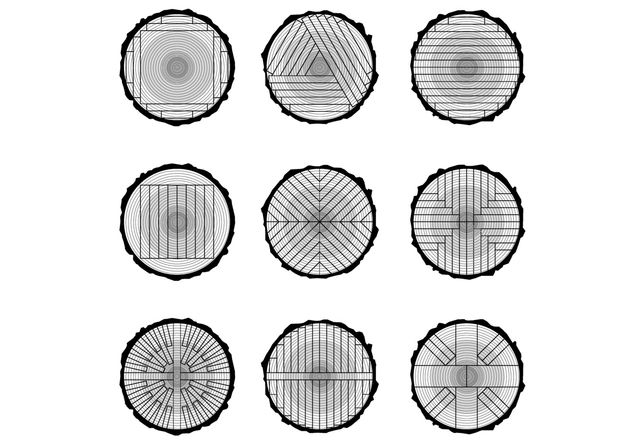
The lumber we use to build is extracted from the trunks of more than 2000 tree species worldwide, each with different densities and humidity levels. In addition to these factors, the way in which the trunk is cut establishes the functionality and final characteristics of each wood section. Let's review the most-used cuts.