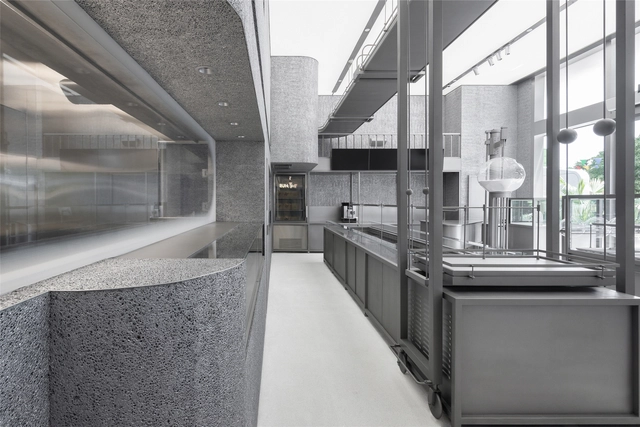
Stabilized Aluminum Foam is a unique looking material that combines the aesthetics of aluminum (its texture, shades and brightness) with a spongy, porous appearance. It is produced by injecting air into a cast aluminum alloy with stabilizing agents, which after curing, creates a porous and lightweight, yet highly resistant and rigid cellular structure. Because of its mechanical and thermal properties, it is particularly useful in applications in various industries, such as automotive, aerospace and marine, especially for energy absorption, thermal insulation, and sound dampening.
Food pyramids are familiar to all of us. They are visual guides that show us the proportions of foods that we should supposedly eat on a daily basis, in order to stay healthy. Composed of a series of layers with different food types–such as grains, flour, fats, vegetables, and others–, at the base are the foods that should be consumed in larger quantities. Towards the top, each layer becomes successively smaller, indicating the foods that are meant to be ingested rarely. The pyramid can vary according to countries and cultures, but its main purpose is always to provide a guide for a balanced life. There are no prohibitions, but it does indicate some foods that should be consumed with caution because of their impacts on our health.
If we are what we eat, is it possible to also replicate this in the construction industry and our buildings? Using this same easy to understand visual language, the Royal Danish Academy Center for Industrialized Architecture (Cinark) developed the Construction Material Pyramid. The idea was to highlight the environmental impact of the most used construction materials, focusing on the analysis of the first three life phases: extraction of raw materials, transportation and manufacturing.
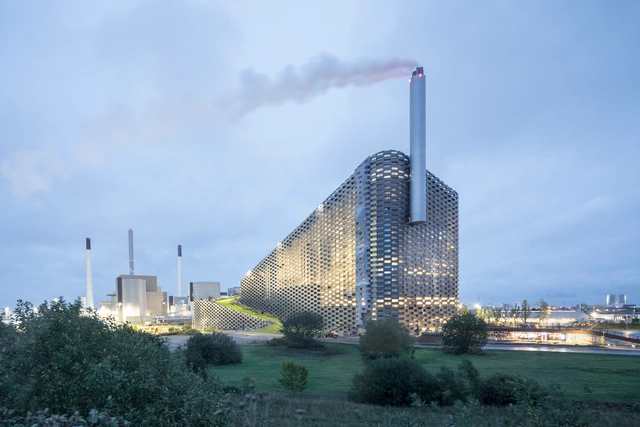
CopenHill Energy Plant and Urban Recreation Center / BIG
All human activities affect the environment. Some are less impactful, some much, much more. According to the United Nations Environment Program (UNEP), the construction sector is responsible for up to 30% of all greenhouse gas emissions. Activities such as mining, processing, transportation, industrial operations, and the combination of chemical products result in the release of gases such as CO2, CH4, N2O, O3, halocarbons, and water vapor. When these gases are released into the atmosphere, they absorb a portion of the sun's rays and redistribute them in the form of radiation in the atmosphere, warming our planet. With a rampant amount of gas released daily, this layer thickens, which causes solar radiation to enter and and stay in the planet. Today, this 'layer' has become so thick that mankind is beginning to experience severe consequence, such as desertification, ice melting, water scarcity, and the intensification of storms, hurricanes, and floods, which has modified ecosystems and reduced biodiversity.
As architects, one of our biggest concerns should be the reduction of carbon emissions from the buildings we construct. Being able to measure, quantify, and rate this quality is a good way to start.
Noisy environments can significantly and negatively effect our bodies, and are a great villain to concentration, learning, and productivity in classrooms and offices. Headaches are one momentary symptom of noise. But staying exposed to very noisy places can bring greater problems such as hearing loss, lower concentration, high blood pressure, and even poor digestion. It can also trigger high levels of stress, sleep disturbances, mood changes, increased heart rate, and ringing in the ears. This is an invisible enemy and is often neglected in big cities with the noise of heavy traffic, demolition. and noisy equipment, such as generators and air conditioners. However, effective measures can be taken to avoid this unnecessary noise.
Continuing our quest to redefine how architecture is perceived nowadays and exposing the different notions out there, ArchDaily gave space for its users to answer four fundamental questions: "What is architecture? What can architecture do? What is your architectural position? What is your design method?" With around 200 entries per interrogation, gathered from all over the world, the ideas shared are mostly complementary and non-conflicting, underlining a general understanding of the role and essence of this field.