1. ArchDaily
  2. The Barbican

The Barbican: The Latest Architecture and News

In Other Worlds by Liam Young Reimagines Cities, Landscapes, and Climate Futures at the Barbican Centre

The Barbican Centre has announced In Other Worlds, a major immersive exhibition by speculative architect, filmmaker, and artist Liam Young, opening from May 21 through September 6, 2026. Occupying three distinct locations within the Barbican complex, the Silk Street Entrance, The Curve gallery, and Car Park 5, the exhibition will transform the Brutalist cultural landmark into a sequence of cinematic environments examining architecture, infrastructure, climate futures, and planetary urbanism. Developed in collaboration with writers, scientists, filmmakers, musicians, and performers, the project brings together large-scale projections, LED installations, sound environments, graphic narratives, costumes, and speculative artifacts to explore how fiction and spatial storytelling can shape conversations around environmental and technological change.


In Other Worlds by Liam Young Reimagines Cities, Landscapes, and Climate Futures at the Barbican Centre - Image 1 of 4In Other Worlds by Liam Young Reimagines Cities, Landscapes, and Climate Futures at the Barbican Centre - Image 2 of 4In Other Worlds by Liam Young Reimagines Cities, Landscapes, and Climate Futures at the Barbican Centre - Image 3 of 4In Other Worlds by Liam Young Reimagines Cities, Landscapes, and Climate Futures at the Barbican Centre - Image 4 of 4In Other Worlds by Liam Young Reimagines Cities, Landscapes, and Climate Futures at the Barbican Centre - More Images+ 9

London Architecture City Guide: 20 Modern and Contemporary Attractions to Explore in UK’s Cultural and Financial Powerhouse

Subscriber Access | 

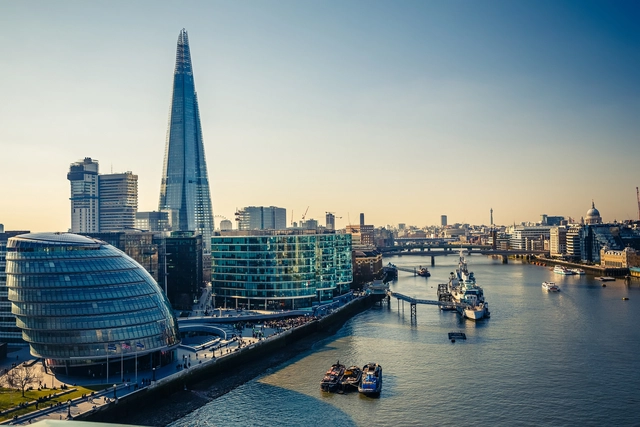
London’s architectural history is a rich tapestry that weaves together styles of various periods and influences. In the post-war era, the city experienced a surge in modern architecture, becoming a canvas for experimentation. New stylistic movements saw their expression crystalized through buildings such as Richard RogersLloyd’s Building, one of the most representative examples of High-Tech architecture, or the Barbican Estate, a large-scale housing estate that became the iconic structure for Brutalist architecture.

London’s contemporary architectural landscape continues to evolve, in part through the works of internationally-recognized architects such as Norman Foster, Zaha Hadid, and Thomas Heatherwick. This varied blend of styles, and ways of expression reflects the city’s ability to embrace architectural movements of global significance. As a center for innovation, London continues to attract established and emerging architects who shape its skyline and contribute to its international architectural discourse, with each new building offering a glimpse into the ever-changing nature of London’s urban fabric.

London Architecture City Guide: 20 Modern and Contemporary Attractions to Explore in UK’s Cultural and Financial Powerhouse - Image 1 of 4London Architecture City Guide: 20 Modern and Contemporary Attractions to Explore in UK’s Cultural and Financial Powerhouse - Image 2 of 4London Architecture City Guide: 20 Modern and Contemporary Attractions to Explore in UK’s Cultural and Financial Powerhouse - Image 3 of 4London Architecture City Guide: 20 Modern and Contemporary Attractions to Explore in UK’s Cultural and Financial Powerhouse - Image 4 of 4London Architecture City Guide: 20 Modern and Contemporary Attractions to Explore in UK’s Cultural and Financial Powerhouse - More Images+ 26

What Makes The Barbican The Perfect Setting for Music Videos?

Subscriber Access | 

Musicians of all ages and genres feature the Barbican in their music videos. Youtuber Phil Gyford’s playlist “The Barbican in Music Videos” compiles songs from artists including British rapper Skepta, UK rock band Coldplay, the infamous electronic musician Moby, and guitarist James Morrison. Even modern pop artist Dua Lipa strut her stuff through the Barbican while singing her song, “Blow Your Mind (Mwah).”

But what makes the Barbican the perfect set for a professional music video? Perhaps artists were attracted to its remarkable Brutalist style. Maybe the architecture was used for it’s historical or political significance.

AD Classics: The Barbican Estate / Chamberlin, Powell and Bon Architects

On the 29th December, 1940, at the height of the Second World War, an air raid by the Luftwaffe razed a 35-acre site in the heart of the City of London to the ground. The site was known as the Barbican (a Middle English word meaning fortification), so-called for the Roman wall which once stood in the area. Following the war, the City of London Corporation—the municipal governing body for the area—started to explore possibilities to bring this historic site into the twentieth century.

AD Classics: The Barbican Estate / Chamberlin, Powell and Bon Architects - Housing, Stairs, FacadeAD Classics: The Barbican Estate / Chamberlin, Powell and Bon Architects - Housing, Facade, CityscapeAD Classics: The Barbican Estate / Chamberlin, Powell and Bon Architects - Housing, Facade, Column, ArchAD Classics: The Barbican Estate / Chamberlin, Powell and Bon Architects - Housing, FacadeAD Classics: The Barbican Estate / Chamberlin, Powell and Bon Architects - More Images+ 23

The Barbican: A Lesson from London's Past for the Housing Crisis of Today

Subscriber Access | 

A higher percentage of the world’s population lives in cities than in any point in history, and with an ever increasing demand for housing, some of the planet’s older and more condensed cities are struggling to keep up. This crisis is currently front and center in London, where median housing prices 12 times the median income have prompted a large number of radical solutions to quell the storm, but with politicians so far declining to take decisive action a viable answer remains a distant possibility.

In a new video produced by a collaboration between The Architectural Review and the Architecture Foundation, Phineas Harper proposes London take lessons from housing solutions from the past. The example on display here is The Barbican, a massive housing block constructed in the 1960s and 70s, and featuring amenities such as an arts center, music school, restaurants, pub and a cinema, all while providing comfortable, affordable housing for the middle-class professionals at which it was targeted. The video recounts the tale of the project's inception and its design ideals, revealing how this 50-year-old fortress in central London could be an inspiration for the architecture - and the politics - of today.