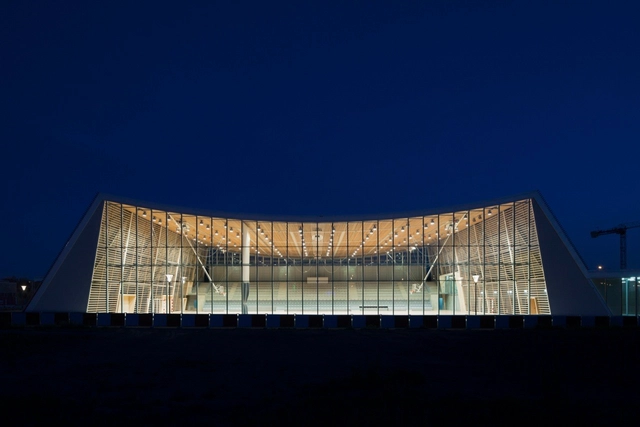
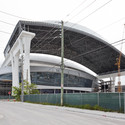
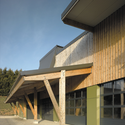
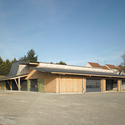
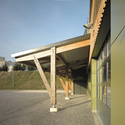
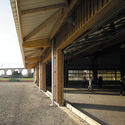
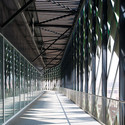
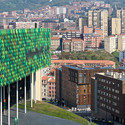
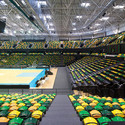
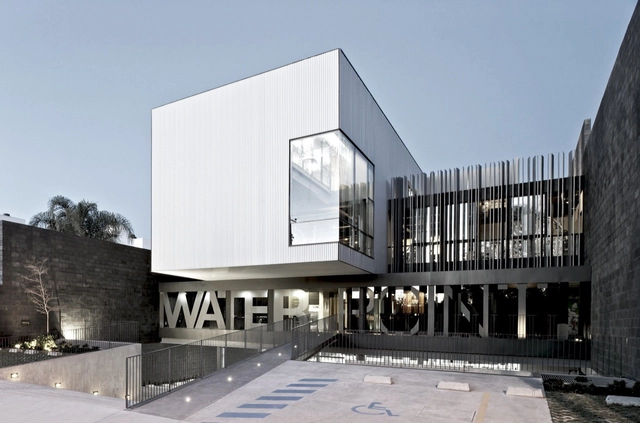
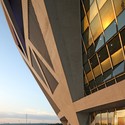
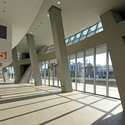
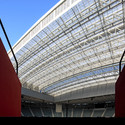
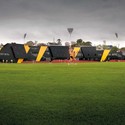
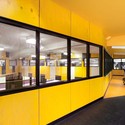
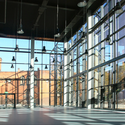
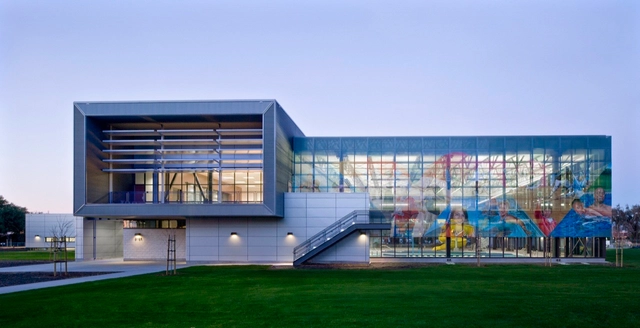
Architects: Populous Location: Miami, Florida, USA Photographs: Emilio Collavino




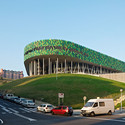
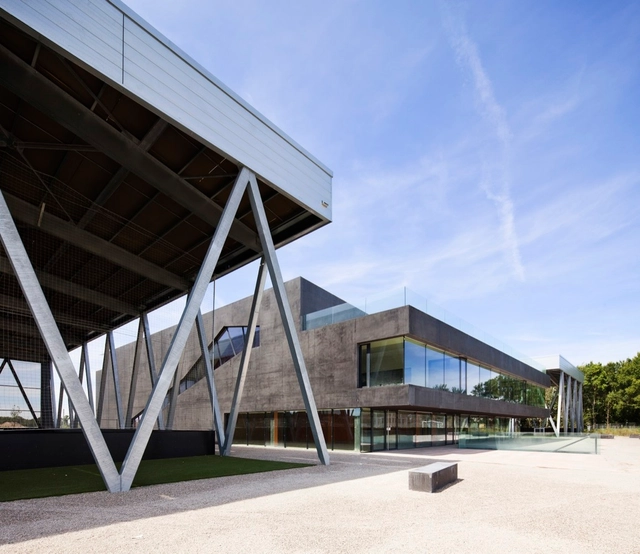
“Chapeau”, a sports park and new urban place for the woods is characterized by an unprecedented relief, introduced in the process of design thinking related to soil and the empty space it creates. The buildings that make up the urban landscape, perfectly calibrated on the urban fabric, have complicated the delicate choice of the approach and the relationship to the existing building of the hall. Early in the project, the intention of Michel Carlana, Luca Mezzalira, Curzio Pentimalli and Riccardo Sanquerin was to integrate the gym in the environment in a local sense. By isolating it from the front of the hall, the building became one of the five elements of life. More images and architects’ description after the break.


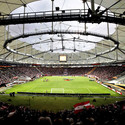
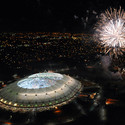
The stadiums built by the architects von Gerkan, Marg and Partners (gmp) in Cape Town and Port Elizabeth for the 2010 World Cup in South Africa received the IOC/IAKS Award on 26 October 2011. In the context of the international Trade Fair for Amenity Areas, Sports and Pool Facilities (FSB), the International Olympic Committee and the International Association for Sports and Leisure Facilities (IAKS) selected the Cape Town stadium for first prize and the Nelson Mandela Bay stadium in Port Elizabeth for third prize in the “stadiums for competitions and events” category. The awards were received by Hubert Nienhoff, gmp partner in charge of the offices in Berlin, Frankfurt and Rio de Janeiro. More information on the projects after the break.


Marc Anton Dahmen & Studio DMTW, in collaboration with Tilke & Partners, shared with us their third prize winning design for the Longchamp racetrack in Paris, France. One of the main aspects of their design is to understand each new structure as a solitary sculpture within the park to respect the landscape and nature of the Bois de Boulogne. Therefore it was very important to conserve as much of the spectacular mature trees as possible. In that sense, the design is aimed to maximize clear open moving space within that park. Consequently, the ground floor of the Grandstand was designed to be as open as possible to aids the visitors between the track and the betting halls, and also to achieve logical circulation between all functions within the site. More images and project description after the break.

Spillman Farmer Architects’ proposal for the Dickinson College Kline Sports Facility takes advantage of the existing features, while striving to introduce more transparency and connectivity as well as making the building’s sustainability evident. The new three-level addition transforms the Kline Center into a dynamic campus gateway, a marquee building with bold daytime and nighttime presence. The addition is placed along the eastern side of the existing building, reaching east to Cherry Street and south to High Street and integrated with the existing topography. More images and architects’ description after the break.

HAO (Holm Architecture Office), along with five other New York design offices, have been invited to participate in the re-design of the Coleman Oval Skate Park and the master planning of the Coleman Oval Park. The competition is sponsored by Architecture for Humanity.
The Coleman Oval Park, situated partly under the Manhattan Bridge, has long suffered from lack of exposure, little upkeep, and the “off the beaten path” factor. More images and architects’ description after the break.