What happens when the sensor-imbued city acquires the ability to see – almost as if it had eyes? Ahead of the 2019 Shenzhen Biennale of Urbanism\Architecture (UABB), titled "Urban Interactions," ArchDaily is working with the curators of the "Eyes of the City" section at the Biennial to stimulate a discussion on how new technologies – and Artificial Intelligence in particular – might impact architecture and urban life. Hereyou can read the “Eyes of the City” curatorial statement by Carlo Ratti, the Politecnico di Torino and SCUT.
https://www.archdaily.com/934165/game-boarding-regional-developmentGerhard Bruyns, Peter Hasdell, and Diego Sepulveda-Carmona
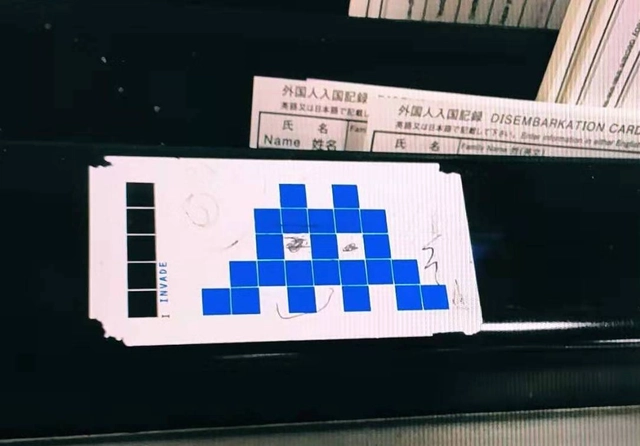
A photograph taken in April 2017 and shared through Instagram of a sticker by the French street artist Invader.
How do street art practices resonate through the digital world, and how do we trace such resonance back to the street? More generally, what happens when the sensor-imbued city acquires the ability to see – almost as if it had eyes? Andrea Baldini (Nanjing University) reflects on the role that the Internet, and social networks, in particular, have had in boosting the circulation of graffiti and street art and, in turn, their communicative and denouncing power.
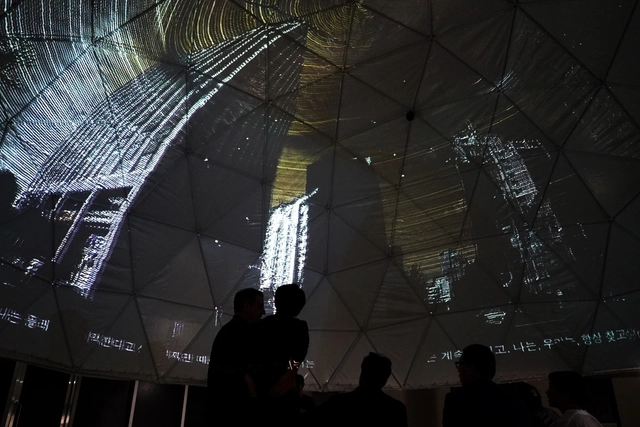
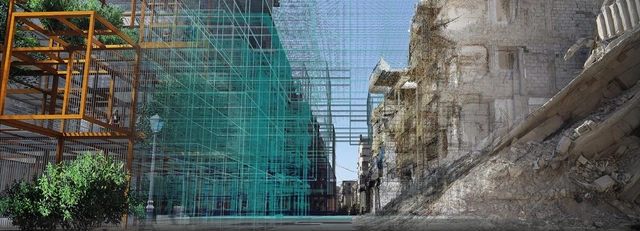
Reparametrize Studio and Digital Architects have created an exhibition combining photography and 360-degree projection mapping, to showcase destroyed cities, part of the 2019/2020 Bi-City Shenzhen Biennale of Urbanism/Architecture. As Ziwar Al Nouri, Founder of Reparametrize Studio stated, the project underlines the different possibilities “when numbers meet Architecture and Culture and help us improve human life and the future of our city”.
What happens when the sensor-imbued city acquires the ability to see – almost as if it had eyes? Ahead of the 2019 Shenzhen Biennale of Urbanism\Architecture (UABB), titled "Urban Interactions," ArchDaily is working with the curators of the "Eyes of the City" section at the Biennial to stimulate a discussion on how new technologies – and Artificial Intelligence in particular – might impact architecture and urban life. Hereyou can read the “Eyes of the City” curatorial statement by Carlo Ratti, the Politecnico di Torino and SCUT.
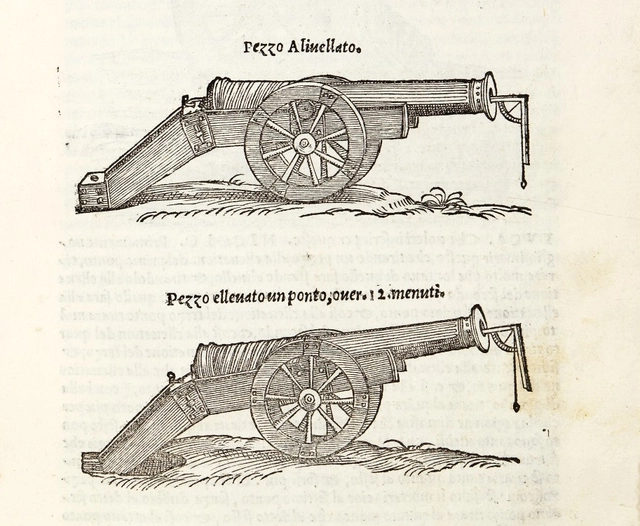
Images taken from Nicola Tartaglia, Nova scientia, second book, Distantia del transito, 1558
What happens when the sensor-imbued city acquires the ability to see – almost as if it had eyes? Ahead of the 2019 Shenzhen Biennale of Urbanism\Architecture (UABB), titled "Urban Interactions," ArchDaily is working with the curators of the "Eyes of the City" section at the Biennial to stimulate a discussion on how new technologies – and Artificial Intelligence in particular – might impact architecture and urban life. Hereyou can read the “Eyes of the City” curatorial statement by Carlo Ratti, the Politecnico di Torino and SCUT.
https://www.archdaily.com/931663/how-does-architectural-design-change-when-the-city-becomes-equipped-with-the-most-recent-advances-in-artificial-intelligence-alessandro-armando-giovanni-durbiano-for-the-shenzhen-biennale-uabb-2019Alessandro Armando and Giovanni Durbiano
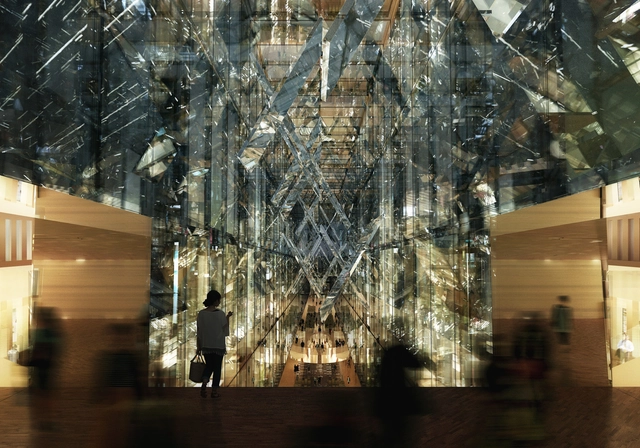
Dominique Perrault Architecture, DPA–X-Sub–Hubs A New Breed of Architectural Objects. Image via Bi-City Biennale of Urbanism\Architecture (Shenzhen)
The 8th Bi-City Biennale of Urbanism\Architecture (Shenzhen) has officially opened in Shenzhen, China. Hosted at both the Shenzhen Museum of Contemporary Art and Planning (MOCAUP) and the Futian Railway Station, the event is the most visited architecture biennale in the world, and holds the distinction of being the first major architectural event where all materials for the exhibitions were sourced in the host city of Shenzhen.
https://www.archdaily.com/930683/the-worlds-most-visited-architecture-biennale-opens-in-shenzhenNiall Patrick Walsh
What happens when the sensor-imbued city acquires the ability to see – almost as if it had eyes? Ahead of the 2019 Shenzhen Biennale of Urbanism\Architecture (UABB), titled "Urban Interactions," ArchDaily is working with the curators of the "Eyes of the City" section at the Biennial to stimulate a discussion on how new technologies – and Artificial Intelligence in particular – might impact architecture and urban life. Hereyou can read the “Eyes of the City” curatorial statement by Carlo Ratti, the Politecnico di Torino and SCUT.
Example of pedestrian pattern heatmaps, as produced by software-translated timelapse recordings in our project Co-Creating Responsive Urban Spaces, transmitting interaction installations in the practice of urban design to activate public spaces. See www.responsiveurbanspaces.amsterdam
What happens when the sensor-imbued city acquires the ability to see – almost as if it had eyes? Ahead of the 2019 Shenzhen Biennale of Urbanism\Architecture (UABB), titled "Urban Interactions," Archdaily is working with the curators of the "Eyes of the City" section at the Biennial to stimulate a discussion on how new technologies – and Artificial Intelligence in particular – might impact architecture and urban life. Hereyou can read the “Eyes of the City” curatorial statement by Carlo Ratti, the Politecnico di Torino and SCUT.
https://www.archdaily.com/930040/from-the-city-as-a-service-to-the-city-as-a-license-martijn-de-waal-and-frank-suurenbroek-for-the-shenzhen-biennale-uabb-2019Martijn de Waal and Frank Suurenbroek
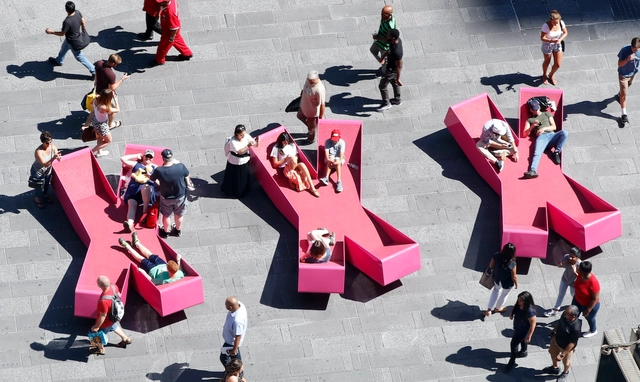
XXX TIMES SQUARE WITH LOVE, Photographs by Rob Kassabian @ RK Films
What happens when the sensor-imbued city acquires the ability to see – almost as if it had eyes? Ahead of the 2019 Shenzhen Biennale of Urbanism\Architecture (UABB), titled "Urban Interactions," ArchDaily is working with the curators of the "Eyes of the City" section at the Biennial to stimulate a discussion on how new technologies – and Artificial Intelligence in particular – might impact architecture and urban life. Hereyou can read the “Eyes of the City” curatorial statement by Carlo Ratti, the Politecnico di Torino and SCUT.
https://www.archdaily.com/929807/xxx-times-square-with-love-jurgen-mayer-h-for-the-shenzhen-biennale-uabb-2019Jürgen Mayer H.
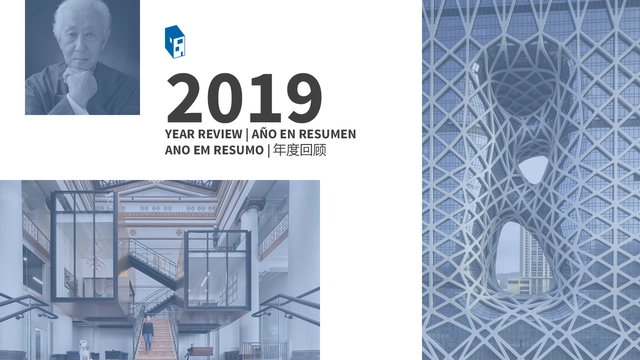
2019 has been a very fruitful year in architecture, unveiling projects, discourses, and careers that cover most of the multiple layers, interest, and fields related to this discipline, and highlighting how relevant it has become to our societies —from the Pritzker Prize 2019 awarded to Japanese architect Arata Isozaki to the revealed theme of the Venice Biennale 2020. Take a look at the main architectural milestones of this year across the globe.
In December 2019, the Chinese city of Shenzhen will host the world’s only Biennale focused exclusively on the topics of urbanism and urbanization. The 2019 Bi-City Biennale of Urbanism\Architecture will explore new phenomena brought about by the digital revolution, and the ability of citizens to become involved in shaping cities. The Biennale curator, Carlo Ratti, exemplifies this intersection between natural and artificial, championing the power of new technologies to transform how we live and design through his work at Carlo Ratti Associati and the MIT Senseable City Lab. In the “Eyes of the City” section of the Biennale, he is joined by MVRDV, and its co-founder Winy Maas, in shaping an experience that invites visitors and observers to question how technologies such as facial recognition can be integrated into urban life.
https://www.archdaily.com/928595/carlo-ratti-and-winy-maas-discuss-facial-recognition-and-the-shenzhen-biennaleNiall Patrick Walsh
Opening in December in Shenzhen, China, the Bi-City Biennale of Urbanism and Architecture (UABB), organized by the cities of Shenzhen and Hong Kong, will discuss the theme of “Urban Interactions”. First to use Facial Recognition and Artificial Intelligence, the public exhibition will test new grounds to reflect on the impact of digital technologies on the urban environment.
What happens when the sensor-imbued city acquires the ability to see – almost as if it had eyes? Ahead of the 2019 Shenzhen Biennale of Urbanism\Architecture (UABB), titled "Urban Interactions," ArchDaily is working with the curators of the "Eyes of the City" section at the Biennial to stimulate a discussion on how new technologies – and Artificial Intelligence in particular – might impact architecture and urban life. Hereyou can read the “Eyes of the City” curatorial statement by Carlo Ratti, the Politecnico di Torino and SCUT.
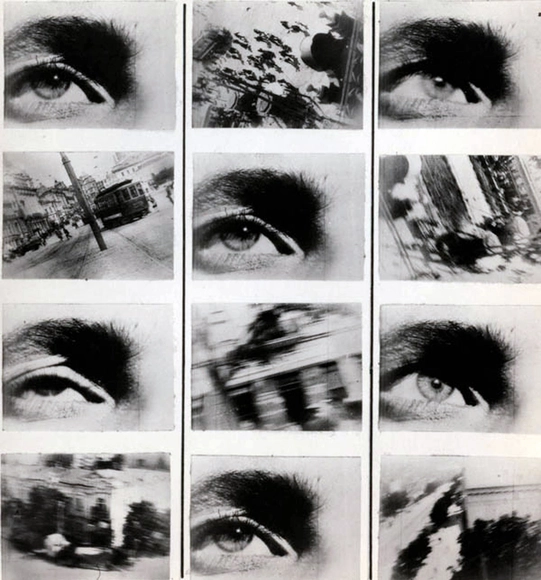
The Man with the Movie Camera (Dziga Vertov, USSR, 1929)
What happens when the sensor-imbued city acquires the ability to see – almost as if it had eyes? Ahead of the 2019 Shenzhen Biennale of Urbanism\Architecture (UABB), titled "Urban Interactions," ArchDaily is working with the curators of the "Eyes of the City" section at the Biennial to stimulate a discussion on how new technologies – and Artificial Intelligence in particular – might impact architecture and urban life. Hereyou can read the “Eyes of the City” curatorial statement by Carlo Ratti, the Politecnico di Torino and SCUT.
What happens when the sensor-imbued city acquires the ability to see – almost as if it had eyes? Ahead of the 2019 Shenzhen Biennale of Urbanism\Architecture (UABB), titled "Urban Interactions," ArchDaily is working with the curators of the "Eyes of the City" section at the Biennial to stimulate a discussion on how new technologies – and Artificial Intelligence in particular – might impact architecture and urban life. Hereyou can read the “Eyes of the City” curatorial statement by Carlo Ratti, the Politecnico di Torino and SCUT.
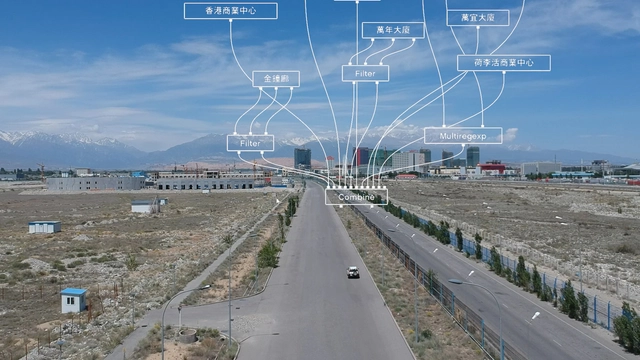
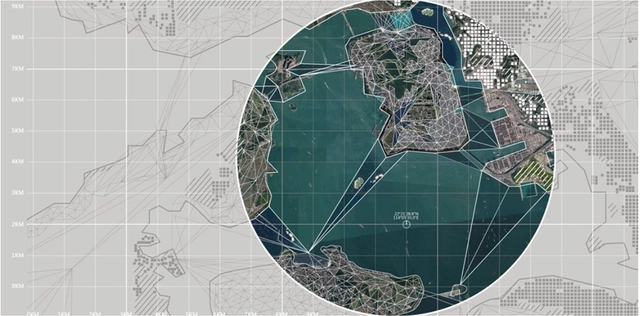
Overlaid tracings of various published IS sanctuary maps based on open source intelligence (for details see original paper), by Azam Majooni
What happens when the sensor-imbued city acquires the ability to see – almost as if it had eyes? Ahead of the 2019 Shenzhen Biennale of Urbanism\Architecture (UABB), titled "Urban Interactions," ArchDaily is working with the curators of the "Eyes of the City" section at the Biennial to stimulate a discussion on how new technologies – and Artificial Intelligence in particular – might impact architecture and urban life. Hereyou can read the “Eyes of the City” curatorial statement by Carlo Ratti, the Politecnico di Torino and SCUT.
Carlo Ratti can be considered one of the great architectural innovators of our time. The founder of Carlo Ratti Associati, and Director at the MIT Senseable City Lab, Ratti champions the power of new technologies to transform both how we live, and how we design. The act of “convergence” is central to Ratti’s architectural outlook, whether it be the convergence of bits and atoms, or natural and artificial, or human and technology. Moreover, he believes that this convergence can reframe the design process, and engage citizens in discussions on what kind of city they want to live in.
https://www.archdaily.com/926026/carlo-ratti-discusses-architectural-innovation-and-the-shenzhen-biennaleNiall Patrick Walsh
What happens when the sensor-imbued city acquires the ability to see – almost as if it had eyes? Ahead of the 2019 Shenzhen Biennale of Urbanism\Architecture (UABB), titled "Urban Interactions," ArchDaily is working with the curators of the "Eyes of the City" section at the Biennial to stimulate a discussion on how new technologies – and Artificial Intelligence in particular – might impact architecture and urban life. Hereyou can read the “Eyes of the City” curatorial statement by Carlo Ratti, the Politecnico di Torino and SCUT.




.jpg?1576062728&format=webp&width=640&height=580)