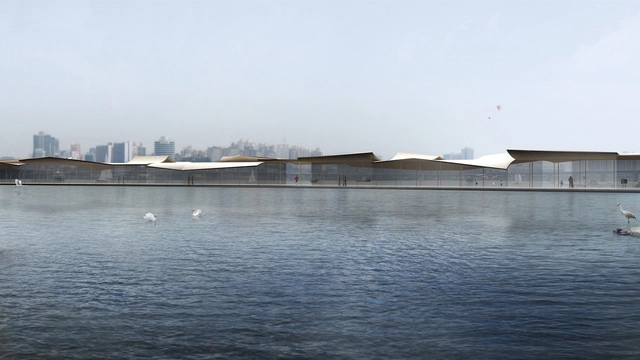
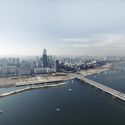
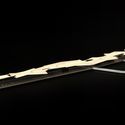
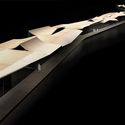
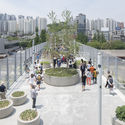
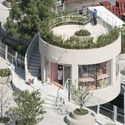
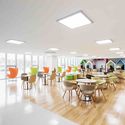
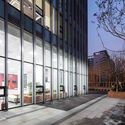
Hong Kong based architecture firm Cheongvogl has won an international competition to build the Yeoui-Naru Ferry Terminal in Seoul, South Korea. Founded by Judy Cheung and Christoph Vogl in 2008, the international practice aspires to “touch human hearts with poetic senses” through their projects. With that in mind, their winning design impressed an illustrious jury including architects Ryue Nishizawa (SANAA, Nishizawa, and Associates) and Alejandro Zaera Polo of APML. Using an approach called “Poetic Pragmatism” – the design aims to enhance the flatness and monochrome characteristics of the Han River site through its architecture. The masterplan connects the entire design to the city’s existing infrastructure while creating a sense of place along the riverbank.
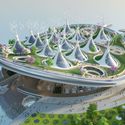
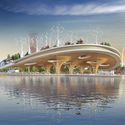
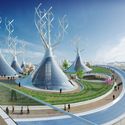
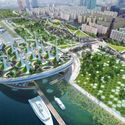
Vincent Callebaut Architectures have developed a design plan reimagining the riverbank of Yeouhido Park, Seoul. The park is envisioned as an experimental urban space dedicated to sustainable development through a series of interventions - including a floating ferry terminal. Named the “Manta Ray,” the ambition of the proposal is to transform the park into an ecological forest of trees, enhancing its natural irrigation and strengthening the banks from floods. The “permeable landscaping” seeks to reduce floods and rehabilitate urban ecosystems that have become fragmented through Seoul’s rapid built expansion. The vegetation-dominated strategy also seeks to reduce the urban “heat island” effect Seoul has been experiencing due to climate change over the past decades.
A Swiss Room to Showcase Lausanne’s Candidature to organize the 28th UIA Congress.
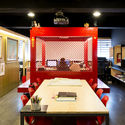
The challenge posed by this competition is to design a place object which encapsulates the ideas behind the topic of “Architecture and Water”. It involves creating a place to showcase Lausanne’s Candidature which offers an intuitive approach to the multiple ramifications of this topic. It should, effectively, act as a laboratory of ideas. This place-object must be able to house a table and 4 chairs for discussions, presentation of the candidature, etc. It will be located in the hall of the Convention center in Seoul.
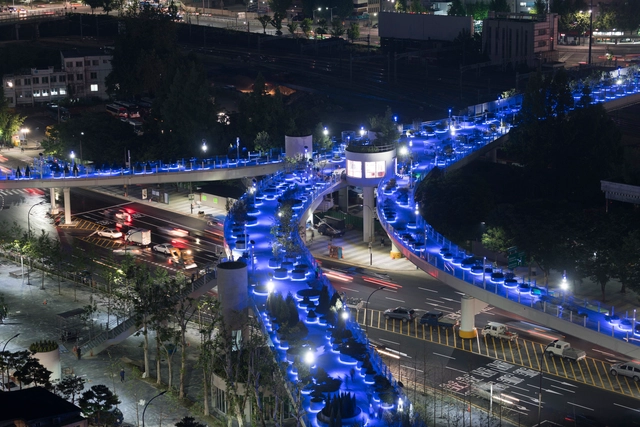
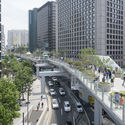
Today the Mayor of Seoul opened the Skygarden, a 983-meter elevated walkway designed by MVRDV which utilizes a formerly abandoned highway in the center of the South Korean capital. Located in Seoul's Central Station district, the 16-meter-high linear park features a living catalog of Korea's indigenous plants, featuring over 24,000 individual plants from 228 species and sub-species. The Skygarden is known in Korean as Seoullo 7017, a name which references the Korean for "Seoul Street," and the 1970 and 2017, the years in which the structure was originally built and subsequently transformed.
The Seoul Metropolitan Government is promoting the Yangjaegogae Eco Bridge Design Competition which connects green areas that were disconnected for the Gyeongbu Expressway. The Yangjaegogae Eco Bridge Competition aims to connect green axis, as a part of the Ring of Green Phase of the 2030 Seoul Park and Green Basic Plan, also targets the preservation of wild animals and plants by obscuring animal’s roaming routes and improving citizens’ convenience by connecting with the Seoul Trails.
Growing the aging society, the demand for nursing homes has been expanding due to the rapid increase in the elderly population and the increase in dementia patients. However, seoul city has a low rate of utilization of facilities compared to the demand for nursing home. To address this problem, the design competition that targets experts in the areas of domestic and international civil engineering, architecture, and the landscape design have been announced in order to create a efficient space design and family friendly urban elderly nursing home models.
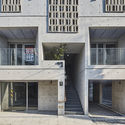
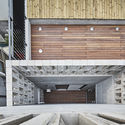
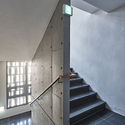
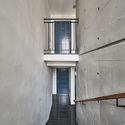
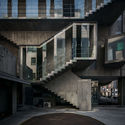
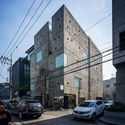
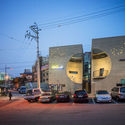
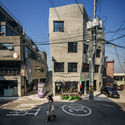
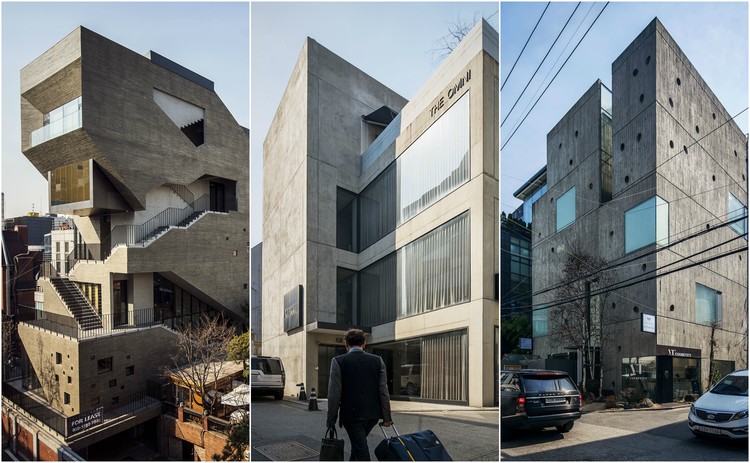
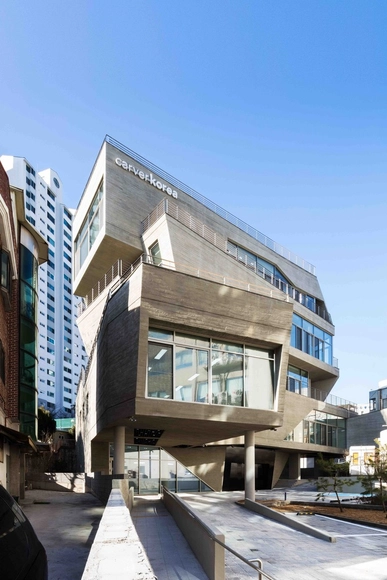
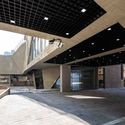
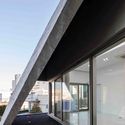
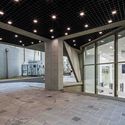
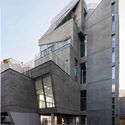
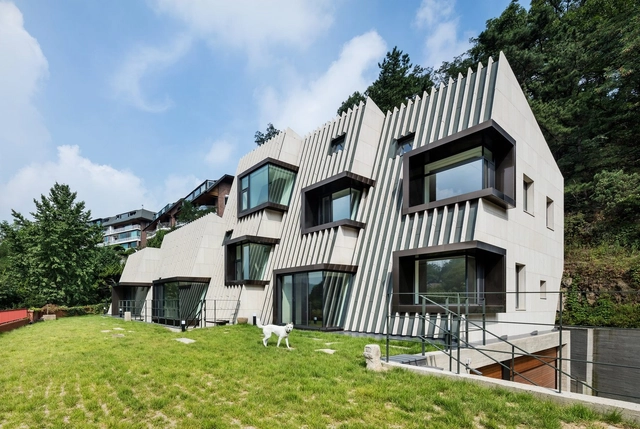
During his frequent travels to Seoul, Hong Kong- and Singapore-based photographer Raphael Olivier noticed a new trend taking the South Korean capital: a crop of geometric, concrete buildings of all genres. He calls the new style Neo-Brutalism, after the modernist movement that proliferated in the late 1950s to 1970s, in which raw concrete was meant to express a truth and honesty. Olivier's observation led him to capture the phenomenon in a personal photo series—a photographic treasure trove of these projects which, when taken as a whole, uncovers a cross-section of this trend in the city's architecture.
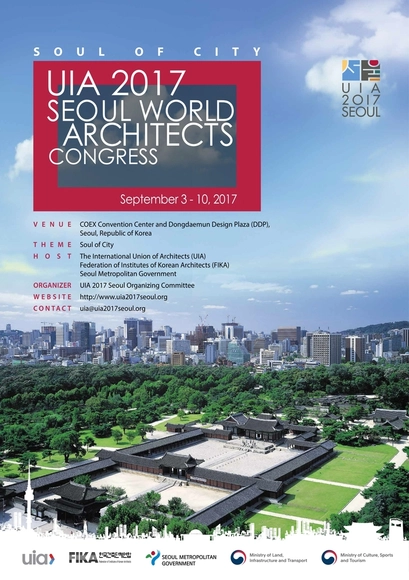
The UIA (International Union of Architects) world congresses are a premier forum for professionals and future leaders in the field of architecture to exchange the best and latest practices, visions and first-hand experience. The UIA 2017 Seoul, in particular, will promote various innovative architectural techniques and technologies among member sections and global citizens. In doing so, academic programs, exhibitions, competitions, student activities, and public outreach programs will simultaneously take place.