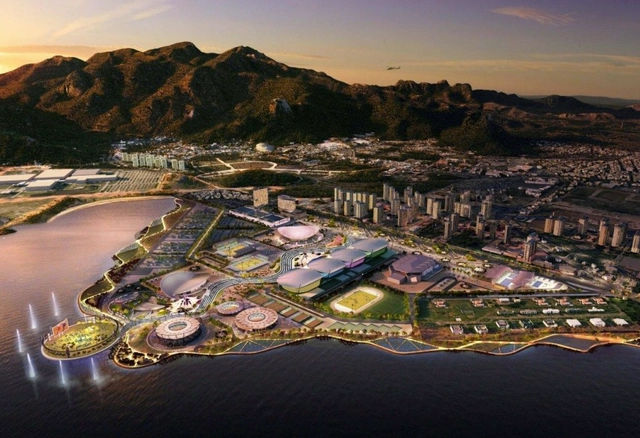
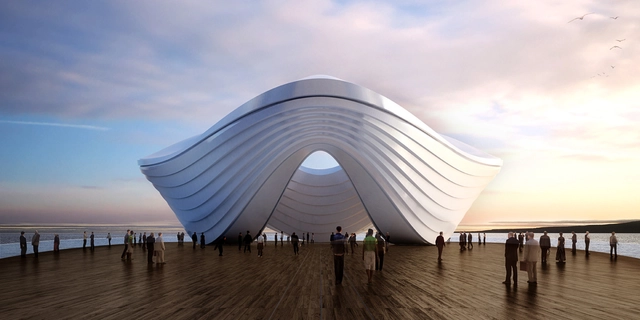
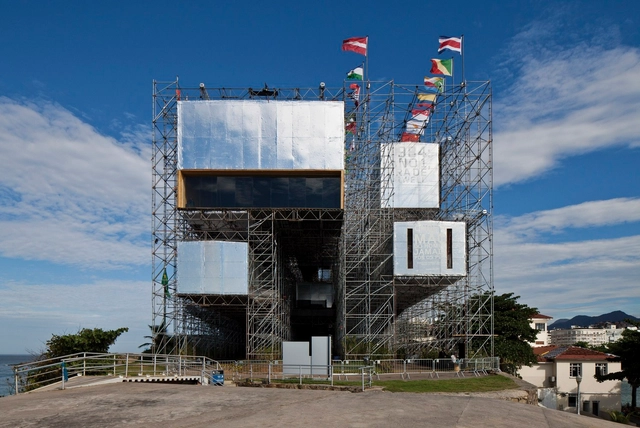
Chun Qing Li, founder director of London-based KREOD, has revealed planes for a 1,200 square meter international trade pavilion for the 2016 Rio Olympics. Floating on a platform in the Barra de Tijuca lagoon, adjacent to Olympic Park, the pavilion is expected to bring together entrepreneurs and industry leaders from Brazil, the United Kingdom and China to discuss future of business and showcase their products.
The world is experiencing exponential growth and Rio de Janeiro, a true megalopolis of six million people, is a prime example. Thus, TEDGlobal 2014 has announced they will be “setting up shop” in Rio’s Copacabana Beach theater in the search to find “fresh thinking” in emerging geographies.
More than 40 speakers and performers have confirmed their attendance, each focusing on the “many facets of the Global South’s rise in influence and power” and relevant new stories from around the world.
Register here and continue after the break for complete list of confirmed speakers and Rio’s Mayor Eduardo Paes’ TED Talk “Four commandments of cities”...
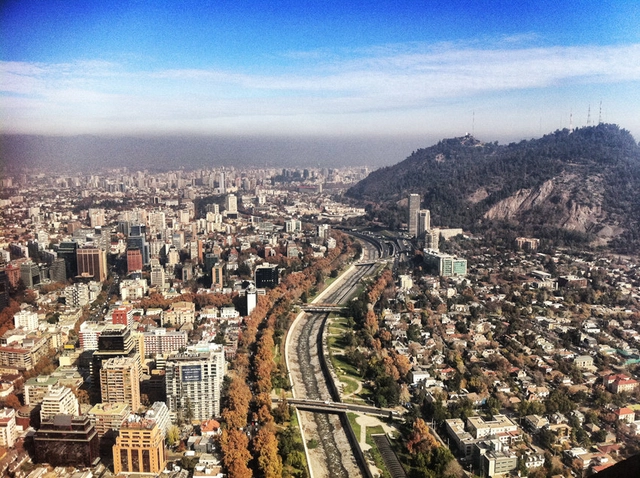
Santiago, Chile took the top spot on the list. Image via Plataforma Urbana
In this article for Fast Company, Boyd Cohen counts down the top 8 smart cities in Latin America. Using publicly available data and his own comprehensive framework to evaluate how smart a city is, he has generated a list which even he admits features a couple of surprises in the top spots. To see the list and discover what each city has achieved to deserve its ranking, you can read the full article here.
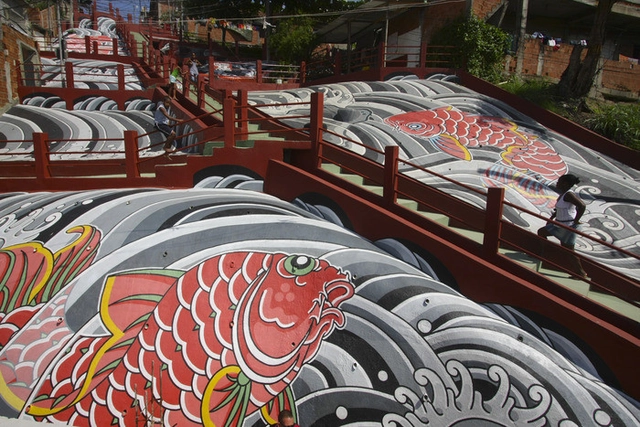
Favela Painting: Rio Cruzeiro, realized in 2008. Image Courtesy of Favela Painting's Kickstarter Page
Dutch duo Haas and Hahn gained fame in 2005 for painting a few houses of Rio Janeiro’s favelas in a palate of bright hues. Now they’re back again, this time with a Kickstarter Campaign to raise the funds to paint the rest of the favela in the hopes of further transforming this crime-ridden community.
Rio de Janeiro has become one of the most popular destinations right now, hosting some games of the 2014 FIFA World Cup and the 2016 Olympics. Joe Capra shared with us this timelapse video he made on the Brazilian city. Besides the fantastic natural settings that surround the city, you can also see the contrast with a few shots of the popular favelas.
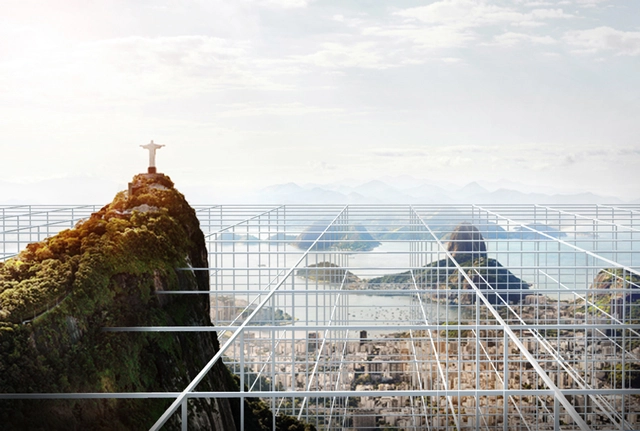
Designed by Buro AD and SPECTACLE for this year’s CityVision Competition, their Rio de Inverso proposal critically addresses the historically cyclical attempts by urban planners to impose order post ex-facto on Rio de Janeiro's informally created, complex and spatially rich urban fabric. With the theme of the competition ‘sick and wonder (wonder and disgust),’ the architects demonstrate how the city was the arena for a continuous struggle. More images and architects’ description after the break.
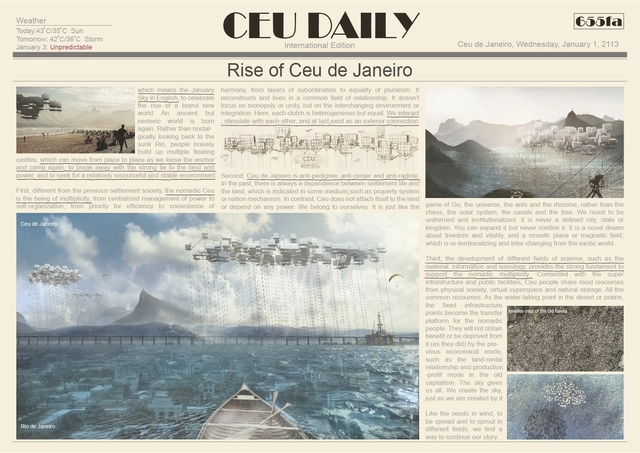
CityVision just announced the winners of the Rio de Janeiro Competition, their fifth international ideas competition which was launched earlier this year with the purpose of providing a vision on Rio de Janeiro’s future. Upon receiving 68 proposals from all five continents, this year's jury selected a winner and 9 honorable mentions. The first place was awarded to Donghua Chen from China, for his project "Ceu de Janeiro" which doesn’t focus on monopoly or unity, but an interchanging environment or integration. More images and information on the winning proposals after the break.
Led by UK housing minister Mark Prisk, architects from five high-profile British practices - Haworth Tompkins, Foster & Partners, Amanda Levete Architects, Avanti Architectsand de Matos Ryan - have embarked on a week-long visit to Brazil in search of major infrastructure opportunities for the 2014 FIFA World Cup and 2016 Olympic Games. The trip is part of the UKBrasil Season, a six-month series of dynamic and engaging projects designed to showcase the best of British business, culture, science and innovation in Brazil and become the largest post-Olympic legacy project in the world.
Mark Prisk stated: “Brazilian companies in these cities are actively looking for fast-track construction systems, innovative building materials and low carbon solutions to meet current and future demand, not only in preparation for hosting the 2014 FIFA World Cup and 2016 Olympic Games but also to compete in the country’s many major infrastructure projects.
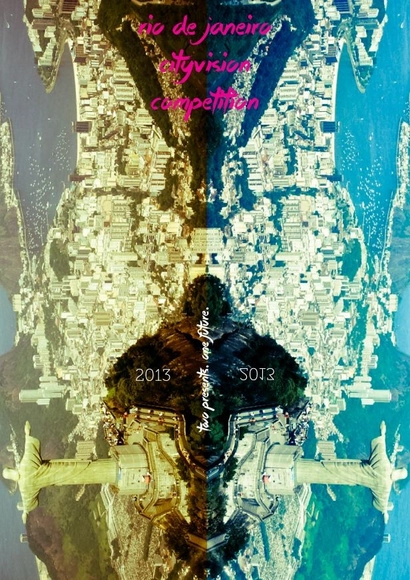
The Rio de Janeiro CityVision Competition is the fifth international ideas competition launched by CityVision with the purpose of providing a vision on Rio de Janeiro’s future. We live in a particular period, made so by a broader vision of history itself, for which “the sums don’t add up” and the meaning of “time” has lost its positive and progressive meaning, giving way to a “contemporary time” in which present, past and future (or rather our visions of it) seem to coexist. Reality is now compromised by the crisis and bad taste has prevailed. It has now become necessary to analyze the city and grasp the essence of its disgust. Submissions are due no later than June 11. For more information, please visit here.
Designed by Aflalo & Gasperini Arquitetos, the Trump Towers is an innovative project that will contribute to the development of the port area of Rio de Janeiro, the future home of the 2016 Olympic Games. Defined as five rather slender towers, with broad front to Francisco Bicalho Avenue, they are similar, equal in height and in geometrically tessellated form. This development is carefully arranged creating a sinuous line suggested by gardens occurring at different heights in each tower. This language gives a sense of order that connects with the landscape and stimulate diversity. More images and architects’ description after the break.
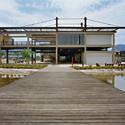
RUA Arquitetos shared with us their design for the Olympic Golf Course Clubhouse in Rio de Janeiro which is organized like a comfortable veranda, dissolving the limits between the landscape, the building, and the users. As Rio citizens, the architects wanted an architecture that expressed the city’s lifestyle, one that was tropical, open and generous, like a big varanda leaning over the golf course. They reconfigured the concept of ‘veranda’ with a large, extremely light roofing around which the clubhouse’s activities are organized. More images and architects’ description after the break.




.jpg?1398307647 "© Cesar Duarte")










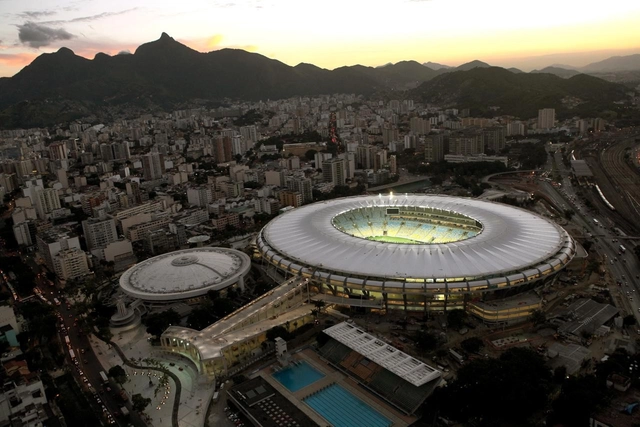
.jpg?1385552815 "Courtesy of Fernandes Arquitetos Associados")
.jpg?1385552825 "Courtesy of Fernandes Arquitetos Associados")


.jpg?1364390899)