If the surest sign of summer in London is the appearance of a new pavilion in front of the Serpentine Gallery, then it’s perhaps fair to say that summer is over once the pavilion is taken down. The installations have gained prominence since its inaugural edition in 2000, acting as a kind of exclusive honor and indication of talent for those chosen to present; celebrated names from the past names include Zaha Hadid, Rem Koolhaas, and Olafur Eliasson.
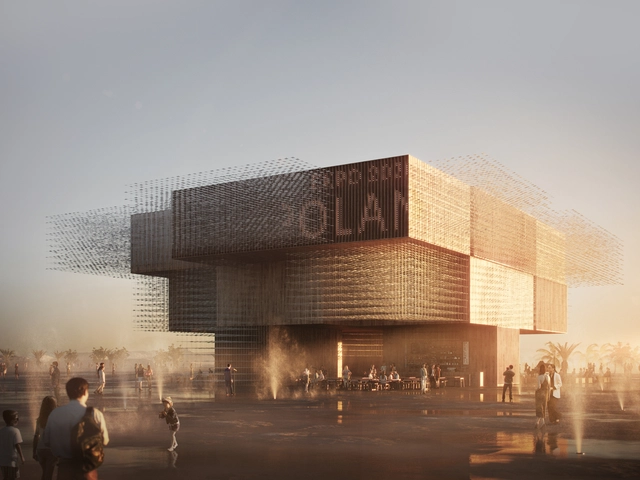
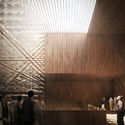
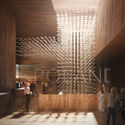
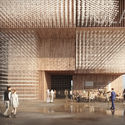
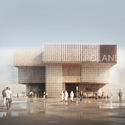
WXCA and Bellprat will design the PolishPavilion for Expo 2020 Dubai, having overcome more than 30 other proposals. The winning scheme seeks to create an “open, tree-like modular structure” inspired by Poland’s rich wildlife.
The pavilion will feature an integrated exhibition with “kinetic flocks of birds floating over visitors’ heads,” referring to the many migratory birds which settle in Poland each year “inspiring legends, connecting minds, and creating the future.”
Architecture and design practices Penda and Smartvoll have created a giant watermill for Austria's National Pavilion for Expo 2020 Dubai in Dubai. ‘The Source of Everything’ was selected as a finalist in an international competition and marks the first collaboration between Penda Austria and Smartvoll. The project features a supersized mill that circulates water through the pavilion and brings an experience to the desert of Dubai that Austria is famous for: Refreshment.
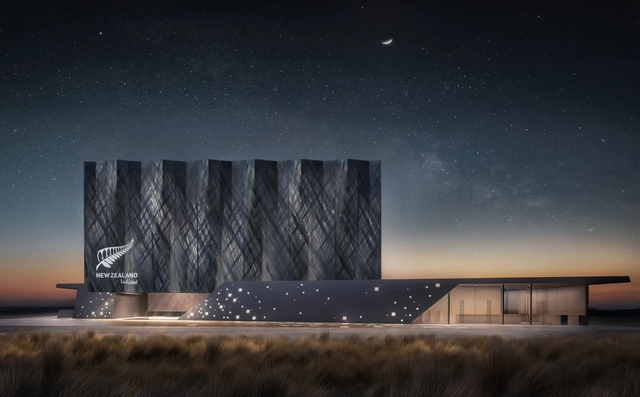
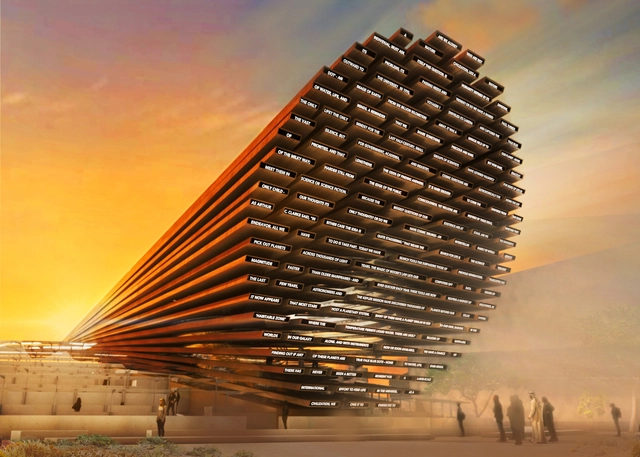
Architecture firm Jasmax has been selected to design New Zealand's National Pavilion for Expo 2020 Dubai. New Zealand will participate in Expo 2020 from October 2020 to April 2021. Expo 2020 Dubai will bring together 180 nations and 25 million international visitors. Over six months, the event will inspire collaboration on global challenges and opportunities. New Zealand’s theme for Expo 2020 is 'Care for People and Place'. The pavilion will feature an exhibition experience, corporate hosting facilities, a restaurant and design store.
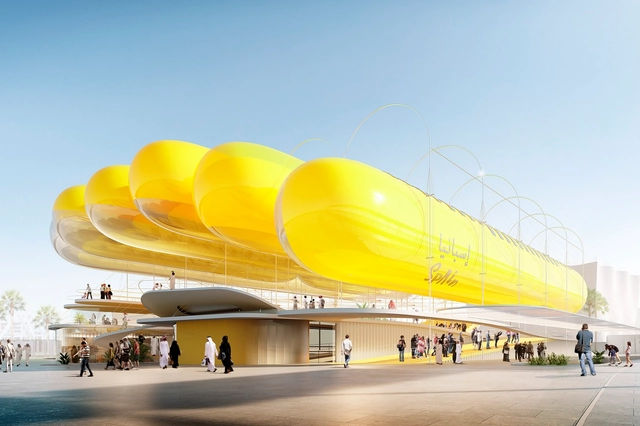
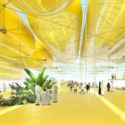
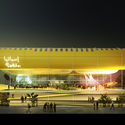
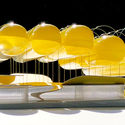
Spanish Pavilion. Image Courtesy of Selgascano & FRPO
Architecture firms Selgascano and FRPO have been announced as a finalist in the competition to design Spain's National Pavilion for EXPO 2020 in Dubai. Their proposal includes an inflatable canopy of nine yellow ETFE cylinders set within a steel framework. Reinterpreting the Spanish plaza, the design creates a new take on the public square. The pavilion was made to be ultralight as a more sustainable structure that could be easily removed and transported. Formed as a 'breathing pavilion', the design allows two inflatables to move up and down to respond to views, light and breeze.
For the Dubai 2020 Expo, the United Arab Emirates and Sheikh Mohammed bin Rashid, Vice President and Ruler of Dubai, selected the theme Connecting Minds, Creating the Future. Organized around ideas of Sustainability, Mobility and Opportunity, the next world Expo will be the first to be held in the Middle East, North Africa and South Asia region. Organised every five years, the world expo lasts six months and is created as a global destination for millions of people to share ideas, showcase innovation, encourage collaboration and celebrate human ingenuity.
Austria Pavilion. Image Courtesy of Querkraft Architekten
The Viennese architecture office Querkraft has been selected to design the Austrian Pavilion for Expo 2020 Dubai. The design combines traditional building materials with modern techniques to present Austria as a center of innovation. Former Federal Minister Beatrix Karl was appointed honorary commissioner for the world expo and will represent Austria externally. The Expo in Dubai will be the first world exhibition in an Arab country in the 170-year Expo history. The Austrian Pavilion will center on questions of how resources can be used more thoughtfully and respectfully in the future.
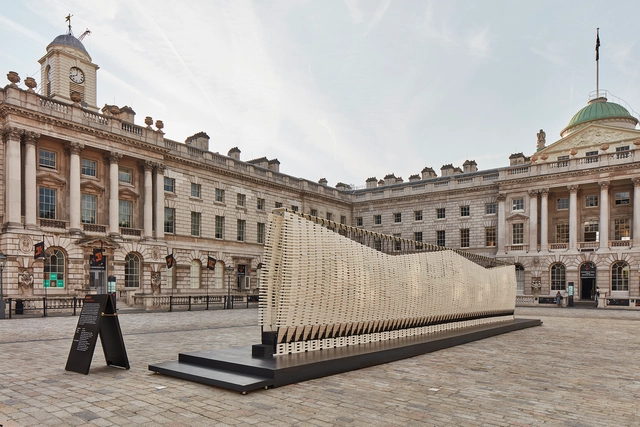
Experimental design practice Studio INI's has designed a kinetic installation to represent this year's Greek Pavilion for the 2018 London Design Biennale. Entitled ΑΝΥΠΑΚΟΗ (Disobedience), the installation responds to the Biennale theme of Emotional States. Selected for the central courtyard exhibit, the design is comprised of a 17 meter-long wall constructed from a steel spring skeleton built up with recycled plastic which flexes, morphs and breathes around the human body.
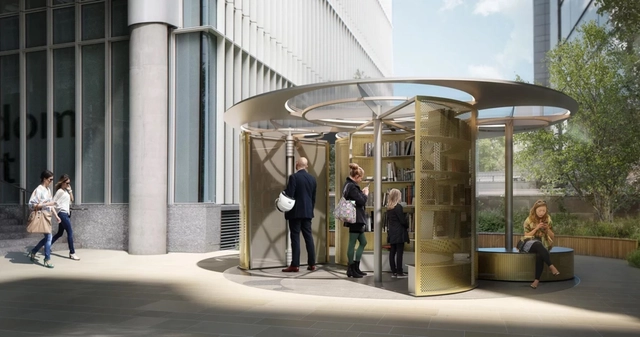
Celebrating Paddington Central’s first year as a Design Route at the London Design Festival, the design practice Snøhetta created a rotating book pavilion for British Land. Snøhetta wanted to create a project that would reimagine the traditional principles of a library through a mechanized pavilion that generates varied spatial types. Designed for visitors to immerse themselves into a world of books, the pavilion encourages exploration, interaction and reflection.
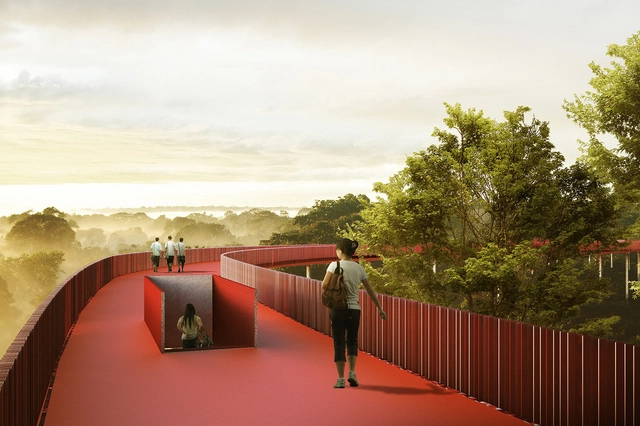
The winning collaboration saw off competition from JCFO, SWA, and TCL, with the competition jury praising the scheme for its “fresh approach and [for] being highly attentive to local ecology [while] meanwhile incorporating romantic techniques and realistic urban visions.”
When learning about architecture, there is no replacement for practical experience: seeing how materials can be joined together, how structural elements respond to the stresses placed upon them, or how construction techniques can alter the finished project. For this reason, it is a good idea to give students a chance for some hands-on experience building real structures—something that, due to budgetary constraints and the academic culture of many architecture schools, has sadly been uncommon in the past.
However, in recent years, this culture has started to shift, with increasing numbers of architecture schools finding ways for students to be involved in construction projects, from small, temporary interventions and pavilions, to larger permanent buildings. In order to show the excellent work that can be done in an educational context, for the fourth timeArchDaily is calling on students and professors to submit the design-build projects they have completed in the past year. As always, we're teaming up with allofArchDailyen Español,ArchDaily Brasil, and ArchDaily China, in the hope that we can present the best work from students worldwide to a worldwide audience. Read on to find out how you can take part.
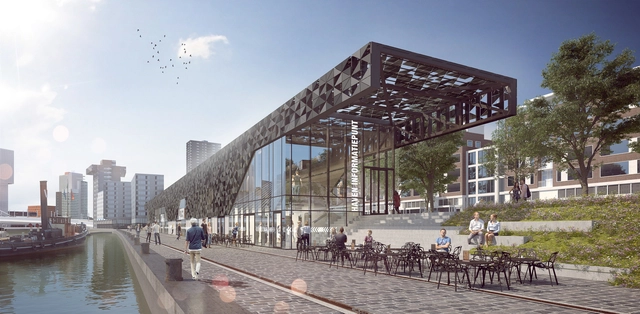
Render. Image Courtesy of MoederscheimMoonen Architects
A new public pavilion from MoedersheimMoonen Architects is set to be built in the old 'Leuvehaven' port in Rotterdam. Located near the Erasmus Bridge, the pavilion intends to bring new life to the historic port of Rotterdam. The municipality of Rotterdam is also set to invest in a bustling residential climate, with this new pavilion housing multiple programs that will contribute to a "lively" and "greener" Maritime District.
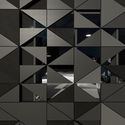
The building will replace three existing pavilions, providing a new perspective for visitors to the Leuvehaven. Much of the structure and foundation from the existing buildings are reused in the new design, promoting sustainability, honoring the present conditions of the site, and bringing high-tech design elements to the historical context.
The various programs for the Pavilion will include "the Port Information Point of the Port of Rotterdam, two publicly accessible workshops from the Maritime Museum Rotterdam and two catering establishments with terraces by the water," with the surrounding exteriors space also to be renewed in phases.
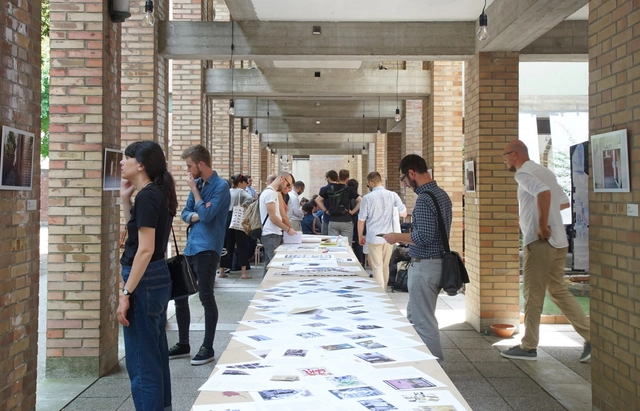
The ‘Unfolding Pavilion’ is an exhibition and editorial project that pops up at major architecture events in previously inaccessible but architecturally significant buildings.
On each occasion the ‘Unfolding Pavilion’ features a different theme inspired by the space it occupies, by means of commissioned original works that react to it and to its wider cultural-historic background. The ‘Unfolding Pavilion’ doesn’t necessarily care about the hosting event’s theme. It lets its occupied space inspire its own theme. Without a good exhibition space (of the finest architectural making), the 'Unfolding Pavilion’ doesn’t have any reason to exist.
In Dnipro, Ukraine, sits a unique multi-purpose pavilion rich with historical roots and design influence. Stage is a collaborative project between architects from Ukraine, Poland, Denmark and Italy, crowdsourced and crowdfunded by the citizens of Dnipro. The site for the pavilion has been centered around community involvement throughout the complex history of Dnipro, but it has laid unused for over 70 years.
Stage is an emanation of the rich and vibrant culture and was built to accommodate the needs of dozens of artists, poets, painters and musicians, who previously relied on various spaces scattered around the city. Their "collective creative energy" was used to reactivate the lost community space. Stage was recently awarded Special Mention in the 2018 European Prize for Urban Public Space.
YAC – Young Architects Competitions – and the Foundation Fashion Research Italy – in cooperation with the Cineteca di Bologna - launch “Seduction Pavilion”, an architectural competition to design and realize an installation that will became a real landmark of an exhibition that the Foundation is going to dedicate to the endless beauty of aspiring female celebrities and pin-ups. A cash prize of € 10,000 + realization of the 1st prize project will be awarded to winners selected by a well-renowned jury made of, among the others, Patricia Urquiola (Studio Urquiola), Fabio Novembre (Studio Fabio Novembre), Ippolito Pestellini Laparelli (OMA), Claudio Silvestrin (Claudio Silvestrin Architects)
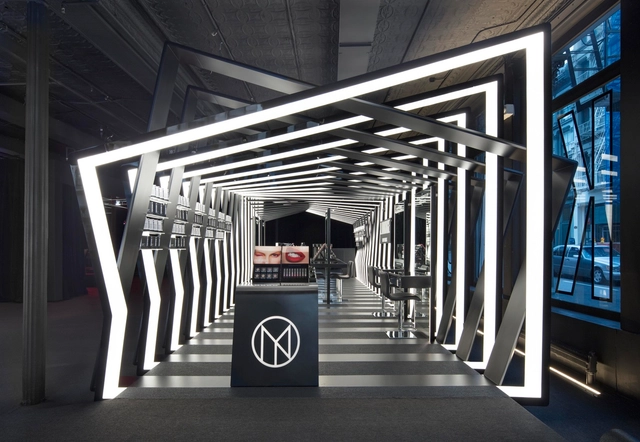
The pavilion coincides with the launching of Il Makiage’s new 800-piece makeup collection, and was designed to convey the label’s “characteristically bold graphic identity.”
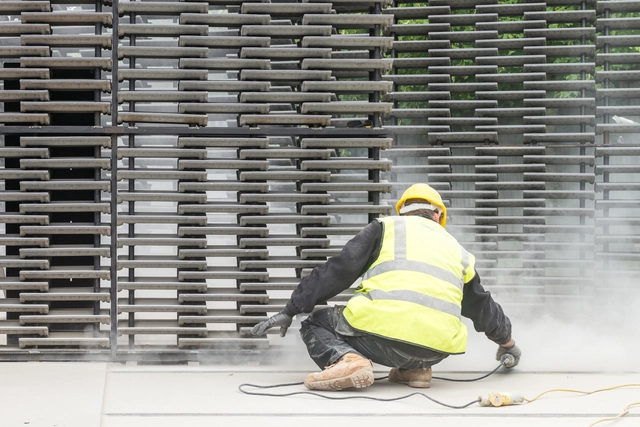
With an interplay of light and water, the pavilion seeks to evoke the sensation of the domestic architecture of Mexico, from where Escobedo hails. The stacked cement tiled visible in the photographs form a "celosia," a type of permeable wall common in Mexico.


.jpg?1539856634&format=webp&width=640&height=580)


.jpg?1539856634)


.jpg?1538515690 "The Source of Everything. Image © Virgin Lemon")
.jpg?1538515817 "The Source of Everything. Image © Virgin Lemon")
.jpg?1538515791 "The Source of Everything. Image © Virgin Lemon")
.jpg?1538515766 "The Source of Everything. Image © Virgin Lemon")





querkraft-bagienski.jpg?1537196954&format=webp&width=640&height=580)
querkraft-bagienski.jpg?1537197015 "Austria Pavilion. Image Courtesy of Querkraft Architekten")
querkraft.jpg?1537196980 "Austria Pavilion. Image Courtesy of Querkraft Architekten")
querkraft.jpg?1537196968 "Austria Pavilion. Image Courtesy of Querkraft Architekten")
querkraft.jpg?1537197037 "Austria Pavilion. Image Courtesy of Querkraft Architekten")
querkraft-bagienski.jpg?1537196954)












.jpg?1529424893 "© atelier XYZ")