"The Community" might be the most frequently used term over the last 50 years of Architectural and Urban discourse. For decades, "the community" has served as a legitimization for anything from Team X to New Urbanism, from Celebration to "vancouverism". But what is "the community"? Where should we look for the proper definition? How did communities appear in the past and how do they form today? Can 'the community" influence the design of its own space, territoiry or context? If yes, what could be the relationship between the community and architecture in the future?
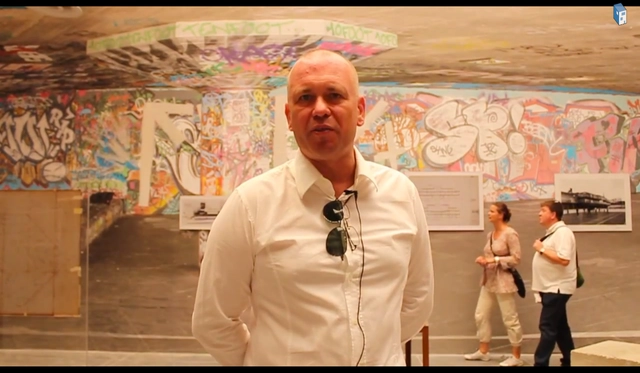
In his Strelka talk Reinier de Graaf is trying to answer these and other, even more complex questions.
Architecture is inseparable from planning, and the huge challenge for the current generation is the growth and shrinkage of cities. Some cities, mainly in the Southern Hemisphere, are growing at exponential rates, while former global hubs in the northern are turning into countrysides. In the south, populations are still growing a lot, while populations are dwindling in Europe, Russia and North East Asia. The dream of the Bilbao effect was based on the hope that there might be a quick fix to both of these problems. Well, there is not.
A decade ago, few people even recognized this was a real issue and even today it is hardly ever mentioned in a political context. As a politician, you cannot say out loud that you have given up on a huge part of the electorate, or that it makes sense for the national economy to favor another part. Reclaiming the agricultural part of a nation is a political suicide issue whether you are in Europe or Latin America. And investing in urban development in a few, hand-picked areas while other areas are desolate is equally despised.
The one person, who is consistently thinking and writing about this problem, is Rem Koolhaas, a co-founder of OMA.
Out of 140 architects considered, 12 architects have been selected by the Nobel Foundation to compete to design their new home, a Nobel Center in Blasieholmen, Stockholm. The conspicuously European selection, chosen for their "design and artistic abilities and experience working in intricate urban environments," includes some very big names - including BIG, David Chipperfield Architects, Herzog & de Meuron, and OMA. The only non-Europeans to compete will be SANAA's Kazuyo Sejima and Ryue Nishizawa.
See the full list of competitors, and more information on the competition, after the break...
Both Le Corbusier and Frank Lloyd Wright can be found on a lengthy list of architects who have tried to build in Venice and lost their battle to conservationists. However, OMA has broke through this barrier, as the practice was recently approved - after five years pending - to go forth with a renovation project of a 16th century palazzo for the fashion retailer Benetton near the Rialto Bridge on the Grand Canal.
More details and statements from the architect after the break...
After winning an international competition, OMA has been commissioned to masterplan a new 10km2 Airport City for a population of 200,000, linking the new Hamad International Airport with the city of Doha, Qatar. OMA’s masterplan is a series of four circular districts along a spine parallel to the HIA runways, intended to create a strong visual identity and districts with unique identities. Phase One of the 30-year masterplan, which links airside and landside developments for business, logistics, retail, hotels, and residences, will be mostly complete in time for the 2022 World Cup, hosted by Qatar.
Rem Koolhaas commented: “We are delighted and honored to participate in the exciting growth of Doha, in a project that is perhaps the first serious effort anywhere in the world to interface between an international airport and the city it serves.”
Last month, we reported on OMA's latest competition winner: the Essence Financial Building, a building that OMA Partner David Gianotten described as "a new generation of office tower" for the city of Shenzhen, China. To talk us through the building's cutting edge sustainable features, we spoke with Arpan Bakshi, an architect, engineer, and Sustainability Manager at YR&G, OMA's sustainability consultants, who led the environmental design for the project.
Learn more about the Essence Financial Building, OMA's collaborative approach, and Bakshi's views on the future of sustainable design - for both China and the world - after the break...
OMA has won the design competition for the Essence Financial Building in Shenzhen, China. Led by OMA Partners David Gianotten and Rem Koolhaas, the design beat out four other entries by international and Chinese practices.
The skyscraper will be OMA’s second in Shenzhen (the first being the Shenzhen Stock Exchange, which will be completed in April this year). By challenging many typical office tower conventions (such as a central core plan and curtain wall systems), OMA hopes their buildings will help lead the way for a “new generation” of office towers in the city.
As David Gianotten commented in the Press Release: "OMA is very excited about its continuous and deepening participation in Shenzhen's development, especially as the city makes its latest evolution: from a manufacturing city into a services hub. This next generation of urbanism calls for a new generation of office towers of which the Essence Financial Building could be one."
More on the Essence Financial Building, after the break...
Australian firm HASSELL Studio, OMA and Populous have been announced as the winners for the redevelopment of Sydney’s new convention, exhibition and entertainment precinct (SICEEP) at Darling Harbour.
The 20-hectare, billion (Australian) dollar project, which will stretch from Cockle Bay to Haymarket and Ultimo, will include Australia's largest convention and exhibition facilities, Sydney’s largest red carpet entertainment venue, a hotel complex with up to 900 rooms, and a new urban neighborhood in Haymarket.
The QNL, a public access library, will symbolically connect the country's past and future. As her highness explained: “The library’s vision of bridging with knowledge Qatar’s heritage and future demonstrates the significant role QNL will play in unlocking human potential as Qatar builds a knowledge-based economy. A modern dynamic National Library for the country is essential in reaching this goal.”
As such, Rem Koolhass - an architect known both for his iconic structures as well as his success with the Seattle Public Library - has been hand-picked for the important design, soon to be, according to the QNL website, "one of the most [...] iconic landmarks in Qatar and the region." As a library on the cutting-edge of digital archiving, the building will require innovative facilities (including over 300 public computers, wifi and multi-media production studios); however, it will also serve the community as a relaxed, social gathering place.
More images of OMA's plans for the Qatar National Library, after the break....
High profile architects BIG (Bjarke Ingels) and OMA (Rem Koolhaas) are in a close battle to win the redevelopment competition for the design of the Miami Beach Convention Center. Recently put on hold by a corruption probe and procedural concerns, Miami Beach’s ambitious plans to create a 52-acre convention center district are again progressing toward a crucial vote by elected officials. The committee’s recommendations will be reviewed by interim City Manager Kathie Brooks, who will issue her own recommendation to city commissioners. Commissioners could vote on the project and development teams Dec. 12. More information after the break.
The RIAS (Royal Incorporation of Architects in Scotland) has announced OMA as the tenth recipient of the prestigious Andrew Doolan Best Building in Scotland Award for the firm’s “welcoming, light and spacious” design of Maggie’s Gartnavel in Glasgow.
Serving as an exemplar for alternative healthcare design, OMA’s single story composition for the cancer care center laces together a series of interlocking rectangular spaces that form around a lush courtyard. Transparent walls of the building’s light-filled interior promenade connect patients directly to nature, as the building accommodates for the complex needs of the facility by providing spaces of interaction, personal privacy, and discrete counseling rooms, along with private nooks and corners. A notable characteristic of Maggie’s Gartnavel is the rich use of materials, from the flush inlaid timber and concrete ceiling to the simplistic concrete exterior and expansive floor-to-ceiling glass walls.
OMA generously donated their £25,000 prize to the Maggie’s Cancer Care Center.
Could OMA's design of the Kunstahl Gallery be largely to blame for the art heist that occurred there this past Tuesday?
That's exactly what the Gallery's security expert, Ton Cremers, has suggested to Dutch newspaper De Volkskrant (as reported by Dezeen) in his attempt to explain how the thieves made off with millions of dollars worth of Picassos, Monets, and more.
More about the Kunsthal (including plans) and why it's supposedly "awful to protect," after the break...
Beginning on October 16th, 2012, Galeries Lafayette in Paris, France, will be celebrating the 100 year anniversary of the Dome designed by architect Ferdinand Chanut and glass artist Jacques Gruber in 1912. 100 years under the Dome will be held at the flagship store of the boulevard Haussmann, a true Parisian symbol. In addition, the gallery will launch an exhibition called 1912-2012. Chronicles of a Creative Itinerary by architect Rem Koolhaas and his studio OMA, along with a collaboration called Chrysalide between visual artist Yann Kersalé and Djuric Tardio – Architectes.
Join us after the break for more stunning images for the anticipated celebration.
OMA has shared with us their proposal for the new National Art Museum of China (NAMOC) in Beijing. The Rotterdam-based practice is one of the all-star contenders competing to design the 1.3 million square feet NAMOC that will be built next to the Herzog & de Meuron-designed Bird’s Nest. Even though rumors are flying about a potential winner, the jury won’t announce the final results of the competition until November.
Given the epic proportions of the NAMOC, OMA has chosen to treat the massive structure as a small city by integrating a variety of city-like districts throughout. The proposal includes a range of experiences in both “classical, orthogonal” museum spaces as well as contemporary, open-plan areas. Continue after the break to learn more.
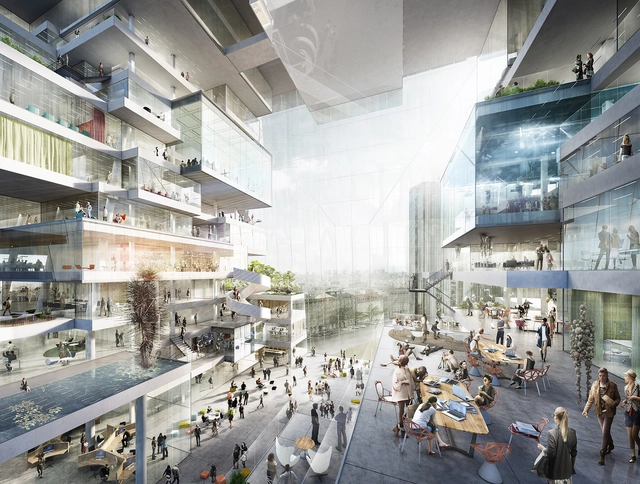
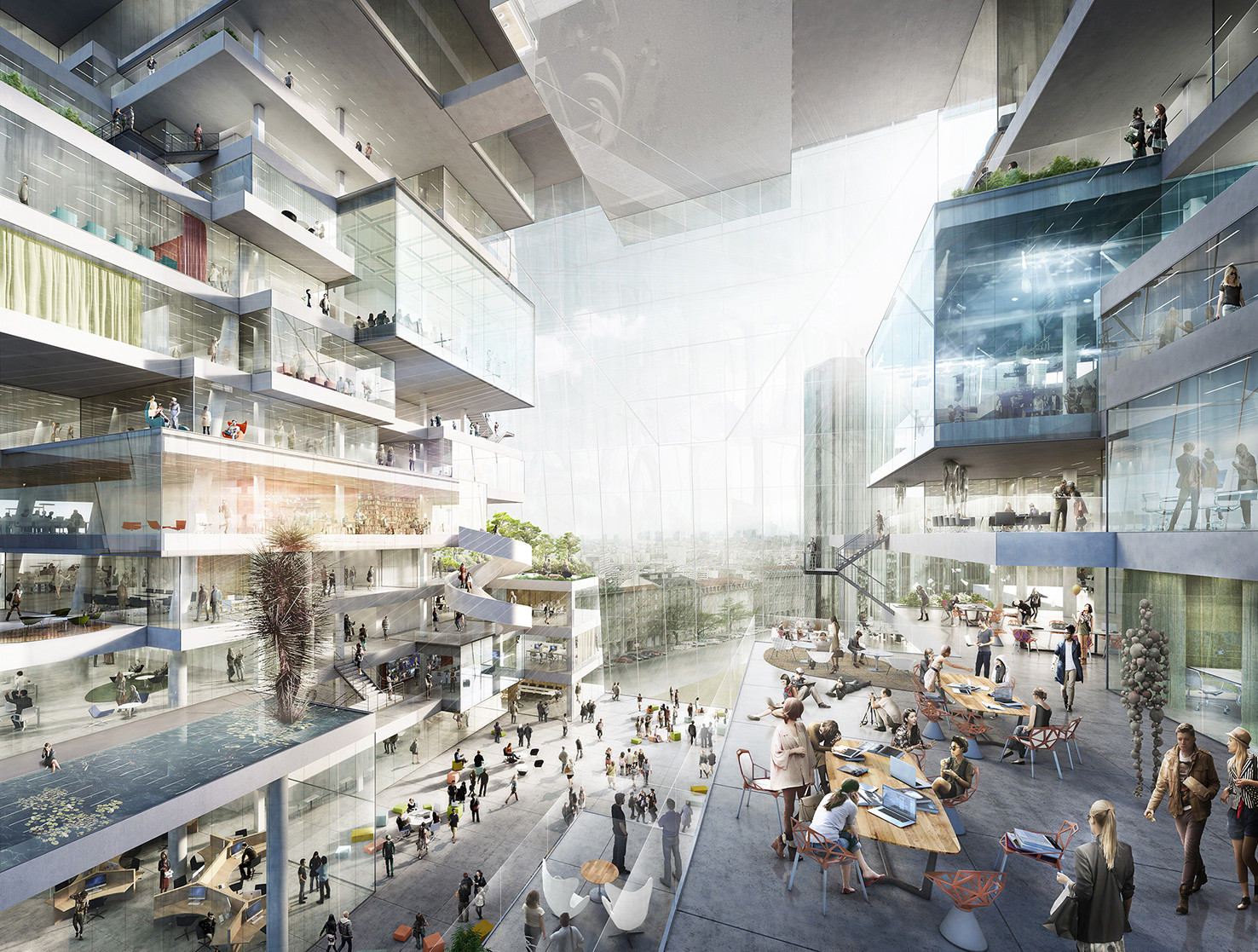
OMA has been selected from four competing international architectural practices to design the new École Centrale engineering school and its surrounding urban development in the research and innovation zone of Saclay, southwest of Paris.
Spearheaded by Clément Blanchet, director of OMA projects in France, the winning “lab city” concept contrasts the corridor linearity of the typical laboratory. The design proposes a low level, glass-roofed superblock that contains an interior open plan grid, where various activities can interact and be overlooked simultaneously. Continue after the break to learn more.