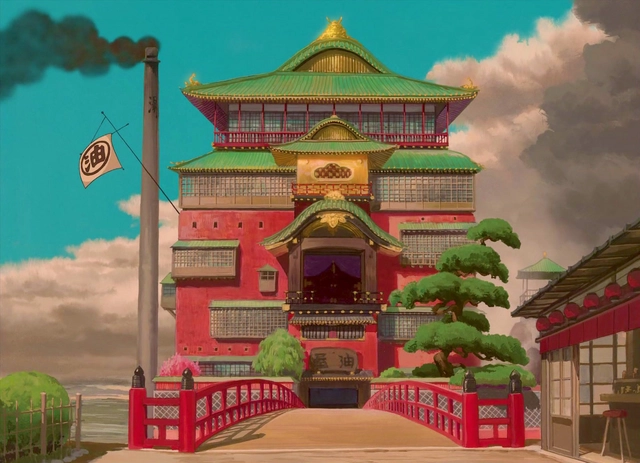
Still from 'Spirited Away' (2001). Image Courtesy of Studio Ghibli
Writers in film and animation, specifically pertaining to the genre of anime, endeavor to incorporate varied architectural backdrops to assist them in telling their stories, with influences ranging from medieval villages to futuristic metropolises. Architecture as a subject includes a wide array of elements to study, with each architectural era further inferring its context and history through its design alone. However, in film and anime, all of the contexts behind a building’s design can be condensed into a single frame, powerful enough to tell a thousand stories.
Humanity's relationship with insects is ancient and complex. While they can spread disease and wipe out crops, they are also vital to our survival on Planet Earth, as pollinators and recyclers. Edward Osborne Wilson, a leading American biologist, stated in one of his articles that “If insects were to vanish, so would nearly all flowering plants and the food webs they support. This loss, in turn, would cause the extinction of reptiles, amphibians, birds and mammals: in effect, nearly all terrestrial animal life. The disappearance of insects would also end rapid decomposition of organic matter and thus shut down nutrient cycling. Humans would be unable to survive.”
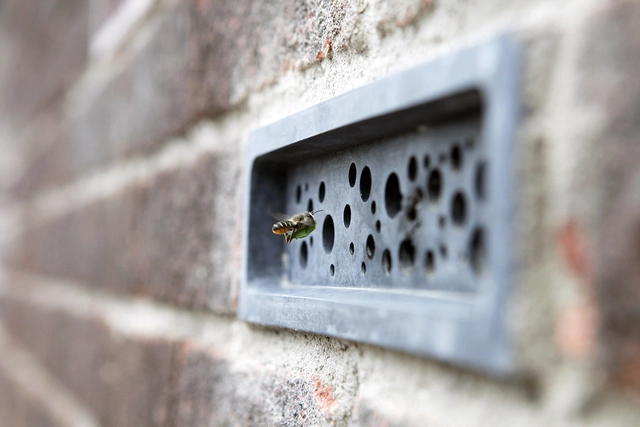
Especially in the case of bees, public opinion has changed in recent years and their importance in food production has sparked warnings about the indiscriminate use of poisons and pesticides around the world. But unlike nature, with its meanders and countless possibilities for resting places, our modern cities and buildings generally do not create adequate environments for insects, and even birds or other animals. The English company Green&Blue has been working on this and creating refuges to incorporate nature into our buildings. We spoke with them to better understand these products.
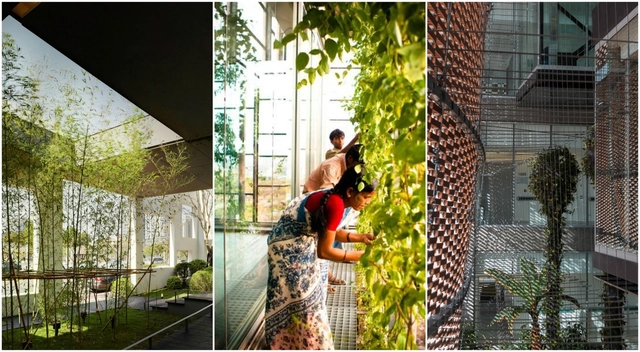
Transcendentalist philosophers have long shared the idea that humans and nature are equal forces that should coexist in harmony. The notion has since expanded to the architecture world, with Frank Lloyd Wright shedding light on the term “organic architecture” as early as the 1900s. In recent years, driven by an increased interest in living closer to nature, architects continue to delve into the concept of integrating interior and exterior, blurring out visual and physical boundaries to bring landscapes indoors.
In Sky-Frame’s latest film, part of the series “My point of view”, a conversation with architect Dara Huang explores this notion, questioning how architecture can merge nature, sustainability and lifestyle within its form, without relying on more technology or materials to do so.
Bringing the weather inside is usually the opposite of what you want from a building envelope. However, new research from the University of Oregon, described in an article by The Washington Post, aims to show the physical and psychological benefits of letting nature inside. Signs of nature and change are both beneficial to our well-being, yet we don’t always have access to them when inside buildings—and humans are now spending 90% of our lives inside. But even in an urban setting, where nature may be hard to come by, there’s no escaping the weather. When researchers found ways to bring things like wind and dappled reflections of the sun inside, they found that exposure to these natural movements lowered heart rates, while being less distracting than similar artificially generated movements.
By now, green buildings are a familiar concept, but the article in The Washington Post proposes moving beyond green buildings as we know them today. While green building can be great in new construction, that excludes a lot of existing buildings that could and should also benefit from an intervention of nature. Ideally, buildings should actively demonstrate their relationship with nature, moving beyond simply “doing no harm.”
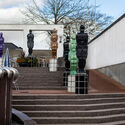
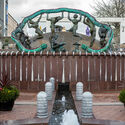
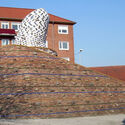
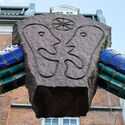
Talking to the Louisiana Channel, Danish professor, sculptor, and artist Bjørn Nørgaard outlines the philosophy that underpins his work and reflects upon his architectural projects. Nørgaard describes in the film, a co-production with Munkeruphus, the strong influence of his mentor in the 1960s - German artist Joseph Beuys - whose theories formed a key part of Nørgaard's evolution and ethos as an artist. The concept of "die soziale Plastik", or social sculpture, would go on to shape Nørgaard's approach to architecture and other forms of art - its main philosophy being that every part of life can be approached creatively.
How many changes have you done to your interior space during this past year? Whether it was a change of furniture layout, repainting the walls, adding more light fixtures or perhaps even removing them, after spending so much time in one place, the space you were once used to didn’t make sense anymore. We could blame the overall situation for how we’ve been feeling lately, but as a matter of fact, the interior environment plays a huge role in how we feel or behave as well. However, if you were wondering why some neighbors seem much more undisturbed and serene even in the midst of a pandemic, it could be because the interior is greener on the other side.
In 1941, Swiss engineer George de Mestral was coming back from a hunting trip with his dog when he noticed that some seeds kept sticking to his clothes and his dog's fur. He observed that they contained several "hooks" that caught on anything with a loop, and from studying this plant, seven years later, he invented the hook and loop fastener, which he named Velcro.
Going beyond human scale is not a novelty. For centuries, builders, engineers, and architects have been creating monumental edifices to mark spirituality or political power. Larger than life palaces, governmental buildings, or temples have always attracted people’s admiration and reverence, nourishing the still not fully comprehensible obsession with large scale builds.
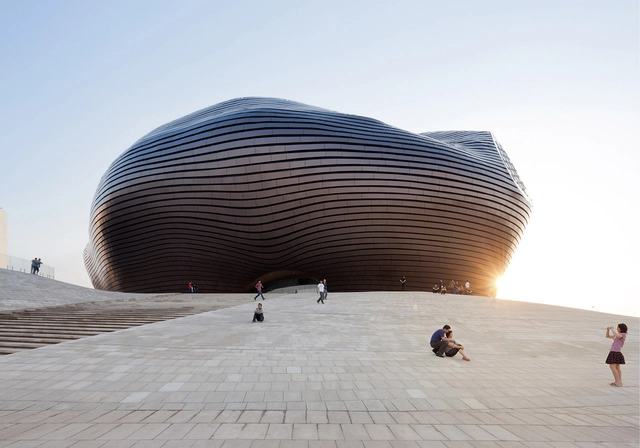
Nowadays, some of the largest and most impressive structures relate less to religious or governmental functions and seem to be turning towards more cultural programs. Most importantly though, today’s grandiose works are generally and openly imitative of Nature.
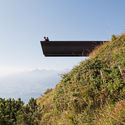
Building in nature constitutes a contradiction, as architecture enables immersive access to the landscape, while at the same time, natural landmarks are being slowly engulfed by tourists. The human presence in natural landscapes is an interplay of scales, a juxtaposition of archetypal shelters against the vast sceneries, as well as a negotiation between access to the landscape and environmental conservation. Exploring a variety of attitudes and formal strategies, the following takes a look at what could be learned from the experiences and design philosophies of several architects and practices that have perfected ways of addressing architecture in the landscape.
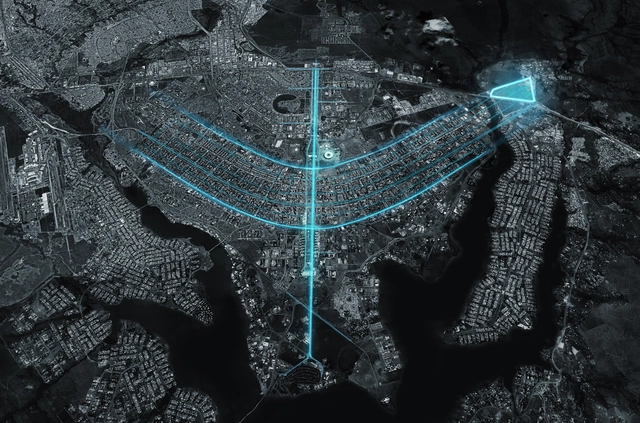
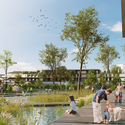
CRA - Carlo Ratti Associati has unveiled a major extension for Brazilia, reinterpreting “Lúcio Costa and Oscar Niemeyer’s modernist master plan for Biotic - a high-tech innovation district immersed in nature”. Developed in collaboration with Ernst&Young, the project that started in 2018 reimagines primarily the superblocks.
Design and the City is a podcast by reSITE, raising questions and proposing solutions for the city of the future. In the fifth episode, Yosuke Hayano, principal partner for MAD Architects, talks about Creating Emotional Connections to Nature. Always asking “How do you bring modern architecture into the future and connect humans with nature?” Hayano discusses the creative approach of the firm.
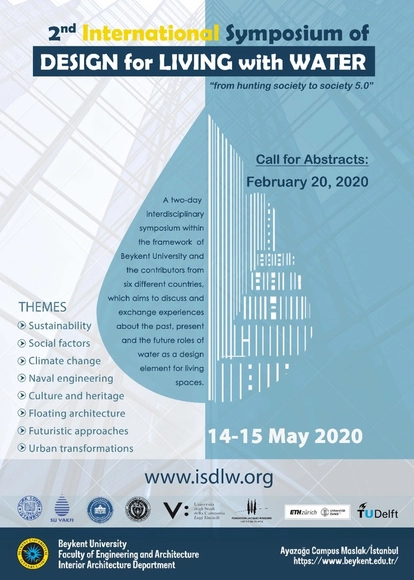
In the days of witnessing the nature's responses to climate change and facing the risk of loosing basic life sources we are calling (inviting) all the academicians, designers, and all other interested parties to take a part in sharing their idea about the importance of ecofriendly, responsive and nature responsible design. We are curious to hear your opinions. We proudly announce the 2nd International Symposium of Design for Living with Water!! It is our turn to take a part in responsibility toward water and nature!
Soil is the foundation of the Earth in which we all inhabit. We grow from it, prosper from it, build upon it, pollute it, and dichotomize it. Soil is an organic material providing a sustainable base for life. Yet, polarized as degrading and dirty. How is it that soil can unite nations, yet divide people? What power does it have in cultivating the built environment and defining its boundaries?
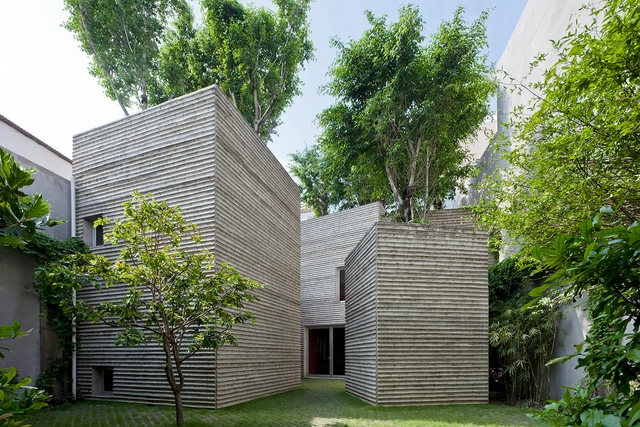
With a subtropical climate, high temperatures and environment favored by the rains, Vietnam has, as one of its main features, landscapes with vegetation in abundance, privileged by the fertile soil and the weather conditions. Ingrained in this scenario, Vietnamese architecture seems to embrace the nature as its protagonist increasingly, miming natural elements along with the rusticity of the concrete surfaces.
With this idea in mind, we selected 20 Vietnamese house projects already published on ArchDaily that incorporate natural elements into their façades and inside spaces. Check the list below!
On September 8, 2019, Austrian’s largest public art installation to date opened to the public. Titled FOR FOREST – The Unending Attraction of Nature, the artwork transforms the Wörthersee Football Stadium in Klagenfurt into a native central European forest. Conceived by Swiss curator Klaus Littmann and inspired by a dystopian drawing by Austrian artist and architect Max Peintner, the installation advocates for pressing contemporary issues such as climate change and deforestation. Through the structural containment of this massive forest, it suggests that nature may someday only be found in specially designated spaces, as animals are today in zoos. Landscape architecture was supervised by Enea Landscape Architecture.
https://www.archdaily.com/924835/austrian-stadium-is-transformed-into-giant-forestLilly Cao
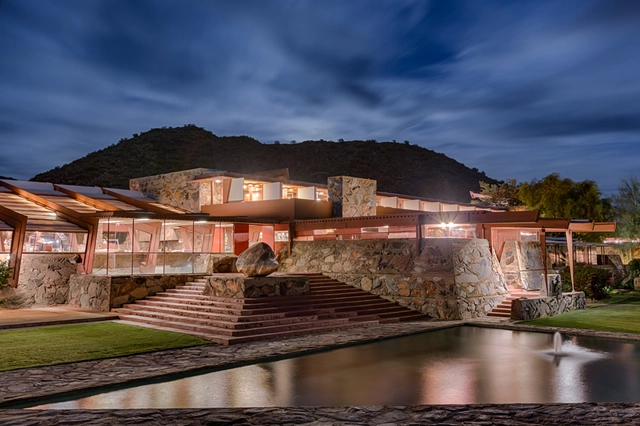
The Frank Lloyd Wright Foundation has used Earth Day, April 22nd, 2019, to launch a new initiative focused on educating the public about how sustainable practices are used in the conservation of National Historic Landmark sites, including the renowned architect’s Taliesin (Wisconsin) and Taliesin West (Arizona) residences. Taking place throughout the year, the Foundation’s efforts will aim to show how these practices can serve as examples for other facets of society.
https://www.archdaily.com/915558/frank-lloyd-wright-foundation-will-use-taliesin-west-to-educate-about-living-with-natureNiall Patrick Walsh
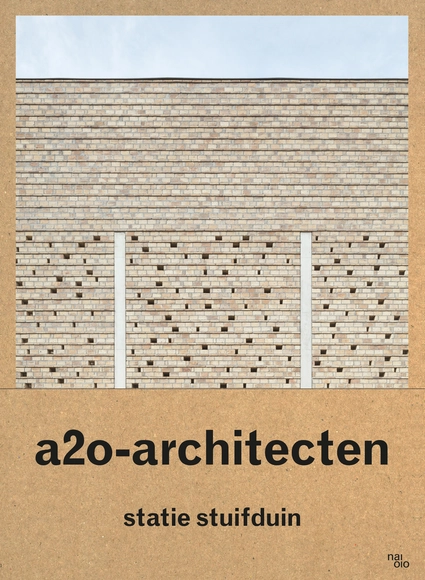
In this book, Belgian architecture office a2o presents an investigative and connecting approach to architecture through an evocative reading of their latest project, crematorium Statie Stuifduin in Lommel, Belgium. This thoughtful yet radical design blends architecture and landscape in a succession of spaces that reveals a deep understanding of both the fundamental aspects of and changing attitudes towards death, burial and the journey of life. Rather than through explicit religious symbols, the sacral is represented by the universal power of nature and by Romantic notions of finding meaning in rediscovered nature. In doing so, Statie Stuifduin goes beyond the specifics of the building to explore new visions of what contemporary funeral architecture can be.




.jpg?1503108285 "© Alejandro Arango")




_NAARO_-_Copia.jpg?1606329213&format=webp&width=640&height=580)


_NAARO_-_Copia.jpg?1606329213)

.jpg?1603313837&format=webp&width=640&height=580)


.jpg?1603313837)






.jpg?1568407487&format=webp&width=640&height=580)
.jpg?1568407514 "© UNIMO Studios")
.jpg?1568407733 "© UNIMO Studios")
.jpg?1568407787 "© UNIMO Studios")
.jpg?1568407611 "© UNIMO Studios")
.jpg?1568407487)