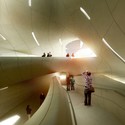
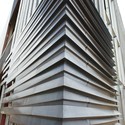
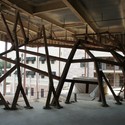
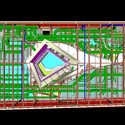
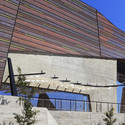
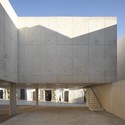
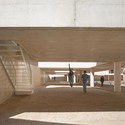
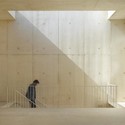
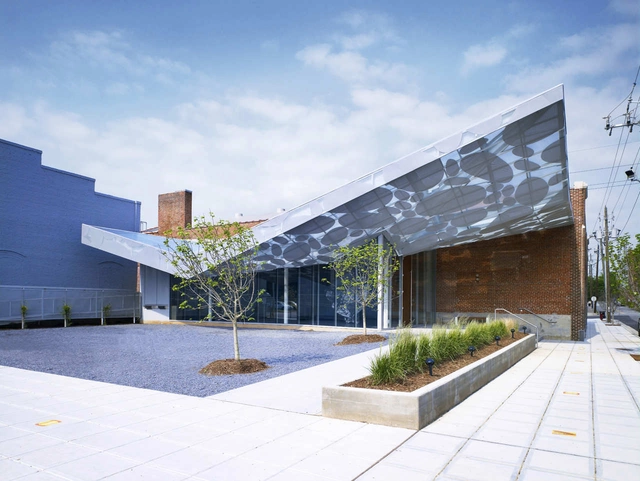
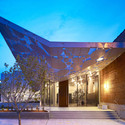
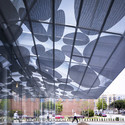
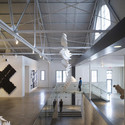
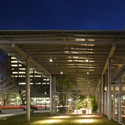
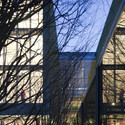
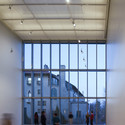
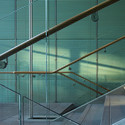
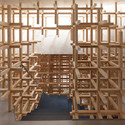
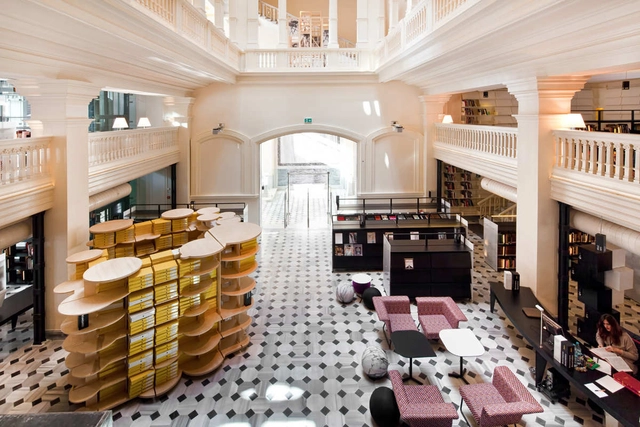
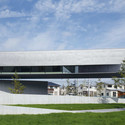
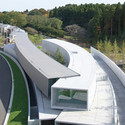
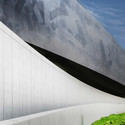
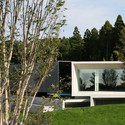
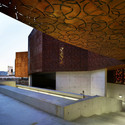
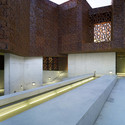
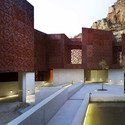
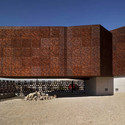
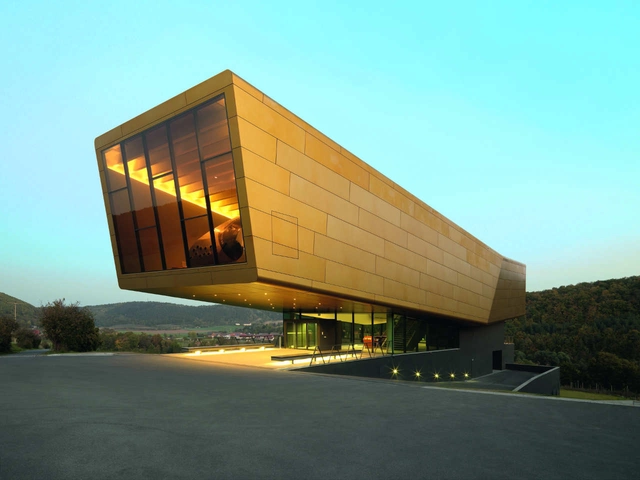
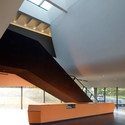
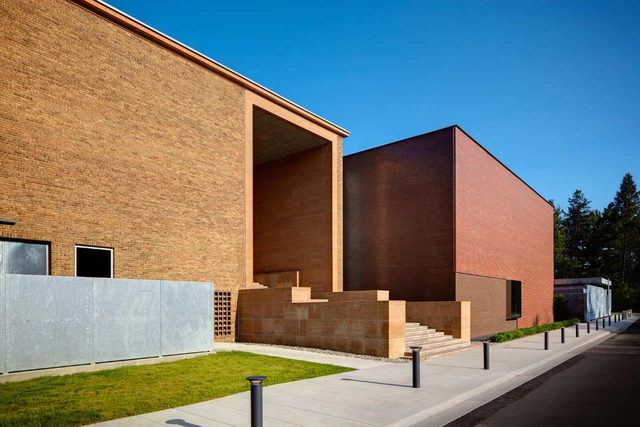
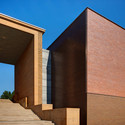
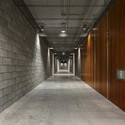
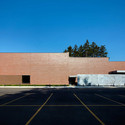
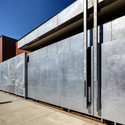
The Louisiana State Museum and Sports Hall of Fame (LSMSHOF) celebrates two seemly disconnected subjects within one contemporary venue, combining North Louisiana’s profound history with its influential world of sports. Designed by Trahan Architects, in coordination with Method Design and CASE, the new $12.6 million venue will house donated memorabilia that embodies “the contributions of the diverse cultures that have shaped the state and are crucial to understanding the unique traditions and legacy of Louisiana and the Gulf South.” A complex design, generated with the help of BIM technology, reflects the disparate subjects in one fluid structure encased within a locally inspired facade.
ArchDaily is once again updating you on the progress of The Stavros Niarchos Foundation Cultural Center designed by Renzo Piano. We showed you initial plans for the building back in 2009. Since then, we have been provided with more detail on the development of the project, which we continue to share with you. As previously mentioned, the center will be a sustainable arts, education, and recreation complex that will contribute to the community of Athens, financed by the Stavros Niarchos Foundation. Plans for this building began five years ago but it was not until December 2011 that preparatory excavation work finally began. Construction is scheduled for Spring 2012 and according to the foundation website:
The beginning of the construction phase comes at a very critical juncture in modern Greek history and brings a much-needed sense of optimism and hope, as well as a whole range of significant economic benefits to the country. Approximately €1 billion of total economic stimulus will be derived from the upfront commitment in the construction of the SNFCC, while 1,500 to 2,400 people will be employed each year to support SNFCC construction and all related industries.
The Mine Plug proposal, by recent Louisiana Tech graduate Brandon Mosley, explores an innovative technique for appropriating a now defunct mine shaft in the once thriving city of Picher, Oklahoma. The city which peaked at a population of almost 20,000 during the mining boom of the 1900’s, has since suffered the inevitable after effects of such environmentally destructive activities. Designated as a superfund site in 1981 by the EPA, the state of Oklahoma began offering buyouts for residents to relocate in 2005. The remnants from years of lead and zinc mining have left mountains of waste called “chat” on the peripheries of the town, as well as contaminated water and over 14,000 underground voids that threaten the stability of the town above. Read more after the break.
In 2007, Zaha Hadid won an international design competition for the Broad Art Museum on the campus of Michigan State University. The 4000 m2 building, which is donated by alumnus Eli Broad and his wife, Edythe, will provide ample space for large art installations and galleries dedicated to “international contemporary culture and ideas through art.” The design takes cues from the surrounding topography as the volume seeks to extend and emphasize existing circulatory and visual connections. Manifested in a series of pleats, the building’s abstracted connections create linear perpsective lines that change are the vistor moves past and through the building, “creating great curiosity yet never fully revealing its content,” explained Hadid. Ground breaking began in March of 2010, and now, construction is nearing completion on the project, which is slated to open in April of this year.
Check out more construction photos, along with the competition proposal renderings, after the break.
Karres en Brands Landschapsarchitecten + Polyform Arkitekter recently won the international competition for redesigning the Museum Garden of the Statens Museum for Kunst in Copenhagen, with their entry ‘SMK tilbage i Parken’ (‘SMK back in the park’). The project will be realized in collaboration with Svava Riesto, Oluf Jørgensen Ingeniører and Via Trafik. The design is based on the concept of connecting the museum garden with the neighbouring park Østre Anlæg, where, in the current situation, it turns its back on. By doing so, the SMK will be embedded into the park and the Museum Garden becomes the new entrance area for both the SMK and Østre Anlæg. More images and architects’ description after the break.