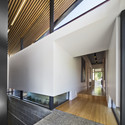
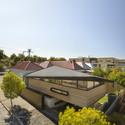
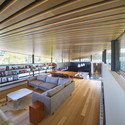
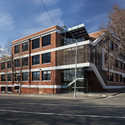
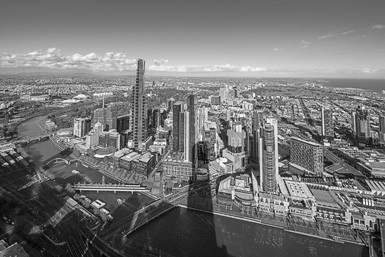
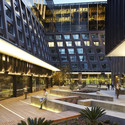
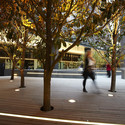
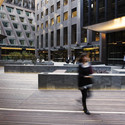
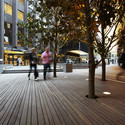
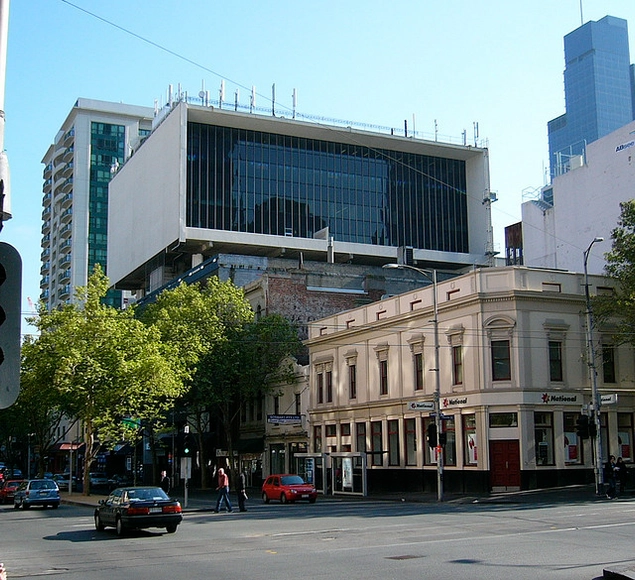
Melbourne newspapers are reporting on an argument breaking out over the preservation of the city's postwar modernist buildings, centering (as ever) on the dispute between their value as cultural heritage vs their 'ugliness' (you can see all the contested buildings in a neat graphic at The Age). While many are in favor of preservation, Alan Davies, in anarticle for Crikey, warns that the cultural benefit in protecting these buildings should always be weighed against the cost of preventing the developments that would have taken their place. Read the full article here.
Pre-existing structures permitted for 'part demolition and refurbishment'. Image Courtesy of Future Melbourn (Planning) Committee
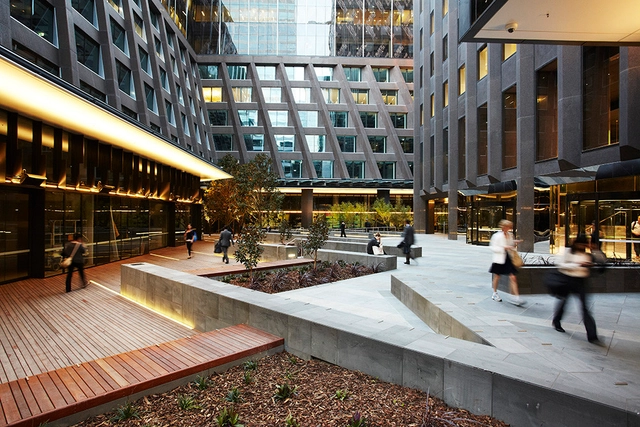
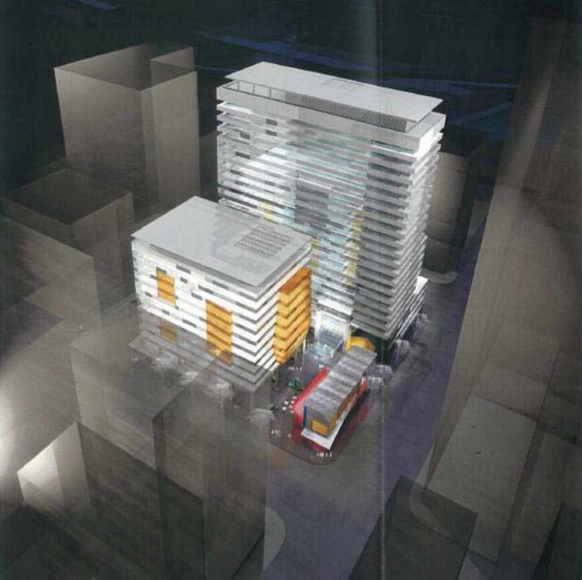
Australian developer CBUS Property has invited four pairs of Australian and internationally-renowned architectural practices to compete to design an office complex at a 6,000 square meter site in downtown Melbourne, Australia where the National Mutual Plaza currently stands.
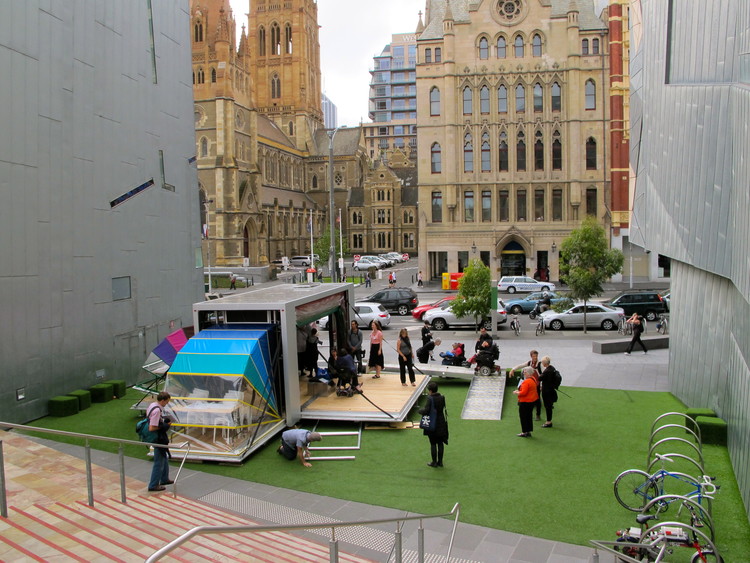
Melbourne Now celebrates the latest art, architecture, design, performance and cultural practice to reflect the complex creative landscape of Melbourne.
Videos
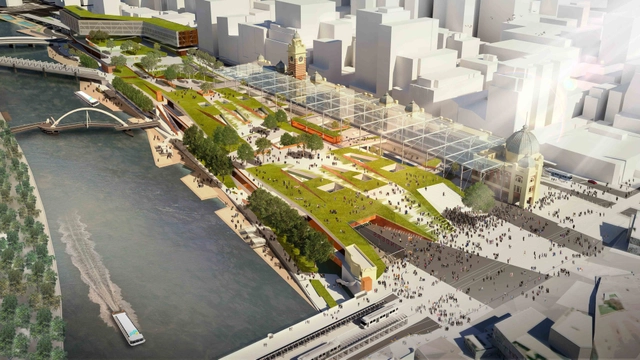
Flinders Street Station Proposal. Image Courtesy of HASSELL + Herzog & de Meuron
Herzog & de Meuron and HASSELL's winning design for Melbourne's Flinders Street Station might not be built due to the fact "the State Government has of yet, refused to promise funding for the design, and ruled out selling the station in order to finance the construction." The project was estimated to cost "approximately $1 billion to $1.5 billion to be realised", which is "on top of the $1.6 million already spent on the competition", leading critics to describe the competition as a "waste of money."
Once labeled 'an empty useless city center,' by architectural commentator Norman Day, the city of Melbourne's transformation since the 1980s has been dramatic. Today, Melbourne is internationally recognized as one of the world’s most liveable cities, with a vibrant, urbane downtown. Currently on show until December 21st at City Gallery in Melbourne, this exhibition examines the impact and legacy of the Postcode 3000 planning policy. Curated by Rob Adams, the exhibition looks at the genesis and typologies of this change and its ongoing impact on the form and vitality of central Melbourne. It asks the question: do we fully comprehend the impact of this latest boom? For more information, please visit here.
Courtesy of Eduardo Velasquez + Manuel Pineda + Santiago Medina
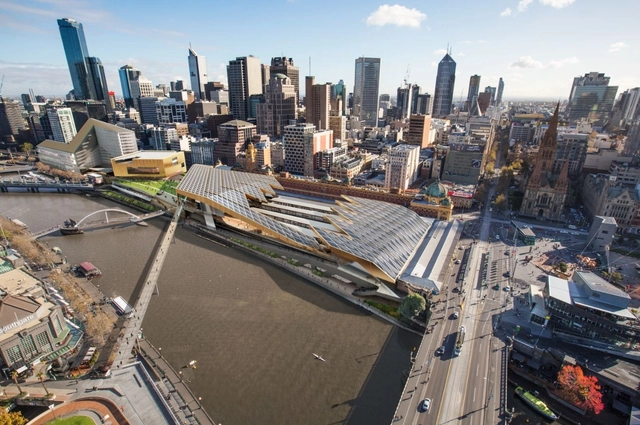
Although ultimately not chosen by the jury, who favored HESSELL & Herzog de Meuron's plan, this proposal by Eduardo Velasquez, Manuel Pineda and Santiago Medina for the rejuvenation of Flinders Street Station garnered the most votes from the public, winning the People’s Choice Award. The 'Courtyard Within a Station' concept seeks to activate the north bank of the river, as well as the western end of the site, and to improve the connection to Federation Square; the idea was to not only make the station a significant transportation node within Melbourne, but a new social and cultural center for the city. More images and architects' description after the break.
Designed by NH Architecture, their competition entry for the Flinders Street Station in Melbourne was recently shorlisted for the People's Choice Award, organized by Major Projects Victoria. Their design seeks to capture this 'Melbourness' and create a new landmark for the city. From cultural to sporting, transport to tourism, this connection between the city and the river binds its colonial past with a trajectory for the next century. Their concept is generated from a combination of conceptual diagrams with the ribbons of infrastructure being over laid with a new form of public networking. More images and architects' description after the break.
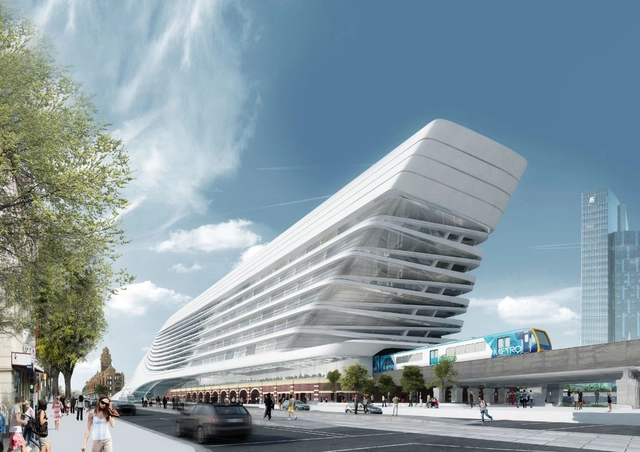
Recently announced as one of the shortlisted entries in the People's Choice Award competition organized by Major Projects Victoria, this design for the Flinders Street Station weaves together the history of the station with a potent new form to create a new public place for the future. Designed by Zaha Hadid Architects + BVN Architecture, their concept resolves the functional challenges while celebrating the travel experience. More images and architects' description after the break.





.jpg?1393215051&format=webp&width=640&height=580)
.jpg?1393215800 "© Peter Bennetts")
.jpg?1393215083 "© Peter Bennetts")
.jpg?1393215207 "© Peter Bennetts")
.jpg?1393215860 "© Peter Bennetts")
.jpg?1393215051)