What makes an architecture school worth consideration are its special programs and initiatives. These programs, often run by a few faculty members, vary from addressing human rights and legal issues to working with local communities to remedy social and economic issues.
UCLA's Architecture and Urban Design (AUD) school has just such a program. Called cityLAB (not to be confused with the student-run, science-based UCLACityLab), it is in many ways unique to a university setting. Run by founder/director Professor Dana Cuff and co-directed by Professor Roger Sherman. It’s name is well-suited: a laboratory to test ideas and address issues arising from city conditions in ways that cannot be done by profit-driven firms. These issues include housing, commercial revitalization, and community and municipal collaboration. These projects have operated successfully on grants that support not just the work being done by the professors, but by staff and Graduate Student Researchers who are paid to work in all aspects of the projects.
Question: What does Snoop Dogg, John Cleese, Lucy Liu and Jeff 'The Dude' Lebowski have in common? Simple, they have all, at some point in time, hung out in the living room of the space-age Sheats Goldstein Residence designed by Frank Lloyd Wright-disciple, John Lautner.
Throughout history, people have spent a great deal of time pondering what the future holds. Scientific discovery, technological innovation - along with rebellious androids, zombies, flying cars, hover crafts, visiting aliens - have been consistently used as stereotypes that emerge in predictions for our imagined future. And while Hollywood was busy exploring dystopian scenarios of this near-future, architects were composing utopian images of an optimistic vision for cities. Architects have built careers upon predicting what cities can potentially become - developing forms, functions, plans and visions of possibilities in the social, political, economic and cultural realms through architecture. In 1962, Mayor Robert Wagner of NYC predicted a culturally diverse, economically viable, global city for New York in 2012. In 1988, Los Angeles Times Magazine gave its 25-year forecast for Los Angeles in 2013, predicting what a life for a family would be like, filled with robots, electric cars, smart houses and an abundance of video-conferencing. Find out how their predictions fared after the break.
Designed in 1984 for artist Lynn Norton and writer William Norton, Frank Gehry’s Norton House is known for its eccentric form and eclectic materiality. Much like his own house in Santa Monica, the Norton House is a sculptural assemblage of everyday materials. The Nortons had in fact seen Gehry’s house in 1983 and obviously approved of his experiment. So, a year later, they commissioned him to design their house on a narrow, ocean-facing plot of land on Venice Boardwalk. With the commission, Gehry continued his exploration of creating architecture with everyday materials, low costs, and sculptural forms.
Opening tonight, February 20, at 6:00pm PST at the Perry Rubenstein Gallery in Los Angeles, Iwan Baan's 'The Way We Live' exhibition features captivating large-scale images of urban, architectural, and home environments that capture Baan’s singular vision. Baan’s artistic practice examines how we live and interact with architecture, focusing on the human element, which brings buildings, intersections, and public gathering places to life. Running until April 13, this is Baan's first solo exhibition at the gallery. More information after the break.
Two dynamic post-graduate programs offered by the Southern California Institute of Architecture (SCI-Arc) in Los Angeles have been charged with examining core contemporary issues facing architecture today. Spanning topics from advanced manufacturing methodologies and new building systems, to urban planning and design challenges faced globally, these post-professional tracks allow students to rethink architecture and design through the creative lens of the SCI-Arc community.
The architecture school’s Emerging Systems, Technologies & Media (ESTm) and Future Initiatives (SCIFI) programs are conceived as intensive one-year (three semesters) post-professional degrees in architecture, functioning as think tanks and research engines within the larger framework of the school.
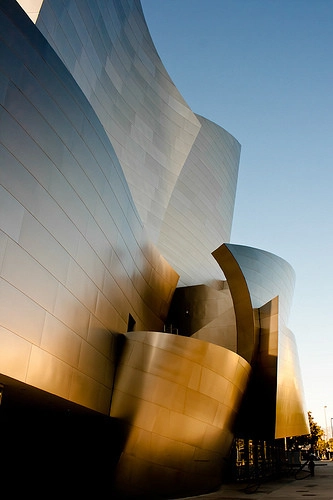
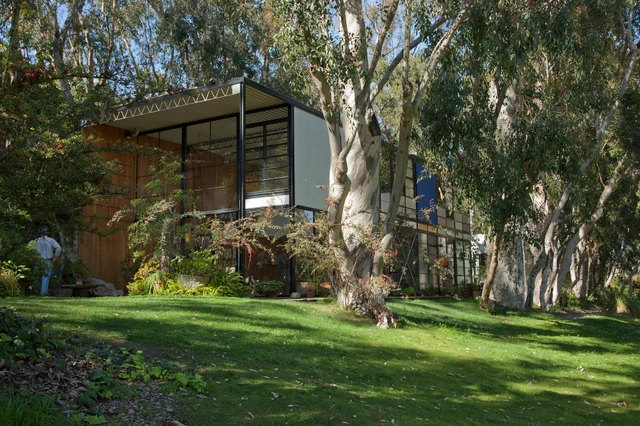
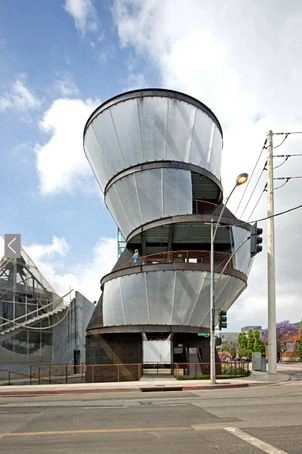
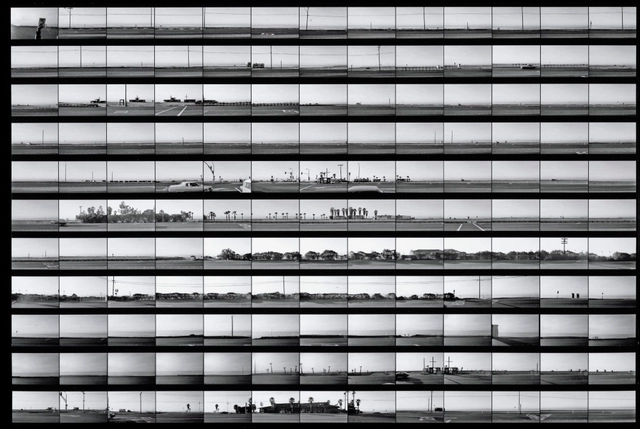
The Getty Trust is partnering with Pacific Standard Time to present 11 individual exhibitions throughout LA's museums that will explore the history and heritage of the city's modern architecture and its influential designers. As musician, photographer and architectural blogger Moby boasts that "LA has the most diverse architecture of any city on the planet". Pacific Standard Time Presents: Modern Architecture in LA will explore this diversity that covers post World War II architecture through today through specific points of view ranging in architectural style, influence and decade. The exhibitions, which will run from April through July 2013, are a follow-up to last year's Pacific Standard Time: Art in LA, 1945-1980. The focus of the exhibitions will range in scale and cover the monumental and everyday architectural moments that make LA unique. Exhibitions will present iconic modernist homes and cultural landmarks as well as coffee shops, car washes, and the freeways in addition to the un-built architectural fantasies of modernism and post-modernism.
Yazdani Studio of Cannon Design and Gruen Associates have shared with us their second place proposal for the highly anticipated design-build competition for the new United States courthouse in Los Angeles, California. Envisioned as an icon within the city skyline, the triangular monolith provides a sustainable, 21st century courthouse that embodies the democratic qualities of dignity, stature, transparency, openness and accessibility.
Located at a pivotal node connecting the Los Angeles Civic Center, the Broadway Historic District and Bunker Hill, the 550,000 square foot courthouse is surrounded by a lush civic space that plays an important role in the existing cityscape.
The GSA has announced that Skidmore, Owings, & Merrill have been selected as the architects of the new Los Angeles Federal Courthouse, which will house the U.S. District Court, Central District of California, and the U.S. Marshals Service. The architects beat out 3 other shortlisted teams to win the $318 million project.
According to the GSA, "The new 550,000-square-foot building will be a sustainable, cost-effective, state-of-the-art court facility that includes security upgrades that are not available in the current 312 North Spring Street courthouse."
The site, located at 107 South Broadway (down the street from Morphosis’ Caltrans building, LA’s City Hall, and the Walt Disney Concert Hall) has been dormant since 2007; although a $1.1 billion design by Perkins + Will was selected soon after, it was abandoned when Congress slashed the GSA's construction budget. The GSA considers the approval of the new redevelopment plan a "major milestone."
Sunny & Mild Media presents Part 2 of its Googie Architecture Series, presenting design work at the cusp of technological innovations of the 1950s. Emerging out of an obsession with the fast new world of cars, planes and rockets, Googie Architecture became an ultramodern style that sought to encapsulate the spirit of the 21st century. The new forms – sweeping, cantilevered roofs, starbursts, and flowing forms – became a form of advertisement that caught the attention of motorists, for its vibrance along the stretches of highways and for its distinctive style.
This installment features a closer look at the diners and restaurants that thrived in the ’50s and were designed with the Googie style. Even the one of the first McDonald’s restaurants adapted the style to work with its logo. Many of these buildings stand in ruin now, but the style was used in all kinds of building typologies – most of which emphasized the car: drive-thru’s, drive-in’s, car washes, diners, and gas stations. Even Las Vegas, and our associations with the its architecture today, are a reflection of that style.
Millennium Partners and Argent Ventures are moving forward with their plan to transform 4.47 acres of vacant parking lots surrounding Hollywood’s iconic, mid-century Capitol Records Building into a transit-oriented, mixed-use development. Located on the famous intersection of Hollywood and Vine, the Millennium Hollywood Project will feature two residential buildings reaching heights up to 585 feet, designed by Handel Architects, that are grounded by a High Line-inspired public space by James Corner Field Operations.
With the Draft Environmental Impact Report (DEIR) currently on public review, the New York-based developers are hoping to get city approvals underway in early 2013.