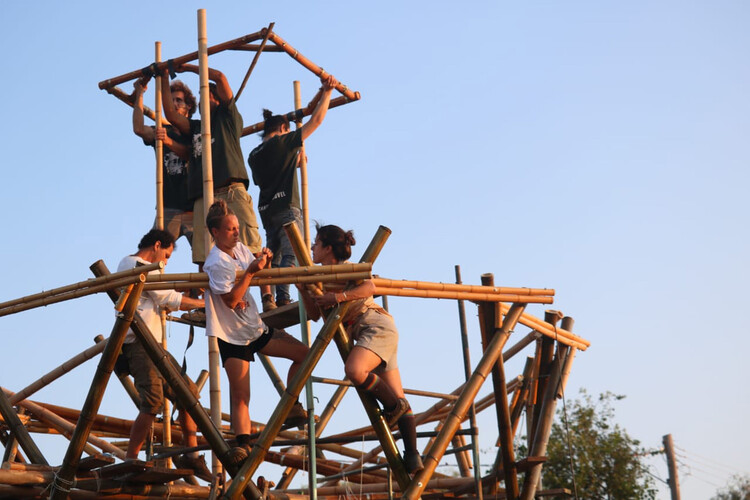
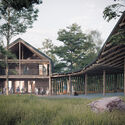
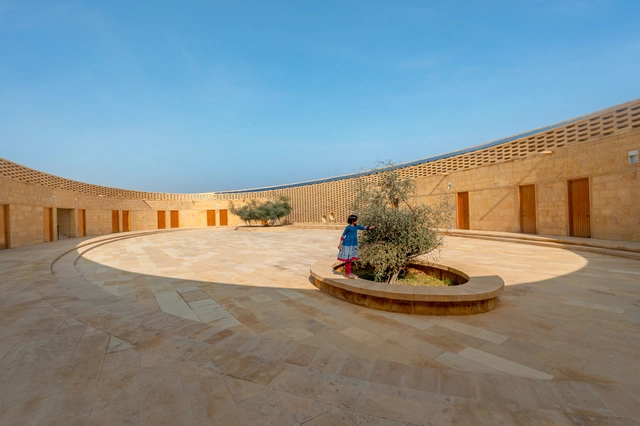
Construction group for the Circo-lô at the IDE Association, in Botucatu | SP. Photo: Tomaz Lotufo
Historically, the first universities in the contemporary model were established in Europe to educate elites for the State and the Church, rather than to promote social emancipation. With the rise of capitalism, they became privileged centers for producing and reproducing modern Western culture. However, from the 1960s onward—particularly after the student uprisings of May 1968—the academic focus shifted toward market-oriented values, displacing humanist and critical ideals. The humanities lost prominence, while technical fields gained central importance, often at the expense of reflecting on the social impact of their work.
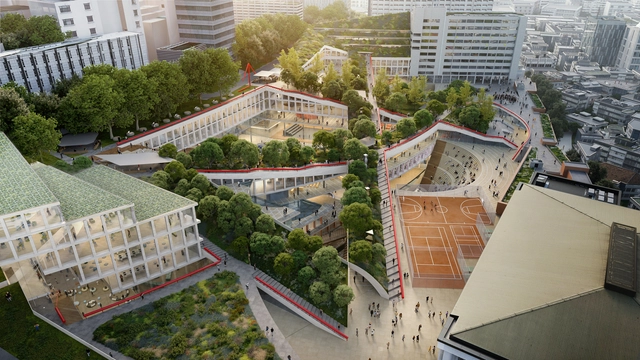
OMA / Chris van Duijn won the competition to design a new campus for Hongik University in Seoul, South Korea. The proposal introduces a cluster of low-rise buildings interconnected by a network of public spaces molded on the existing topography of the site. The design aims to reemphasize the university’s connection to the city and its neighboring areas and to introduce greenery and various open spaces creating a seamless connection between roof terraces, outdoor courtyards, and sunken plazas. The winning proposal was chosen from the entries from established international practices, including SANAA, Herzog & de Meuron, Renzo Piano Building Workshop, and David Chipperfield Architects.
For many, schools and kindergartens represent the first contact with public architecture. They, together with every educational facility, serve as the foundation for learning and knowledge dissemination, playing an important role in shaping the formative years of children and young adults. In consequence, these buildings need to respond to the needs of different age groups, while creating functional and flexible spaces for learning, but also for play and unstructured interaction. Light and ventilation needs contribute to the complexity of these architectural programs. However, designing educational facilities presents opportunities for innovation and creative expression, as they are required to adapt continuously to the changing needs of students and faculty while creating a conductive environment for learning.
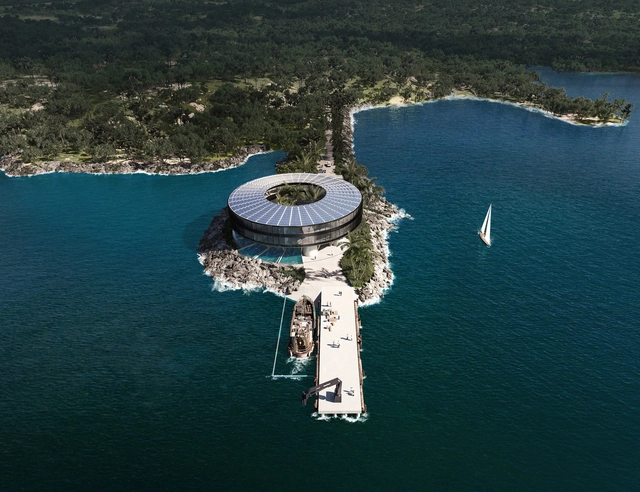
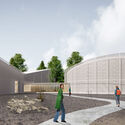
This week’s curated selection of Best Unbuilt Architecture highlights designs submitted by the ArchDaily community dedicated to cultural institutions. From a learning center created to offer the girls in Mozambique an equal opportunity to learn, play and connect, to a naval station redesigned as a research center on the coast of Puerto Rico, this selection features projects created to encourage learning, curiosity, and the exchange of knowledge and expertise. The article includes designs from both established and emerging architectural practices, including Moore Ruble Yudell, C+S ARCHITECTS led by Carlo Cappai and Maria Alessandra Segantini, Hello Wood, and snkh studio.
March 8th is celebrated as International Women's Day, a date remembered for years as a symbol of the fight for their rights. However, although many countries have laws establishing equal rights for men and women, gender inequality and all its consequences are still experienced every day by girls and women all around the world. The patriarchal system, rooted in many societies over the centuries, has been responsible for inequality of power between the genders which, in the most extreme cases, results in violence and femicide.
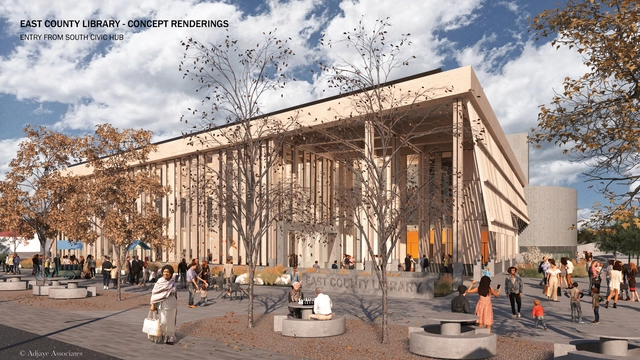
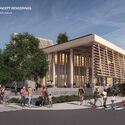
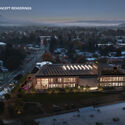
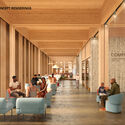
Adjaye Associates, in collaboration with Holst Architecture, the prime architect of record, have unveiled the first renderings for the new East County Library in Portland, Oregon, a new facility that will provide a diverse range of services and programming. The design of the 95,000-square-foot building is informed through extensive community engagement and feedback. Several local organizations aid these efforts by organizing public community events, focus groups, teen outreach, and surveys. As the project is currently in the schematic design phase, the images presented are early drafts, likely to change to reflect the input received.
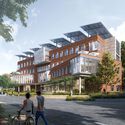
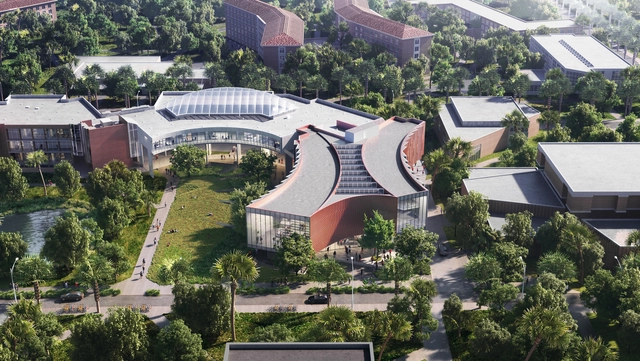
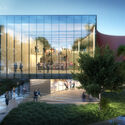
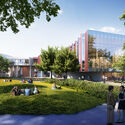
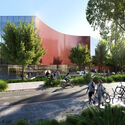
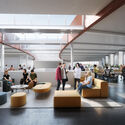
Architecture and design practice Brooks + Scarpa has announced that the new Ramos Collaboratory Building for the University of Florida’s School of Design Construction and Planning has broken ground. This extension will add nearly 50,000 square feet (4,600 square meters) of educational spaces to the existing college, which is also undergoing significant remodeling. The new building will include reconfigurable, multi-functional spaces where the students, faculty, and staff can collaborate both formally and informally. The building is anticipated to be completed in early 2025.
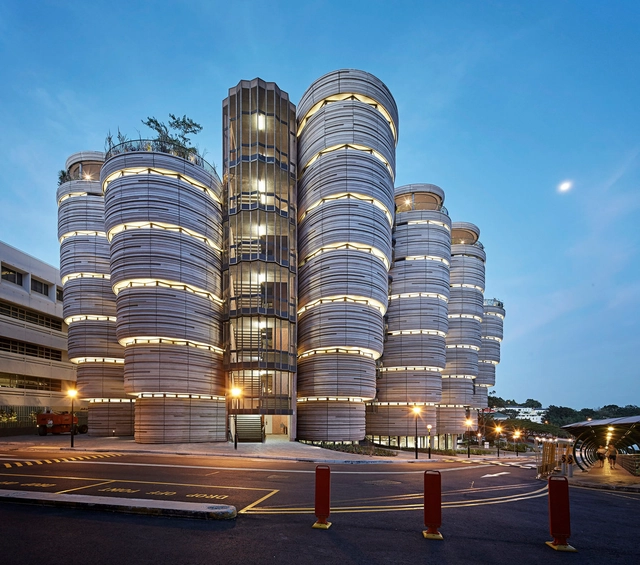
Heatherwick Studio has released a new film showcasing the Learning Hub at Nanyang Technological University. Directed by Marcus Hawk, the video features cinematography by Joe Almond. As an educational landmark for Singapore, the Learning Hub was designed as a new multi-use building as part of NTU’s redevelopment plan for the campus.