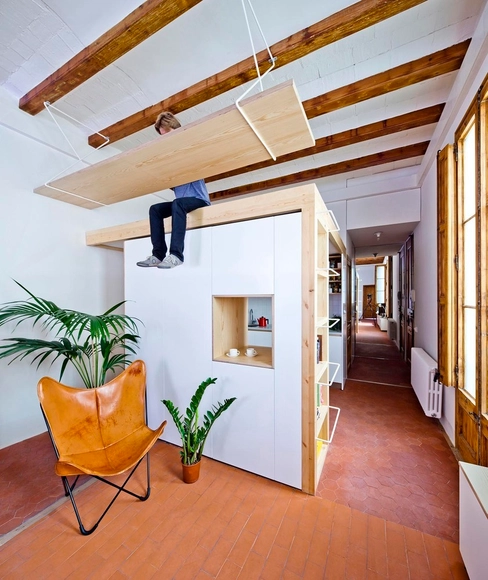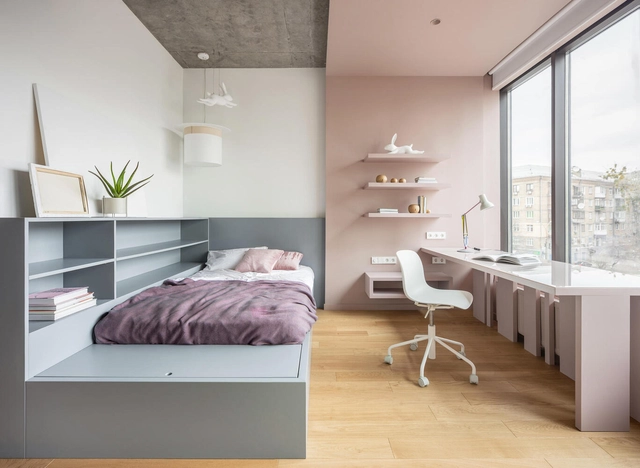
Functionality, good ventilation, comfortable lighting, and access to views are some of the important required characteristics that make for human comfort in inhabited or occupied spaces. Nonetheless, those elements are becoming harder to achieve within smaller city dwellings. Architects and individuals, therefore, turn towards design solutions to create more agreeable and personalized settings.
An initial solution to upscale and widen spaces is to reduce the amount of standard solid partitions or walls and replace them with alternative means of spatial separation.
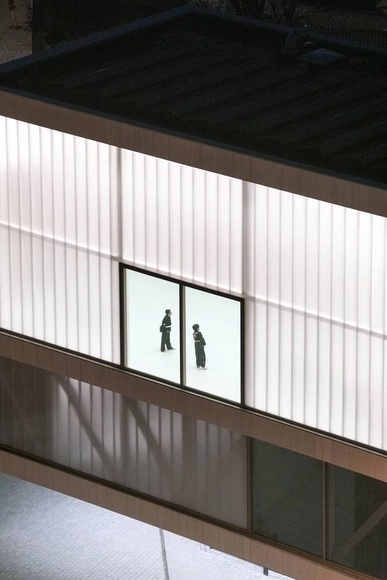
Translucent polycarbonate panels boast unique and striking aesthetics while simultaneously maintaining efficient functionality. They can add depth and color to a façade and may adapt to meet a wide range of performance requirements, from temperature resistance to impact resistance to UV protection and more. Rodeca, a leading company in the polycarbonate panel industry, offers high-quality products with high customizability vis-à-vis colors, transparency levels, treatments, profiles, sizes, joint systems, and more. Below is a detailed list of these many options, accompanied by diagrams and installation steps. We also discuss several case studies where polycarbonate facades have been used to great success, taking full advantage of the options available alongside the intrinsic aesthetic qualities of the translucent panels to complement and elevate their designs.
https://www.archdaily.com/964597/how-to-design-and-install-seamless-translucent-polycarbonate-facadesLilly Cao
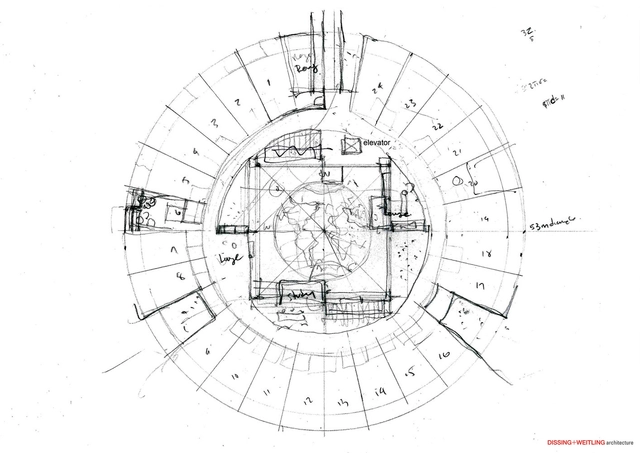
Often, when people think of buildings, they default to imagining rectangular structures—or at the very least, structures with orthogonal floor plans and hard angles, certainly not buildings with circular plans. The rarity of the circular plan comes in part from the fact that poor design choices can lead to wasted space and awkward interior arrangements, especially if furniture and appliances are rectangular in shape. However, strongly designed circular planes can have a dramatic effect, generating extraordinary spatial configurations that meet a variety of aesthetic and functional needs, while challenging the material specification process. Below, we list 18 buildings with circular plans, considering their varying strategies of design.
https://www.archdaily.com/966202/how-to-properly-design-circular-plansLilly Cao
If you live in an apartment, you may unintentionally know the details of your neighbor's life by overhearing conversations through your shared walls. Or you keep awake when the dog that lives in the apartment above decides to take a walk in the middle of the night. If so, you may live in an apartment with inadequate sound insulation in its walls and/or slabs. As cities grow increasingly dense and builders seek to increase their profit margins, it is not uncommon for acoustic comfort to be overlooked in many architectural projects. When the resulting noise is excessive or unwanted, it impacts the human body, the mind, and daily activities. While not all spaces need to seal all types of sound, creating spaces with an adequate degree of soundproofing improves the quality of life of all users.
The height of the ceiling of a space heavily influences our perception of it. Generally, local building codes regulate the minimum dimensions for ceiling height, which are calculated to ensure adequate quality of life in the environment. But the exact height of the ceilings is often defined by the dimensions of other materials that make up the building, the height of the constitutive slabs, or even by rounding the dimensions of the stair steps. It is common, with the densification of cities aimed at increasing profitability, for entrepreneurs to design with minimum ceiling heights in houses and offices, reducing construction costs. On the other hand, in older structures, more generous ceilings can be observed, which generally enable a greater degree of design freedom. But how can architects make the most of these spaces?
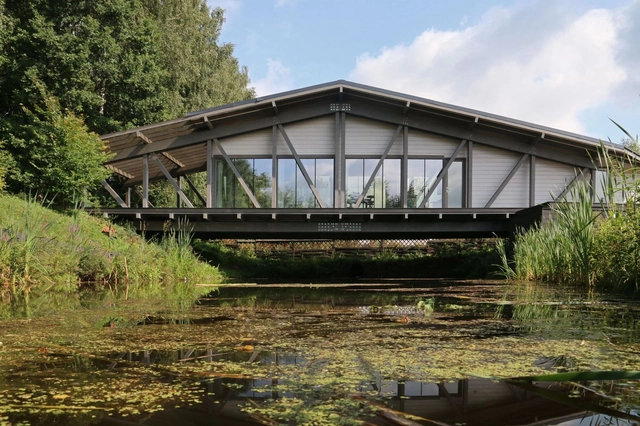
Bridge House / BIO-architects. Image Cortesia de Ivan Ovchinnikov
Metaphorically, building bridges equates to creating new opportunities, connections, and paths. The first bridges likely formed naturally with logs falling across rivers and natural depressions, though humans have also been building rudimentary structures to overcome obstacles since prehistory. Today, technological advances have made it possible to erect bridges that are both impressive and sculptural, playing a key role in transportation and connectivity. Usually needing to overcome large spans, with few points of support, bridges can be quite difficult to structure. But when is the bridge more than a connection between two points, instead resembling a building with a complex program? How can these 'bridge houses' be structured?
The Midnight Charette is an explicit podcast about design, architecture, and the everyday. Hosted by architectural designers David Lee and Marina Bourderonnet, it features a variety of creative professionals in unscripted conversations that allow for thoughtful takes and personal discussions. A wide array of subjects are covered with honesty and humor: some episodes provide useful tips for designers, while others are project reviews, interviews, or explorations of everyday life and design. The Midnight Charette is also available on iTunes, Spotify, and YouTube.
This week David and Marina discuss tips and tactics for creating a design presentation. The two cover the different scenarios to prepare for, the three most important components of any design presentation, how to include research and data, balancing beauty and clarity, tips if you’re struggling to make a presentation look good, presentation process strategies, and traps to avoid, and more. Enjoy!
https://www.archdaily.com/950526/the-midnight-charette-on-how-to-create-an-architecture-presentationThe Second Studio Podcast
The Midnight Charette is an explicit podcast about design, architecture, and the everyday. Hosted by architectural designers David Lee and Marina Bourderonnet, it features a variety of creative professionals in unscripted conversations that allow for thoughtful takes and personal discussions. A wide array of subjects are covered with honesty and humor: some episodes provide useful tips for designers, while others are project reviews, interviews, or explorations of everyday life and design. The Midnight Charette is also available on iTunes, Spotify, and YouTube.
This week David and Marina discuss strategies for giving a convincing design/architecture presentation. The two cover the different outcomes of a presentation, the pros and cons of different formats (slideshow and boards) and how they can best be used, key words that should not be used, dealing with questions, how to be convincing, how to sell a key point, what content should come first, understanding the audience, preparation, and more. Enjoy!
https://www.archdaily.com/948485/the-midnight-charette-on-how-to-give-an-architecture-presentationThe Second Studio Podcast
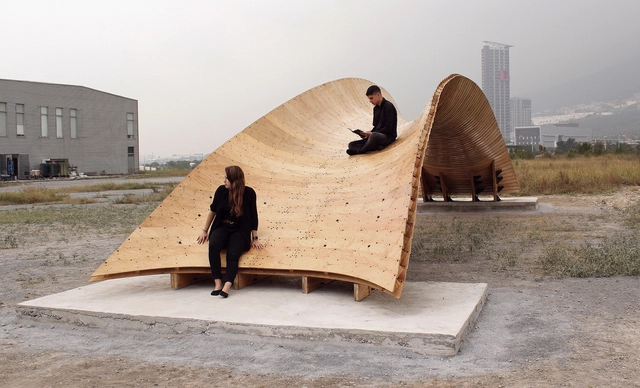
From its starting to point as a tree to its product form as a beam or piece of furniture, wood used in architecture and interior design goes through several stages and processes. A renewable resource and popular traditional building material, wood is also often cited as a promising construction material of the future, one that is suitable for the new demands of sustainability. But unlike concrete, whose molds can create even the most complex curves, wooden architecture most commonly uses straight beams and panels. In this article, we will cover some techniques that allow for the creation of curved pieces of wood at different scales, some of which are handmade and others of which seek to make the process more efficient and intelligent at a larger scale.
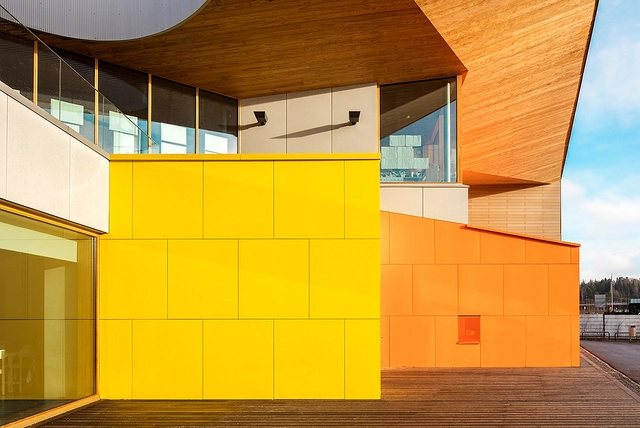
Panelized facade systems are a popular exterior design element across multiple project types in today’s architecture. Different material and color options create unique and completely customized exteriors versatile enough to fit almost any design style. Ensuring the vision comes to life exactly as imagined, however, can be tedious with Revit’s or ARCHICAD’s innate capabilities alone. The time-consuming manual process of specifying the design, pattern, colors, and fabrication methods of a panelized facade can be simplified and made more intuitive with Steni’s BIM elements.
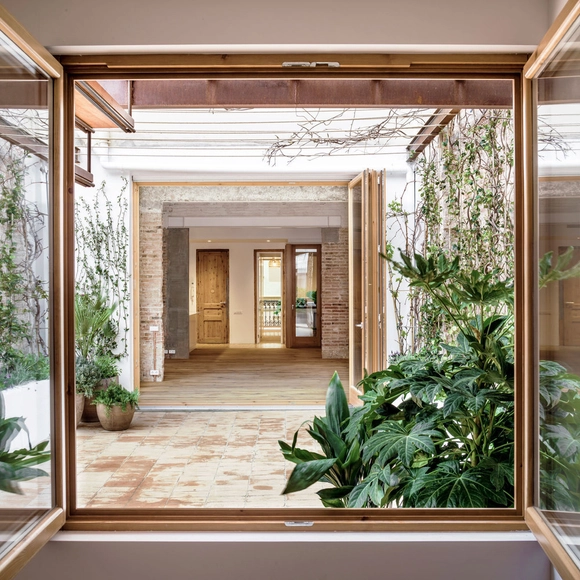
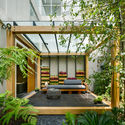
Indoor gardens can contribute important benefits to home living, ranging from aesthetic beauty to improved health and productivity. Research has shown that indoor plants help eliminate indoor air pollutants called Volatile Organic Compounds (VOCs) that emanate from adhesives, furnishings, clothing, and solvents, and are known to cause illnesses. They also increase subjective perceptions of concentration and satisfaction, as well as objective measures of productivity. Indoor gardens may even reduce energy use and costs because of the reduced need for air circulation. These benefits complement the obvious aesthetic advantages of a well-designed garden, making the indoor garden an attractive residential feature on several fronts.
https://www.archdaily.com/932106/how-to-incorporate-gardens-in-home-designLilly Cao
Of the varying aspects of architectural and interior design, lighting is one element that can visually enhance or destroy a space. This influence stems from the wide range of artificial lighting designed for the most widely differing tasks, environments, and purposes, including internal and even external spaces such as facades and landscape projects. Think of two environments with the same dimensions and layout. Suppose that in the first, only one point of light was applied - a general, unspecified point of light in this case - while in the second a light project was performed considering the use of space and valuing certain aspects of the architectural design. Undoubtedly, the second option is a more pleasant space. In the same way, poor lighting design can ruin an environment. But how is it possible to achieve these different results?
In a previous article, we already showed how to calculate the correct light intensity required for each environment. Here, we compile a list of some of the key types of lighting systems.
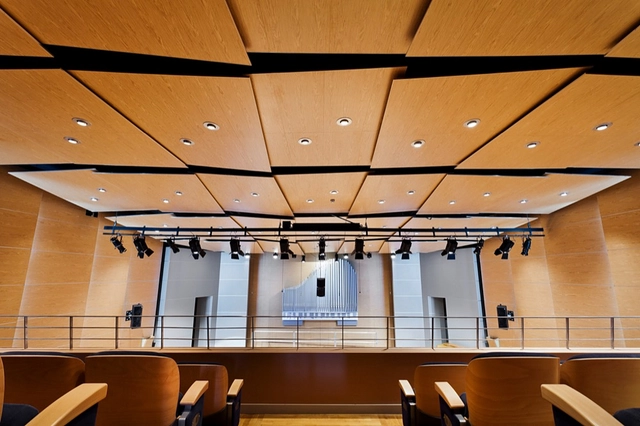
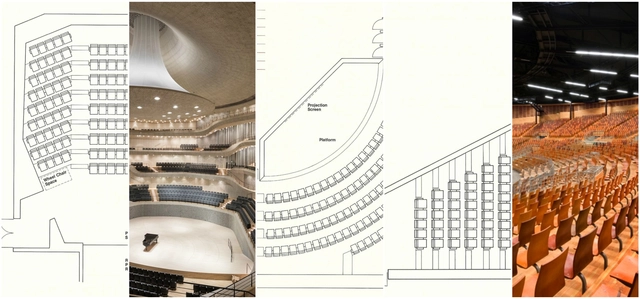
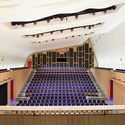
Audience sightlines, accessibility and acoustics all make theater seating a hugely precise art. As part of their set of online resources for architects and designers, the team at Theatre Solutions Inc (TSI) have put together a catalog of 21 examples of theater seating layouts. Each layout is well detailed, with information on the number of seats, the floor seating area and row spacing. These layouts fall under three general forms; to supplement this information, alongside TSI's diagrams we've included the pros and cons of each type, as well as examples of projects which use each format. Read on for more.
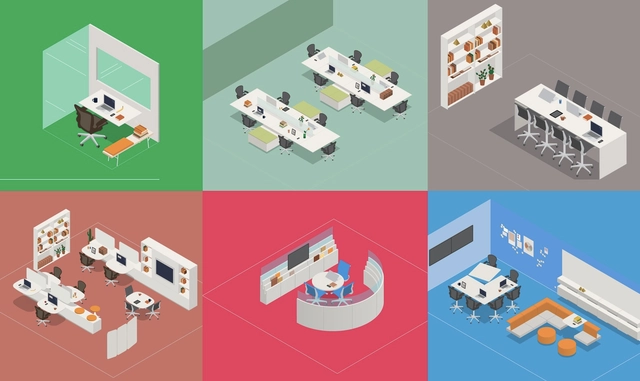
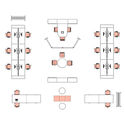
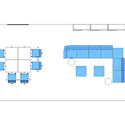
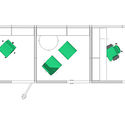
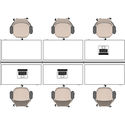
Many people's way of working has changed, but most offices remain the same.
However, innovating doesn't necessarily mean breaking down every wall and creating a play space; the design of an office must take into account the needs and details of each type of work separately. For every function, there are better and worse ways to organize spaces, and some configurations work better for certain activities but not for others. The most important consideration is that the workplace allows interactions while providing spaces for concentration and focus.
The Midnight Charetteis an explicit podcast about design, architecture, and the everyday. Hosted by architectural designers David Lee and Marina Bourderonnet, it features a variety of creative professionals in unscripted and long-format conversations that allow for thoughtful takes and more personal discussions. Honesty and humor are used to cover a wide array of subjects: some episodes provide useful tips for designers, while others are project reviews, interviews, or simply explorations of everyday life and design. The Midnight Charetteis available for free on iTunes, YouTube, Spotify, and all other podcast directories.
On this episode of The Midnight Charette podcast, hosts David Lee and Marina Bourderonnet discuss how to create a design portfolio that will get you interviewed and hired. The two cover everything from the critical points most designers overlook and what employers look for in a portfolio to format, binding, book sizes, graphics, what projects to include and exclude, cover design, layout, ordering work, digital submissions, and more. If you have any questions or advice about portfolios or any other design-related topics, leave a voicemail at The Midnight Charette hotline: 213-222-6950.
https://www.archdaily.com/922508/how-to-make-a-portfolio-that-will-get-you-hiredThe Second Studio Podcast
The Midnight Charetteis an explicit podcast about design, architecture, and the everyday. Hosted by architectural designers David Lee and Marina Bourderonnet, it features a variety of creative professionals in unscripted and long-format conversations that allow for thoughtful takes and more personal discussions. Honesty and humor are used to cover a wide array of subjects: some episodes provide useful tips for designers, while others are project reviews, interviews, or simply explorations of everyday life and design. The Midnight Charetteis available for free on iTunes, YouTube, Spotify, and all other podcast directories.
https://www.archdaily.com/919509/tips-and-tactics-for-beating-competition-when-applying-for-a-jobThe Second Studio Podcast
The Midnight Charetteis an explicit podcast about design, architecture, and the everyday. Hosted by architectural designers David Lee and Marina Bourderonnet, it features a variety of creative professionals in unscripted and long-format conversations that allow for thoughtful takes and more personal discussions. Honesty and humor are used to cover a wide array of subjects: some episodes provide useful tips for designers, while others are project reviews, interviews, or simply explorations of everyday life and design. The Midnight Charetteis available for free on iTunes, YouTube, Spotify, and all other podcast directories.
On this episode of The Midnight Charette podcast, hosts David Lee and Marina Bourderonnet discuss six career questions regarding office and employee reputation in Architecture from the Archinect forum thread, The Issue of Reputation in Architecture. If you have any questions or advice about portfolios or any other design-related topics, leave a voicemail at The Midnight Charette hotline: 213-222-6950.
https://www.archdaily.com/916636/how-to-get-hired-and-keep-up-a-reputation-in-architectureThe Second Studio Podcast
Although the sun is almost 150 million kilometers away, this star has had the most impact on our planet. But while some are busy chasing the sun for sun-kissed skin, architects are all about creating sun-kissed spaces.
By definition, “passive solar energy is the collection and distribution of energy obtained by the sun using natural means”. The simple concept and process of implementing passive solar energy systems have provided buildings with heat, lighting, mechanical power, and electricity in the most environmentally-conscious way possible.
In this article, we will provide you with a complete guide of implementing passive solar systems in your designs.