In a study recently published by AIA, less than 13% of architectural firms have incorporated building performance as part of their practice. With buildings contributing 40% of total carbon emissions leading to climate change, just 25 projects are roughly equivalent to planting 1 million trees each year. In addition to that, teams that are able to showcase data-driven and performance-driven decision-making and feature an energy analysis in every pursuit are able to increase fees and generate more revenue. Although integrating building performance sounds like a no-brainer, it proves to be difficult at many firms, because in addition to the practical changes, it requires a culture shift. That culture shift can only happen if the tools are easy to use, accurate, and mesh well with current workflows. Right now is the perfect time to tackle these culture changes due to a few reasons:
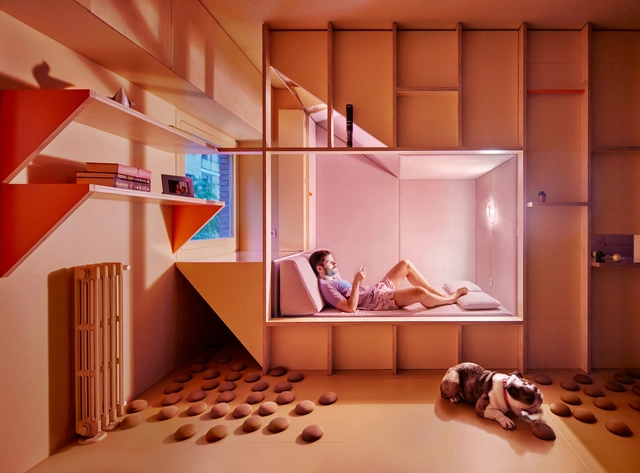
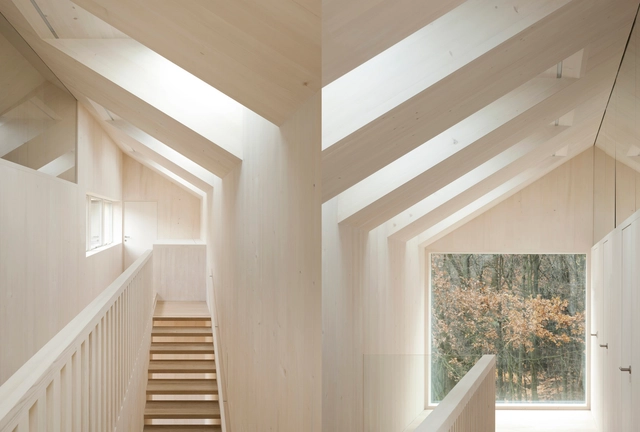
Un chico, su bulldog, un huerto y la casa que comparten / HUSOS. Image
It's very likely that you are reading this text in an interior space with the lights on. For most people, modern living entails spending most of the day in closed rooms, bathed in a sum of artificial and natural lights. Yet while artificial light has afforded mankind incalculable possibilities, it has also caused some confusion in our bodies, which have evolved for thousands of years to respond to the stimuli of sunlight in the day and darkness at night. This responsiveness to natural light is called the circadian rhythm or cycle, and describes the 24-hour biological cycle of almost all living beings. Circadian rhythms are primarily influenced by light reception, but temperature and other stimuli also play a role in the process.
Perhaps the most renowned 'skylight' ever built is the Pantheon of Rome commissioned by Marco Vipsanius Agrippa during the reign of Emperor Augustus (27 BC-14 AD) and rebuilt by Hadrian (117-118) around 126 AD. At the highest point of its dome (in this case, the oculus) the sunlight shines, casting its beams over the various statues of planetary deities that occupy the niches on the walls. The light that enters the space symbolizes a cosmic, sacred dimension. In projects around the world, natural light continues to fulfill this scenic role, especially in religious projects.
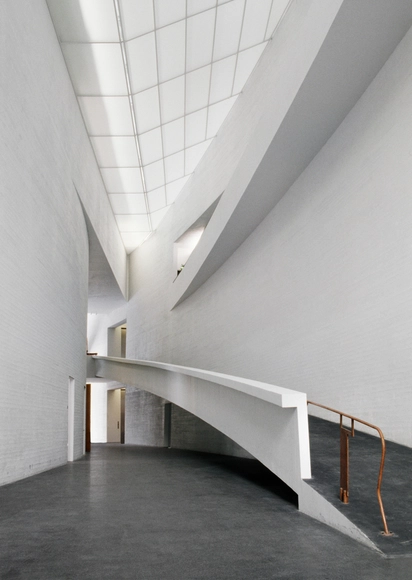
It is characterized as zenithal illumination as that which comes from above, from the sky (zenith). Very useful for large spaces that can not be adequately lit by windows, skylights are a widely used device for providing a pleasant, diffuse light. Generally, care is taken to prevent direct entry of sunlight; the openings must be well designed so that they do not overheat the space of allow water infiltration. Below is a collection of projects that make good use of this technique.
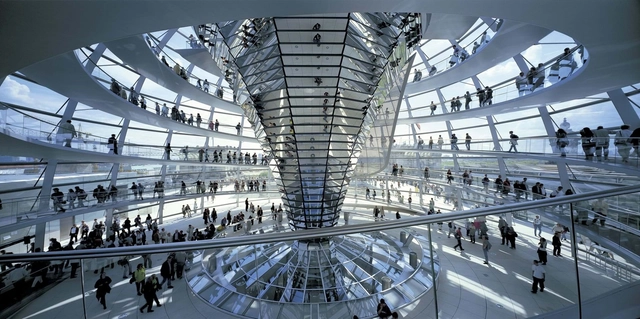
While many architects consider windows for brightening interior spaces, Norman Foster is intrigued by natural light from above. The British star architect has long held Louis Kahn and Alvar Aalto in high esteem for how they handled daylight - especially with regard to the roof. In particular large public buildings benefit from this strategy creating enjoyable spaces. Therefore, Foster regards daylight from above as indispensable when he develops megastructures for airports on the ground or tall skyscrapers for work. But daylight from above is much more than an aesthetic dimension, remarks Foster: "Quite apart from the humanistic and poetic qualities of natural light there are also energy implications."
Did you know that 64 million European children spend more time at school than anywhere else other than their home? European children spend approximately 200 days each year at their primary schools. With this information, how do we go about designing healthier classrooms that create productive learning environments? This question is perhaps more important than ever, as this will be the first time since the 1970s that Europe and the UK will see a boom in the construction and renovation of schools. What a tremendous opportunity this is for both architects and educators to rethink what an educational facility should be and how the physical environment can be designed to have a positive impact on learning.
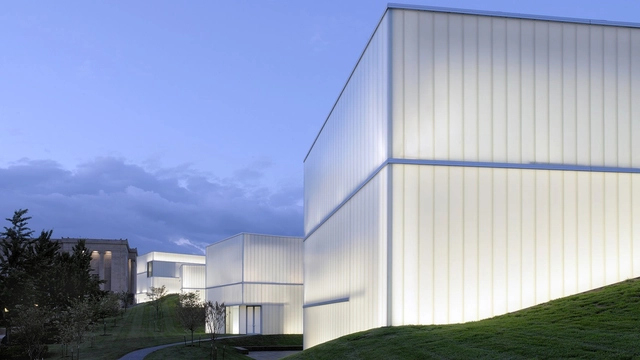
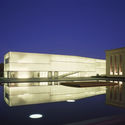
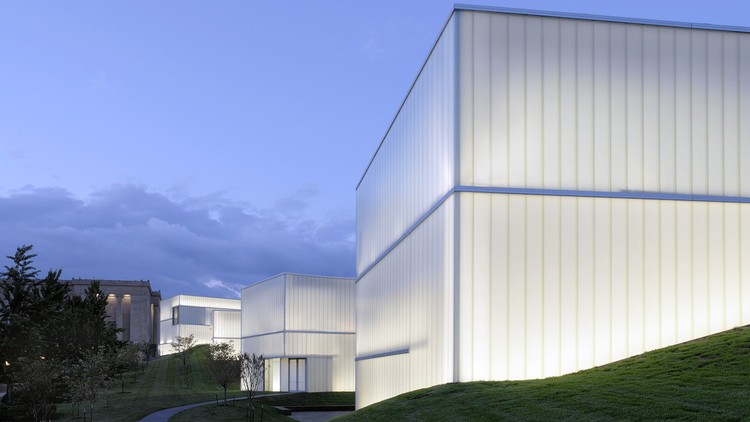
Recurrently we see how architects opt for translucent facades to create the envelopes of their buildings, promoting the entry of a large amount of natural light, while simultaneously controlling it during the day. Illuminated during the night, many of these projects can be seen in the dark, appearing as lanterns or lighthouses for their neighbors and community. Being exposed to changing conditions – day or night – to choose the right material, it's necessary to study in detail the orientation and location of the building, the pre-existing context, and the configuration of the interior spaces.
We present a system of glass panels that allow buildings with this type of façade –spanning from floor to ceiling without interruptions – with minimal frames and different colors, textures, thermal and acoustic performances.
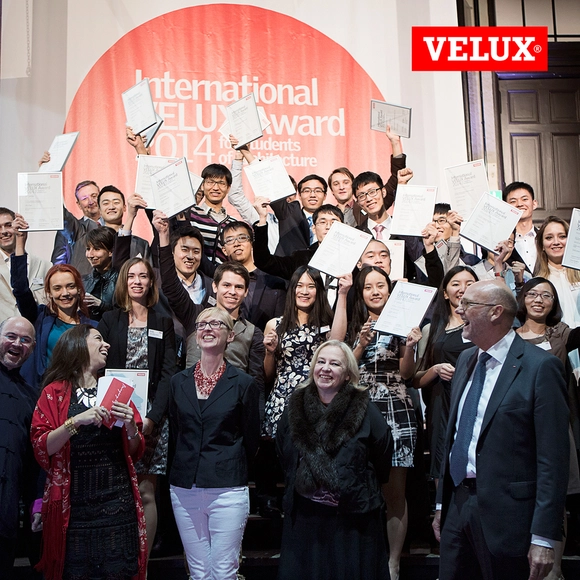
Held every two years, the International VELUX Award challenges students to generate projects that take advantage of daylight, with the aim of developing a deeper understanding of this energy source.
A jury of renowned architects chose 9 regional winners for its 2018 iteration, who will now compete for the winning title at the World Architecture Festival in November. The winners were chosen from projects presented by students from 250 different architecture schools in 58 countries.
https://www.archdaily.com/897749/meet-the-9-regional-winners-of-the-2018-international-velux-award-for-students-of-architectureAD Editorial Team
Hiroshi Sambuichi's approach to a site entails long-term study and reflection upon the qualities and forces of nature embedded within. His understanding is “deeper and with a finer grain,” explains American architect and member of The Daylight Award jury James Carpenter as one of several reasons why Sambuichi was recently announced as the latest laureate of the nearly 50-year-old Daylight Award in 2018. In Sambuichi's hands, “light becomes timeless, fluid and rich.”
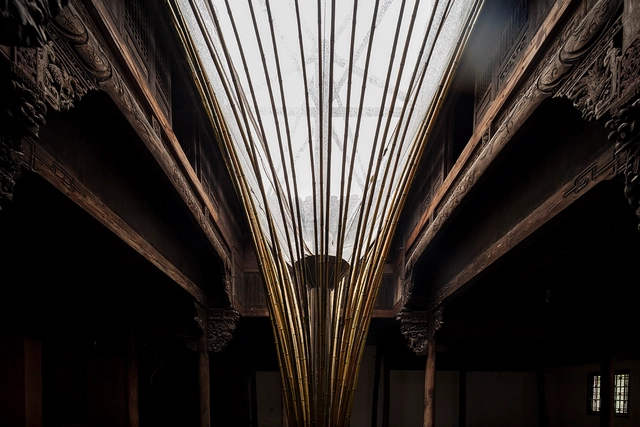
In response to the overwhelming growth of cities and neighborhoods in China, architects from Atelier Archmixing’s Shanghai office, have developed a series of proposals that seek to return value to sensitive interior spaces and improve the user’s quality of life through design.
The project consists of an interesting light fixture; a bamboo structure similar in shape to an umbrella, that lets natural light and fresh air into the building.
Under the theme "Healthy & Climate Friendly Architecture - From Knowledge to Practice", the 7th VELUX Daylight Symposium, held in Berlin on 3-4 May 2017, was attended by 39 speakers from research and architectural practice.
Participants were able to contrast the information presented by researchers with the 'built experience' of architects from Europe, Canada and USA, generating interesting discussions about the need to go deeper in the understanding of this natural resource, and then design more effectively.
Anne Lacaton (France) is an award-winning architect and part of the duo Lacaton & Vassal, having made reuse of existing materials and integration of daylighting in standard construction their signature architecture and adding a social dimension to architectural design.
Omar Gandhi (Canada) from Omar Gandhi Architect is recognized as one of the world’s top 20 young architects by Wallpaper* Magazine and as one of 2016’s ‘Emerging Voices’ by The Architectural League of New York will be one of four keynote presentations by critically acclaimed architects that will be live-streamed from the international forum for daylight and architecture, the VELUXDaylight Symposium, to be held for the 7th time, 3-4 May 2017.
Stefan Behnisch (Germany) from Behnisch Architekten, an award-winning architect and advocate of sustainable design, is one of four keynote presentations by critically acclaimed architects that will be live-streamed from the international forum for daylight and architecture, the VELUXDaylight Symposium, to be held for the 7th time, 3-4 May 2017.
Steven Holl has been awarded the 2016 Daylight Award in Architecture, which honors architects “who have distinguished themselves by realizing architecture or creating urban environments that showcase a unique use of daylight, for the benefit of overall quality of life, its impact on human health, well-being and performance, and its value to society.”
Videos
Watch the ten regional winners of the International VELUX Award 2016 for Students of Architecture present their daylight-inspired projects at the World Architecture Festival in a live streamed event!
Watch the ten regional winners of the International VELUX Award 2016 for Students of Architecture present their daylight-inspired projects at the World Architecture Festival in a live streamed event before the jury selects the two global winners!
Registration for the International VELUX Award 2016 for Students of Architecture is open until 1 April 2016.
The International VELUX Award for students of architecture is a competition that wants to encourage and challenge students to explore the theme of daylight - and to create a deeper understanding of this ever-relevant source of energy, light and life. The award encourages projects that celebrate the privilege of being a student with curiosity and with the willingness to think “out of the box” – as well as consider the social, sociological and environmental dimension of daylight.
Videos
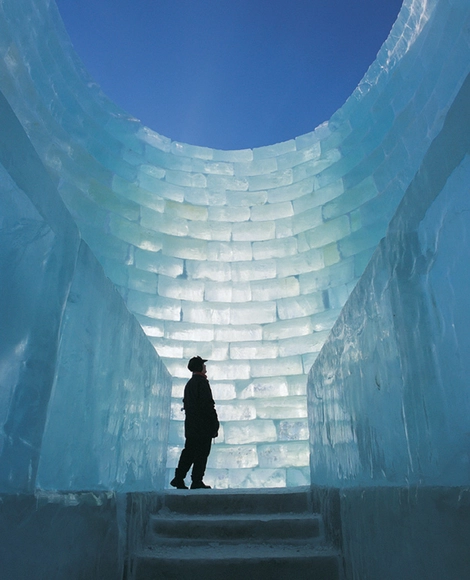
Oblong Voidspace - Jene Highstein & Steven Holl. The Snow Show, Lapland, 2003 and 2004. Image Courtesy of Fung Collaboratives, Photo Credit: Kostamoinen
Winter is the perfect time to build structures with ice, a time and a technique that together offer the possibility of a pure white architecture. With a cloudy sky the condition culminates into an impressive whiteout: white architecture, the landscape and the sky dissolve into a diffuse unity without a visible horizon. If clear skies emerge a subtle contrast of warm and cool white appears with yellowish sunrays against the blue sky. However, the ice itself has striking effects as well: The surface appearance ranges from crystal clear glass to soft opaque impressions. And, for the long nights, illumination achieves an additional magical glow and extends the short daylight time.
Worldwide, snow shows, ice hotels and festivals have attracted numerous visitors with glistening snows and stunning lighting solutions. Futhermore, this frozen water strategy presents a sustainable solution par excellence, where the manufacturing and even disposal causes no harm to the environment. Read on to explore the coolest projects and events featuring architects and artists from Finland to China.
With its hundreds of churches, Rome has a developed a rich history of domes. Inspired by this heritage, Jakob Straub has photographed the city's most remarkable rotundas from the ancient Pantheon up to Pier Luigi Nervi's modern sports arena. His neutral photo perspective, taken looking upwards from the center of the rotunda, opens a new view for the underlying concepts where the architecture yearns for the firmament. For Elías Torres, these “zenithal-lit” spaces constitute an important method for daylight architecture, where the exterior is also transformed into a fascinating distant reality.
Torres has analysed numerous strategies for lighting architecture effectively with daylight from above. In his book “Zenithal Light,” illustrated with an abundance of striking photos, he came to the conclusion that “Amongst the representations of the sky in the interior of architecture, the one that depicts the sun shining from above with a circular form has been the favoured one for many cultures.”