Shiro Studio, in collaboration with Mesh Partnership and Equals Consulting were just announced by RIBA as the winning team of the Great Fen Visitor Center competition. Sitting beautifully within the expansive landscape, the team had skillfully incorporated elements of the traditional Fenland building typology within an exciting contemporary visitor center design. The silvery and bog-oak black exterior, shimmering with the play of Fenland light, would contrast markedly with, and complement,its spacious, light-filled interiors and panoramic views onto the surrounding landscape. More images and architects' description after the break.
Constructed for the Changwon Suclpture Biennale 2012 held in Changwon city, South Korea the Brick-Pod Pavilion defines architecture as ‘a sculpture with interior space’, and attempts to create a dome with black bricks which has been used for traditional architecture here in Korea. Designed by Kazuya Morita Architecture Studio, you can enjoy the breezing air, moving leafs, and sparkling sunshine through its numbers of the openings, feeling much more sensitive than when we are outside. More images and architects' description after the break.
Located at the mouth of Marseille’s World Heritage-listed harbor, the Vieux Port Pavilion, designed by Foster + Partners, provides a new sheltered events space on the eastern edge of the port. Bringing new focus to the city, these photographs by Edmund Sumner demonstrate the stainless steel canopy's ability to amplify and reflect the surrounding movement of the harbor, creating a spectacle that encourages pedestrians to linger. Since its opening early this year, the project is truly an invitation to the people of Marseille to enjoy and use this grand space for events, markets and celebrations once again. A complete gallery of Sumner's images can be viewed after the break.
The Tel-Aviv White City Forum winning proposal by Kimmel Eshkolot Architects is an exhibition center, part of the huge Tel- Aviv wholesale market project currently under construction. Comprising thousands of apartment units, a mall, a school and a sports complex, the Forum will be a platform for genuine urban celebration. More images and architects’ description after the break.
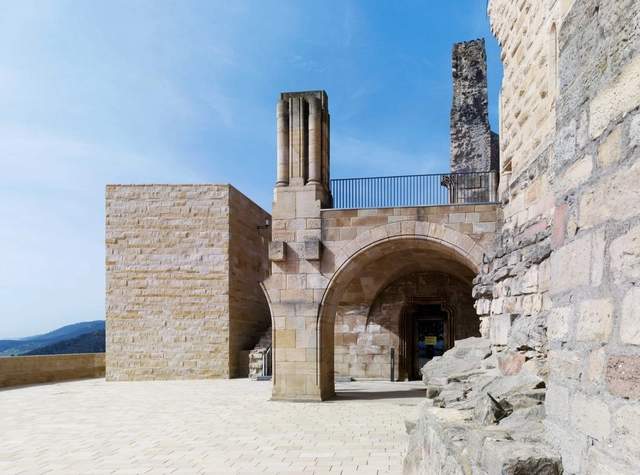
The proposal for the Château of Chillon Restaurant & Boutique by Mauro Turin Architectes takes into account the cultural significance of the historical national monument and uses century-old construction along with various updated methodologies. Their aspiration is to add, in a notion of continuity, a new layer of history about the site and the Castle. Therefore, the building is designed in the image of its ambitions, in the expectation in what can be called the expansion of the Castle. More images and architects' description after the break.
Courtesy of MenoMenoPiu Architects + BE.ST Architect
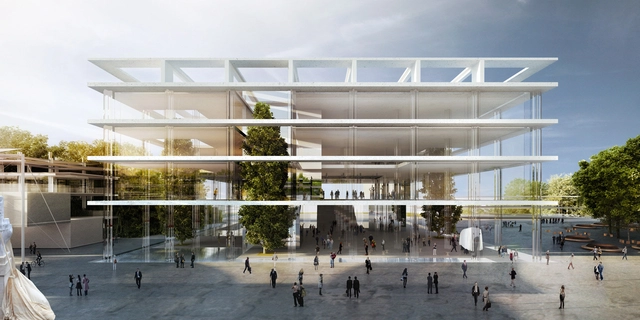
MenoMenoPiu Architects + BE.ST Architect shared with us their proposal for the Italian Pavilion Expo 2015. Titled 'The Slabs', their design consists of a light cage where the technical innovation is embedded within the structure: revolutionary glass columns sustain traditional slabs clad in marble. Simple and elegant in its structural system, marble and glass are intertwined to express the Italian architectural tradition of proportion and elegance. More images and architects' description after the break.
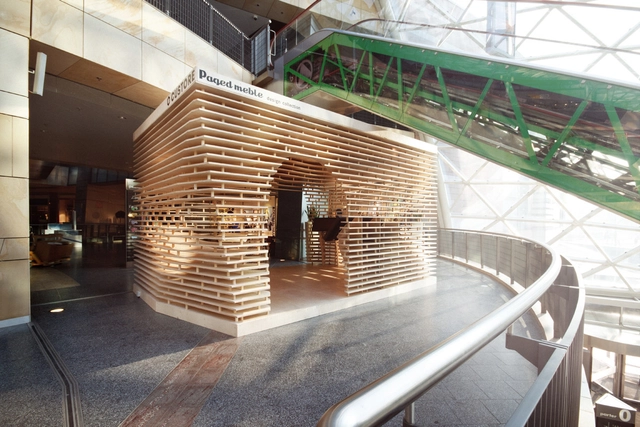
Custore, an experimental project, is a pavilion that explores the areas of parametric architecture used for the commercial market. Designed by Anna Dobek + Mateusz Wojcicki, they had to deal not only with the aesthetic issues of computer-generated sculptural forms, but also with practical problems associated with the execution of the project inside a commercial building, and - most importantly – with the real clash of artistic forms and commercial market guidelines. More images and architects’ description after the break.
Videos
Courtesy of University of Houston CoA + Judd Foundation
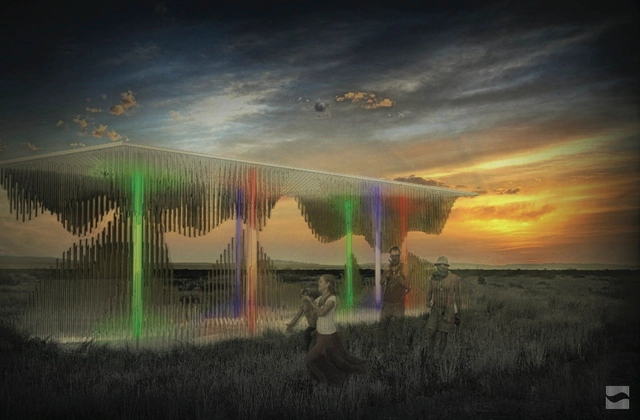
Vitreous is a collaborative academic initiative by the University of Houston's Gerald D. Hines College of Architecture and the Judd Foundation that incorporates the vantage points of the natural landscape, and the technological advancement of digital fabrication and media technologies. The faceted panels disguise and blend the unbounded Marfa landscape with reflective images causing a perceptual distortion between the viewer and the surroundings and between the real and the virtual. More images and the team's description after the break.
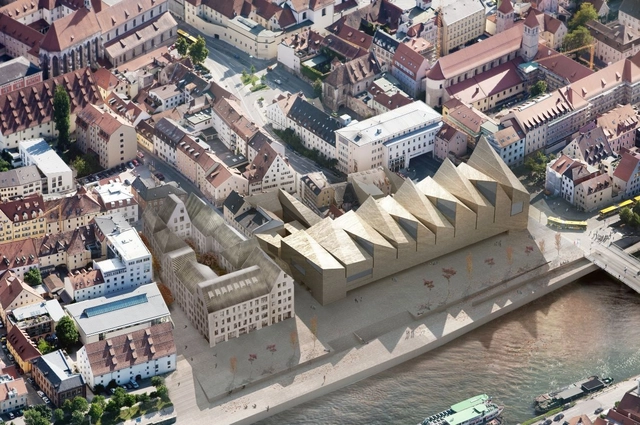
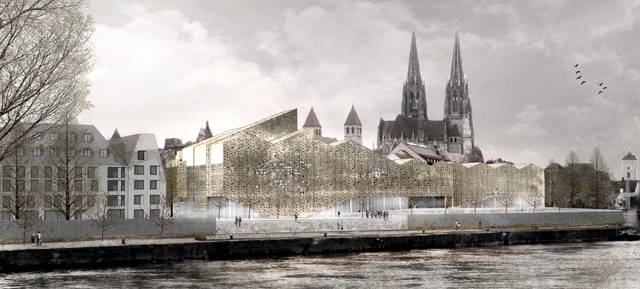
The design of the Bavarian history museum by X+UN Architecture takes into account the impact of the most important landmarks surrounding the site. Located in Regensburg, it is placed on the bank of the Donau River, which acts as a visual promenade that makes the building visible from a long distance and channels an important flow of people into the site. The shape of the museum is generated from a series of stripes parallel to the river. More images and architects' description after the break.
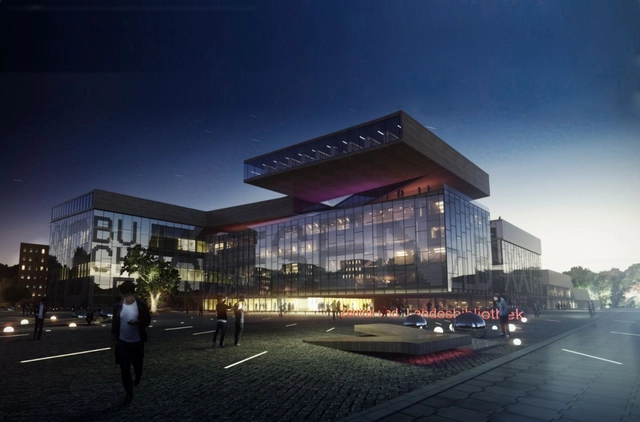
Designed by Envés Arquitectos, their proposal for the New Central Library in Berlin was named as one of the winners of the competition, which is conceived as an open, public, free and comfortable meeting place; summing up, an urban lobby. This flexible place is able to interact with a changing user (from a kid to an ancient), but simultaneously ensures the area’s accessibility and right usage. The library also aims to become an activity catalyst, a landmark to be perceived from far away. More images and architects' description after the break.
OODA + Menos é Mais Arquitectos recently unveiled their design proposal for the Bavarian History Museum which explores the ability of architecture and urban planning to spread a cultural event, so that it leads to optimism and a contrasting pleasure drive between the river, the museum, the city and the public in general. Taking advantage of the excellent location on the Danube and close to the cathedral, the new museum is an urban landmark that reveals his historical narrative in its interior. More images and architects' description after the break.










.jpg?1368068039&format=webp&width=640&height=580)
.jpg?1368067934 "© Gerard van Beek")
.jpg?1368067908 "© Gerard van Beek")
.jpg?1368067923 "© Gerard van Beek")
.jpg?1368067989 "© Gerard van Beek")
.jpg?1368068039)