
-
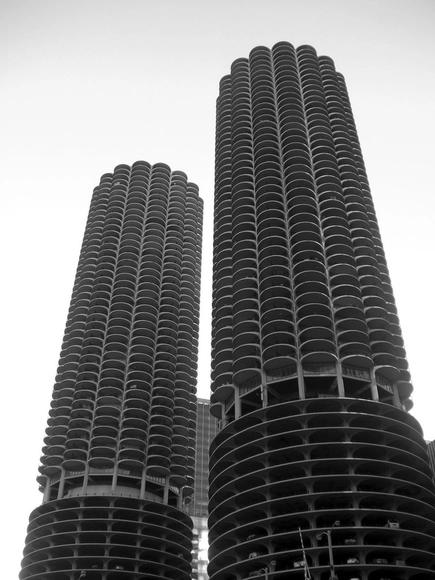
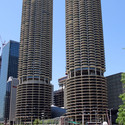
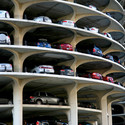
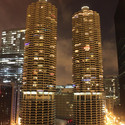
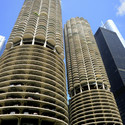
Architects: Bertrand Goldberg
- Year: 1964



The recent recipient of the 2010 AIA Chicago Unbuilt Design Award, the Culver House Development sparks the conversation of sustainable design within the private sector of the prestigious Gold Coast neighborhood, Chicago, Illinois. A mixed-use development, the building was designed to achieve LEED Gold status. Both the office space and eight dwelling units capitalize on the thoughtful design of the energy efficient and ample day-lit spaces.
The jurors are quoated as descirbing the Culver House Development plan as “very smart” and the scheme “handsome.” In reference to the varied floor plans of the residential units jurors claimed that “it breaks the typical pattern of every floor being the same” and continuing stating, ”it is like a jigsaw puzzle.”
More about this award winning design following the break.
Architects: Dirk Denison Architects Location: Chicago, Illinois, United States Project Year: Unbuilt Renderings: Antonio Petrov , Daniel Wolf

Jimenez Lai of Bureau Spectacular shared his residential project for a warehouse loft. The 1400 sf space is conceived as a house within a house where all the material possessions are compacted into one oversized briefcase, which the subject sleeps inside. The project focuses on engaging two architectural issues: the inside/outside and S/XL.
More information, including Lai’s illustrated storyboards after the break.

The project transforms a picturesque urban pond from the 19th century into an ecological habitat buzzing with life. With the design’s improvements to water quality, hydrology, landscape, accessibility, and shelter, the site is able to function as an outdoor classroom in which the co-existence of natural and urban surroundings is demonstrated.
Architect: Studio Gang Architects Client: Lincoln Park Zoo Project Area: 4 acres Project Year: 2010 Photographs: Beth Zacherle and Studio Gang Architects

HOK has infused green strategies into Chicago’s Greenway Self-Park facility – a not so typical place to find sustainable ideas. While the 11 story energy efficient parking garage features a naturally ventilated exterior wall, a cistern rain water collection system, a green roof, and electric car plug-in stations, we can’t get over the dozen wind turbines made by Helix Wind that attach to the external structure.
More about the self-park and more images after the break.

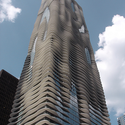
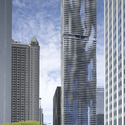
Roosevelt University will soon feature a new vertical campus, courtesy of VOA Associates. The existing campus layout makes it nearly impossible for the college to grow outwardly – so the only solution was to expand vertically. The 32 storey building is quite slim in profile, yet its wavy glass façade provides a distinguishing aesthetic touch.
More about the tower after the break.

_Hedrich_Blessing_night.jpg?1593019741&format=webp&width=640&height=580)



Tod Williams and Billie Tsien Architects, a renowned practice with expertise in public/cultural buildings, just unveiled the details for the new Reva and David Logan Center for the Creative and Performing Arts at the University of Chicago.
This new building will offer 170,000sqf for studios, rehearsal space, director’s cut screening rooms, state–of–the art acoustical theaters, lecture rooms and set–building shops, that will be shared by many departments including visual arts, theater, music, as well as cinema and media studies.
The project includes a 11-story tall tower, which will become a new landmark at the south of the campus. At the top of this tower we find the Performance Penthouse, a tall space for performances and rehearsals with an amazing view over the city (see render below).
The rest of the complex is distributed on smaller buildings, with an interesting set of skylights to naturally lit the interiors.
As usual in Tod Williams Billie Tsien works, such as the American Folk Art Museum in New York, the Phoenix Art Museum and the East Asian Library at Berkeley, the simplicity of the materials (stone and glass) give the building a contemporary yet ageless look, a building that will stand over time, not just a fad.
More renderings after the break.


After our UN Studio’s Burnham Pavilion gallery, many of you wondered how it was built. This photo reveals the woodenstructure for this pavilion, which was later finished with a plastic-like material.


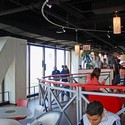

_Hedrich_Blessing_shadowplay.jpg?1593019578 "© Hedrich Blessing")
_Hedrich_Blessing_brick_interior.jpg?1593019512 "© Hedrich Blessing")
_Hedrich_Blessing_interior.jpg?1593019880 "© Hedrich Blessing")
_Hedrich_Blessing_brick_detail.jpg?1593019807 "© Hedrich Blessing")
_Hedrich_Blessing_night.jpg?1593019741)