


-
Architects: Renzo Piano Building Workshop
- Area: 70 m²



Boston Society of Architects (BSA) recently launched their lecture series which opens up on September 21st with Jeremiah Eck, FAIA as he considers a simple way to infuse sustainability and light in homes; Barnaby Evans does something similar for cities while Chee Pearlman enlists design for the betterment of humanity and Audrey O’Hagan, AIA looks boldly toward the future of the profession. All free BSA lectures take place at 6:00 pm at the BSA Space multimedia room (290 Congress Street, Boston). More information on the series after the break.
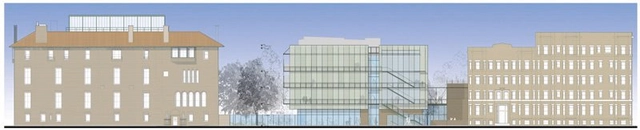
Opening in 2012, the $118 million steel, glass, and copper-clad expansion to Boston’s Isabella Stewart Gardner Museum by Renzo Piano Building Workshop will more than double the size of the current facility. Included in the project are a new entrance, music hall, gallery space, and other amenities for an institution that has remained largely unaltered since opening in 1903.

The Boston Society of Architects/AIA announced the winner of the 2010 Harleston Parker Medal as the Cambridge Public Library by William Rawn Associates Architects and Ann Beha Architects. Each year, the Boston Society of Architects (BSA) and the City of Boston award the Harleston Parker Medal to “the single most beautiful” building or structure built in the Greater Boston area over the past 10 years.
More images of the winner after the break.

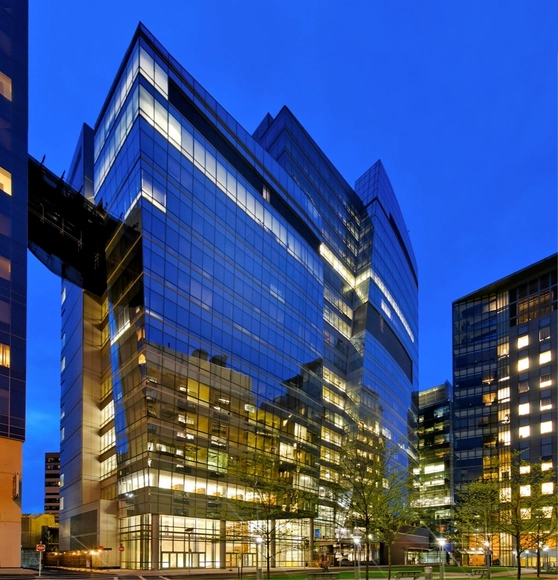
The International Living Future Institute launched the Living City Design Competition in 2010, seeking designs for our cities in the year 2035. map-lab’s submission was ResilienCity. ResilienCity seeks to set the vision for the future of Boston’s Innovation District, a new neighborhood built on grey field and brownfield sites that will provide residences and workplaces for over 300,000 people.
We have reached the tipping point where we need to think of the whole, not the self. We have arrived at a time when we need to stop behaving selfishly and begin to explore how we can all come together as a community to create environments that are culturally enriching, healthier, and equitable. We come back to nature to do this. Additional images of map-lab’s submission and a continuing narrative can be seen after the break.


For this week the Architecture City Guide series headed to the city of Boston including neighboring Cambridge just across the Charles River Basin. This area has an overwhelmingly large amount of modern architecture in a small radius, and our list reflects just that. What buildings do you want to see added to our Boston list, share them with us in the comment section below.
The Architecture City Guide: Boston list and corresponding map after the break!

The Boston Society of Architects plans to move from its current location on 52 Broad Street to a new space at Atlantic Wharf, as part of a major transformation of the 1867 institution. As part of an open design competition, the BSA selected Höweler + Yoon Architecture’s proposal entitled: Slipstream Public Exchange. Images of the proposal, a fly through video and an architects description after the break.
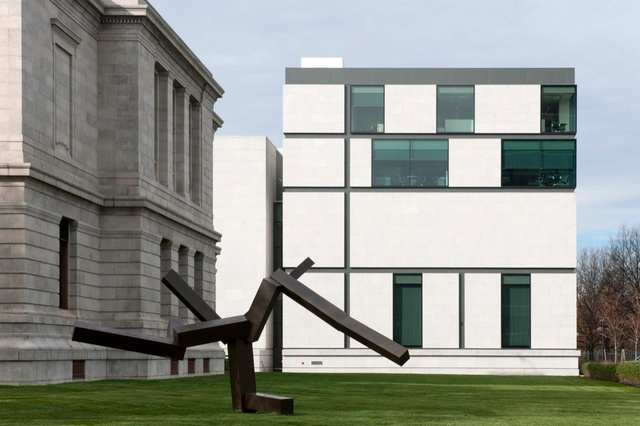

The ambitious and successful award-winning architect, MAA Christian Bay-Jorgensen, from the architectural firm, Bay Arch, shared with us this unique and sustainable building at the harbour in Boston, Massachusetts. With affiliates in Ringkobing and Copenhagen and with creativity and energy in the blood, Boston Fusion will contain apartments and offices to create a new, green design in every sense with the help of eco-friendly materials from Icopal. This project also forms part of the plans for a new, green quarter called South Boston. More images and architect’s description after the break.

Sun-Young Park, an architecture PhD student at Harvard shared with us a review on the Typology Redux Conference at Northeastern University in Boston. Read the complete review after the break.

Organized by Northeastern University and Tim Love, Associate Professor and Principal of Utile, the Typology Redux conference will consider the market-driven building typologies. When architects design office buildings, apartment buildings, and other market-driven building types, an unwritten set of rules establishes the framework for design exploration.