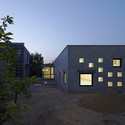
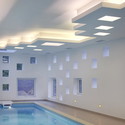
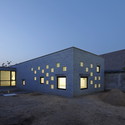
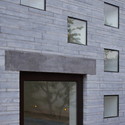
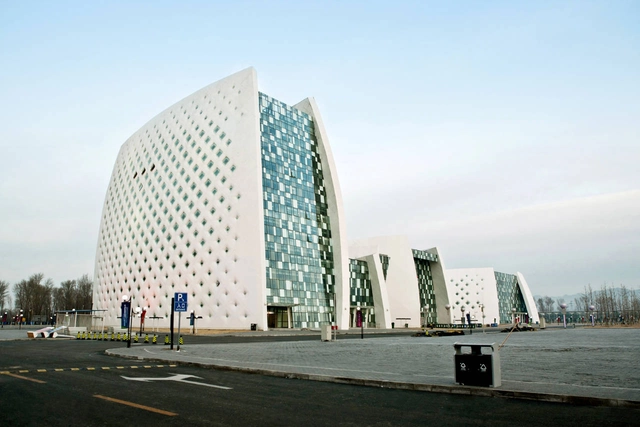
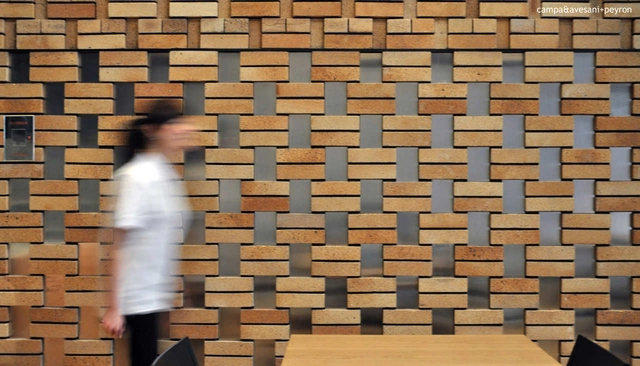
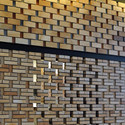
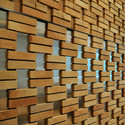
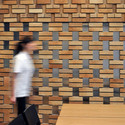
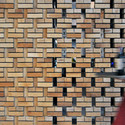
OPEN Architecture recently created a new kind of school system that provides a balanced and joyful learning environment integrated with farms and gardens. Drawing inspiration from the ancient Chinese philosophy which had always centered on the harmony between people and nature, the architects feel it is urgent to bring the ancient philosophy back to the core of our education, and put it in the context of new challenges ahead. If there is one thing that we have to put above all other issues for the 21st century, it is probably the vulnerability of nature, especially in the decades to come, and amidst all the looming environmental crisis. More images and architects’ description after the break.
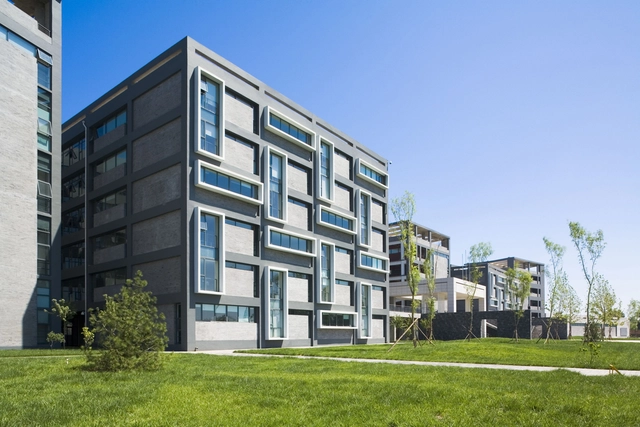
Leo A Daly, in collaboration with Local Design Institute WDCE, recently won a competition to design Phase 2, Plot B, of the international headquarters campus of China Mobile Ltd. in Beijing. One of the largest mobile telecommunications companies in the world, China Mobile Ltd. selected their design for the research and development office and laboratory buildings, each a five- and nine-story facility, which are organized on an east-west pedestrian axis and mirrored in their massing to establish opposite, formal entries linked to internal courtyards at the ground level. More images and architects’ description after the break.
Located in natural surroundings close to the mountain, river, and wetland in the west south suburb of Beijing, Atelier 11’s proposal for the main pavilion of the Expo aims to create an artificial landscape. Rather than a manmade construction, their design echos the park’s site condition and the Expo’s particular theme. Simplistic form, unique spaces, and flexible planning become elements that both facilitate and influence one another in the overall design. More images and architects’ description after the break.
Beijing urban expansion _ The fast and enormous urban development of Beijing has transformed the city into a metropolis made of suburban residential compounds, abandoned industrial plants, community housing blocks from the 70s-80s and popular self-grown villages. A mix of high rise residential areas, business districts, impressive infrastructures enclosing spontaneous house areas surviving the demolition and renovation dictated by the construction market. The population has grown from 1 to 18 millions in 60 years, and the size of the city has reached 5 times the ancient capital within the walls – the 2nd Ring Road.
The urban expansion, mostly based on imported urban models and low quality constructions, has been exploding in the past 30 years, and it is rooted with political and economical decisions, as well as local culture and history. Briefly, Beijing is a stunning showcase of urban consequences happening in the world’s first growing economy, during an explosive industrial revolution.
Hallway House, a radical residential project designed by NL Architects, has been conceived within the framework of a ‘match making’ program set up by the Dutch Architecture institute (NAi), together with Housing Corporation VANKE. As a Sino-Dutch collaboration in social housing, NL Architects has created a new concept for high-quality affordable housing on a site in Huilongguan, Beijing. More images and architects’ description after the break.
EASTERN design office + KAWAGUCHI & ENGINEERS shared with us their project, Light Thread, China Agricultural University’s Gymnasium / Wrestling Arena for the 2008 Olympics in Beijing. During the Olympic Games, the wrestling arena has a 10,000-person capacity. After the Olympic Games, 4,000 temporary seats can be taken out and the interior can be refitted with three arenas, a pool, and 6000 seats to transform the space into a gymnasium complex. Since this building will come into the possession of the Chinese Agriculture University, they sought to create a condition that allows the special requirements of the Olympic Wrestling Arena and the functional features of a building for the Chinese Agriculture University to both be fulfilled in a single construction. More images and architects’ description after the break.
Chinese artist Ai Weiwei was selected as one of the runner-up candidates for TIMES 2011 Person of the Year Award. Ai Weiwei is known in the architecture world for his collaboration with Herzog & de Meuron, serving as the artistic consultant for the Beijing National Stadium, otherwise known as the Bird’s Nest stadium.
Guo Jinlong, the Mayor of Beijing, China and Thomas J. Pritzker, Chairman of the Hyatt, revealed the location of the 34th Pritzker Prize Ceremony. The prestigious event will be held in Beijing, China on May 25th, 2012.
Designed by Brininstool, Kerwin, and Lynch, the Beijing Core Area Master Plan is a massive civic proposal of over 27 million square feet of building area and an additional 1.5 million square feet of public space design for the Central Business District of Beijing, China. More images and architect’s description after the break.
The emergence of China on the global economic stage has been discussed at nauseum in myriad publications. But this emergence has had an impact on the world of architecture, providing a testing ground where architects can experiment with new ideas about sustainability and urban growth. These new ideas have been realized in recently completed structures, and more are just beginning construction or have been proposed for the future. More on these new buildings after the break.
Next week we will be taking our Architecture City Guide to Beijing and we need your help. To make the City Guides more engaging we are asking for your input on which designs should comprise our weekly list of 12. In order for this to work we will need you, our readers, to suggest a few of your favorite modern/contemporary buildings for the upcoming city guide in the comment section below. Along with your suggestions we ask that you provide a link to an image you took of the building that we can use, the address of the building, and the architect. (The image must be from a site that has a Creative Common License cache like Flickr or Wikimedia. We cannot use images that are copyrighted unless they are yours and you give us permission.) From that we will select the top 12 most recommended buildings. Hopefully this method will help bring to our attention smaller well done projects that only locals truly know. With that in mind we do not showcase private single-family residences for obvious reasons. Additionally, we try to only show completed projects.
https://www.archdaily.com/161251/help-us-with-our-architecture-city-guide-beijingChristopher Henry
“You’re not going to find any of Ai Weiwei’s work being shown in Beijing”, said each Beijing gallery representative. That’s because the artist and agent provocateur has been detained for 80 days now was released today, from what the government is saying was based on “economic charges”. The name “Ai Weiwei” has joined a long list of sensitive words in this country, and associating yourself with the artist has become tantamount to asking for trouble. Just ask the Chinese curator who was questioned by authorities after putting Ai Weiwei’s name under a blank wall in Beijing’s Incident Art Festival.
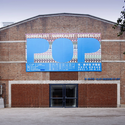
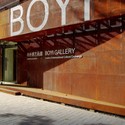
While Beijing’s lively art scene might currently be scrubbed clean of Ai Weiwei’s work, there’s one thing that’s a little difficult to “harmonize” away, as it’s known here. In 1999, Ai Weiwei began moving into the world of architecture, establishing his own architecture studio called FAKE design four years later. So Ai Weiwei’s artistic vision continues to stand in the form of buildings across the nation’s capital. The most concentrated of these is the artist district of Caochangdi, a few kilometres north of the more commercial art district called 798. It’s also the location of the artist’s studio and where he headed straight to after his release.
More after the break.
https://www.archdaily.com/145818/ai-weiwei-is-free-at-last-plus-photos-of-his-architecture-work-in-beijingMonica Tan