-
Architects: midori arquitectura
- Area: 40 m²
- Year: 2022
-
Manufacturers: Serveis Textils


On June 1st, the ceremony for the VI European AHI Prize was held at the Sant Pau Hospital building in Barcelona. This recognition promoted by Architectural Heritage Intervention, in collaboration with the College of Architects of Catalonia and supported by the Department of Culture of the Generalitat de Cataluña, the City Council of Barcelona, and the Metropolitan Area of Barcelona, arises from the conviction that today, architectural heritage is not only an essential element of knowledge, but also a vital socio-economic resource for the sustainable development of territories.

Cities are a canvas for architectural creativity and the dynamism of urban life. In recent years, they have taken on an additional role: that of living laboratories for innovative architecture and urban design. International cities have become experimental grounds for architectural technology, sustainable practices, and human-centered design principles to be tested and refined. This paradigm shift has not only transformed the physical aspects of urban environments but has also redefined the relationship between architecture, community, and the built environment.

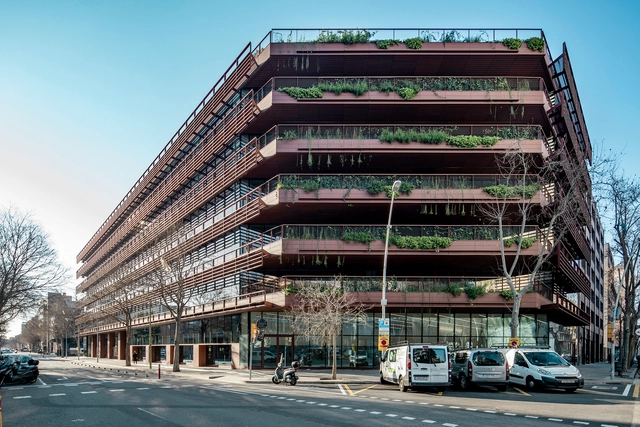
In increasingly denser urban environments, there is a new-found interest in underused spaces as opportunities for further development. Representing up to 25% of cities' land area, rooftops are among the most exciting spatial resources. From sustainable infrastructure and urban farming to social spaces and cultural venues, the article looks into the potential of creating a multi-layered city through the activation of urban rooftops.


On the occasion of the sixth edition of the AHI European Heritage Intervention Award, the 26 selected projects within the categories of Built Heritage and Outdoor Spaces have been announced, among a total of 241 projects submitted from 28 different European countries.


From April 20 to 30, the second edition of the Model: Festival d'Arquitectures de Barcelona took place, debuting a new theme, Radical Empathy, and a new location, the surroundings of the new Parque de las Glorias. This year, managed by the Fundació Mies van der Rohe, the event turned the city into a laboratory of experimentation and dissemination of architectural and urban thought, providing an opportunity to rethink new models and new imaginations of the city.
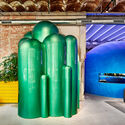
During the 10 days of the festival, 5 temporary installations were presented as a tool to build a more sustainable, fraternal, and fair city. Among the proposals, we could find a breastfeeding area designed by Equal Saree, the roof of a parking lot transformed into a mushroom structure by Harrison Atelier, and a surface that provides information about the benefits and disadvantages of the city's air created by Daryan Knoblauch, among others. At the same time, a series of 4 digital architectures and augmented realities were added, incorporating new experiences and technologies.