This article was originally published on Archipreneur by architect Chris Barnes who, with his wife Bonnie Robin, runs the practice Field Office Architecture.
There aren’t many architects I know who do not love to travel, and I’ve always felt the two things are intrinsically linked. Maybe it’s our constant quest for visual inspiration and new ideas, or perhaps our fascination for how people live their lives and how wildly that varies from border to border, and the impact that has on our physical environments.
Either way, in the age of Instagram and unavoidable envy at the seemingly constant stream of images of laptops by the beach, cocktail in hand my wife and business partner Bonnie Robin, and I were keen to try this thing called digital nomadism for ourselves.
Hungarian architects Paradigma Ariadné push the concepts of progression and growth to a literal spatial extreme in their proposal for a new sport complex for the MTK Football Academy. Drawing inspiration from the diagram of traditional European peasant houses, the design stretches into a kind of visual infinity, stacking all the rooms in the building along a single horizontal axis.
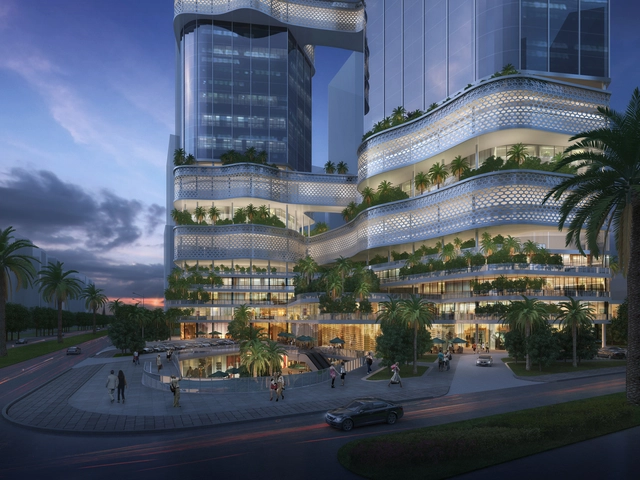
Los Angeles-based studio EC3 has revealed its design entry for a new 14.5-acre, cultural & sports center in Shenzhen’s growing Dalang neighborhood, hosted by the Shenzhen Longhua District Government and the Vanke Real Estate Co.
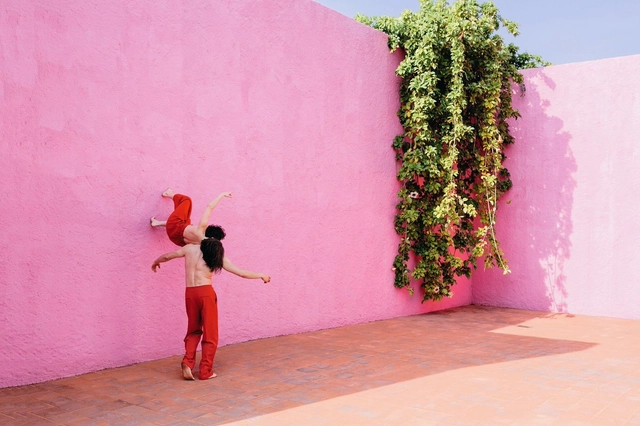
What is a building that is not inhabited? Is it still architecture? Could we say that we live in a daily choreography where our everyday life is in constant movement with the world around us? Different philosophers and theorists have long addressed the issue that architecture is not simply a set of concrete, steel, and glassware ready to protect its users, but rather all the actions it harbors, all the bodies, and set of breaths and movements. This has been reinforced by different theories that approach the body as an actor of place. However, theories of the body in architecture are not as rare as we might believe. From Ergonomics to Le Corbusier's "Modulor," theorist have sought to understand our relationship with architecture.
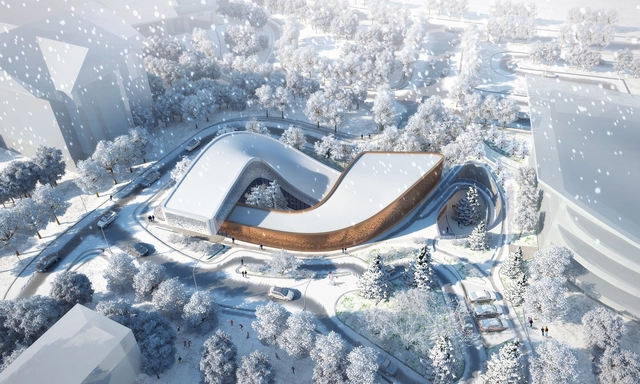
GroupGSA's design for the Four Seasons Reception Center in Chongli, Zhanjiakou, China, where the 2022 Winter Olympics will be hosted, has been announced as the winning bid. The building will be used as the main information center for all of the activities that will occur at the ski resort during the Olympic Games.
Australia-based GroupGSA’s recent design for iCarbonX’s Super Headquarters in Shenzhen, China has been dubbed “outstanding” by the competition’s jurors. The firm was invited to submit an entry which explored iCarbonX’s goal to “build an ecosystem of digital life based on a combination of an individual’s biological, behavioral and psychological data, the Internet, and artificial intelligence.”
Though the understated Swiss and British Pavilions were the big (and perhaps overly literal) winners at this year’s Venice Architecture Biennale investigating Freespace, it was the Chinese that put their relentless architectural progress on display. Nestled in the back of the Arsenale, the Chinese Pavilion presented dozens of built works all around Chinese countryside, each project demonstrating a meaningful social impact through the involvement of villagers in the production process. Among the most visible Chinese architects presenting at the pavilion was Shanghai-based educator and practitioner Philip Yuan, whose office Archi-Union Architects has become a major voice in the already-distinctive contemporary Chinese architecture scene.
Light is an important, if complex, tool in architecture. Not only does it lend atmosphere, texture, and vibrancy, but it is increasingly essential in an age where technology alienates us from nature. In this excerpt from Mary Guzowski's new book, The Art of Architectural Daylighting, she introduces the science and art of daylighting - and details six ways the masters approach the challenge.
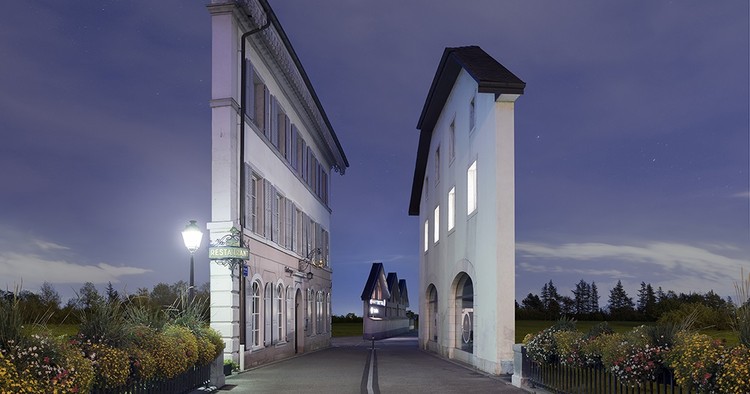
In his ongoing photo-series "Façades," French photographer Zacharie Gaudrillot-Roy a series of images in which he removes the mass and depth of buildings, and leaves behind the mere fragments of exterior skin. The photos, which resemble deserted Hollywood sets, illustrate roadways, towns, apartment complexes, and other environments without giving away the ideas of anything beyond the superficial image of the facade—leaving much to the imagination.
Summer. Vacation. Two magic words that will certainly ease all the pain and exhaustion of working/studying full-time. Now that it is that time of year, most people are busy planning their travel itineraries. Whether it’s a city trip to Paris to see the Eiffel Tower and the Louvre, or a journey to walk on China’s Great Wall, the majority of travelers will choose to cross iconic landmarks off their bucket lists. However, there is a lot more to London than the London Bridge and Buckingham Palace, and there is a lot more to Barcelona than Gaudí. There are, in fact, hundreds of underrated, exquisite structures that go unnoticed.
If you are planning a getaway soon, here is a list of hidden architectural gems that are worth the visit.