1. ArchDaily
  2. Architectural Criticism

Architectural Criticism: The Latest Architecture and News

The Nine-Step Architectural Beauty Detox Plan

This article was originally published on Common Edge.

In 1755, Francesco Algarotti, disgusted with what opera had become, wrote An Essay On The Opera in which he called for its simplification. For Algarotti, opera had degenerated into a vehicle for soloists to grandstand with endless improvisations overshadowing the music and ignoring the drama. Even the drama had lost the plot with mythological characters in extraordinary and complex situations. Algarotti saw drama as being the essence of opera and wanted the emphasis restored to it, with everything else secondary. Christoph Willibald Gluck and his librettist, Ranieri de’ Calzabigi, were the first to make it work with their 1762 opera Orfeo ed Euridice. It had characters and drama people could relate to, music that could be remembered and lyrics and a plot that could be understood. It’s regarded as the first truly modern opera.

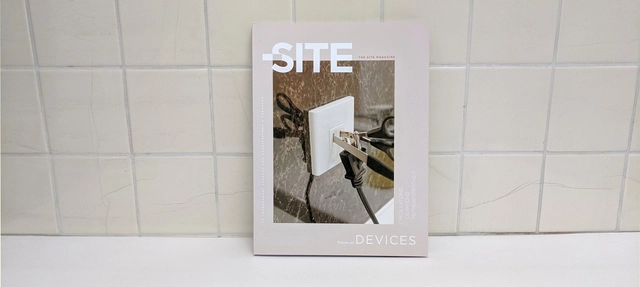
The Site Magazine: Does Architecture Heal? Does Architecture Discriminate?

In the three years since our editorial collective launched The Site Magazine we have collaborated with designers and design institutions around the world to probe social, economic, cultural, and political questions through the lens of architectural knowledge. The discipline of architecture is simultaneously broad and incisive: the practice of architecture demands a constant reinvention of its role, a redefinition of design’s limits. Our forthcoming series “Does Architecture _______?” confronts the obstacles and opportunities afforded by architecture’s evolving agency while continuing to delineate relevant contexts for spatial design. “Does Architecture _______?” is conceived as a series of five thematic issues, each one curated to discursively champion or constructively critique the latent tensions and potential of the built environment that we know, or can imagine.

Call for Submissions: Dennis Sharp CICA Awards for Architectural Criticism 2020

The International Committee of Architectural Critics CICA is pleased to announce an invitation to publishers, editors, curators and authors to submit their publications for consideration for the 10th CICA Awards 2020 by 30th November 2019. Award winners will be announced during the UIA XXVII World Congress of Architecture to be held in Rio de Janeiro from July 19th to 23rd, 2020.

An Architecture of Turbulence

Subscriber Access | 

A single family house may often have been considered as a very small pixel within any urban context, but the fact is, on average more than fifty percent of the urban fabric is being shaped by these tiny small pixels. It is well said by Tadao Ando: “The house is the building type that can change society.” Thus, this is how a client, a developer, a builder, an architect, or a designer could or should be responsible and willingly participate in a collective effort to shape a better urban context.

12 Steps to a Successful Critique

Subscriber Access | 

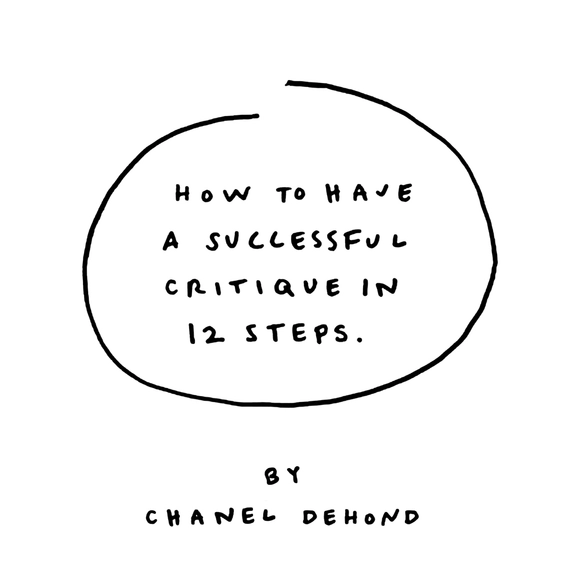
Juries, assessments, 15 minutes of hell... no matter what you call it, a critique is always agonizing. Regardless of how confident you are with your proposal and how much thought and effort you have put into every detail, at least one of the jury members will make sure to find something to complain about.

To prepare you for upcoming juries, artist Chanel Dehond has illustrated 12 steps to having a successful critique (or surviving one, at least).

From Climate Change to Global South: 11 Editors Choose 11 of our Best Articles

Back in 2008, ArchDaily embarked on a challenging mission: to provide inspiration, knowledge, and tools to the architects tasked with designing cities. In an effort to further align our strategy with these challenges, we recently introduced monthly themes in order to dig deeper into topics we find relevant in today’s architectural discourse. From architects who don't design to reframing climate change as a global issue, we are celebrating our 11th birthday by asking 11 editors and curators to choose ArchDaily's most inspiring articles.

[TRANS-] topia 2019 :: journal call for submissions

[TRANS-] topia
across, beyond, through :: critique, fantasy, technology

Will Snøhetta's Redesign Calm the Outcry From Its Original Controversial Proposal?

Labeled as "vandalism" and "murder" of an icon of postmodernism, Oslo-based firm Snøhetta's redesign proposal for Phillip Johnson and John Burgee's AT&T Headquarters was received with instantaneous backlash across the architectural community last year. Architect Robert A. M. Stern, marched alongside a protest outside 550 Madison Avenue, and even critic Norman Foster, who never claimed to have any sympathy for the postmodern movement, still vocalized his sentiments that "[the building] is an important part of our heritage and should be respected as such."

A rejection of the bland and cold functionality of Midtown's crystal skyscrapers, the AT&T building was intended to encourage a more playful approach architecture in the corporate world; the crazy socks beneath a three-piece suit. It was not without controversy. Upon its completion, the building was derided for its decorative and outsized pediment and occasionally dark interior spaces. Indeed, the building's arched entry spaces were among the only architectural elements to be met with praise from both critics and the public. 

Will Snøhetta's Redesign Calm the Outcry From Its Original Controversial Proposal? - Image 1 of 4Will Snøhetta's Redesign Calm the Outcry From Its Original Controversial Proposal? - Image 2 of 4Will Snøhetta's Redesign Calm the Outcry From Its Original Controversial Proposal? - Image 3 of 4Will Snøhetta's Redesign Calm the Outcry From Its Original Controversial Proposal? - Image 4 of 4Will Snøhetta's Redesign Calm the Outcry From Its Original Controversial Proposal? - More Images+ 1

Design Criticism Ignores the Places that it Could Help the Most

This article was originally published on CommonEdge as "The Design Media Needs to Examine its Own Privilege."

Kate Wagner grew up in rural North Carolina. As a kid, her mom, who never went to college, worked in a grocery store deli and later in childcare. Her dad had a steady government job with a pension, and his time in the military meant he had the resources and benefits needed to get a college degree. Wagner describes her economic background as “one foot in the working class and one foot in the middle class, and it was always a negotiation between those two classes.” They were, she says, “just normal-ass American people.”

Architecture and Criticism: By the People, for the People?

This article was originally published on Common Edge as "Architectural Criticism that's Not Just for Architects."

In case you hadn’t noticed the world is going from paper to pixels. You’re reading this, here. Everything is changing, and that includes how we talk and think and write about architecture.

How Important is the Name of a Renowned Architect to a Project?

Subscriber Access | 

From the Fundación Arquia Blog, architect José Ramón Hernandez brings us an article that reflects on projects that can only be appreciated because of who they were created by. If it weren't for the fact that they bear the signature of their illustrious creator, they most likely would have gone completely unnoticed or even despised.

City of Los Angeles Appoints Inaugural Chief Design Officer

City of Los Angeles Appoints Inaugural Chief Design Officer - 1 的图像 4
© Wikimedia user KennethHan licensed under CC BY-NC-ND 2.0

Recently, long-standing architecture critic for the LA Times Christopher Hawthorne announced that he was stepping down to take up the position of chief design officer for the City of Los Angeles in Mayor Eric Garcetti’s administration. According to Hawthorne, the role will involve raising “the quality of public architecture and urban design across the city — and the level of civic conversation about those subjects.” This dramatic shift raises the question: what is the role of the critic and architecture criticism in shaping civic architecture?

Brad Pitt: "I Get This Well of Pride" Over Make It Right's New Orleans Work

Brad Pitt: "I Get This Well of Pride" Over Make It Right's New Orleans Work - Featured Image
The Float House / Morphosis, Make It Right. Image © Iwan Baan

Ten years ago this month, Hurricane Katrina swept through the Gulf coast of the US, hitting New Orleans the hardest. Two years after the wake of this destruction, after seeing the city's lack of rebuilding progress firsthand, Hollywood star and architecture enthusiast Brad Pitt launched Make It Right, a project set to build 150 houses designed by 20 internationally renowned architects.

Over the past eight years, Make It Right has not only helped to rebuild the Lower Ninth Ward in New Orleans—the area struck the hardest by the disaster—but has also began to spread its work to Missouri, Montana, and New Jersey, with more projects coming soon. While the non-profit organization has had success in its endeavors, it has simultaneously faced a great deal of criticism.

In a recent interview with NOLA, Pitt discusses some of these criticisms, reflecting on the growth of the organization, and the changes it has made. Find out about Pitt’s evolving perspective, after the break.

Brad Pitt: "I Get This Well of Pride" Over Make It Right's New Orleans Work - Image 1 of 4Brad Pitt: "I Get This Well of Pride" Over Make It Right's New Orleans Work - Image 2 of 4Brad Pitt: "I Get This Well of Pride" Over Make It Right's New Orleans Work - Image 3 of 4Brad Pitt: "I Get This Well of Pride" Over Make It Right's New Orleans Work - Image 4 of 4Brad Pitt: I Get This Well of Pride Over Make It Right's New Orleans Work - More Images+ 2

Excerpt: Conversations with Architects in the Age of Celebrity

Excerpt: Conversations with Architects in the Age of Celebrity - Image 7 of 4
CCTV Headquarters in Beijing by OMA. Image © OMA / Philippe Ruault

No matter what you think of it, these days there is no denying that a celebrity culture has a significant effect on the architecture world, with a small percentage of architects taking a large portion of the spotlight. Questioning this status quo, Vladimir Belogolovsky's new book "Conversations with Architects in the Age of Celebrity" interrogates some of these famous architects to find out what they think of the culture which has elevated them to such heights. In this excerpt from the book's foreword, Belogolovsky asks how we got into this celebrity-loving architectural culture, and what it means for the buildings produced.

Patrik Schumacher Actually Makes a Good Point

Subscriber Access | 

Last week Patrik Schumacher, director at Zaha Hadid Architects and the practice's frontman in the field of architectural theory, took once again to Facebook to disseminate his ideas - this time arguing that "the denunciation of architectural icons and stars is superficial and ignorant." In the post, Schumacher lamented the default position of the architectural media which he believes sees success and reputation as "a red cloth and occasion to knock down icons," going on to outline his beliefs on why stars and icons are useful and even inevitable mechanisms of architectural culture.

Schumacher has made headlines via Facebook before, with a post last year in which he argued for an end to the "moralizing political correctness" that has led to the popularity of socially-conscious design - a post which attracted almost universal outrage from architects, critics and social media users of all stripes. However this latest post had a very different feel; many people, myself included, seemed to find themselves at least partially agreeing with Schumacher. After all, at the most basic level he was asking for designs to each be judged on their individual merits - what's not to like?

Archiculture Interviews: John King

Subscriber Access | 

"What I love about architecture is it really is the art form that we all encounter, it's larger than life, it's what you can't avoid." In this installment of Arbuckle Industries' Archiculture interviews, author and urban design critic John King dissects the role of the public in architectural practice and the mindset of those who get involved. He goes on to discuss the defining characteristics of successful, seasoned architects, and compares their mentality to that of emerging architects. Additionally, King touches on the subject of architectural criticism and how the profession came about.

Cantilevers on Sand, Ducks in a Bag & Other Adventures: A Conversation with FormlessFinder

Subscriber Access | 
Cantilevers on Sand, Ducks in a Bag & Other Adventures: A Conversation with FormlessFinder - Image 2 of 4
Julian Rose (left) and Garrett RIcciardi (right) met at Princeton University and later started formlessfinder together . Image Courtesy of formlessfinder

Formlessfinder of New York City has a vision "to liberate architecture from the constraints of form." Samuel Medina of Metropolis Magazine recently interviewed the Princeton duo on contemporary architectural practice - fittingly naming them "Formal Renegades."

“We like architecture,” says Garrett Ricciardi, with real sincerity. “We want to save architecture.” But from what? Ricciardi is one half of New York–based formlessfinder, the experimental—you might say radical—architecture firm he founded with Julian Rose in 2011, just after the pair completed a joint thesis at Princeton University. Their project, which laid out the blueprint for Ricciardi and Rose’s subsequent collaborations, advanced a daring proposition: to liberate architecture from the constraints of form.

“The basic idea of the formless is about freeing up architecture to make it about what we want it to be about,” Rose says. “The idea is that form has sort of gotten in the way,” he adds, before checking off a laundry list of offenders: parametricism, digital fabrication, blobs, minimalism. Where form has “always served to limit and control,” the formless, as the architects have come to define it, is subversive by nature. It’s an operation rife with uncertainty, producing “messy, equivocal, and, most importantly, generative” results. 

A Case for the Democratization of Architectural Media

Subscriber Access | 

In October Phineas Harper, assistant editor of The Architectural Review, published an article about the state of architectural publishing, in which he addressed the crisis facing traditional architectural publishers and heavily criticized online platforms, particularly ArchDaily, that have “little time for critique, turning instead to reworking press releases and biased descriptions from the architects.”

Allow me to introduce myself: I am a critic and creator of original content for ArchDaily, and I would like to refute these allegations.