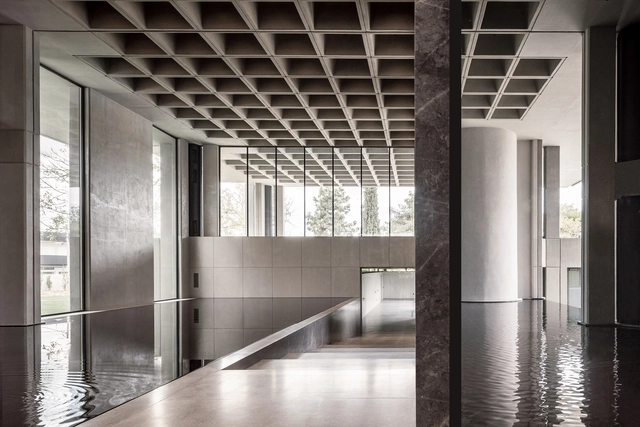
Hidden in plain sight, ceilings are often the final surface interior designers and architects think about, but the expansive plane of unobstructed plaster or concrete offers mar more creative freedom than we realize. Modern design rules demand that the ceiling is kept clean. Not with a telescopic mop attachment, but by stripping off the popcorn spray, wood-chip wallpaper, or plaster patterning that haunt my own memories of ceilings-past.
While many clients greet this contemporary need for clean lines with acquiescence, choosing smooth, skimmed plaster finishes with unobtrusive yet forgetful recessed spots, other bolder clients recognize the ceiling’s potential for the creative outlet it is.
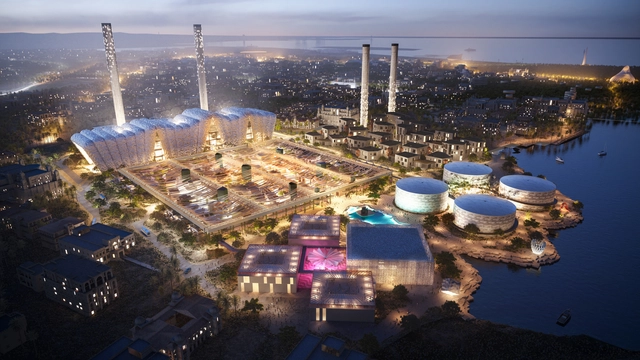
Heatherwick Studio has unveiled a new project to transform an old desalinization plant into the centerpiece of a new cultural district on the waterfront of Jeddah, Saudi Arabia. The industrial structure is set to be reconfigured to become The Museum, large complex offering production spaces, studios, and ateliers for artists and makers. Its program also includes exhibition spaces that can accommodate large-scale commissions to help visitors to learn and feel inspired by the next generation of artists.
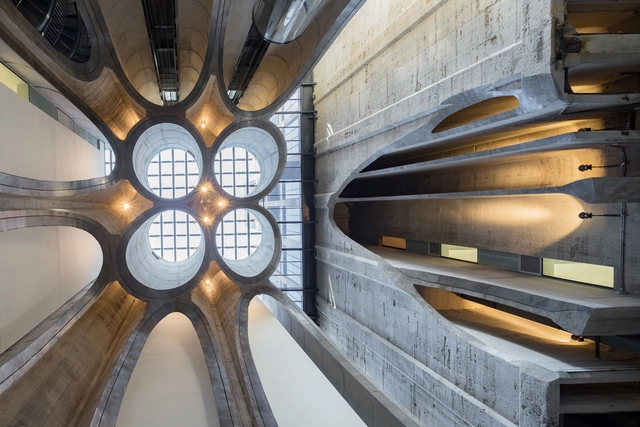
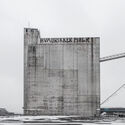
Hulking, imposing, and utilitarian, silos are an enduring urban feature, structures typically used for the storage of materials in bulk. They are important physical elements of the agricultural industry, storing grain, fermented feed, and other foodstuffs. These tall, typically cylindrical forms remain the subject of architectural fascination — from being symbols of technological progress for Modernist architectural figures of the early 20th century, to in contemporary times, instigating inventive approaches to adaptive reuse.
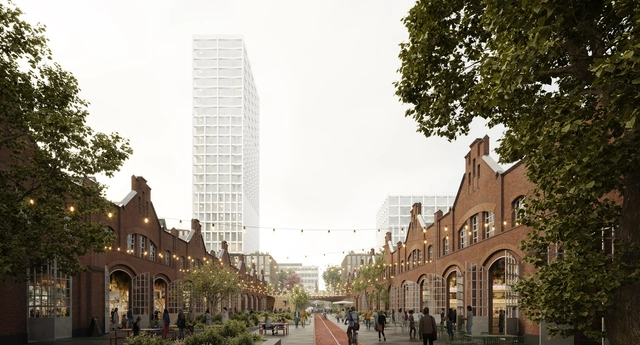
The Portuguese office MASSLAB, in collaboration with AFRY Ark Studio, won the Train Factory Mixed-Use Competition, an international competition in two stages whose main objective was to create a landmark for the city of Helsinki, Finland. The proposal was selected from five world-renowned architectural consortia.
The Train Factory Group and the City Council of Helsinki organized the competition, and the proposal “A roof for Helsinki” was chosen. The old electric train building will be transformed into a 45,000 m² complex for offices, retail and a hotel, reimagined as part of the social, commercial and cultural heritage.
Refurbishment and adaptive reuse have been at the forefront of architectural discourse in recent years. This demonstrates that the profession is becoming increasingly aware of its impact on the environment and the opportunities presented by reusing what has already been built. Architecture 2030 has recently launched CARE, or Carbon Avoided Retrofit Estimator, a new digital tool that enables designers, owners, and communities to quantify the carbon benefits of adaptive reuse. By entering a streamlined set of project information, such as energy targets and potential building interventions, users can quickly estimate both operational carbon emissions generated by the use of the building and embodied carbon emissions, which are tied to the building materials employed.
Cities are inseparable from fast-paced lifestyles. Rising rents and “not-that-small” apartments characterize urban environments, perpetuating the chase for “bigger, faster, and more”. As economies develop and human needs grow, buildings are erected at alarming rates to rush toward progress. The risks of urban living are gradually being exposed, raising questions about more intentionally-driven actions. One way to return to slower lifestyles is by returning to slow architecture.
2022 could be remembered as the year when surprising AI-fueled tools became accessible to a larger audience: from text-to-image generation Stable Diffusion, Midjourney, and DALL-E 2 to unsettling design experiments such as This House Does Not Exist, to surprisingly smart OpenGPT, a language-processing designed artificial intelligence to generate human-like text.
Cautiously described by OpenAI CEO Sam Altman as "a preview of progress", any user can talk with OpenGPT about almost anything: the results are astonishing and it easily can embody an umpteenth so-called threat for creative-related jobs. However, OpenGPT does not have access to browse the internet. Instead, it interacts based on the gigantic database that it has been trained on. As expressed by Gannett's Eric Ulken, "even the best generative AI tools are only as good as their training", so what an "inappropriate request" is has previously been tuned (by humans) as well.
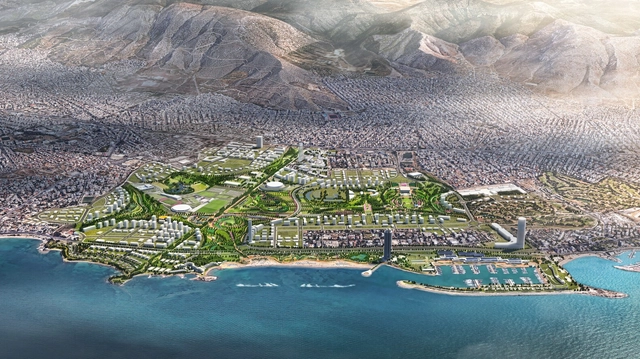
The Athens International Airport was decommissioned in 2001, leading to two decades of work for the local government to establish funding and a governance mechanism to transform the 600 acres of unused space into Europe's largest coastal park. The site has a layered history, from prehistoric settlements to the construction of the airport in the 20th century and the site being used for as an Olympic venue in 2004. Architecture office Sasaki is leading the design to transform the site again and create the Ellinikon Metropolitan Park, a restorative landscape and climate-positive design that will serve as a park, playground, and cultural center for the city of Athens. Developers are planning to break ground early next year.
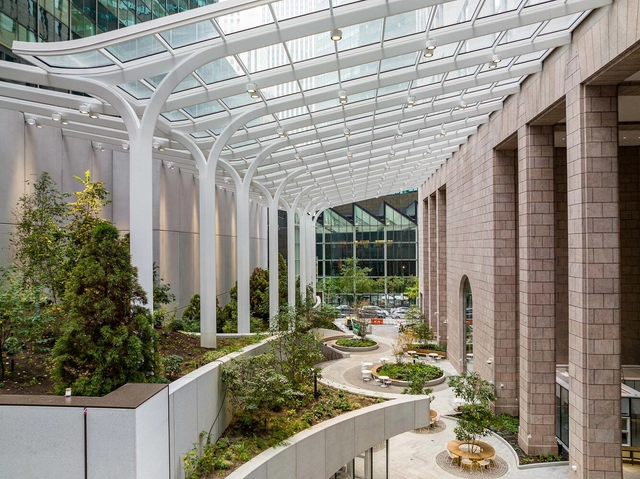
550 Madison Avenue (née the AT&T Building, more recently Sony Plaza) is among the more recognizable figures on New York’s skyline. Designed by architect-provocateur Philip Johnson, the 37-story skyscraper stands out thanks to its curious headgear: a classical pediment broken by a circular notch, inviting frequent comparisons to the top of a Chippendale grandfather clock. A singular, if largely inoffensive presence on today’s icon-heavy streetscape, the design was positively shocking on its debut in 1979, when Johnson himself appeared on the cover of Time holding a model of the project, then still four years from completion. The image heralded the arrival of something new in American architecture: the fading of the flat-crowned Modernist towers of the midcentury and the onset of the Postmodernist wave.
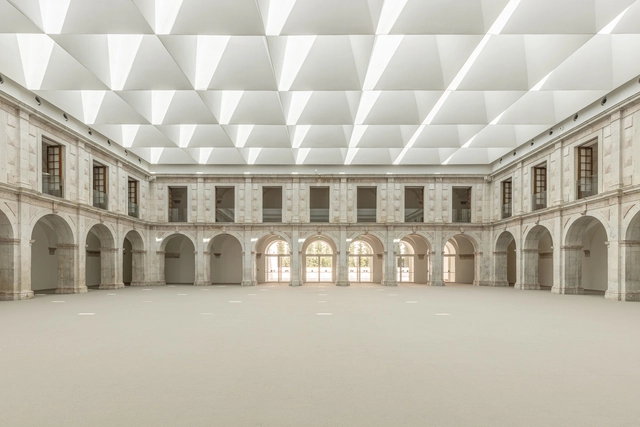
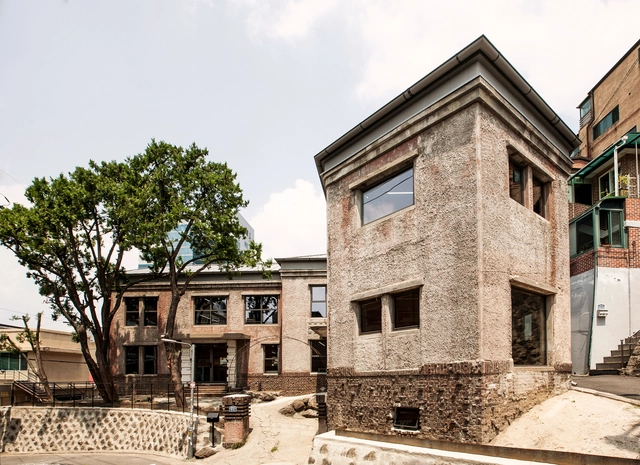
Considering the time, energy, and environmental impact of a construction process, architecture must explore different methodologies that work with the existing built environment. For example: how to give life to a forgotten building? Adaptive reuse gives new opportunities to abandoned buildings, following the idea that good architecture must be durable, innovative and recyclable.
Architects should not design just for the present, but should also think of how to adapt buildings for the future. In view of the world’s current situation regarding the climate crisis and available natural resources, adaptive reuse explores strategies for sustainability and design innovation, working to reduce energy consumption, minimal carbon impact and positive social impact.
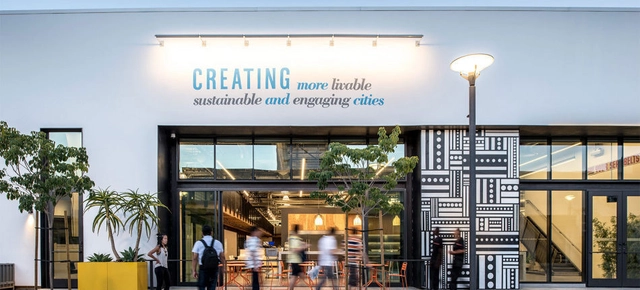
Studio One Eleven converted underutilized retail into their creative work space, for 135 employees; adjacent local and crafted retail can now better flourish. The project spurred the city of Long Beach to rejuvenate Harvey Milk Park, allow for multiple street decks for outdoor dining, and encouraged several high-quality public art installations by POW! WOW!.. Image Courtesy of Los Angeles County Public Library
My first encounter with saving a building landed me in handcuffs and a trip to the Long Beach Police Department. A friend and I were frustrated that our hometown was demolishing good buildings—because they did not conform with the current style of architecture—only to replace them with parking lots! All in the name of “progress.” In 1988, when we learned that the Jergins Trust Building, a Beaux-Arts beauty, was slated to be torn down with no plans for the site, we jumped into action and chained ourselves to the building to stop the wrecking crew. Our efforts kept it up for another four hours. And then it was gone forever.
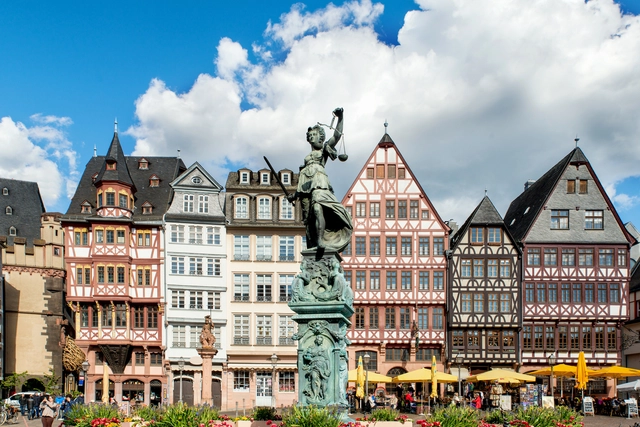
The architectural identity and urban fabric of the old city of Frankfurt has grown organically over centuries. Shops, bars, and craftsmen's workshops have always attracted a lot of visitors to the area between the Cathedral, or "Dom" in German, and the Römer, the main square in the center of Frankfurt. Historically, the area included buildings of many different styles, such as Gothic, Renaissance, Baroque and Classical architecture, which most locals only knew about from black and white photographs, the town’s famous miniature model in the historic museum, or stories passed down through generations.
However, the quarter’s picturesque buildings and alleyways, were almost entirely destroyed during the Second World War, but the collaborative work of the community and local authorities have made it seem as though time before the war stood still. The entire quarter was reconstructed exactly as its original plans, bringing Frankfurt’s medieval history back to life and creating what is now known as the Neue Alstadt, a project considered by some to be controversial.
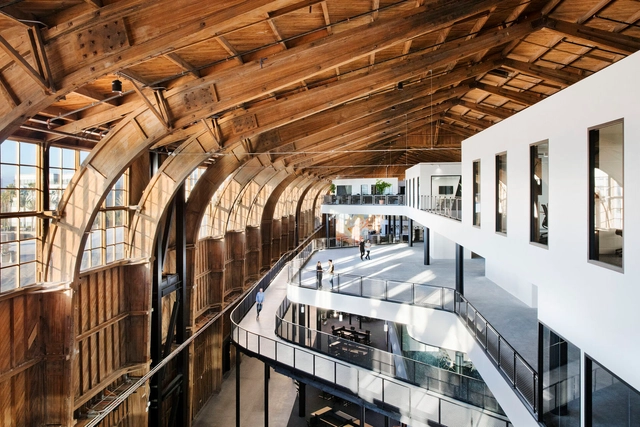
Hangar architecture is a relatively new building type. Ever since the Wright brothers stored and repaired their aircraft in a wooden hangar constructed in 1902, designers and builders have continued to rethink what these structures can be. Beyond actual airports and terminals, hangars are unique in that they're purpose-built to hold an aircraft or spacecraft. Today, how can this building type be challenged and reimagined?
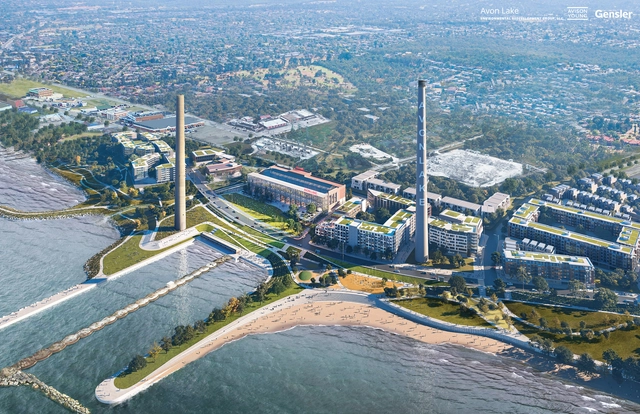
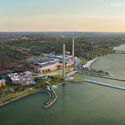
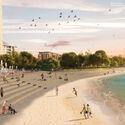
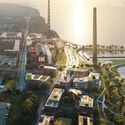
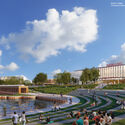
Gensler, in partnership with Avon Lake Environmental Redevelopment Group (ALERG), City of Avon Lake, and Avison Young, have presented initial redevelopment plans for the environmental remediation and sustainable redevelopment of the historic Avon Lake Generating Station in Avon Lake, Ohio. The redevelopment scheme will serve as an opportunity to reframe the former coal-fired powerplant site into a regional attraction while restoring the lakefront ecosystem.
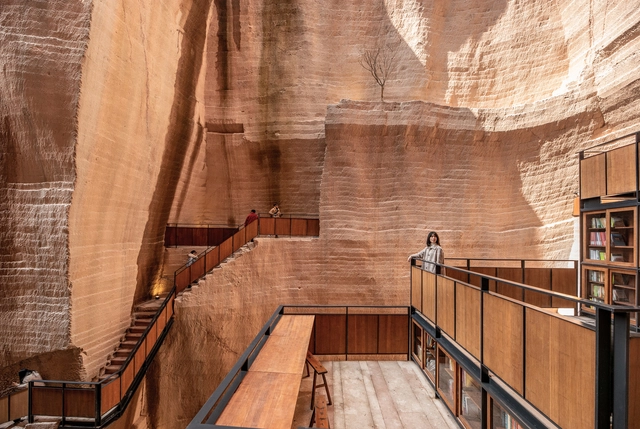
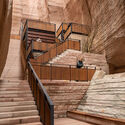
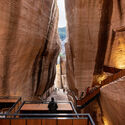
Today, reusing and adapting existing spatial resources is regarded around the world as an important contribution to sustainable development, and new challenges are thus also emerging at the margins of classic building tasks due to the changing assessments regarding whether to preserve or demolish. Xu Tiantian’s projects in the quarries of Jinyun combine aspects of landscape planning, interior design, artistic installations, and social planning with an economic revitalization of the rural area. In this way, a ruined and exploited landscape becomes a sign of departure with which a new sustainable coexistence can be linked to a narrative about the history of the location.
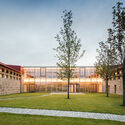
Most visitors to Mexico City spend their time exploring tranquil, idyllic neighborhoods like Roma and Condesa, filled with quaint buildings, bustling pedestrian promenades, and cosmopolitan attractions. But life in the Mexican capital finds most of the population on the disadvantaged side of a vertiginous inequality, defined by meager wages, the looming threat of violence, and a glaring lack of public infrastructure. The government’s attempts to address the latter have often stumbled; it is common practice for projects that require architectural expertise to be assigned to building contractors, who produce layouts lacking in any design sensibility. This even though Mexico City now boasts one of the world’s most fertile design scenes and has a strong legacy of renowned architects working in tandem with the government to produce exceptional public works—from the urban housing projects of Mario Pani to the monumental buildings of Pedro Ramírez Vázquez.
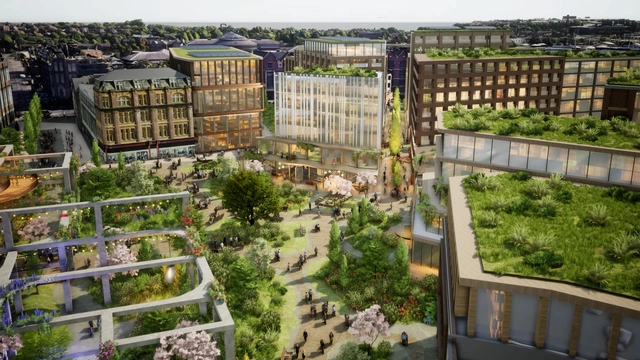
Heatherwick Studio is taking part of this year’s Royal Academy Summer Exhibition with two retrofit projects in the United Kingdom: Broad Marsh in Nottingham and Parnham Park in Dorset. Titled "Ruins Reimagined", the exhibition presents two different approaches to reusing existing architecture, from a Grade I-listed 16th century house to a partially demolished 1970’s shopping center, each offering a unique response in scale and heritage to the Summer Exhibition’s theme of ‘climate’. The models are on display in the Architecture Room until 21st August. This year, the Architecture Room is curated by Niall McLaughlin RA and Rana Begum RA, and will sit across two spaces, mixing art and architecture together.

























![[DON'T TRANSLATE] The PILARES Program Seeks to Bring Beautiful Design to Mexico City’s Neglected Neighborhoods - Featured Image](https://snoopy.archdaily.com/images/archdaily/media/images/62b4/21c2/3e4b/31ac/f100/0004/slideshow/8D5A7030-1024x682.jpg?1655972285&format=webp&width=640&height=580)
![[DON'T TRANSLATE] The PILARES Program Seeks to Bring Beautiful Design to Mexico City’s Neglected Neighborhoods - Image 1 of 4](https://images.adsttc.com/media/images/62b4/221e/3e4b/31ac/f100/0009/thumb_jpg/Untitled-7.jpg?1655972378 "© Onnis Luque")
![[DON'T TRANSLATE] The PILARES Program Seeks to Bring Beautiful Design to Mexico City’s Neglected Neighborhoods - Image 2 of 4](https://images.adsttc.com/media/images/62b4/2205/3e4b/31ac/f100/0007/thumb_jpg/Untitled-4.jpg?1655972352 "© Onnis Luque")
![[DON'T TRANSLATE] The PILARES Program Seeks to Bring Beautiful Design to Mexico City’s Neglected Neighborhoods - Image 3 of 4](https://images.adsttc.com/media/images/62b4/21c2/3e4b/3137/e400/0008/thumb_jpg/8D5A6928-682x1024.jpg?1655972285 "Variegated bricks form a series of arched windows and doors in Dellekamp Schleich’s PILARES project, DIF Quetzalcoatl, located in the south of the city, near Xochimilco.. Image © Onnis Luque")
![[DON'T TRANSLATE] The PILARES Program Seeks to Bring Beautiful Design to Mexico City’s Neglected Neighborhoods - Image 4 of 4](https://images.adsttc.com/media/images/62b4/21eb/3e4b/31ac/f100/0006/thumb_jpg/Untitled-1.jpg?1655972327 "“Even the most privileged person can find themselves in need of a place to sit, rest, and feel safe when they’re walking around the city,” notes architect Fernanda Canales. Through her PILARES project (left, in construction), Reforma, she is seeking to create democratic indoor and outdoor spaces for the local community to find solace and protection. Architect Alberto Kalach of TAX (Taller de Arquitectura X) designed La Pulga, a lofty, long-arched, two-story concrete building in the Cuauhtémoc district.. Image © Onnis Luque")
![[DON'T TRANSLATE] The PILARES Program Seeks to Bring Beautiful Design to Mexico City’s Neglected Neighborhoods - More Images](https://images.adsttc.com/media/images/62b4/21c2/3e4b/31ac/f100/0004/newsletter/8D5A7030-1024x682.jpg?1655972285)