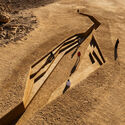
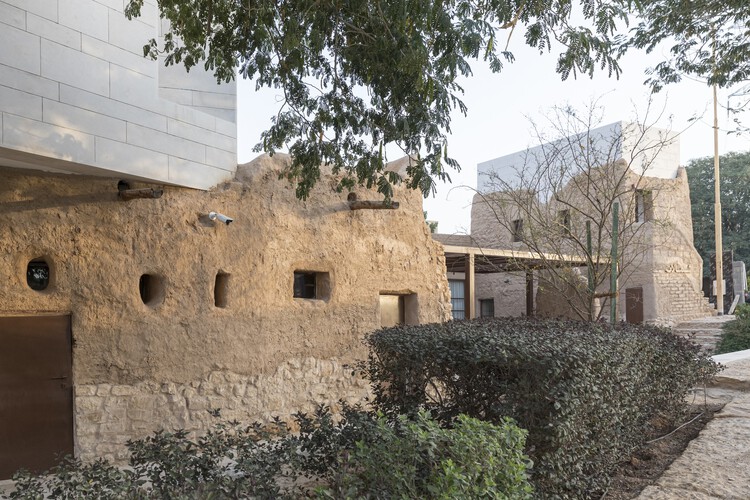
As Saudi Arabia's cities expand through increasingly ambitious cultural projects, Syn Architects has spent much of its practice looking at what predates that transformation. The practice's participation in the 2025 Venice Architecture Biennale grew out of years spent documenting Najdi architecture, disappearing urban fabric, local materials and inherited forms of knowledge. For Syn, heritage becomes useful when it can be documented, tested and brought back into use.
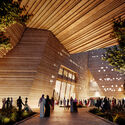
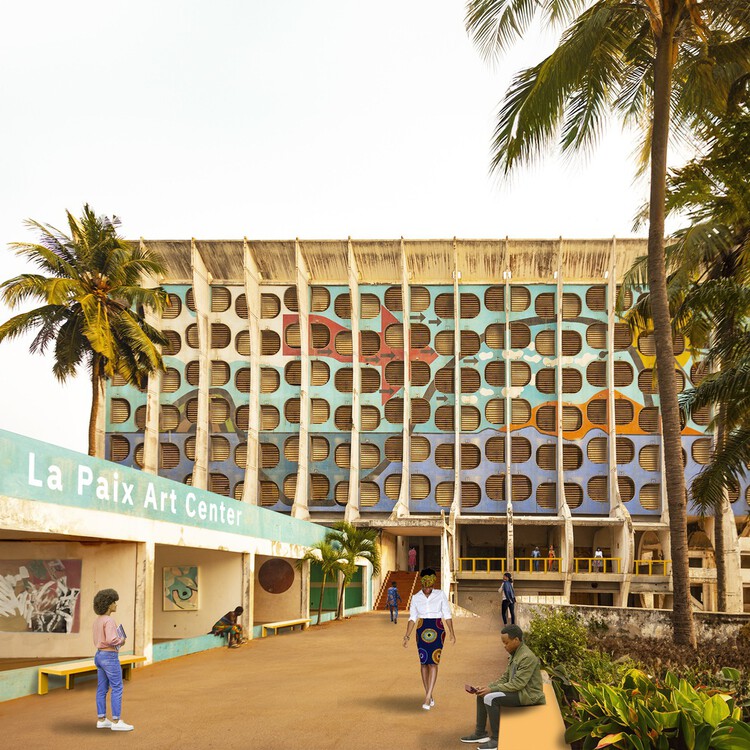
"Architecture that holds multitudes." This is the phrase Studio NEiDA uses to introduce itself, making its position toward the world clear: to listen to and respect the plurality of existences that move through each context. More than a statement of principles, the phrase seems to function as a method. What does it mean, after all, to design spaces capable of sheltering not only people, but also memories, knowledge, and conflicts?
There is no denying that Studio NEiDA's plural approach is, in part, rooted in its own geographical position. Working between Togo and Germany, the practice operates across two seemingly distinct contexts that are nevertheless historically connected. In a recent interview, Jeanne Autran-Edorh, the French-Togolese architect and co-founder of the studio, alongside the curator and writer Fabiola Büchele, recalls the history between the two countries, noting that, as few people know, before becoming an independent republic, Togo was a German colony that later came under French rule.
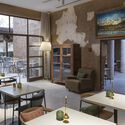
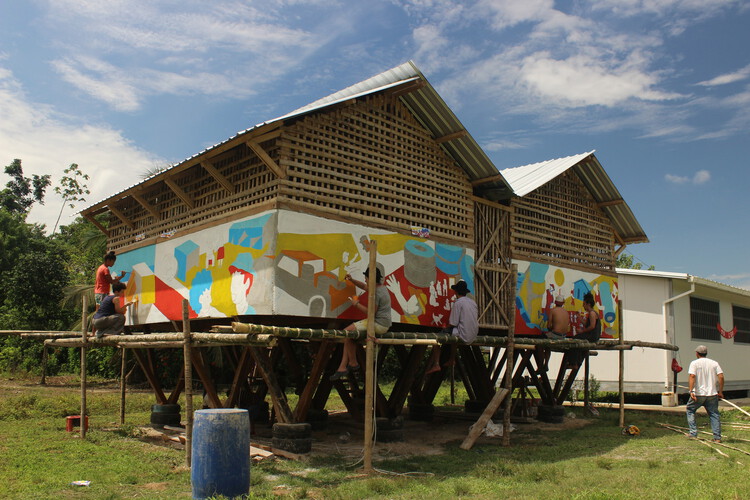
Founded in Quito in 2017 by Martín Real and Florencia Sobrero, Taller General works across housing, rehabilitation, exhibitions, and community projects. What ties them together is less a type of building than a way of building: architects, builders, craftspeople, students, organizations, and communities move in and out of the process, and each project takes shape from whatever is already there.
This approach grew from direct experience with construction. Before Taller General was formally established, Real and Sobrero became involved with Actuemos Ecuador, one of the civil society initiatives formed in response to the earthquake that affected Ecuador's coast in 2016. Working within the realities of building connected architectural decisions to materials, budgets, available labor, and local knowledge, this established a relationship with construction that has remained central to the practice.
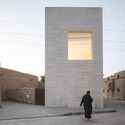
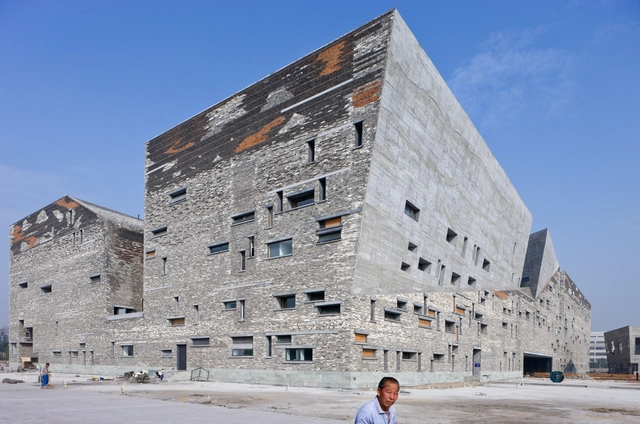
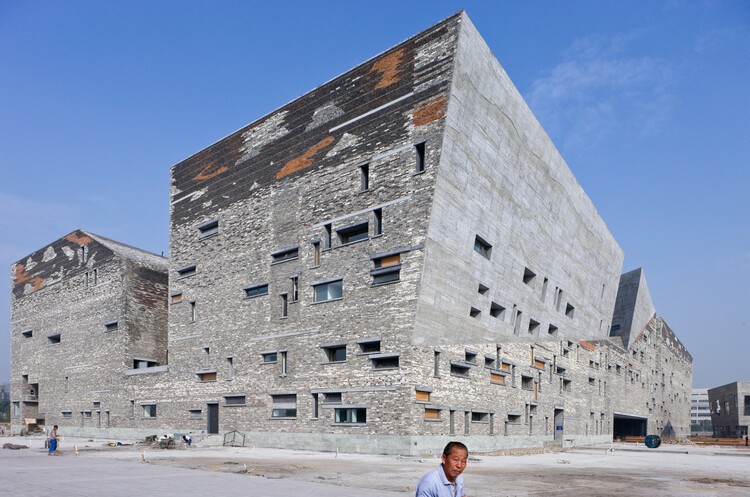
Lu Wenyu—co-founder of Amateur Architecture Studio with Pritzker laureate Wang Shu—has shaped many of the practice's most emblematic works across China, including the Ningbo History Museum and the Xiangshan Campus of the China Academy of Art in Hangzhou. Often working outside the spotlight, her leadership is unmistakable in the discipline of execution and the roles she has assumed: in 2003, together with Wang Shu, she established the Architecture Department at the China Academy of Art, where she also serves as Director of the Sustainable Construction Center. Her practice and teaching form a reciprocal loop: research conducted in studios at the China Academy of Art continually folds back into construction strategies on site, while lessons learned in the field return to the classroom as material intelligence rather than abstract theory.
Amateur Architecture Studio, Ningbo History Museum, 2008. Image Courtesy of Louisiana
Born in 1963 in Urumqi, Xinjiang, China, architect Wang Shu has dedicated his career to defining a contemporary approach to building that is deeply rooted in China's cultural and material history. In 2012, he was recognized with the Pritzker Prize, becoming the first Chinese citizen to receive the distinction. The award jury acknowledged his body of work "for the exceptional nature and quality of his executed work, and also for his ongoing commitment to pursuing an uncompromising, responsible architecture arising from a sense of specific culture and place." In 2027, along with his wife Lu Wenyu, Wang Shu will be a curator for the Venice Architecture Biennale.