Buenos Aires is a city of rich history and distinct atmospheres. There are many reasons to explore its architecture: the city is the result of a complex interplay of cultural factors shaped by a multitude of architectural styles and trends. Its streets and heterogeneous buildings define its inhabitants, reflecting an identity forged by its history.
Beyond its historic and heritage buildings, the city offers a remarkable diversity of modern and contemporary architecture. Indeed, its architectural highlights are easily discovered on foot, framed by its prominent and beautifully designed green spaces. Below is a list of 31 sites that every architect should visit.
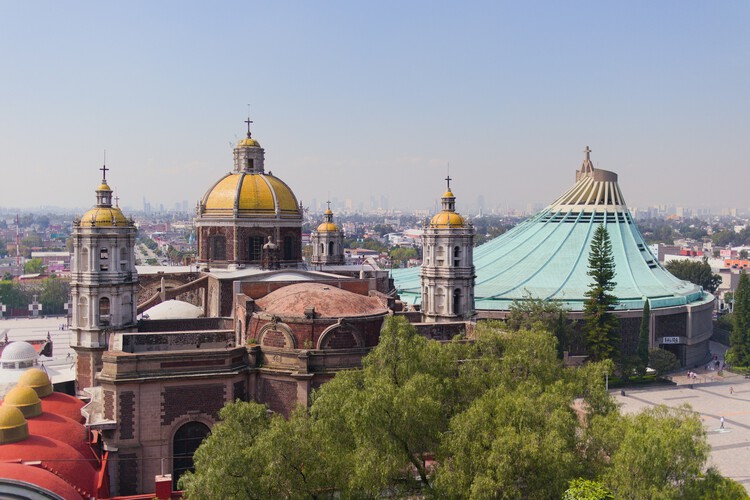
Mexico City. Image by Eduardo Enriquez, via Unsplash
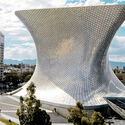
Mexico City is a sprawling metropolis of layered temporalities, where architecture operates as a continuous negotiation between deep-seated history and intense urban mutation. Built over the aquatic traces of Tenochtitlan, the city's fabric is an ongoing dialogue between eras: the monumental scale of the Pre-Hispanic Templo Mayor and the Viceroyalty architecture of the Catedral Metropolitana coexist with the modern and contemporary impulses that define its skyline. This dense juxtaposition creates a unique urban canvas where sacred geography, colonial imposition, and 20th-century ambition intersect.
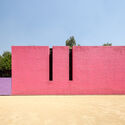
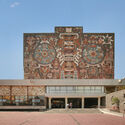
The mid-century marked a definitive era of experimentation, forging a Mexican Modernism that masterfully synthesized international structural rationalism with local identity and materiality. This synthesis is epitomized by the sweeping, plastic integration of art and architecture at the Ciudad Universitaria, the structural poetry of Félix Candela's hyper-parabolic shells, and the raw, monumental brutalism of Teodoro González de León and Abraham Zabludovsky. Parallel to this, the intimate, introspective mastery of Luis Barragán and Juan O'Gorman redefined domestic space, experimenting with light, vernacular color, and tectonic honesty to create spaces of profound spatial stillness.
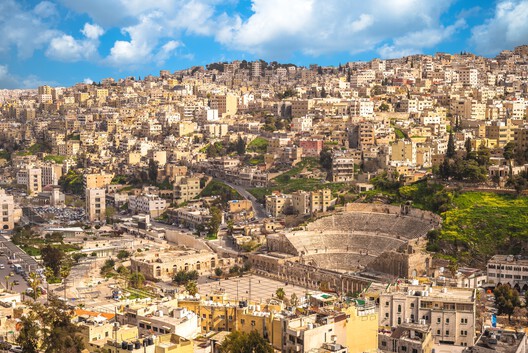
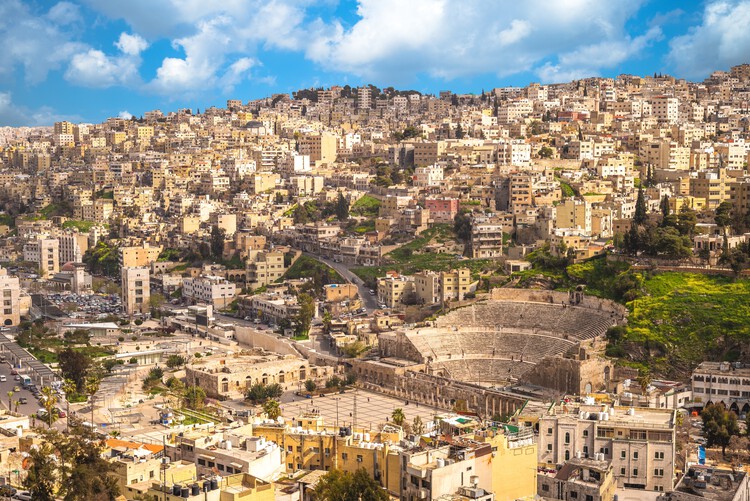
Built across several hills, Amman has grown at a pace few Middle Eastern capitals have matched. The city has received successive waves of migration — Circassians in the late 19th century, Palestinian refugees in 1948 and 1967, the Iraqi population after 1990, and Syrians since 2011 — each reshaping its density and social profile. Locally quarried limestone, extracted from quarries across Jordan and required by law for façades since the 1970s, has become the city's only common visual denominator. Behind this material uniformity, however, lies a continuous dialogue between vernacular tradition and international ambition.
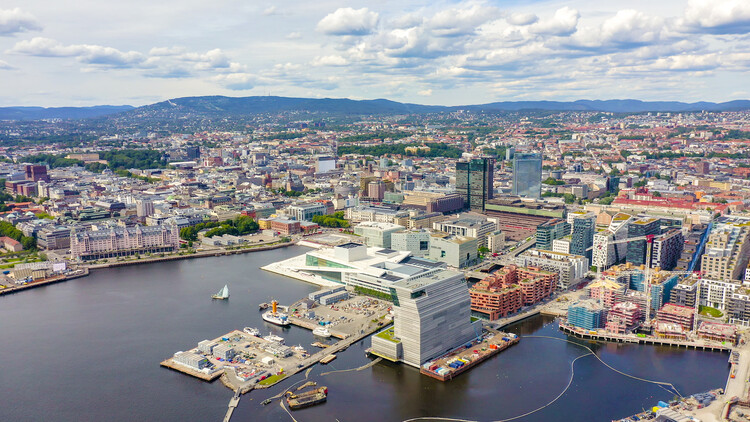
Oslo, Norway. Photo by Collection Maykova, via Shutterstock
Oslo is the capital of Norway as well as its largest city, serving as the country's political, economic, and cultural center. Nestled at the head of the Oslofjord and surrounded by forested hills, it's home to roughly 700,000 people in the city, with over a million living in the greater metropolitan area. Founded around a thousand years ago, Oslo has a long history as a trading post and administrative seat. However, much of its modern character was shaped after a major fire in the seventeenth century led to a full rebuilding under Danish rule, when it was briefly renamed Christiania. Today it consistently ranks among the world's most livable cities, prized for its blend of urban life and easy access to nature.
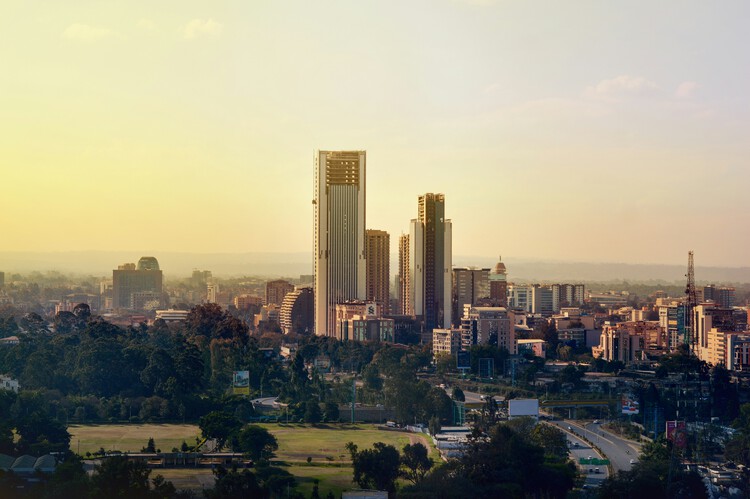
Nairobi's architectural identity was transformed by Kenya's independence in 1963. As the new nation sought to define itself, the city became a testing ground for a modern architecture that could embody progress while responding to African culture, climate, and local conditions. This opened a period of architectural experimentation, with different approaches emerging to the relationship between modernity, identity, and place.
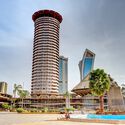
The Kenyatta International Convention Centre is perhaps the clearest expression of this moment. Its architecture brought together modernist principles with references to African forms, establishing a distinctive response to the ambitions of a newly independent nation. Around it, Kenyan and international architects developed other interpretations of modernism, from the sun-shading facades of Reinsurance Plaza to the sculptural silhouette of Nation Centre, alongside religious, educational, and civic projects that expanded the architectural vocabulary of the city.