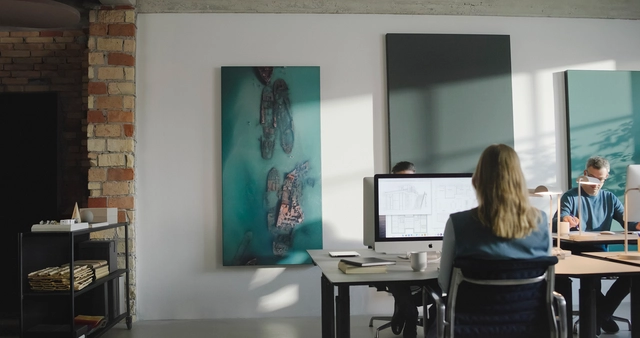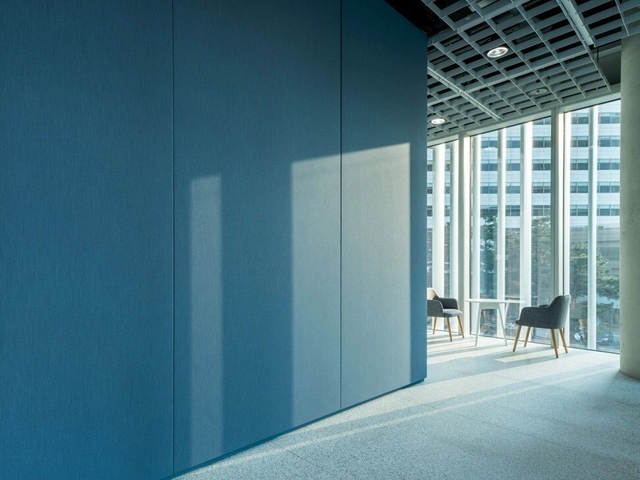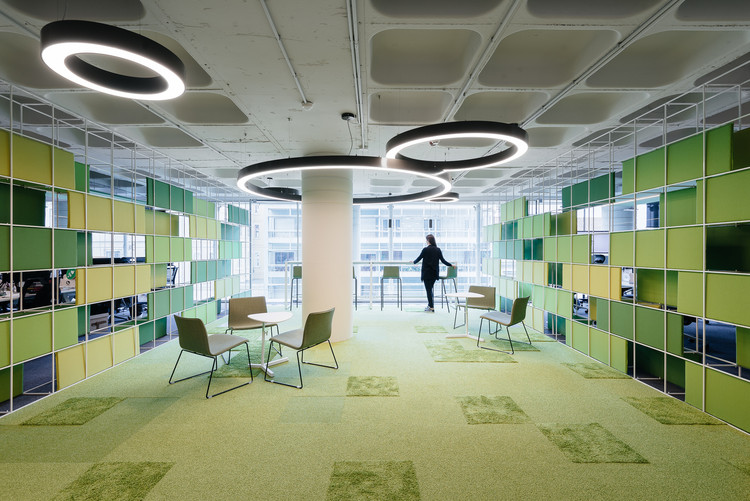
Rockfon Canva Wall Panels in various shades of green and blue create a harmonious atmosphere on the office walls – and the best acoustics. Image Courtesy of Rockfon
Even if you have never engaged with the ins and outs of a building’s acoustics, you will, no doubt, have had many a meeting or passing conversation eased by Rockfon’s sound-absorbing solutions. They may have invisibly clad a ceiling above you in tile form or seamlessly formed the white walls that surrounded you. Rockfon – a part of Rockwool Group – specialises in banishing acoustic bounce with sound absorbing products made from organic stone wool. The products have been part of the fabric of our public spaces – offices, schools, restaurants and libraries – for more than 60 years.
https://www.archdaily.com/991357/leading-the-way-by-sight-not-sound-the-changing-image-of-acoustic-designEmma Moore
The noisier the environment, the harder it is to concentrate on the sounds we really want –and need– to hear. We spend about 90% of our time indoors, either at home or at work, often with little concern for acoustic qualities, making our body remain in a constant warning state. In offices this is an even more critical issue. While traditional open plan working spaces encourage teamwork and effective communication, many professionals face the challenge of being able to concentrate with the frequent noises, whether from a nearby conversation, the construction site next door, or a noisy espresso machine. Among the problems that noise pollution can cause in the human body are stress, accelerated heartbeat, increased blood pressure, insomnia, and a constant state of vigilance. Studies also show that poor acoustics negatively affect productivity.
This can be further amplified by the environment itself, often composed of "hard" surfaces (masonry, concrete, glass) that reverberate sound several times over, making it necessary for people to raise their voices to be understood. Furthermore, acoustic devices are generally perceived as accessories that are not very aesthetically pleasing, often with clumsy designs and with little or no flexibility.
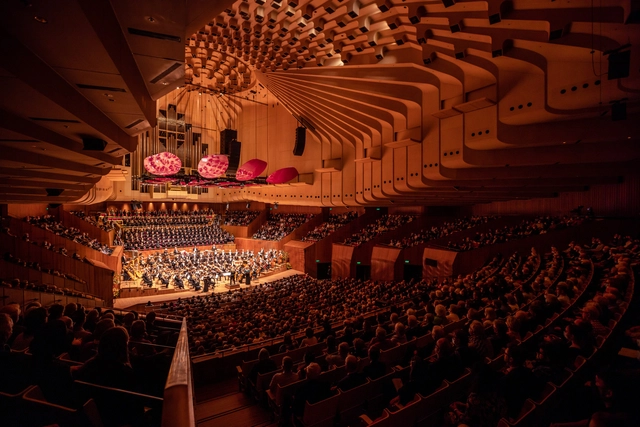
The Sydney Opera House has reopened its largest performance space, the Concert Hall. Since the venue closed for renovations in February 2020, the space has undergone extensive renovations to improve the acoustic performance, enhance access for people with mobility needs, and upgrade the staging systems. The renovation process respects the original interiors, while better equipping the hall to present a wide range of performances. This is the largest and final project in the Opera House’s Decade of Renewal, a 10-year program of renovation works totaling almost $300 million to upgrade the World Heritage-listed monument ahead of its 50th anniversary in 2023.
At the Four Seasons restaurant in New York, designed by Philip Johnson and Mies van der Rohe in the iconic Seagram Building, a rectangular pool played the leading role in the space, highlighted by four trees planted in pots at each of the vertices. The soft noise made by the water became consecrated. In addition to giving the hall some personality, it served to absorb the sounds of conversations (often secret) among tables. Just as the way that light enters a space, or how interior landscapes are perceived, sound is one more characteristic of an environment, though it is generally overlooked by architects. This goes beyond providing it with efficient acoustics, but creating a sound atmosphere for a space. This is the concept of soundscape.
We talk a lot about sound treatment for architecture but normally for new projects. In projects that are already built, either a rented apartment or small commercial space, we often have to deal with noises that we can't control, affecting our physical and mental health. In this article, we explore practical tips on how to manage and reduce these noises and improve the quality and atmosphere of these environments.
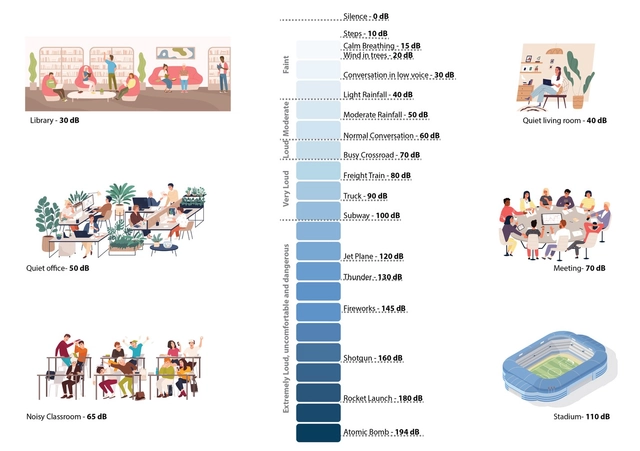
Acoustic comfort is affected by the levels and the nature of the sound experienced in an interior space, measured in decibels. The functionality and aesthetics of working and living spaces are usually the primary focus of the designer, however, too often overlooked, are the factors contributing to the productivity of employees or the comfort of residents. Providing a comfortable acoustic environment contributes significantly to the overall mood and health of people operating within it.
As our cities densify and building types become more and more mixed-use, we tend to spend a lot of time in noisy environments. When we think about acoustic comfort, we rarely think of places like restaurants, venues, and big offices; places with a lot of people, machinery, and background noise. The quality of sound can entirely change the experience of people in an interior space, and improving the space's acoustic quality relies on treating all surfaces, from walls to ceilings, and flooring. In this article, we will present a variety of solutions for ceilings, flooring, and walls, their different combinations, and a simple guide of how to apply them correctly in public spaces without compromising the aesthetic of the interior.
Modular system Mywall by Fantoni. Image Courtesy of Fantoni
As material technology becomes more advanced and the importance of health and wellbeing is taken more seriously, sculpting sound is now a consistent part of specifiers’ briefs in all sectors, from echo-free hospitality to clear and functional meeting rooms, and even transforming home offices or music rooms into headache-free sound vaults.
The ceiling is an important element in architecture and interior design, combining functionality with aesthetics through different materials that add layers of texture and color, providing quality and comfort in interior spaces as well as a protective surface for other building systems.
It is safe to say that living in large urban areas, most of the sounds surrounding us are accidental, and most of them are not very pleasant. According to Julian Treasure, chairman of The Sound Agency, sounds can affect us in many ways: physiologically, psychologically, cognitively, and behaviorally, reducing productivity in workspaces and even affecting sales in retail stores. Therefore, paying attention to acoustic comfort in the built environment is imperative, not only for engineers and consultants but also for architects.
Few things irritate us more than exposure to excessive noise or inability to hear what we need to hear. Whether it's a nearby construction site, highway traffic, air conditioning, or a neighbor learning saxophone, research shows that noise can contribute to cardiovascular disease, high blood pressure, headaches, hormonal changes, sleep disturbance, reduced physical and mental performance, and the reduction of well-being. On the other hand, in an acoustically "comfortable" environment, in addition to listening to what we want, we focus better and feel calmer.
The concern about creating acoustically comfortable environments is often relegated to cinemas, concert halls and recording studios. But it is particularly important in learning environments, such as classrooms, as it directly influences the teaching-learning relationship. Acoustic discomfort can harm the process of knowledge acquisition, interfering with attention and worsening student-teacher communication.
If you live in an apartment, you may unintentionally know the details of your neighbor's life by overhearing conversations through your shared walls. Or you keep awake when the dog that lives in the apartment above decides to take a walk in the middle of the night. If so, you may live in an apartment with inadequate sound insulation in its walls and/or slabs. As cities grow increasingly dense and builders seek to increase their profit margins, it is not uncommon for acoustic comfort to be overlooked in many architectural projects. When the resulting noise is excessive or unwanted, it impacts the human body, the mind, and daily activities. While not all spaces need to seal all types of sound, creating spaces with an adequate degree of soundproofing improves the quality of life of all users.
Noisy environments can significantly and negatively effect our bodies, and are a great villain to concentration, learning, and productivity in classrooms and offices. Headaches are one momentary symptom of noise. But staying exposed to very noisy places can bring greater problems such as hearing loss, lower concentration, high blood pressure, and even poor digestion. It can also trigger high levels of stress, sleep disturbances, mood changes, increased heart rate, and ringing in the ears. This is an invisible enemy and is often neglected in big cities with the noise of heavy traffic, demolition. and noisy equipment, such as generators and air conditioners. However, effective measures can be taken to avoid this unnecessary noise.
"Acoustics" in architecture means improving sound in environments. Although it is a complex science, understanding the basics - and making efficient and effective decisions - is much easier than you might think. The first step is to understand that there are two technical categories used in acoustics: soundproofing and acoustical treatment. Soundproofing means "less noise" and treatment, "better sound".
More than half the world’s population lives in dense urban areas. Uncomfortably loud restaurants, stores, hotels, or offices are enough to keep patrons away. When planning a meeting or even a night out with friends, we are conscious of selecting a location where we can focus and hear one another. The noisier our world gets, the more difficulty we have focusing on the sounds we actually want to hear.
Since the beginning of time, our ears have warned us of approaching danger. While their function remains the same, the dangers of today are different than they were in the past. Unwanted sounds can have serious health effects such as: hearing loss, cardiovascular disease high blood pressure, headaches, hormonal changes, psychosomatic illnesses, sleep disorders, reduction in physical and mental performance, stress reactions, aggression, constant feelings of displeasure and reduction in general well-being. With this laundry list of side effects, it would be foolish to leave the acoustic comfort of our spaces up to consultants alone. When we take acoustic comfort into our own hands, the end result can be quite extraordinary.
It is truly odd how we always find ourselves in a bad mood at work and our productivity keeps decreasing as the week passes by. To be fair, we can’t keep blaming our colleagues, clients, or Monday for our rough day; sometimes it’s the chair we are sitting on, the fluorescent lighting above our computer, or the constant “chugging” sound of the printer near the desk.
Other than the fact that people spend about 70-80% of their time indoors, almost 9 hours of their day are being spent at work; and studies have indicated that the environmental quality of an office has short and long term effects on the comfort, health, and productivity of the people occupying it. While research on the comfort conditions of workplaces is still relatively minimal, we have put together a list of factors that have proved to be highly influential on the comfort of individuals in workplaces.
Audience sightlines, accessibility and acoustics all make theater seating a hugely precise art. As part of their set of online resources for architects and designers, the team at Theatre Solutions Inc (TSI) have put together a catalog of 21 examples of theater seating layouts. Each layout is well detailed, with information on the number of seats, the floor seating area and row spacing. These layouts fall under three general forms; to supplement this information, alongside TSI's diagrams we've included the pros and cons of each type, as well as examples of projects which use each format. Read on for more.
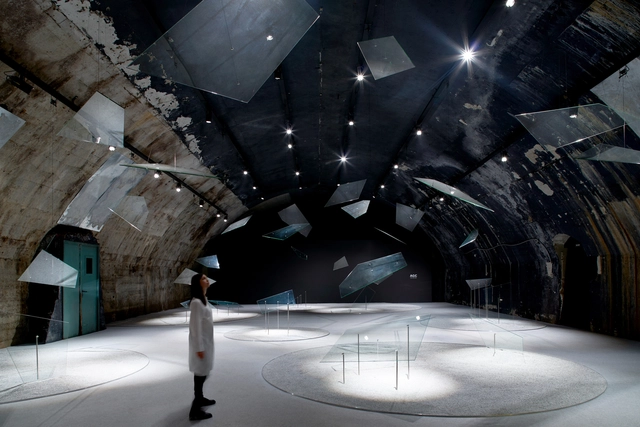
Open ceilings offer an opportunity for creative design and technical integration. They play a key role in forming interior spaces and add value by adding comfort through acoustics, finishes and other integrated solutions to the overall design intent.