1. ArchDaily
  2. 3D Modelling

3D Modelling: The Latest Architecture and News

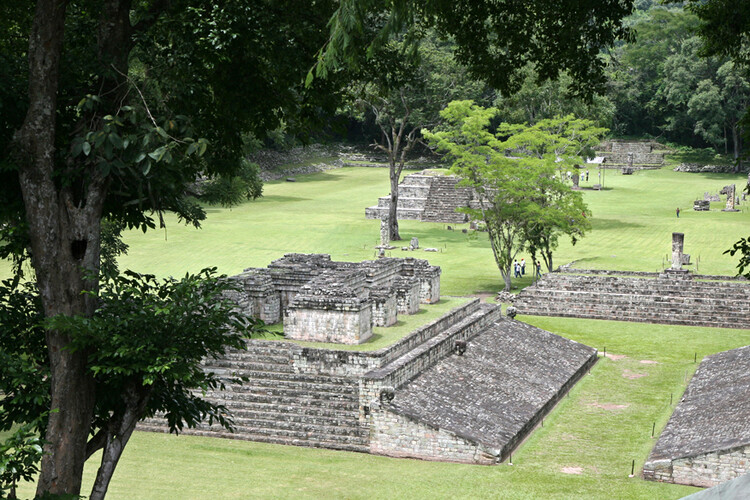
Anatomy of a Maya City: The Urban Structure of Copán in Honduras

Subscriber Access | 

Deep in western Honduras, within a valley near the Guatemalan border, lies the ancient Maya city of Copán. Flourishing during the Classic period between the fifth and ninth centuries CE, the city developed as a regional epicenter through trade networks, dynastic politics, and monumental architecture. Today, the site is designated a UNESCO World Heritage Site due to its extensive architectural remains, including stepped pyramids, sculpted stelae, and ceremonial core. Over a century of systematic archaeological research has documented its urban morphology, revealing distinct residential districts, civic spaces, and systems of movement and visibility.

This analysis examines the spatial organization of Copán through the framework of urban theorist Kevin Lynch and "The Image of the City". By applying Lynch's five structural elements — edges, districts, paths, nodes, and landmarks — it is possible to analyze how Copán functioned not only as a ritual center but as a legible urban landscape designed to reinforce political hierarchy and regulate collective movement. Historical data for this analysis was taken from books and articles linked throughout the text, and was possible thanks to the collaboration of historian Arnulfo Ramirez de la Costa, professor and coordinator of the History program in the Department of History at the National Autonomous University of Honduras (UNAH) in Tegucigalpa.
Anatomy of a Maya City: The Urban Structure of Copán in Honduras - Image 1 of 4Anatomy of a Maya City: The Urban Structure of Copán in Honduras - Image 2 of 4Anatomy of a Maya City: The Urban Structure of Copán in Honduras - Image 3 of 4Anatomy of a Maya City: The Urban Structure of Copán in Honduras - Image 4 of 4Anatomy of a Maya City: The Urban Structure of Copán in Honduras - More Images+ 8

Bridging Design and Communication in Residential Projects

 | In Collaboration

Architectural drawings operate through abstraction. Plans, sections, and elevations condense spatial, constructive, and dimensional information into a set of codes that make sense within the discipline, but are not always immediately legible to those unfamiliar with this language. In some projects, this condition can create a recurring tension between what is designed and what can be understood. This intensifies when the tools used do not correspond to the scale and complexity of the design. In contexts such as single-family homes, renovations, or additions, overly complex software can introduce noise, delays, and unnecessary dependencies, making proposals harder to develop and convey.

From Data to Digital Twins: Japan’s PLATEAU Project Offers Open-Access Models of More Than 250 Cities

"Map the New World" is the motto of Project PLATEAU, led by Japan's Ministry of Land, Infrastructure, Transport and Tourism (MLIT), to develop and expand access to 3D models representing the diversity of cities across the country. Japan comprises a total of 744 cities, including 14 with populations exceeding one million, 190 with between 100,000 and one million inhabitants, and 540 with populations between 10,000 and 100,000. To date, 3D models of more than 250 cities have been made available as open data through the country's public G-Spatial Information Center, and can also be accessed via an online browser viewer. According to public authorities, the project aims to strengthen urban resilience by providing society with new tools to address local challenges. This involves not only urban space modeling but also collaboration with local governments, private companies, and technology communities. The project also includes a digital reconstruction of the recently closed Osaka World Expo site.

From Data to Digital Twins: Japan’s PLATEAU Project Offers Open-Access Models of More Than 250 Cities - Image 1 of 4From Data to Digital Twins: Japan’s PLATEAU Project Offers Open-Access Models of More Than 250 Cities - Image 2 of 4From Data to Digital Twins: Japan’s PLATEAU Project Offers Open-Access Models of More Than 250 Cities - Image 3 of 4From Data to Digital Twins: Japan’s PLATEAU Project Offers Open-Access Models of More Than 250 Cities - Image 4 of 4From Data to Digital Twins: Japan’s PLATEAU Project Offers Open-Access Models of More Than 250 Cities - More Images+ 1

The Plan and the Prompt: How AI Is Rewiring Design and Practice

Subscriber Access | 

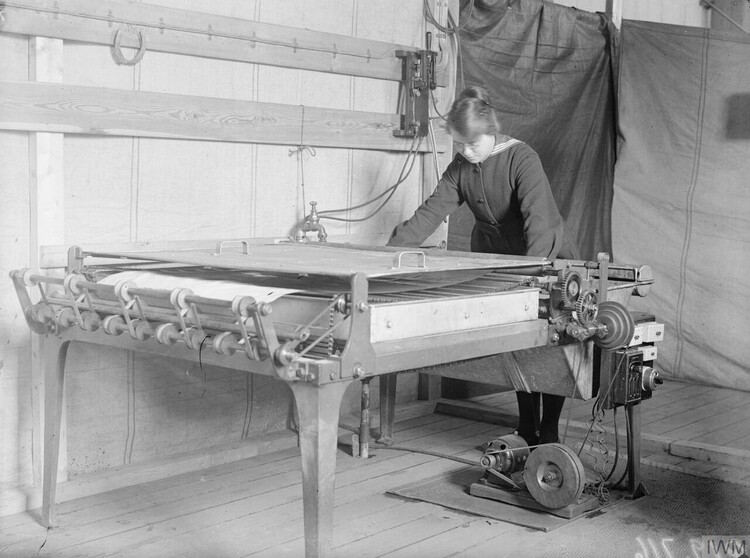
Architecture's design process has always been shaped by the tools at hand. We once drew with pen and ink on fragile sheets, copied by blueprint and guarded against smudges and tears; then Mylar arrived, making revisions and preservation easier and nudging drawings toward a leaner, more deliberate economy of lines. Computer-aided drafting followed, speeding coordination and changing how we think about scale and precision. Today, AI adds another layer—gathering information in seconds and spinning images on command—promising new efficiencies while raising fresh questions about authorship and craft. What we make, and how we make it, has evolved with each tool; the history of our methods is the history of our ideas.

Beginning in the post-war era, Mylar (developed in the 1950s) eased drawing reproduction and hastened the shift from blueprint to whiteprint processes. Before Mylar, simply preserving drawings—keeping an idea intact, legible, and undamaged—was a significant task. Post-war design priorities often leaned toward efficiency, simplicity, and an industrial minimalism aligned with reconstruction needs. The tools reinforced this: architectural work remained predominantly hand-drawn, where every line took time to lay down and even more time to erase. That labour sharpened the economy of drawing; each stroke had to earn its place.

The Plan and the Prompt: How AI Is Rewiring Design and Practice - Image 1 of 4The Plan and the Prompt: How AI Is Rewiring Design and Practice - Image 2 of 4The Plan and the Prompt: How AI Is Rewiring Design and Practice - Image 3 of 4The Plan and the Prompt: How AI Is Rewiring Design and Practice - Image 4 of 4The Plan and the Prompt: How AI Is Rewiring Design and Practice - More Images+ 10

Architecture in the Age of Platforms: What Role Does Software Play in Practice Today?

Subscriber Access | 

How many software tools and platforms are involved today in developing a contemporary project? From designing a single-family house to a public library, relying on just one or two programs is no longer common. Instead, multiple tools combine, overlap, and interact throughout various stages, including analysis, design, rendering, coordination, and construction. This widespread use of software in the virtual world reflects not only the technical complexity of today's practice but also a more subtle yet equally significant shift: software has become less a specific tool and more an environment that accompanies and even challenges the process.

AI and Architecture Software at AIA25: From Code to Concrete in the Digital Future

Subscriber Access | 

The future of architecture isn't just being drawn—it's being coded. Since mathematician John W. Tukey coined the term "software" in 1958 in The American Mathematical Monthly, its influence has steadily expanded, from revolutionizing science and engineering to quietly transforming architecture. What was first embraced as an innovation for structural calculations and drafting has since revealed a much broader potential, becoming a creative driver in architectural narrative and practice.

While that transformation has already taken root—software now embedded in the way we design and think—it continues to evolve. At the recent AIA Conference on Architecture & Design in Boston, current innovations made it clear that we're entering a new chapter: one where software and artificial intelligence aren't just enhancing workflows but actively shaping sustainability, regulation, and decision-making. Architects and software developers now treat code with the same logic as a material—shaped not by modeling or carving, but through parameters, cycles, constant evolution, and feedback. At the same time, architects are working with AI as a co-pilot in the design process, collaborating with it to support decision-making and enhance the design.

Beyond the Drawing Board: How Augmented Reality is Reshaping Architectural Design Review

Over the last decade, architectural design has relied on 2D methods of representation, such as elevations, sections, and floor plans, paired with digital renderings of 3D models. While these tools are essential to convey geometry and intent, they remain limited by their two-dimensional format. Even the most realistic renderings, created through programs like SketchUp, Revit, or AutoCAD, still flatten space and distance the viewer from the lived experience of a project. Recently, architects have begun to explore immersive technologies as a way to bridge this gap between drawing and experience, offering new ways to inhabit and assess spatial proposals.

Beyond the Drawing Board:  How Augmented Reality is Reshaping Architectural Design Review - Image 1 of 4Beyond the Drawing Board:  How Augmented Reality is Reshaping Architectural Design Review - Image 2 of 4Beyond the Drawing Board:  How Augmented Reality is Reshaping Architectural Design Review - Image 3 of 4Beyond the Drawing Board:  How Augmented Reality is Reshaping Architectural Design Review - Image 4 of 4Beyond the Drawing Board:  How Augmented Reality is Reshaping Architectural Design Review - More Images+ 4