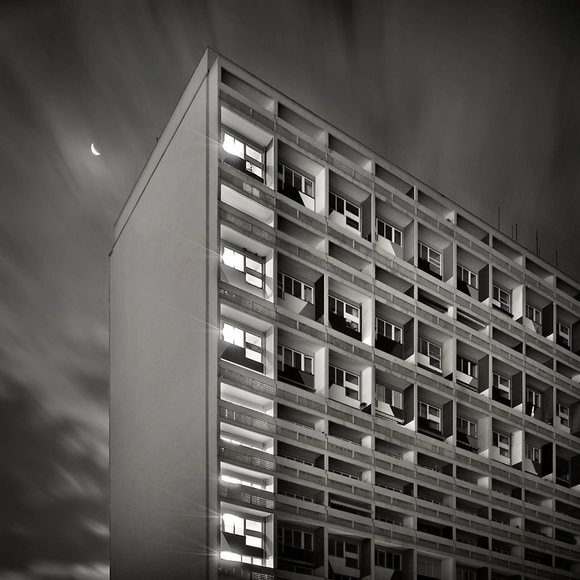
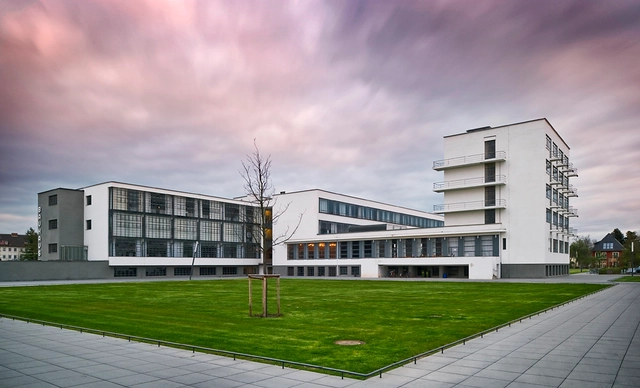
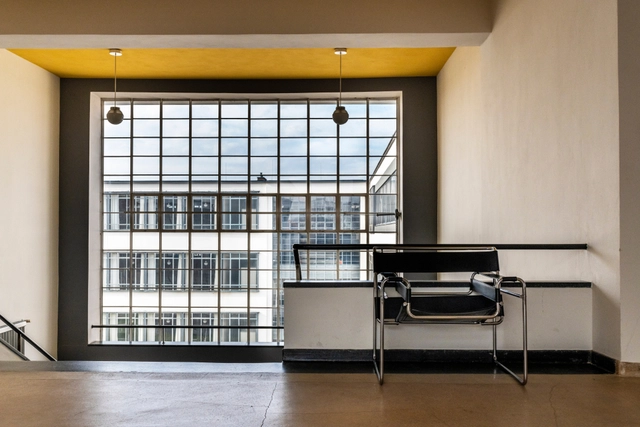
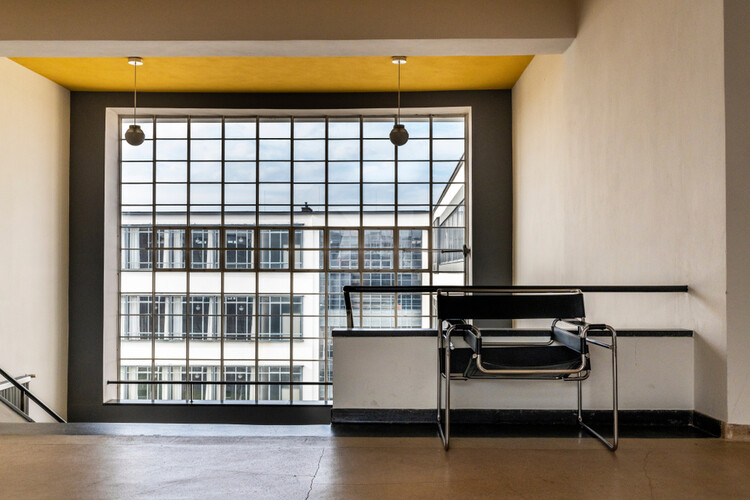
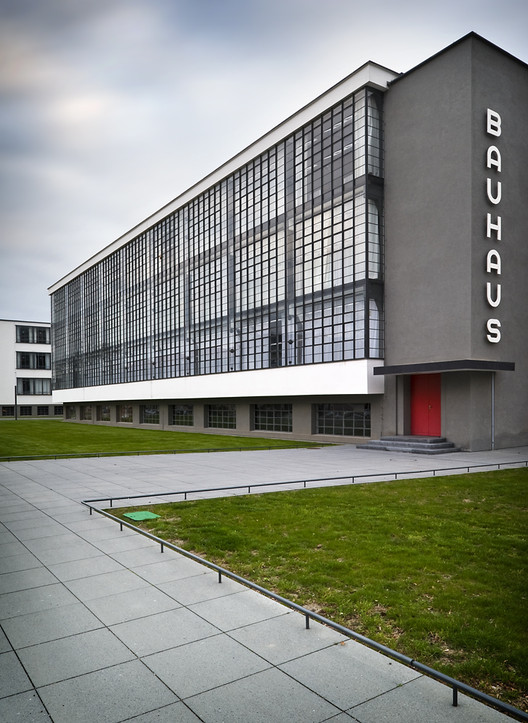
Bauhaus's designs have influenced our contemporary society in obvious and subtle ways. Iconic examples include Marcel Breuer’s Wassily Chair, the B55 Chair, the Bauhaus typeface, and the graphic design principles emphasizing clean lines, primary colors, and geometric shapes. However, the architectural construction details of the Bauhaus movement are much less discussed. While most can readily identify modern or Bauhaus buildings by their geometric forms, functionality, and industrial materials, their architectural details are often overlooked. They not only echo the design language of Breuer’s renowned furniture pieces but also have influenced the much-celebrated architectural glass details of Mies van der Rohe. How were Bauhaus's details executed, and how might they be translated into contemporary details today?
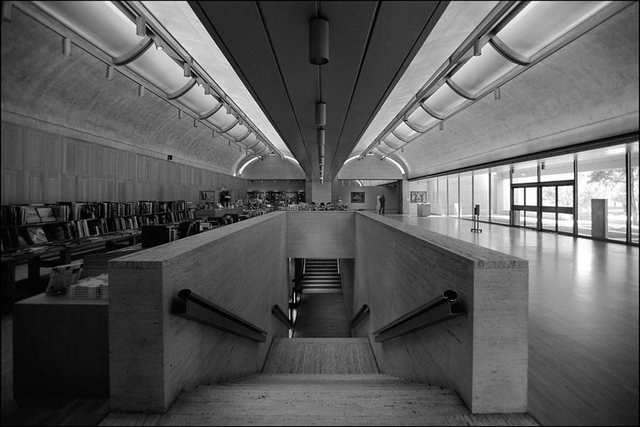
Kimbell Art Museum / Louis Kahn. Image Courtesy of Xavier de Jauréguiberry
AD Classics presents you with some of the greatest buildings of the past that have influenced and shaped architecture today. Throughout ArchDaily's 13 years, more than 200 classics were published, and for this edition, we have rounded up the top 20 most visited Architecture Classics to date.
One of the most highly regarded architects of the 20th century, Walter Gropius (18 May 1883 – 5 July 1969) was one of the founding fathers of Modernism, and the founder of the Bauhaus, the German "School of Building" that embraced elements of art, architecture, graphic design, interior design, industrial design, and typography in its design, development and production.
I taught architectural history in two schools of architecture during the 1980s and 1990s. Back then it was common for students to get a full three-semester course that began with Antiquity and ended with Modernism, with a nod to later twentieth-century architecture. My text for the middle section was Spiro Kostof’s magisterial History of Architecture: Settings and Rituals. With many centuries to cover, he spent very little effort in dealing with the twentieth century. In the last third of the course, students read texts such as Towards a New Architecture by Le Corbusier and Reyner Banham’s Theory and Design in the First Machine Age. My colleagues and I felt that we offered students a pluralistic and comprehensive review of key developments in the history of the built environment.
Few of the architectural principles developed in the 20th century have been as widely accepted as the curtain wall, with the technology going from an implied feature of Le Corbusier's Five Points of Architecture to the go-to facade treatment of architects worldwide. In this article, originally published on Australian Design Review as "Invisible Cities - The Last Remnant of Modernism," Annabel Koeck argues that the curtain wall, initially prized for its glassy transparency, is now making buildings and even entire cities invisible thanks to its sheer ubiquity - at the expense of architectural expression.
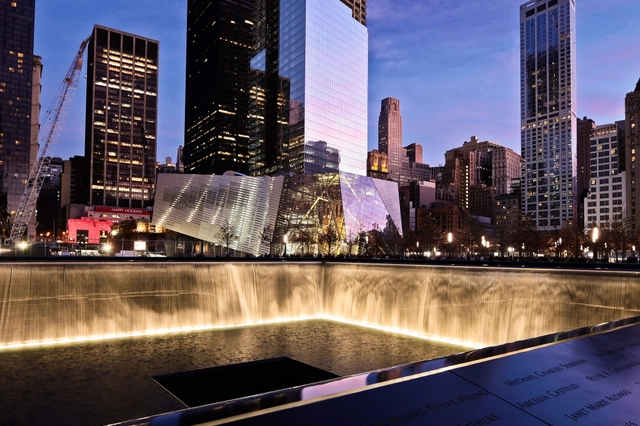
Norwegian architects Snøhetta, based between Oslo and New York, designed the glass structure for the The National September 11 Memorial entry pavilion, which appears camouflaged against the backdrop of neighbouring glass curtain walls that define the New York skyline. Admittedly, Snøhetta’s pavilion was conceived by a very different brief, one defined by timidity and subtlety; yet paradoxically it was the curtain wall that facilitated this. Looking over the South Pool towards an array of glazed elevations that dominate the skyline it is ironic that a Modernist technique – the curtain wall – could now spell the end for architectural diversity in cities.
We will be publishing Nikos Salingaros’ book, Unified Architectural Theory, in a series of installments, making it digitally, freely available for students and architects around the world. The following chapter discusses our society’s phobia against natural, local forms - our “ecophobia” - and the need for the architecture discipline to counter this fear by adopting a more scientifically-rigorous, intellectual structure. If you missed them, make sure to read the previous installments here.
The 21st century has begun with a continuation, and perhaps intensification, of the worst prejudices seen in the twentieth. Those prejudices include a disdain of traditional cultures, and all that links a human being to his/her local history.
Similarly, most building and planning today follow unwritten rules that have no empirical foundation, being based strictly upon visual/ideological constructs from the early twentieth century. Contemporary design avoids any criterion of quality that draws upon evolved precedent and tradition from a prior era, and thinks that this refusal is a great virtue. In this way, architects and urbanists end up obeying simplistic criteria for design, rejecting any sense of beauty that links human beings with their land, tradition, and culture.
The term “ecophobia” refers to an unreasonable but deeply conditioned reaction against natural forms. It has also been used in clinical psychology to denote a phobia against one’s dwelling, but that specific use now appears to be antiquated. However, we believe that these two terms “ecophobia” and “oikophobia” may in many cases be used interchangeably. (Linguistically, the common Greek root for “house” can be written either as ecos or oikos).
https://www.archdaily.com/512714/unified-architectural-theory-chapter-5Nikos A. Salingaros & Kenneth G. Masden II
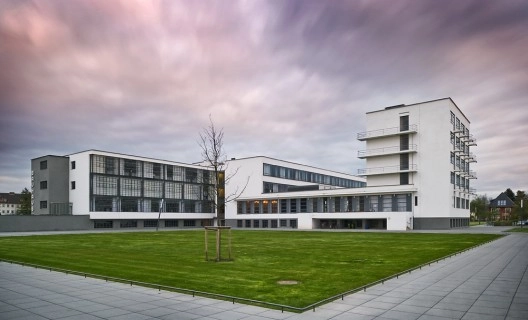
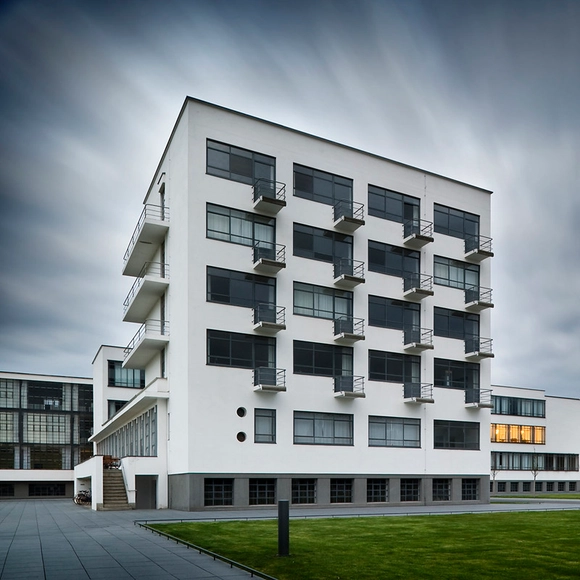
Recently, the Bauhaus Foundation has opened the residential block of the famous building, offering tourists the chance to spend a night. Seizing the opportunity, Olly Wainwright reports on what it feels like to stay - finding it to be a "primordial soup of originals and copies, and copied originals", from Albers to Ikea, and coming to the conclusion that it may now be missing the party atmosphere it was once famous for. But at only €35 a night, he hopes the chance to stay will "attract crowds of architecture and design students, to reinfect the pristine white shell with the spirited energy it needs." You can read the full article here.
For architects, it’s a dream come true: the studio building at the Bauhaus is now open to visitors (and pilgrims) looking to spend a night in the famous building. This new development will undoubtedly solidify the school’s place on the modern “Grand Tour” list, but is also meant to foster a creative and lively atmosphere that hasn’t been seen there for almost a century. Learn more here.
https://www.archdaily.com/439891/bed-breakfast-and-bauhausKatherine Allen



.jpg?1570002957&format=webp&width=230&height=230&crop=true)




__by_Karl_Henrik_Nostvik__1967-1973._Image_©_Iwan_Baan__.jpg?1542624862&format=webp&width=230&height=230&crop=true)
__by_Henri_Chomette_and_Roland_Depret__1973-1978._Image_©_Iwan_Baan__.jpg?1542624833&format=webp&width=230&height=230&crop=true)