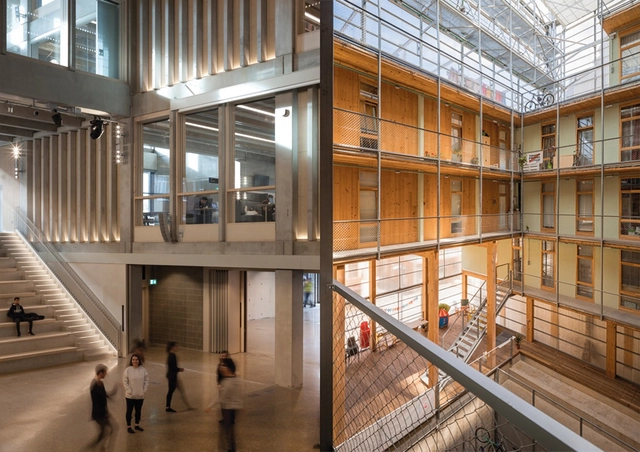
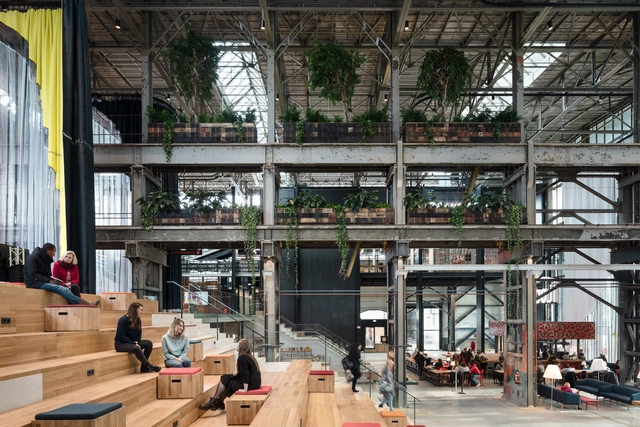
Lluc Miralles

BROWSE ALL FROM THIS PHOTOGRAPHER HERE
↓

Barcelona Architecture City Guide: 30 Buildings and Places from Gaudí to Today

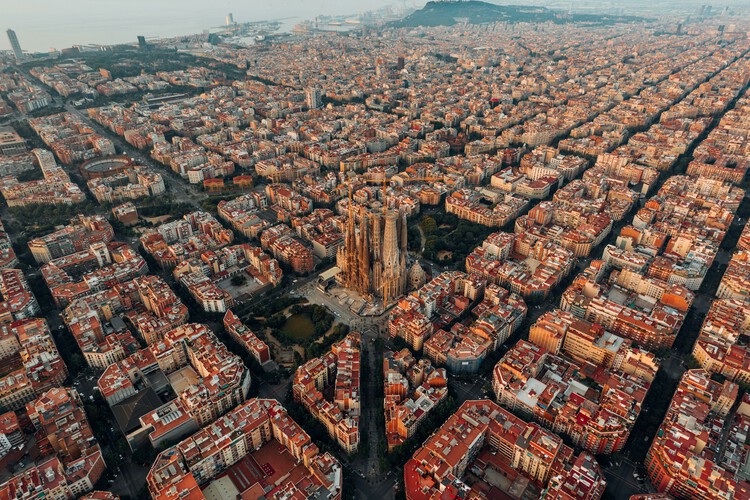
Barcelona is a city where architecture has long served as a laboratory of urban experimentation, each era leaving its mark on the city's fabric. From the dense streets of the Gothic Quarter to the ornate interiors of the Palau de la Música Catalana, the city expanded outward through Ildefons Cerdà's Eixample, a stage where Gaudí and his contemporaries challenged the rules of form, scale, and ornamentation. These experiments defined a local identity and culminated in the Sagrada Família, a vision that continues into the 21st century through the integration of advanced technology.

The city's twentieth-century transformation forged an architectural language with global influence. The principles of International Modernism are embodied in Mies van der Rohe's Barcelona Pavilion, while later developments—from Bofill's explorations in collective housing to the urban interventions of the 1992 Olympics—reshaped the skyline and the city's relationship to its waterfront. Subsequent contemporary projects continue to negotiate form, landscape, and urban scale, contributing to a layered and evolving city.

Barcelona Architecture City Guide: 30 Buildings and Places from Gaudí to Today - More Images+ 29

Subscriber Access

From Passages to Shared Spaces: The Social Life of Circulation

Audio available

Most people rarely remember a passage. They remember the classroom, the apartment, the gallery, or the plaza at the end of it. Passages are usually designed to disappear into the background, guiding movement from one destination to the next. Yet some of architecture's most memorable experiences happen while moving through a place rather than arriving at it.

Circulation is often treated as one of architecture's most practical elements. Corridors connect rooms, galleries provide access, and walkways organize movement through a building. Their purpose seems straightforward: to help people get from one point to another. Because of this, circulation spaces have long been considered secondary to the programs they serve. Attention tends to focus on destinations, while the spaces in between remain largely unnoticed.

From Passages to Shared Spaces: The Social Life of Circulation - More Images+ 13

Collective Housing in Barcelona: The Sustainable and Cooperative Model of Lacol

One of the biggest current challenges in large cities is the housing crisis and the lack of efficient solutions to mitigate its effects on citizens. This problem is exacerbated in cities where tourism and vacation or temporary housing dominate the market, distancing residents from the possibility of accessing affordable urban housing. Furthermore, gentrification, driven by rising rents and real estate speculation, contributes to the displacement of local communities, transforming traditional neighborhoods into areas exclusively oriented toward tourist consumption.

Collective Housing in Barcelona: The Sustainable and Cooperative Model of Lacol - More Images+ 3

Subscriber Access

"Individual Space is as Important as Collective Space": In Conversation with Pritzker Prize Laureate Anne Lacaton

Led by Pritzker Prize laureate Anne Lacaton, the jury of the European Collective Housing Awards has just selected the winners for its first edition. Established by the Basque Architecture Institute and Arc en Rêve Centre d’Architecture in collaboration with the Department of Territorial Planning, the award celebrates innovation and excellence in collective housing design, emphasizing aesthetics, social responsibility, and environmental sustainability. The winning projects - La Borda Housing Collective in Spain and the Conversation of a Wine Storage into Housing in Switzerland - were selected from 171 entries across 19 European countries for their contributions to new construction and renovation, respectively.
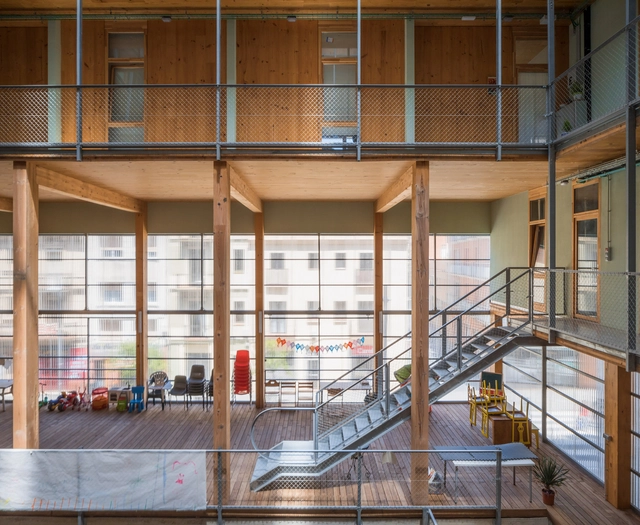
Anne Lacaton, renowned for her groundbreaking work with partner Jean-Philippe Vassal, has been working to push the boundaries of sustainable and socially responsible housing architecture for decades. The Pritzker Prize laureates are celebrated for their innovative approach to social housing and are committed to enhancing the quality of life for residents. Their philosophy centers around creating generous, adaptable spaces that rethink how we live together. Onsite in San Sebastián, ArchDaily had the chance to interview the Pritzker-Prize winner to delve into her architectural practice and philosophy. In the conversation, the architect explored core values, the significance of reuse in social housing, and the promising trends in collective housing design that emerged from the first edition of the awards.

 "Individual Space is as Important as Collective Space": In Conversation with Pritzker Prize Laureate Anne Lacaton - Imagem 1 de 4 "Individual Space is as Important as Collective Space": In Conversation with Pritzker Prize Laureate Anne Lacaton - Imagem 2 de 4 "Individual Space is as Important as Collective Space": In Conversation with Pritzker Prize Laureate Anne Lacaton - Imagem 3 de 4 "Individual Space is as Important as Collective Space": In Conversation with Pritzker Prize Laureate Anne Lacaton - Imagem 4 de 4 Individual Space is as Important as Collective Space: In Conversation with Pritzker Prize Laureate Anne Lacaton - More Images+ 9

All Purpose Homes: Are Residential Spaces Taking Over the Role of First, Second, and 'Third Places'?

Dwellings can be understood as the most significant and primary form of architecture, as the house is intimately related to the idea of shelter, one of humanity’s basic needs. In the words of architect Mario Botta, “As long as there is a man who needs a house, architecture will still exist.” Yet, in spite of its ubiquity, or perhaps because of it, an exact definition of a home is difficult to find. Throughout history, different functions and spaces have been added and subtracted from this unit, reflecting directly the character of the society that produced it.

The list of expectations that a house has to fulfill is long and ever-evolving: to provide intimate and safe spaces where one can recharge their energy, but at the same time to allow for interaction, welcoming friends and family to join in; it is the purveyor of leisure and relaxation, but also the site of most labors of care, while also providing a small incubator for starting entrepreneurs. This tendency to demand a residential unit to fulfill multiple roles was heightened to unprecedented levels during the pandemic. Health concerns led to the closing of most workspaces, the second place where people spent most of their time, and of cafes, restaurants, cinemas, and malls, the “third places.” Suddenly, the home had to become an all-purpose space.

All Purpose Homes: Are Residential Spaces Taking Over the Role of First, Second, and 'Third Places'? - More Images+ 6

Redefining Domestic Spaces of the Future: 14 Projects in Europe

Unconstrained by the dogmas of established offices, new architectural practices can often challenge building norms and redefine living standards. The Young European Architecture Festival (YEAH!) is an event dedicated to highlighting these new and emerging practices and bringing their contributions to the built environment into focus. Many of these practices are challenging and redefining typologies of residential architecture. They are building upon ideas such as cooperative housing schemes, community-initiated developments, and circular economy. Others are exploring local identities and resources as a way to reinvigorate the profession while creating respectful and regionally relevant works of architecture.

Redefining Domestic Spaces of the Future: 14 Projects in Europe - More Images+ 14

Subscriber Access

Urban Trends: The Cooperative Housing Model in Barcelona

Cooperative housing, or co-housing, is a residential model that promotes access to housing in cities. This model first developed in countries like Denmark and Uruguay, and it is becoming increasingly popular throughout Europe. Indeed, it arrived in Barcelona several years ago and has since steadily expanded throughout the region, spreading beyond the boundaries of the Catalan capital. Below, we explore the cooperative housing model in Barcelona and how it contributes to a more democratic architecture for its citizens.

Grafton Architects' Kingston University Town House and Lacol's La Borda Win the 2022 EU Mies Award

The European Commission and the Mies van der Rohe Foundation have announced that Kingston University Town House by Grafton Architects and La Borda cooperative housing by Lacol are the recipients of the 2022 European Union Prize for Contemporary Architecture - Mies van der Rohe Award. Winner of the Architecture Category, Kingston University Town House was awarded for its "remarkable environmental quality that creates an excellent atmosphere for studying, gathering, dancing and being together". The 2022 Emerging Architecture Prize was given to La Borda cooperative housing by Lacol in Barcelona, commended for its "co-ownership and co-management of shared resources and capacities".

Grafton Architects' Kingston University Town House and Lacol's La Borda Win the 2022 EU Mies Award - More Images+ 2

Subscriber Access

Design and Sustainability Are Indissociable: The Main Themes Explored in the EU Mies Award 2022

Stating that “design and sustainability are indissociable”, the 2022 European Union Prize for Contemporary Architecture – Mies van der Rohe Award, centered its nominations on social inclusion, sustainability and circularity, and aesthetic research. So far, 40 shortlisted projects are moving to the next level. The biennial contest that gives tribute to works completed within the previous two years in general, will announce the 5 finalist works in February 2022, and the winner in April 2022.

Focused on 3 main titles, "the European city: a model for the sustainable smart city", "defining common European culture while reflecting the diversity of expression" and "an architecture that has social impact and transmits a cultural message", we have grouped the selected projects, nominated by a jury formed by Tatiana Bilbao, Francesca Ferguson, Mia Hägg, Triin Ojari, Georg Pendl, Spiros Pengas and Marcel Smets to give a better understanding of the selection criteria and the architectural situation in Europe. 

Design and Sustainability Are Indissociable: The Main Themes Explored in the EU Mies Award 2022 - More Images+ 24

Subscriber Access

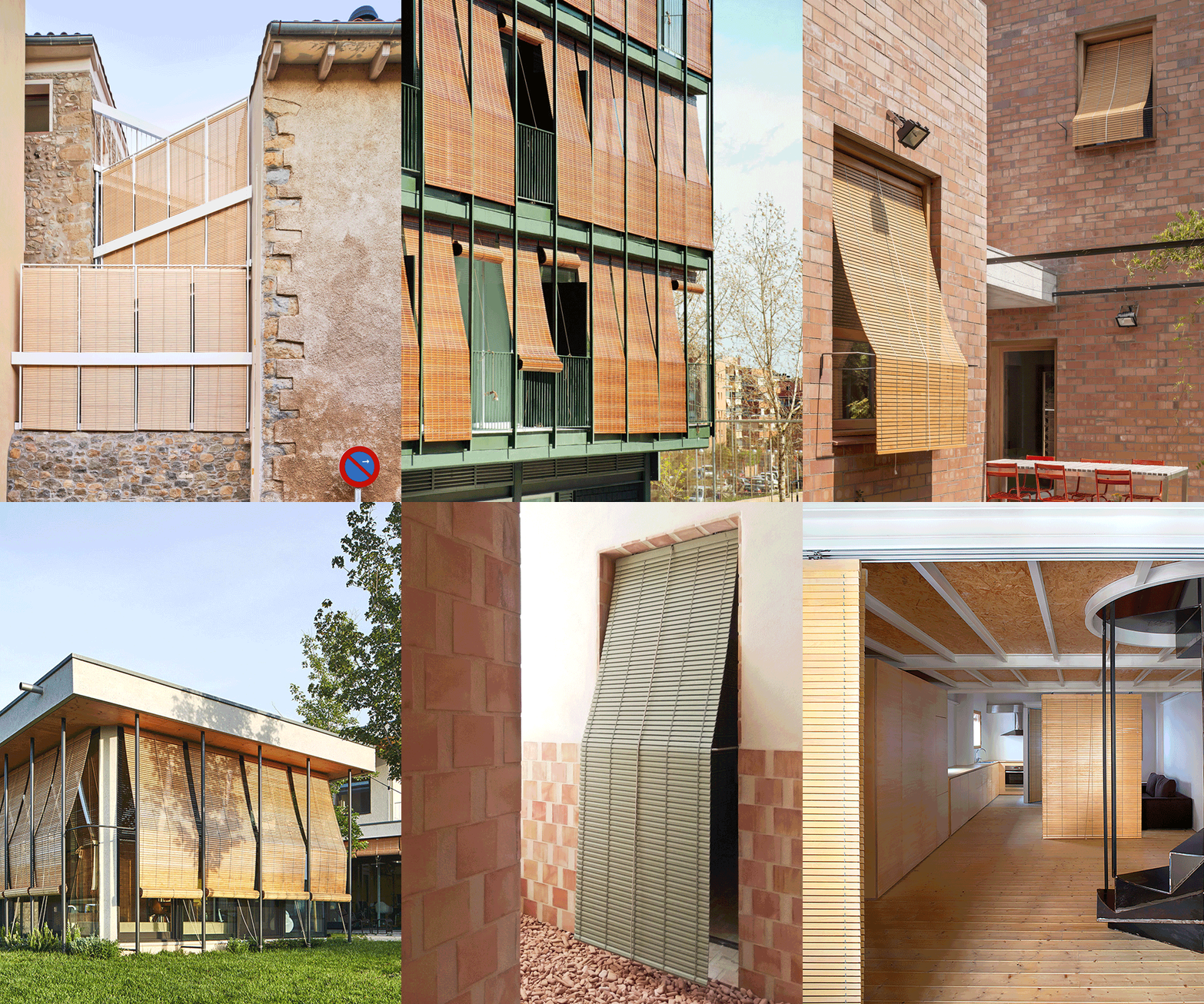
Traditional Solutions, Modern Projects: Wooden Screens for Sun Protection and Ventilation

Throughout history, sunshades--light-weight screens typically made of interwoven wooden reeds--have been the go-to method of sun protection and temperature control for dwellings across civilizations, especially those located in tropical and Mediterranean climates. While offering protection from the sun's heat and rays, sunshades also allow air to permeate, making them an effective and economical cooling system for interior spaces. 

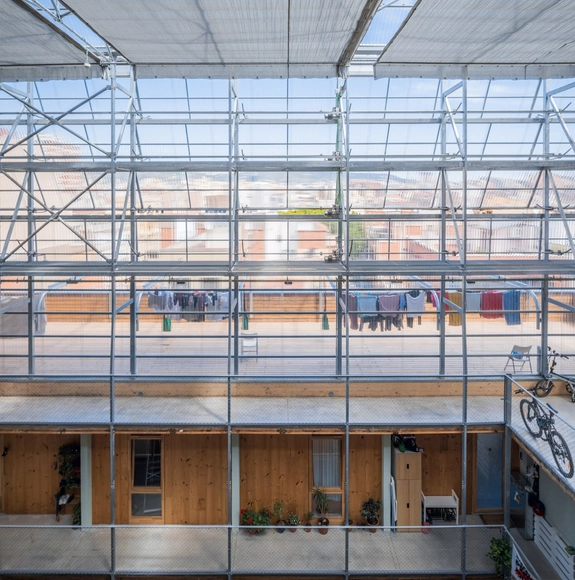
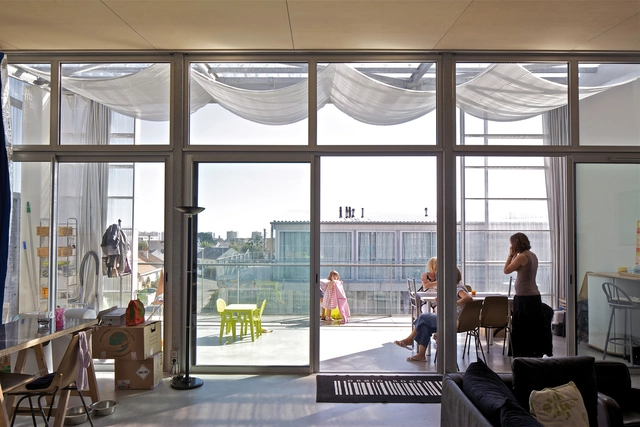
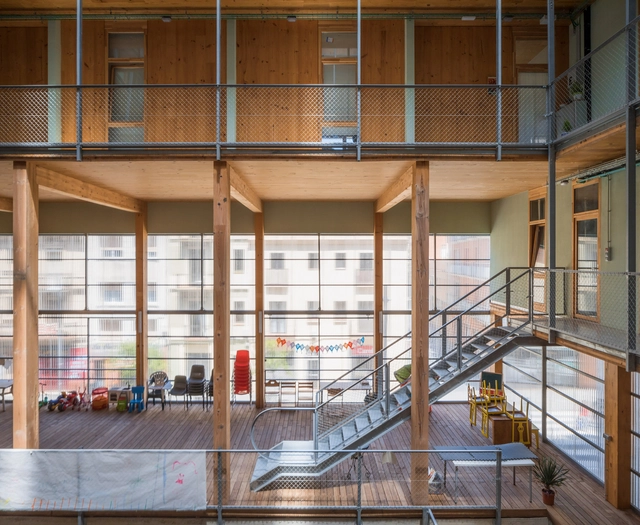
La Borda / Lacol

La Borda / Lacol - Apartments
© Lluc Miralles

La Borda / Lacol - More Images+ 26

•
Barcelona, Spain
  • Architects: Lacol
  • Area Area of this architecture project Area:  3000 m²
  • Year Completion year of this architecture project Year:  2018
  • Manufacturers Brands with products used in this architecture project
    Manufacturers:  Egoin, 9INTEX, Fermacel, Guntamatic, Ininsa, +5

Kálida Sant Pau Center / Miralles Tagliabue EMBT

Kálida Sant Pau Center / Miralles Tagliabue EMBT - More Images+ 22

  • Architects: Miralles Tagliabue EMBT
  • Area Area of this architecture project Area:  400 m²
  • Year Completion year of this architecture project Year:  2019
  • Manufacturers Brands with products used in this architecture project
    Manufacturers:  Andreu World, Gres Aragon, Roca, Santa & Cole, Viccarbe, +17