-
Architects: KWK Promes, Robert Konieczny
- Year: 2025
-
Professionals: Kornel Szyndler Proeco, WIDAWSCY studio architektury, KELLER system glazing, KER+3MR


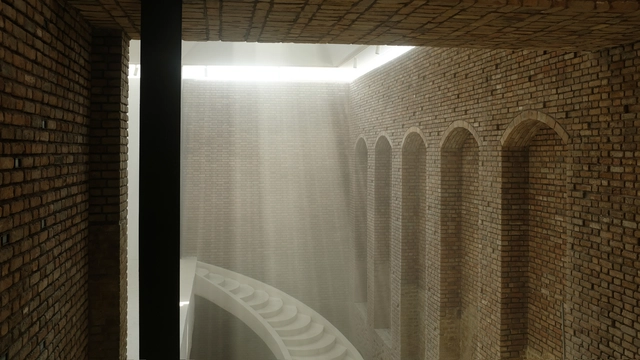
Creating an atmosphere that enhances exhibitions and enriches the visitor and user experience requires a thoughtful balance between preserving a space's unique character and adapting it to meet the needs of artistic and cultural production. The challenge lies in maintaining a building's industrial atmosphere while accommodating the specific requirements of exhibition design or the various uses the new building will require. This delicate task involves careful consideration of spatial layout, material choices, and lighting solutions, all of which play a significant role in shaping the new environment.
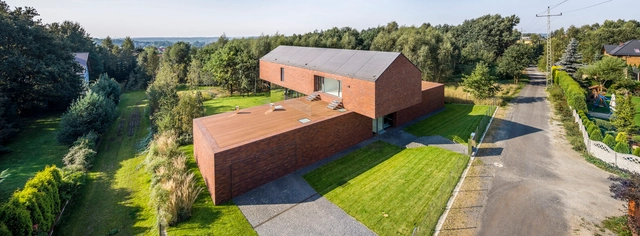
Among the "Five Points of New Architecture" formulated by Le Corbusier, terrace gardens figure as a way to take advantage of a building's so-called fifth facade, either as leisure areas or landscaping spaces. Thanks to technological advances in reinforced concrete in the mid-twentieth century, usable flat roofs are far from new. There are traces in Mesopotamia and vernacular architecture from Greek and Arab civilizations. However, problems that frequently arise relate to infiltration and leaks. Water is relentless in finding a place to drain, and flat roofs are exposed to this when execution and design are not carefully thought-out. In fact, as documented in several letters, this was a source of disagreement between the owner and the Swiss-French architect in the case of the influential Villa Savoye. Today, nonetheless, there are good waterproofing options on the market that provide durability, resilience, adaptability and, above all, avoid headaches and fights between builders and owners. Elevate is built on 40 years of history in the production of roofing membranes, as well as insulation and vapor barriers, and develops solutions for waterproofing flat roofs with a low inclination.
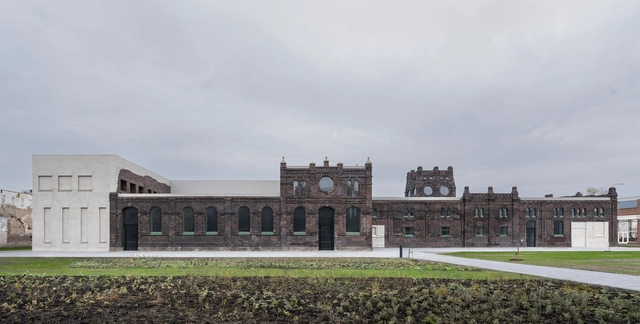
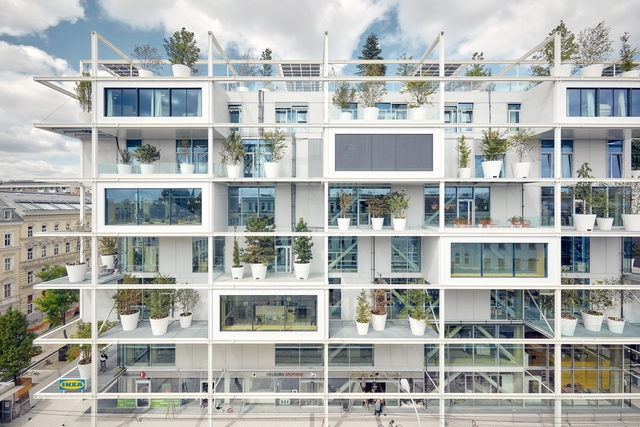
The European Commission and the Fundació Mies van der Rohe have announced the 2024 European Union Prize for Contemporary Architecture / Mies van der Rohe Awards (EUmies Awards) nominees. A total of 362 works of architecture realized over 38 different European countries have been selected, marking the first stage of the EUmies Awards’ 18th cycle. In the next stage, the jury will choose 40 outstanding projects, followed by visits to the finalists and interviews with the architects, their teams, and the project clients.
The 2024 EUmies Awards aims to recognize the best-built works in Europe completed between April 2021 and May 2023. The selection of projects reflects the current changes within the European context, with increasing attention given to environmental, social, and economic awareness expressed through architecture, landscape architecture, urban planning, and design. This year’s jury is chaired by Frédéric Druot (Paris/Bordeaux), who will be accompanied by Martin Braathen (Oslo), Pippo Ciorra (Rome), Tinatin Gurgenidze (Tbilisi/Berlin), Adriana Krnáčová (Prague), Sala Makumbundu (Luxembourg), and Hrvoje Njiric (Zagreb).
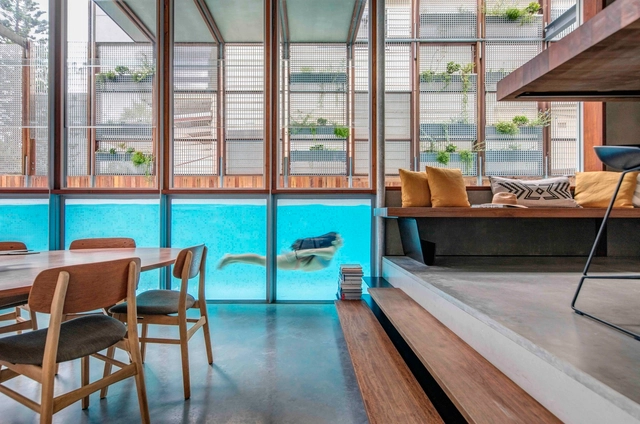
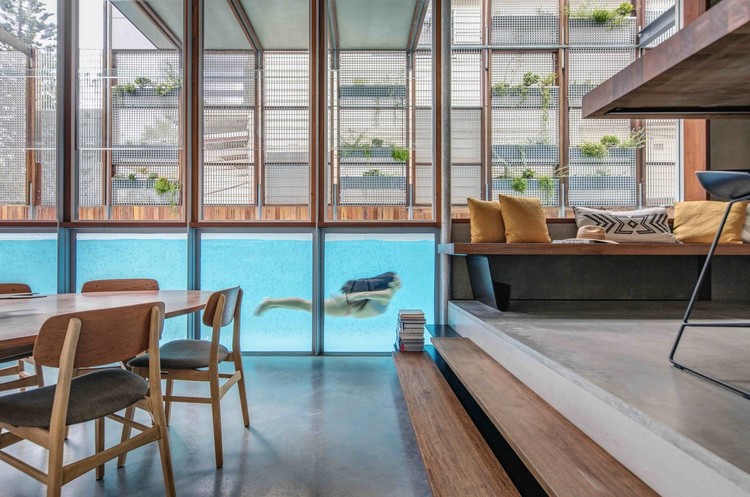
Within architecture, water evokes sentiments of calmness and wellbeing. The element has influenced design through its dynamic and fluid nature. With recent technological advances, architects have created some of the most strategic, innovative, and unexpected intersections of design and H2O.
Below, we have provided a roundup of indoor pools that highlight the application of water in different spaces, showing its relationship to materiality and use.