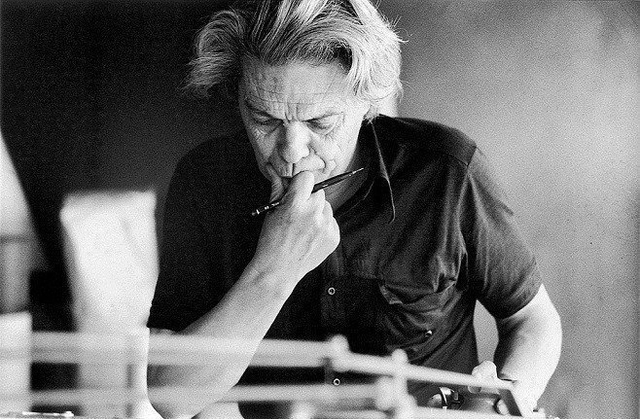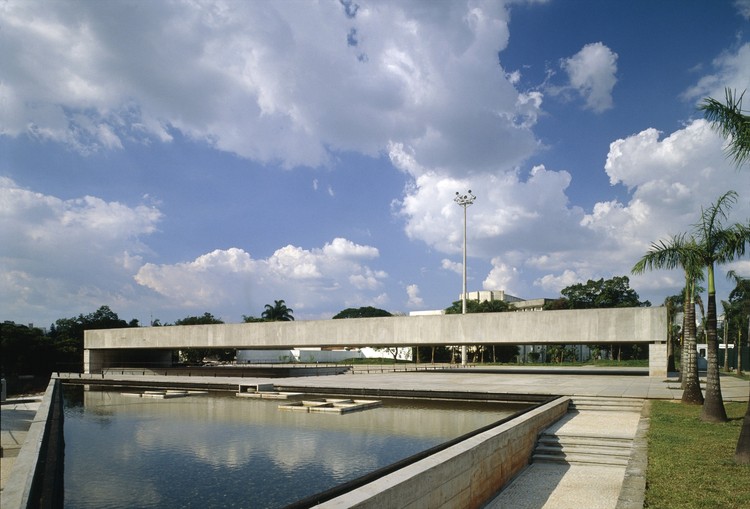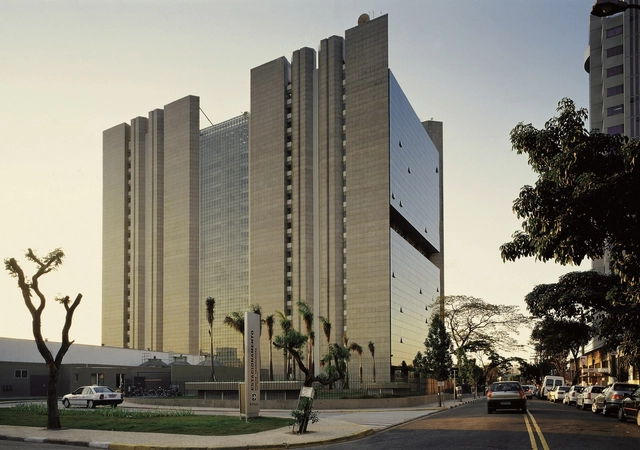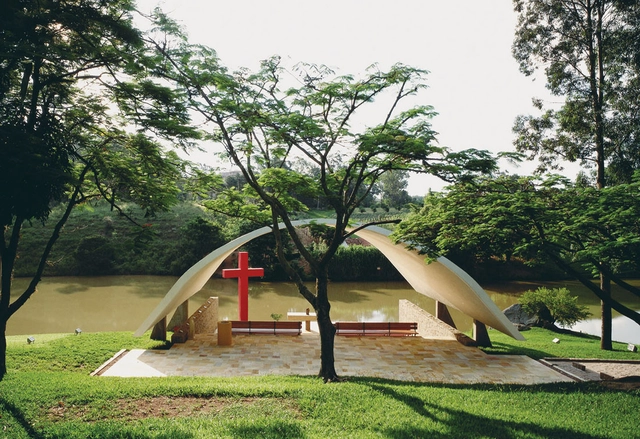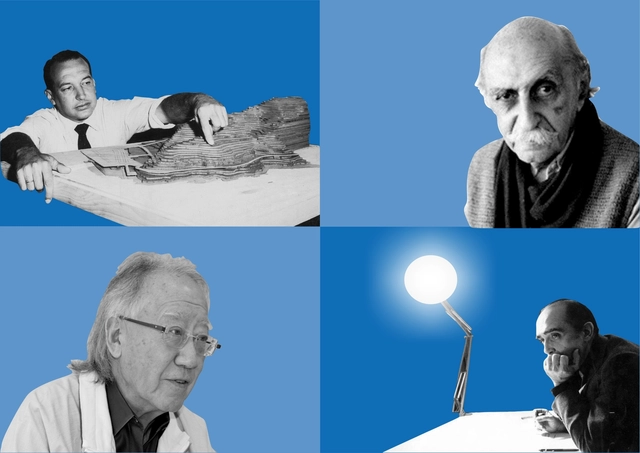
The documentary Vilanova Artigas: The Architect and the Light, written by Laura Artigas and co-directed with Pedro Gorski, was produced to mark the architect's centennial and released in 2015. The film won the "Lusophony Award" at the Portuguese film festival Arquiteturas Film Festival Lisboa 2015 and is now available online to watch from home.
While brick is one of the preferred construction methods within the architectural culture of several Latin American countries, Uruguay's unique history with this material has been deeply shaped by the contributions of the renowned engineer Eladio Dieste. His work pushed brick to its ultimate lightness, creating curved surfaces through a pioneering technology he termed reinforced ceramics. In doing so, Dieste offered the country—and the world—a new perspective on the structural possibilities of brick, strengthening its role in local identity and inspiring further exploration and design with the material.
In any profession, it is common for children to follow in their parents' footsteps, motivated by the environment they grew up in and inspired by a passion for the craft. Architecture is no exception. Growing up surrounded by sketches, floor plans, and coffee seems to spark the desire to pursue the same career.
In celebration of Father's Day, observed in Brazil this coming Sunday, August 12, we have compiled a list of architects who followed in their fathers' footsteps. Read on below:
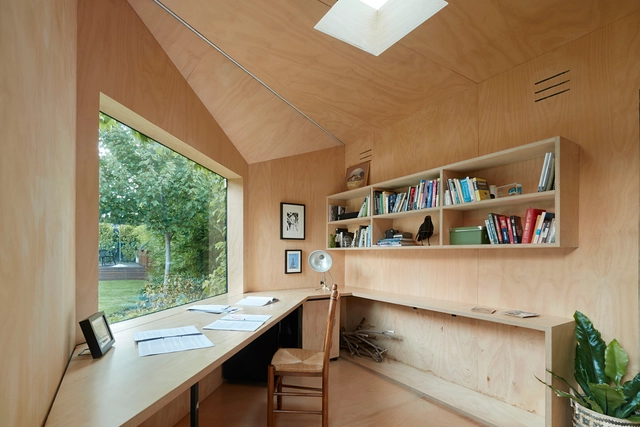
Working from home comes with a flexible schedule, not to mention savings on travel costs, and you can be closer to family. But distractions can make working from home inefficient. It becomes critical to separate the spaces used for living from the ones used for working. Building an addition is, in most cases, the perfect solution.
https://www.archdaily.com/947157/tiny-offices-extensions-to-separate-the-home-from-the-work-spacesClara Ott
Throughout history, simple structures have constituted one of the most common forms of human expression. Small-scale housing, shelters, and viewpoints have been shaped by myriad materials that effectively created - depending on the techniques used - different forms of response to the same need.
Here is a compilation of 20 small-scale projects that stand out due to their small size and their simple, practical structures.
As the son of famed Mexican architect Ricardo Legorreta, and now the leader of the firm which he joined under his father in 1989, Victor Legorreta is one of Mexico’s most visible architects. In this interview, the latest in Vladimir Belogolovsky’s “City of Ideas” series, Legorreta discusses the complexities of following in the footsteps of his father and how, in his view, good architecture is made.
Vladimir Belogolovsky:What kind of projects are you working on at this moment?
Victor Legorreta: We work on a variety of projects—about 60 percent are in Mexico and the rest are abroad. Mexico City is increasingly becoming a vertical city in its attempt to reverse its tendency of growing into an endless and dysfunctional sprawl. We are working on several mixed-use towers with retail, entertainment, restaurants, offices, and residential uses in a single building to enable people to find everything they need within easy reach, to lessen the pressure on traffic, which in the city is now among the worst in the world. We are also working with The Aga Khan Foundation on two projects—a university in Tanzania and a hospital and university in Uganda.
Update:Paulo Mendes da Rocha was today awarded the RIBA Royal Gold Medal at a ceremony at the RIBA headquarters in London. The article below was originally published when the award was announced on September 29, 2016.
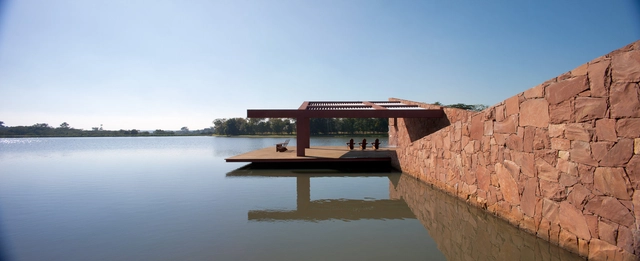
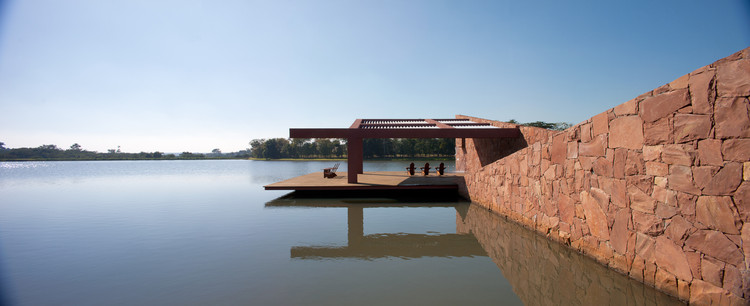
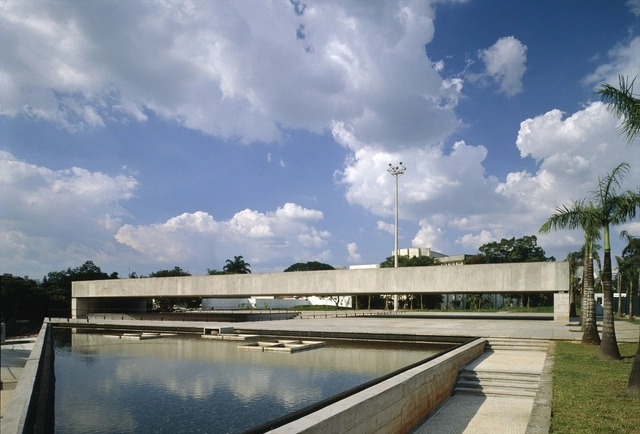
The Royal Institute of British Architects (RIBA) has awarded its 2017 Royal Gold Medal to Paulo Mendes da Rocha. The 87-year-old is among Brazil's most celebrated architects, known for his special brand of Brazilian Brutalism which has had a dramatic effect in his home country, particularly in the city of São Paulo. The award continues a spectacularly successful year for Mendes da Rocha, who won the Golden Lion for Lifetime Achievement at the 2016 Venice Architecture Biennale in May, and was announced the 2016 Premium Imperiale Laureate just weeks ago. Mendes da Rocha has also previously received the Pritzker Prize in 2006 and the Mies van der Rohe Prize for his Pinacoteca de São Paulo project in 2000.
Chosen to curate the Brazilian contribution at the 2014 Venice Architecture Biennale, diplomat and architecture critic André Aranha Corrêa do Lago has revealed plans for an exhibition that will chronologically illustrate the evolution of Brazilian architecture.
180 projects will be exhibited, all of which have either played a significant role in the country’s architectural evolution, such as the pre-Colombian (Indian shacks), vernacular constructions and baroque designs, or have displayed a strong international influence, like the Capanema Palace, Pampulha and Brasília. In addition to this, 50 important personalities, including Lucio Costa, Oscar Niemeyer, Lina Bo Bardi, and Paulo Mendes da Rocha, will be highlighted for their assistance in spotlighting the importance of Brazilian architecture.