Mexico City is undoubtedly one of the most exciting and effervescent cities on the cultural and architectural scene in recent decades. Various authors have positioned it inside and outside the country through projects that make up a meeting platform for the creative community. LAGO/ALGO is part of the list of those resilient spaces that emerged from the pandemic, with the need to reimagine our current context by rethinking how we relate to the public and private space having the iconic Chapultepec Forest as a stage, an 810-hectare urban park that is divided into four sections which harbor some of the most important tourist sites in Mexico.
Currently working on 45 simultaneous projects, including India’s largest bio-diversity park in India and the second largest in the world, Amit Gupta has been leading Studio Simbiosis for the past 12 years with a special focus on sustainability where performance follows experience more than form following function.
In this 2022 version of the World Architecture Festival, in Lisbon, ArchDaily had the opportunity to talk with Amit Gupta and discuss the main philosophy behind Studio Simbiosis, the challenges of building in India’s low-tech context, and the future of artificial intelligence and the metaverse in architectural design.
In Childhood’s End, Arthur C. Clarke’s mid-20th century science fiction classic, a character wonders if the flattened inhabitants experiencing a far-off planet’s tremendous gravitational force are aware of the third dimension. In recent years, this hypothetical has found parallels in our growing digital universe, where we are continually drawn to our flat screens to confirm our relevance, connect with like-minded individuals, or create dating profiles. With attention spans riveted by endless digital content, walking down the street has become a delicate dance of avoiding people staring obliviously at their phones—those who, calling to mind Ada Louise Huxtable’s famous question, “Kicked a Building Lately?,” might walk right into one.
Climate change has been one of the most pressing topics of this year, and for a good reason. Its effects are visible not only in natural habitats but also in urban environments. The construction industry has an important role to play in this dynamic. Throughout the year, events such as COP27 emphasized the importance of striving to achieve net carbon zero and the challenges faced by developing countries affected by increasingly devastating natural disasters. Possible directions for development include actions at varying stages and scales, from optimizing green spaces for urban heat control to employing local and innovative building materials to minimize the carbon footprint or passing laws that help create more sustainable urban and natural environments.
This article represents a roundup of articles published on ArchDaily during the course of 2022 with themes related to climate change and architecture’s potential to make a difference. It breaks down the topic into four main questions: What Are Cities Doing to Mitigate Urban Heat? How to Tackle Rising Sea Levels? What Was COP27 and Why Does It Matter? Can Building Materials Play a Role in Achieving These Goals? The last section presents an overview of new legislation approved during 2022 as a way of understanding how state and local governments are imposing this need for change.
Videos
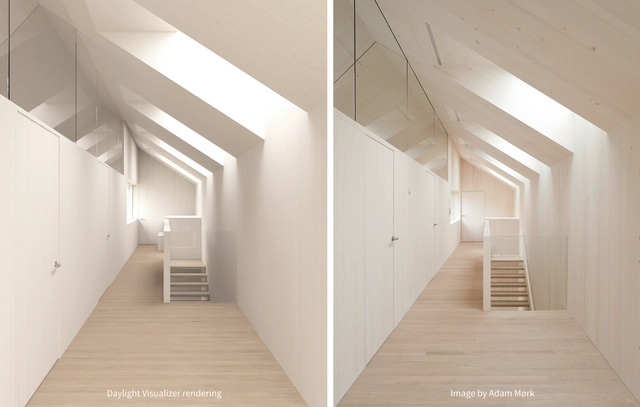
Photo-realistic luminance rendering from VELUX Daylight Visualizer (left) compared with photo from built project (right). Image Courtesy of VELUX Group
Daylight is core to realizing healthy and sustainable buildings, but its dynamic nature and the complex ways in which it interacts with its environment make it a difficult discipline to master. The new version of VELUX Daylight Visualizer makes climate-based daylight modeling more accessible than ever, empowering architects to make the best use of daylight anywhere in the world.
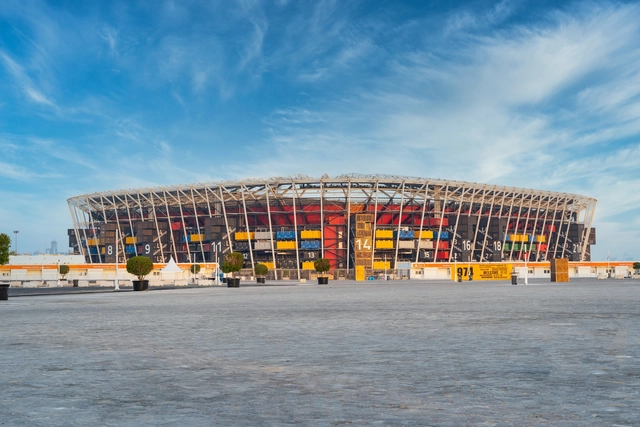
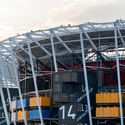
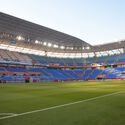
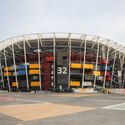
Reports show that authorities have begun dismantling Stadium 974 after it hosted seven matches during FIFA World Cup, with six group games and one Round of 16 knockout matches. It was also the only stadium built for the World Cup without air conditioning, so it only hosted evening matches. According to the BBC, construction workers moved on the site on 9 December to “take the stadium out of tournament mode.” The structure was designed to be the first FIFA-compliant stadium that can be fully dismantled and re-purposed after the tournament ends. While Qatar called this a “beacon of sustainability,” experts warn that the real sustainability of the scheme depends on several factors, including when and where the stadium will be reused.
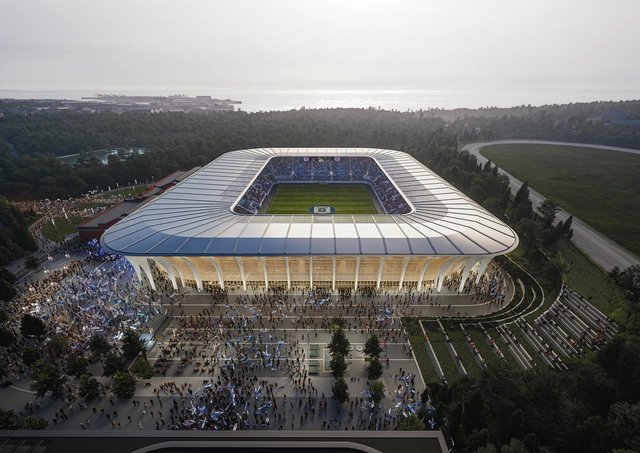
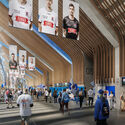
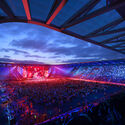
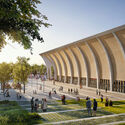
In collaboration with architecture and engineering consultancy Sweco and landscape architects Tredje Natur, Zaha Hadid Architects was selected to deliver the new Aarhus football stadium in Denmark. Dubbed the "Arena of the Forest," the stadium will be embedded within the city's Marselisborg forest, offering public and ticketed spaces all year round while revealing glimpses of the surrounding landscape. Scheduled for opening in 2026, the complex will cover 69,912 square meters, including the Aarhus arena and the renovation of the adjacent 'Stadionhallerne' building completed in 1918 by architect Axel Høgh-Hansen.
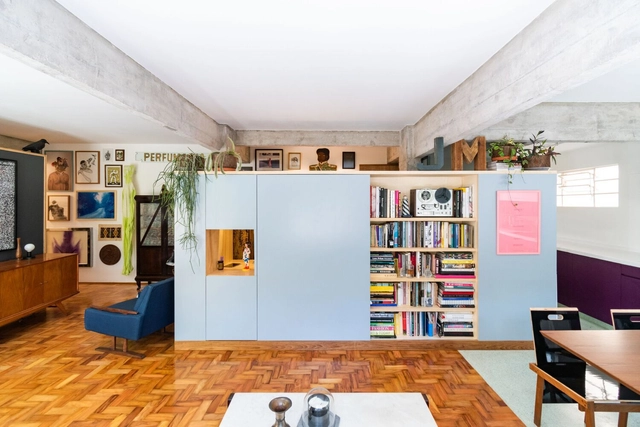
Throughout 2022 we brought different ideas for homes, from methods that do not require previous experience and with accessible materials to more elaborate projects that demand a complete renovation of the space. Many people want to bring a new atmosphere into their own homes at the end of the year. That is why we have put together some tips with the simplest executions and others that help you create the necessary transformation for your home.