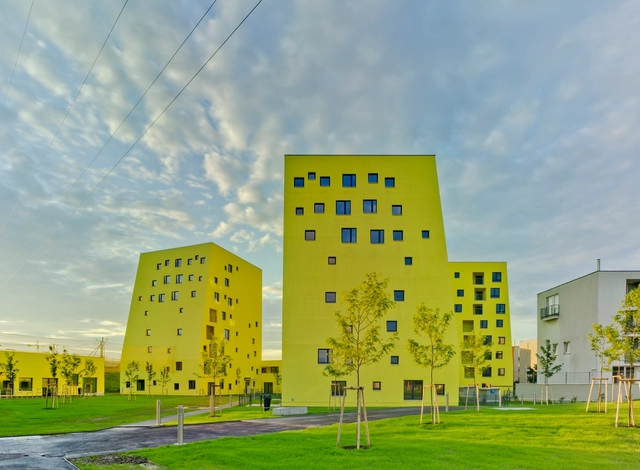
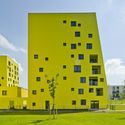
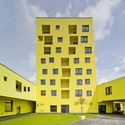
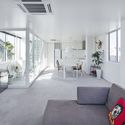
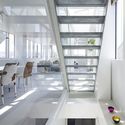
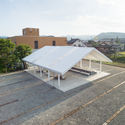
Singapore’s first Housing and Development Board (HDB) housing blocks were erected in November of 1960, in response to a severe lack of adequate housing for the country's 1.6 million citizens. Fast forward to 2017, and over 80% of the Singaporean population live in HDBs, with over 90% of them owning the home they live in. Often painted in vibrant colors, HDBs have a focus on community social spaces, more often than not maintaining the ground floor of the apartment blocks as open public space, exclusively for public meeting areas. These can include hawker centers, benches, tables, grills and pavilions where residents can socialize under cover from the hot Singaporean sun.
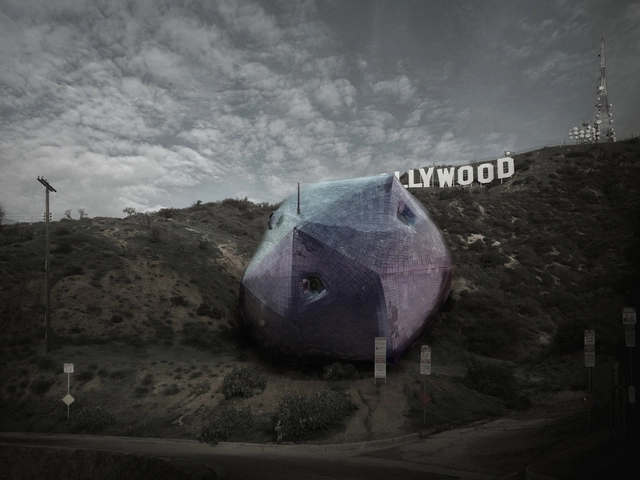
First Place: Ambivalent House / Hirsuta (Jason Payne, Michael Zimmerman, Joseph Giampietro, Ryosuke Imaeda); Los Angeles, California, USA. Image Courtesy of arch out loud
Architectural research initiative arch out loud, in partnership with Last House on Mulholland (LHOM), has released the winner of their competition to design a house of the future, to be sited directly below the Hollywood Sign.
Serving as a “design charette” to generate ideas about potential uses for the currently open site, the competition called for residential designs that demonstrate the use of innovative technology and integrative environmental strategies, while capitalizing on the prominence of the site.
The Hollywood competition received entries from 500 designers across the world, selecting three winners, with an additional owner’s choice.
The winners of the Hollywood design competition are:
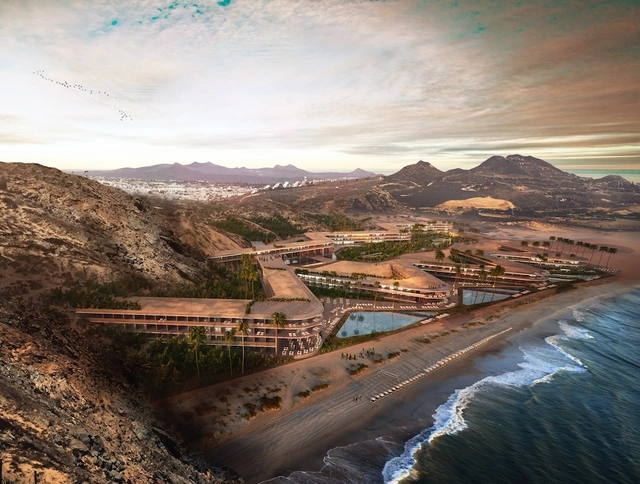
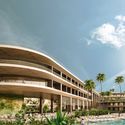
Sordo Madaleno Arquitectos (SMA) has revealed their recent competition proposal for St Regis Los Cabos, a 12.4-hectare hotel and residential project on the southern tip of the Gulf of California in Mexico, bordering the Pacific Ocean.
In response to the site’s natural conditions—vast area, views, and exposure to predominant winds—the project’s volumetric design focuses on the use of camouflaged materials, terraces, and methods to provide shelter from the wind, all of which creates two parallel undulating forms at the edge of the beach.
The hotel and its amenities will be aligned with the east side of the complex, such that they achieve a layout with as many rooms as possible with direct views of the Pacific Ocean that rotate to ensure privacy.
Second Edition. Winner of the category A: Public library in Ceuta. Paredes Pedrosa Arquitectos. Photo by Roland Halbe
The Award for Architectural Heritage Intervention AADIPA, arises from the belief that heritage, as a vehicle for social integration and an economic vitalizing resource for the community, deserves to be appreciated and encouraged. In the current context, in which architectural heritage is considered not only to be a fundamental instrument of knowledge but also a first rate socio-economic resource for the sustainable development of the territory, the disclosure, distinction and recognition of works and quality projects contributing to the preservation of the collective memory is imperative.
The Built Environment Trust along with the Greater London Authority are seeking ideas that could help the nightlife of cities work better – be culturally, socially, economically beneficial.
Architects, landscape architects, planners, environmentalists, material scientists, economists, product designers, acoustic experts and other interested parties are invited to submit ideas for better 24 hour cities. The brief is broad: we want big visions and detailed specific thoughts… all can be contenders for the exhibition, publication and prizes on offer.
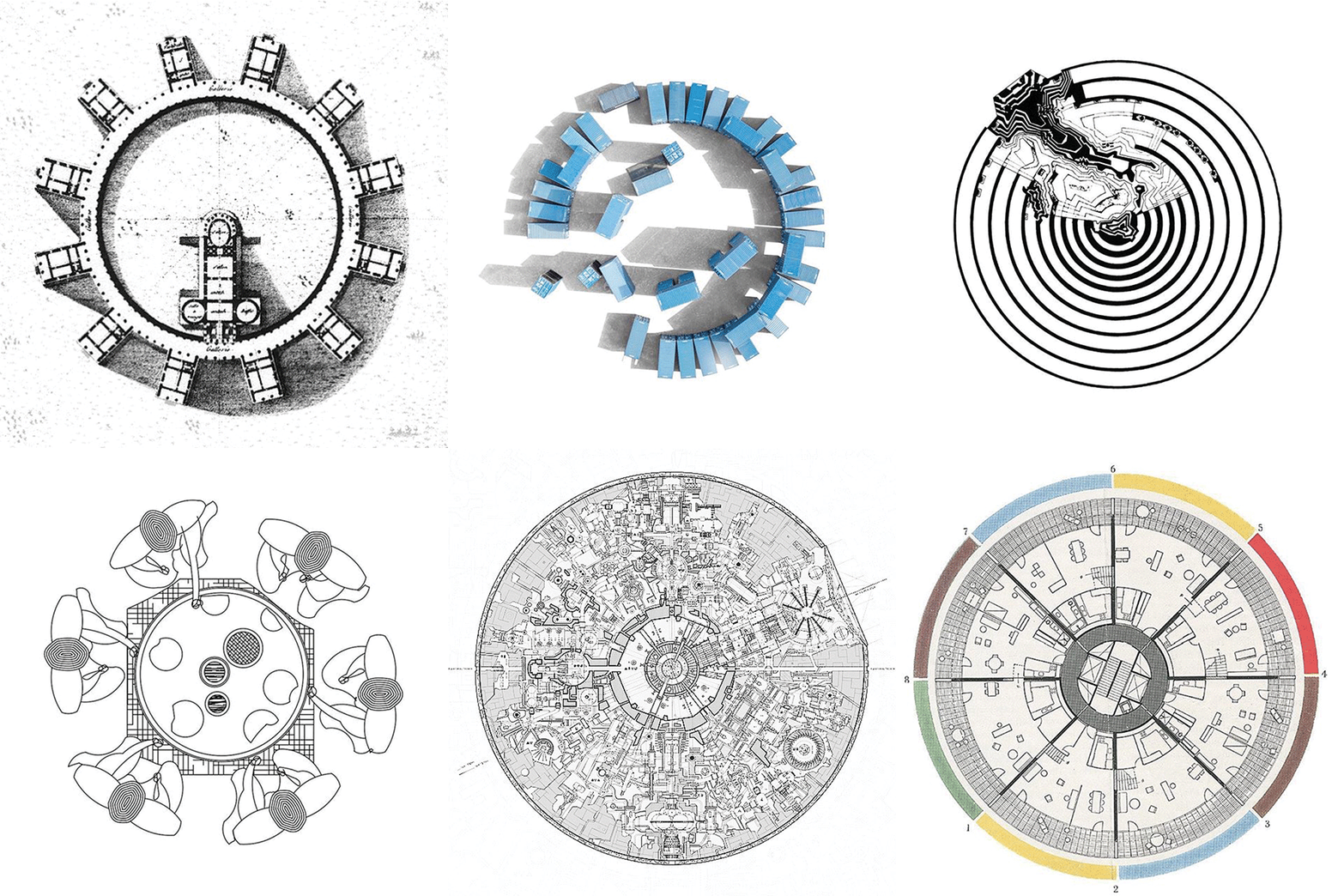
“The circle . . . is the synthesis of the greatest oppositions. [It] combines the concentric and the excentric in a single form, and in equilibrium. Of the three primary forms [triangle, square, circle], it points most clearly to the fourth dimension.”
Inspired by this obsession, one Instagram account titled “Circular Spaces” has collected many of the best examples of circles found in architecture. The account tracks the geometries at all scales, from the planet-sized plan of the Death Star to the familiar intimacy of a round dining table. Check out a selection from “Circular Spaces” below.
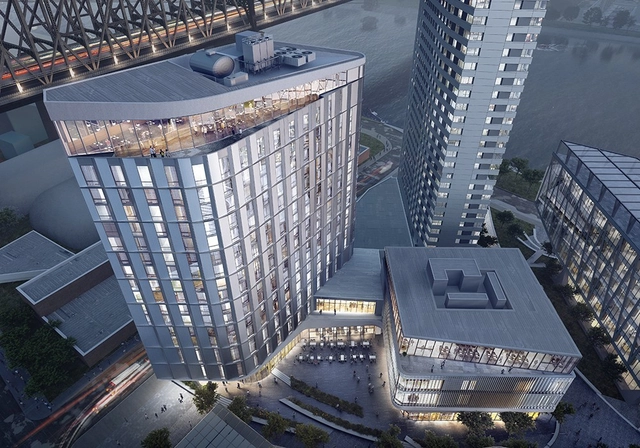
Cornell Tech has revealed that Snøhetta will be the latest firm to design buildings for its currently under-construction Roosevelt Island Campus, joining structures by top architects including Morphosis, Weiss/Manfredi, Handel Architects, and Skidmore Owings & Merrill. The two new buildings, the Verizon Executive Education Center and Graduate Hotel, will be the final part of phase one of the campus master plan, slated for completion in 2019.