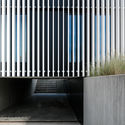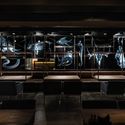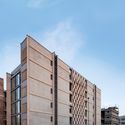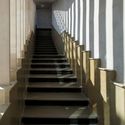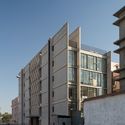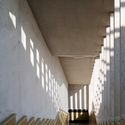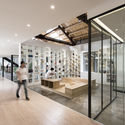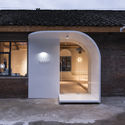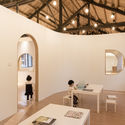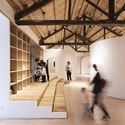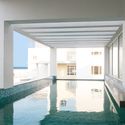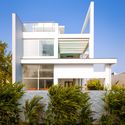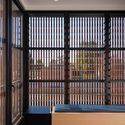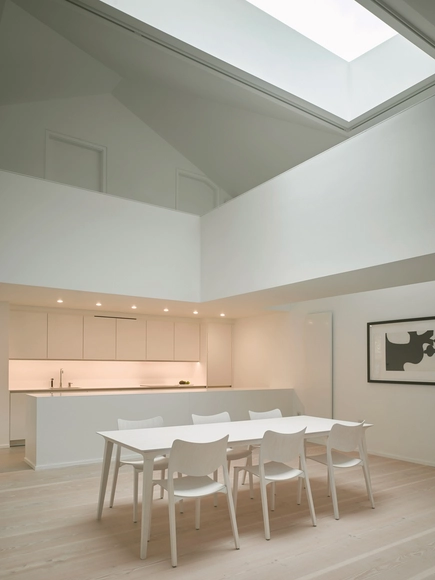


.jpg?1500480837 "© Nick Gutteridge")


-
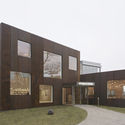
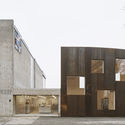
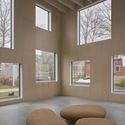
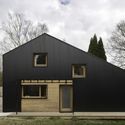
Architects: Lifschutz Davidson Sandilands
- Area: 1768 m²
- Year: 2016
-
Professionals: Skelly & Couch, Bradley-Hole Schoenaich Landscape, Haskins Robinson Waters, EQ2 Light


.jpg?1500566908)
Renderings for a new office building in the Playa Vista neighborhood of Los Angeles designed by Gehry Partners have been revealed in documents released by the LA Department of City Planning. Called New Beatrice West, the eight-story development consists of a series of terraced glass boxes, capped with abundant vegetation aimed at contributing passive energy-efficiency to the complex. The new building will integrate an existing adjacent office building that currently houses the offices of Gehry Partners.
.jpg?1500566881 "via LA Department of City Planning")
.jpg?1500566871 "via LA Department of City Planning")
.jpg?1500566918 "via LA Department of City Planning")
.jpg?1500566892 "via LA Department of City Planning")
.jpg?1500566908)

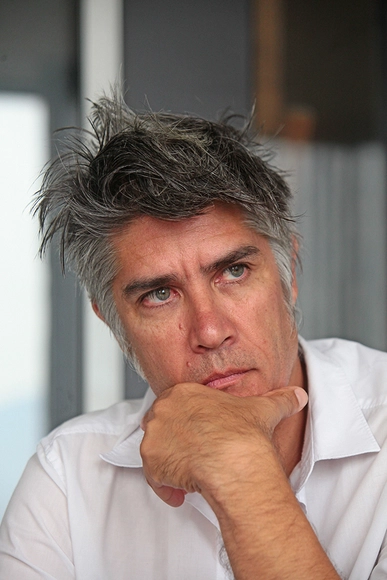
This interview with the winner of the 2016 Pritzker Prize, Alejandro Aravena, was published last year in Issue 31 of Revista AOA, a Spanish-language magazine published by the Association of Architecture Offices of Chile. The interview was conducted by the editorial committee of Revista AOA—represented by Yves Besançon, Francisca Pulido and Tomás Swett—and is accompanied by photographs by Álvaro González. Aravena's openness and warmth allowed them to deliver a profound questionnaire about his thoughts and architectural projections, especially in light of Aravena's Venice Biennale which took place last year.


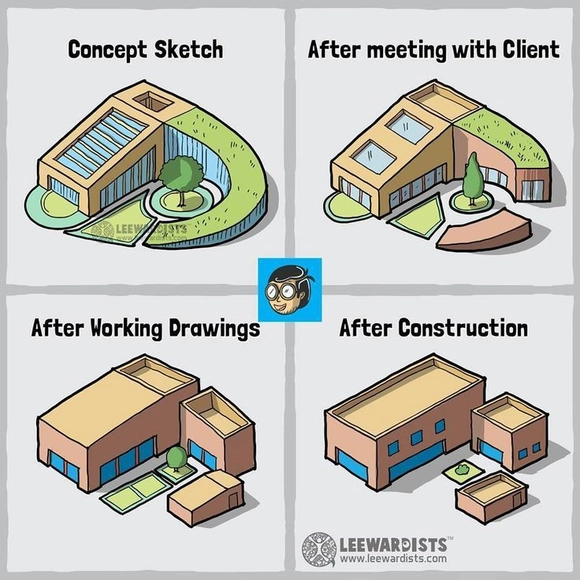
Have you ever visited a worksite and thought, "Wow, this contractor knows a lot more about construction than I do"? Have you had to change your original design because it was too difficult to construct or because it exceeded the budget? Do you think you're good at creating well-designed, efficient spaces but you're not so good when it comes to resolving the project's details?
Chances are you've found yourself in one or more of these situations, especially if you are a recent graduate. And depending on where and how you were educated, most students learn about construction and materials as it relates to the particular projects they are designing in school. Some people dedicate their career to the construction side of things--choosing classes, studios, and jobs that are focused on more technical, real-world training; others decide to focus their studies on urbanism, landscape architecture or the history of architecture. Finally, it also highly depends on the specific strength and concentration of the school you attend.
In spite of the differences that make our profession one rich in diverse interests and allows us to create many different kinds of buildings, the educational deficit (as it relates to materials and construction), prevents us from perhaps exercising the most significant parts of our job: the architect's ability to bring designs to life.
A design by C-re-a.i.d. for a Maasai village in northern Tanzania, is a morphological response to the imposed need to settle, using sustainable, local and accessible materials to redefine its construction culture.
The project is built by a series of earthbags and glass bottles that in addition to generating private and comfortable spaces, allow a quick and easy construction.
.jpg?1500381046)
The Museo Soumaya, which opened to the public in 2011, is one of the more striking cultural landmarks on the skyline of Mexico City. Designed by FR-EE / Fernando Romero Enterprise, the space accommodates and displays a private art collection of nearly 70,000 works spanning the 15th to the mid-20th Centuries, including the world’s largest private collection of Auguste Rodin sculptures. In this photo-essay, photographer Laurian Ghinitoiu has turned his lens to this – a rotated rhomboid clad in a skin of 16,000 hexagonal mirrored-steel panels.



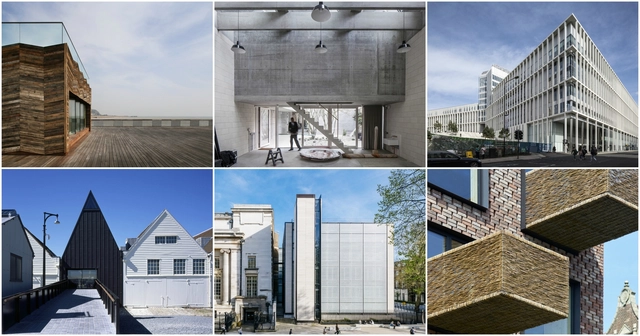
The Royal Institute of British Architects (RIBA) has announced the shortlist of six projects competing for the 2017 Stirling Prize, the UK’s most prestigious award for architecture, given to the building “that has made the biggest contribution to the evolution of architecture in a given year.” Selected from the list of national award winners, the finalist buildings range from an elegantly detailed photographer’s studio in west London, to an immense new campus for the City of Glasgow College.
“This year’s shortlisted schemes show exceptionally creative, beautifully considered and carefully detailed buildings that have made every single penny count,” said RIBA President Jane Duncan. “Commissioned at the end of the recession, they are an accolade to a creative profession at the top of its game. Each of these outstanding projects has transformed their local area and delights those who are lucky enough to visit, live, study or work in them.
“This year’s shortlist typifies everything that is special about UK architecture: this is not just a collection of exceptionally well designed buildings but spaces and places of pure beauty, surprise and delight.”
The winner of the Stirling Prize will be announced on October 31st.

One of Louis Kahn’s most unique and lesser-known projects, the floating concert hall known as Point Counterpoint II, is at risk of demolition, reports the Pittsburgh Post Gazette.
Built from 1964 to ’67 as part of celebrations for the American Bicentennial, the 195-foot-long vessel has since been used as the waterborne home of the American Wind Symphony Orchestra (AWSO), allowing the group to take their own venue places as far away as Paris, France and St. Petersburg, Russia. Along with circular doorways and portholes, the structure features a 75-foot-wide stage that can be opened and closed using a hydraulic lift system.





.jpg?1500381347 "© Laurian Ghinitoiu")
.jpg?1500381865 "© Laurian Ghinitoiu")
.jpg?1500382233 "© Laurian Ghinitoiu")
.jpg?1500381480 "© Laurian Ghinitoiu")
.jpg?1500381046)