
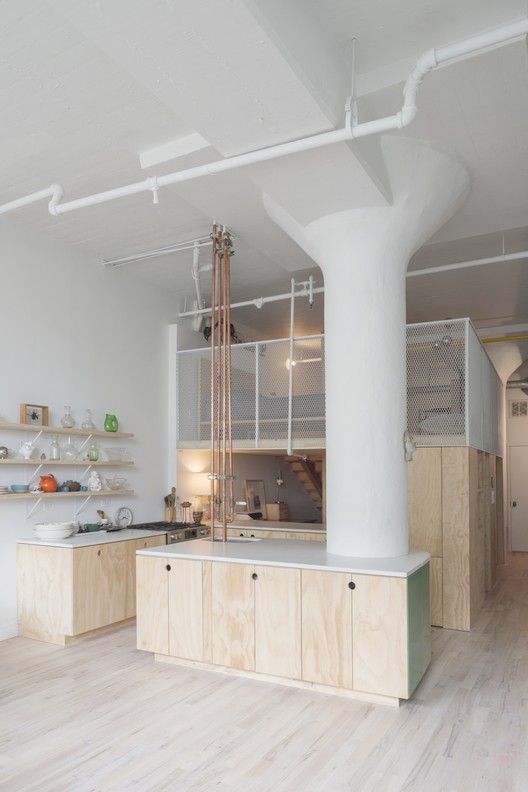
-
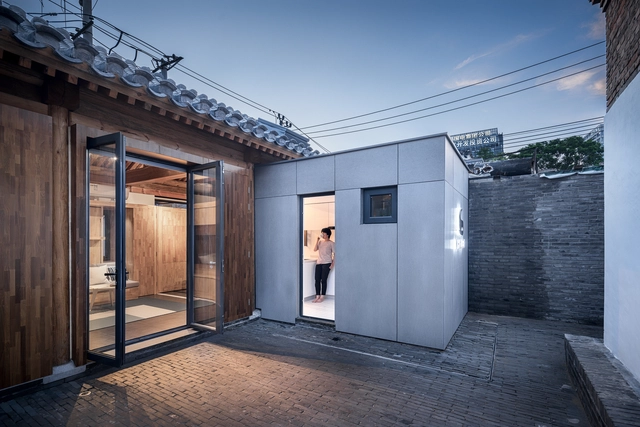
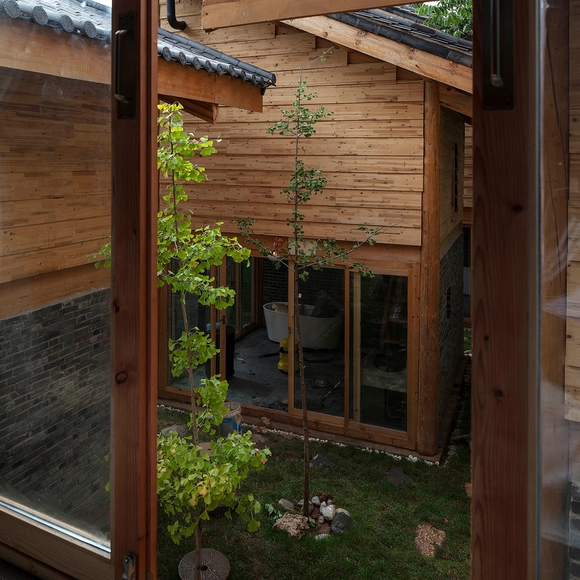
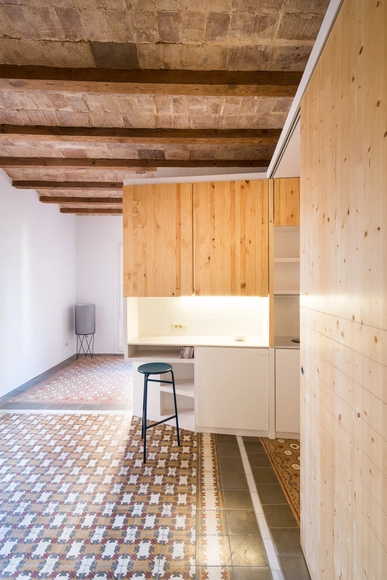
Architects: New Affiliates
- Area: 750 ft²
- Year: 2017
-
Manufacturers: Blueman Hardware Corporation
-
Professionals: Create NYC Contracting Inc.



This article originally appeared on guggenheim.org/blogs under the title "How Analog and Digital Came Together in the 1990s Creation of the Guggenheim Museum Bilbao," and is used with permission.
The Guggenheim Museum Bilbao, which celebrates its twentieth anniversary this month, has been hailed as a pinnacle of technological progress since its October 1997 opening. While the use of the modeling software CATIA (Computer Aided Three-Dimensional Interactive Application) was without question groundbreaking, some of the greatest moments of ingenuity during the building’s design and construction were distinctly low-tech. Developed between 1991 and 1997, the curved and angular titanium-clad building was conceived at the turning point between analog and digital practice. This profound shift enveloped and permeated every aspect of the project, from the design process and construction techniques to the methods of communication technology put to use.
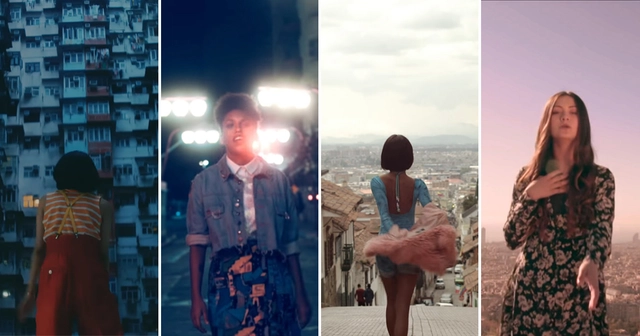
In the age of green screen backgrounds, hyperrealistic renderings and the endless run of superhero movies that rely heavily on special effects, some directors are still betting on turning cities into protagonists of their music videos. In the nineties, Michael Jackson visited Brazil and filmed They Do Not Care About Us in one of the most dangerous neighborhoods in South America – but do you remember which city it was?
Here we compiled ten music videos where the cities, their neighborhoods and their inhabitants serve as the stage for actors, singers, and dancers to display their art around the world.
Can you recognize the cities where these music videos were filmed? Take the test below and find out.

Three projects have been selected as the winners of The American Architecture Prize (AAP) 2017, which aims to recognize “creativity and innovation in architectural, interior and landscape design.”
An expert Jury judged thousands of entries from 68 countries and winners were selected from 41 categories. The jurors included Peggy Deamer, Professor of Architecture at Yale University; Troy C. Therrien, Curator of Architecture and Digital Initiatives at the Guggenheim Foundation and Museum; Ben Van Berkel, Principal of UNStudio and Professor at Harvard University Graduate School, and many more.
It has been a privilege to receive such exceptional entries competing for the AAP this year. Every submission is outstanding in its own way. All these entries from accomplished architects and architecture firms give us the opportunity to not only promote amazing designs but also to marvel together at the evolution of architecture, interior design and landscape architecture across the globe - AAP President Hossein Farmani.
.jpg?1508199071&format=webp&width=640&height=580)
.jpg?1508252278)
The Naoshima Pavilion by Sou Fujimoto is one of the more recent additions to the world-renowned "Art Island," and is located only meters away from Naoshima's boat terminal (designed by SANAA). The lightweight, highly-transparent mesh-like steel structure was conceived and constructed for the 2016 Setouchi Triennial. Photographer Laurian Ghinitoiu has turned his lens to the project which, in spite of its modest size, casts a striking silhouette on the island's coastline.

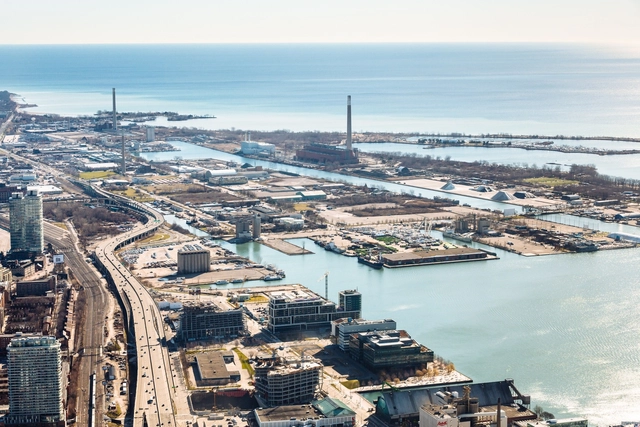
Sidewalk Labs and Waterfront Toronto have revealed plans for a brand new community on Toronto’s Eastern Waterfront that will bring together “forward-thinking urban design and new digital technology to create people-centred neighbourhoods that achieve precedent-setting levels of sustainability, affordability, mobility, and economic opportunity.”

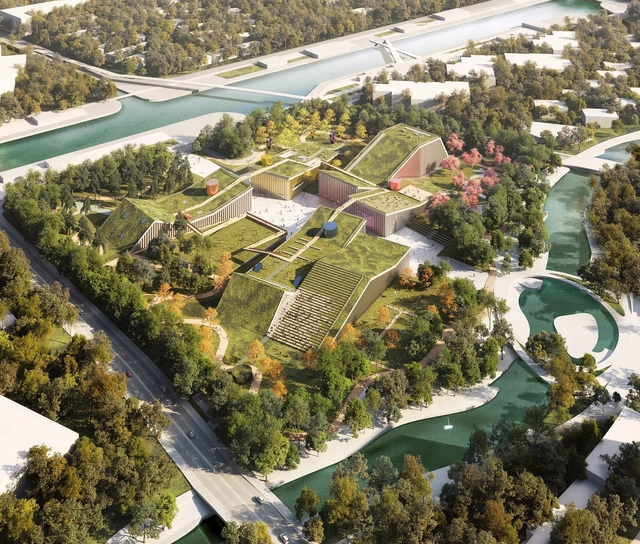
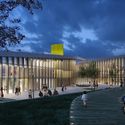
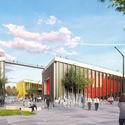
MVRDV, in collaboration with ISA Architecture, has revealed the designed of the Zhangjiang Future Park, a park and community center for the workers and residents of Zhangjiang Hi-Tech Park in Pudong, Shanghai, China. Fully integrated into a rolling park landscape will be a library, an art centre, a performance centre and a sport center – four civic programs that are currently lacking in the neighborhood.
.jpg?1508257249&format=webp&width=640&height=580)
Adjaye Associates has unveiled designs for SPYSCAPE, a new museum and interactive experience that illuminates the world of espionage from historical secret intelligence to modern day hacking through a collection of rare artifacts, exhilarating storytelling and immersive personalized experiences.
Located a stone’s throw from Times Square in New York City, the 60,000-square-foot space will use architecture as a key element of the museum experience. Inspired by the spaces occupied by the world’s most significant spy organizations, the building interiors will resemble a small town, with a variety of spaces unfolding beneath a vaulted canopy. Circulation will lead visitors through a wide range of vantage points and perspectives, playing with perceptions and drawing you into the individual pavilions.
.jpg?1508257213 "Courtesy of Adjaye Associates")
.jpg?1508257227 "Courtesy of Adjaye Associates")
.jpg?1508257249 "Courtesy of Adjaye Associates")
.jpg?1508257238 "Courtesy of Adjaye Associates")
.jpg?1508257249)

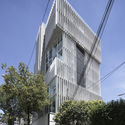
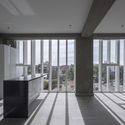
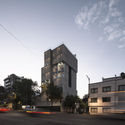
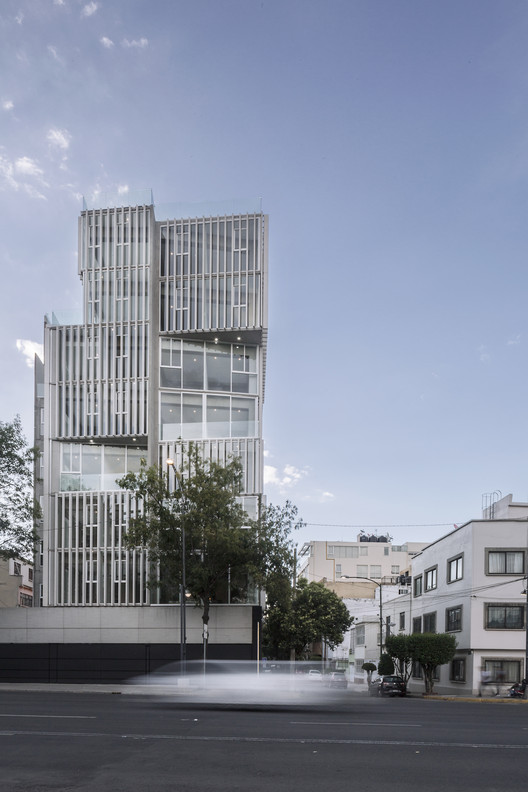
In the decade since the start of the financial crisis, there has been an explosion in the number of architectural practices that have pursued unusual and ingenious business models—among the most popular of which is the concept of the developer-architect, who serves as their own client. With his architecture firm and development company JSa, Javier Sanchez has been proving this concept since long before the financial crisis hit. In the latest interview of his City of Ideas series—and the third of his interviews with Mexican architects after Enrique Norten, Alberto Kalach and Mauricio Rocha and Gabriela Carrillo—Vladimir Belogolovsky speaks to Sanchez about the benefits of working as one’s own client and how JSa leverages its business model to improve the city.


.jpg?1508199210 "© Sergio Grazia")
.jpg?1508199200 "© Sergio Grazia")
.jpg?1508199140 "© Sergio Grazia")
.jpg?1508199188 "© Sergio Grazia")
.jpg?1508199071)
.jpg?1508252363 "© Laurian Ghinitoiu")
.jpg?1508252194 "© Laurian Ghinitoiu")
.jpg?1508252388 "© Laurian Ghinitoiu")
.jpg?1508252216 "© Laurian Ghinitoiu")
.jpg?1508252278)